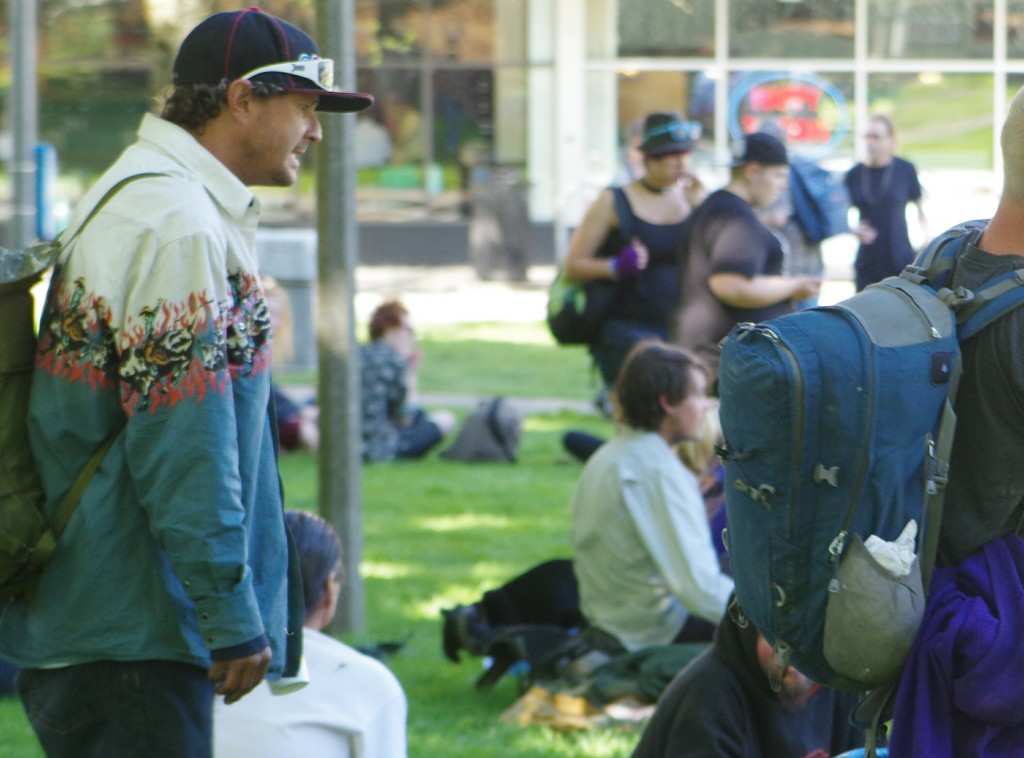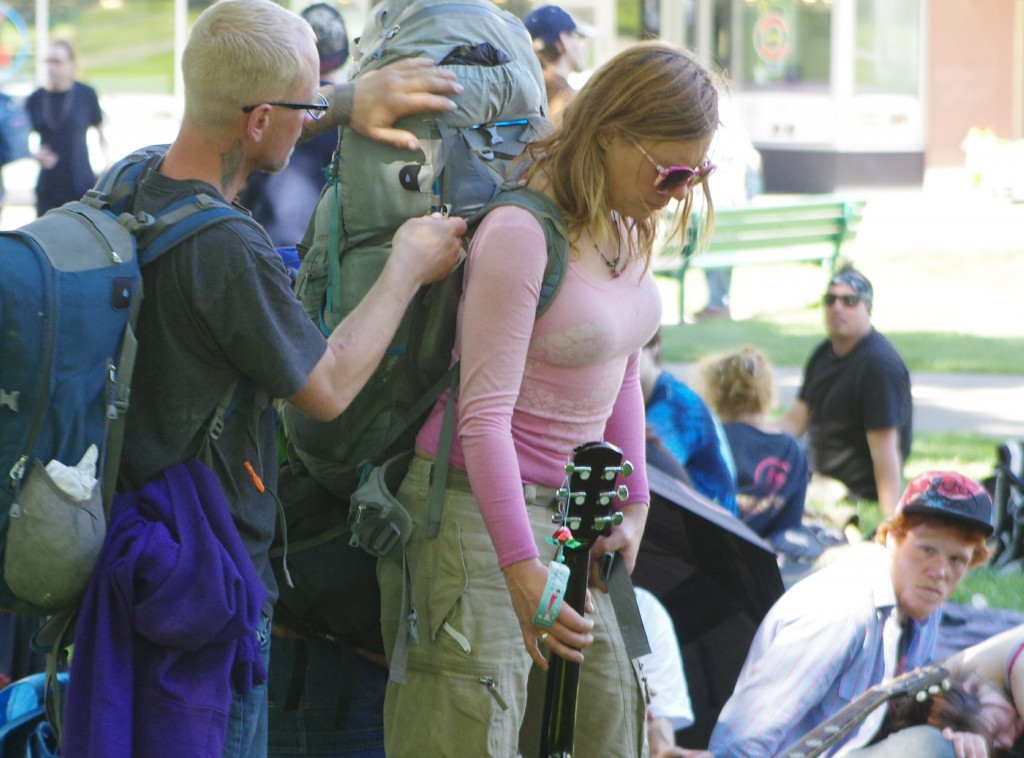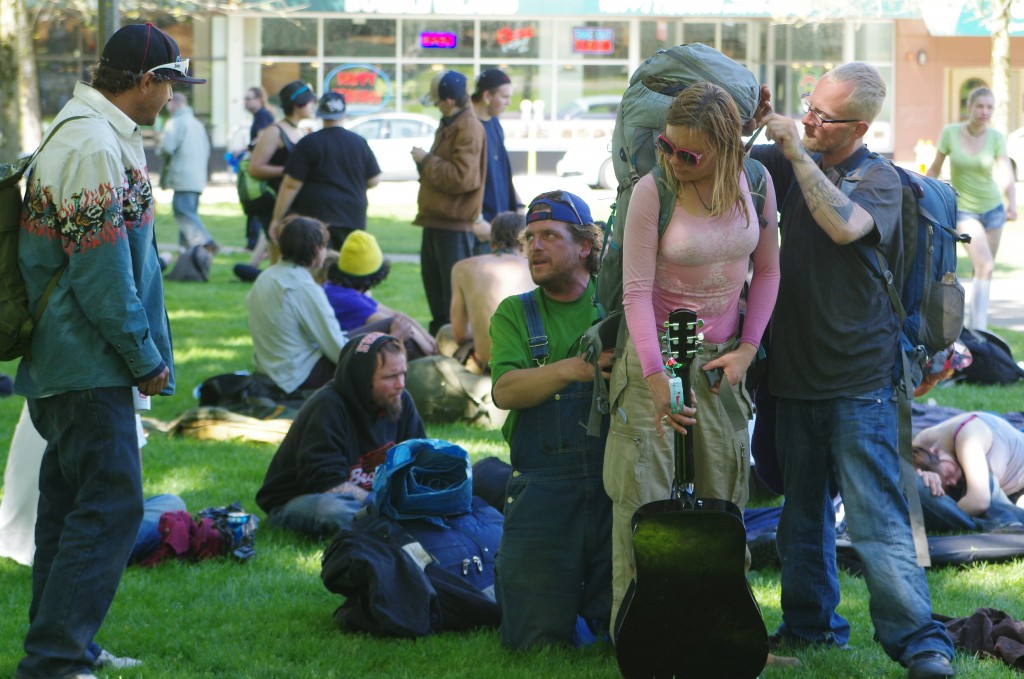
Tibbits & Shivers arrested for assault on 2-month old baby

Editor’s Note: This site was attacked early on the morning of 1-16-15 w/the goal of deleting the following images of alleged perpetrators and victim. The hacker(s) used the ip # 99.101.5.121 and Chrome as their browser. Windows 7 was used as the OS and AT&T as the internet service provider. (Does this sound like anyone you know w/motive?–if so, leave a comment as to who, etc.) The images are safely stored offline and, of course, were restored for the public’s benefit. If convicted, the accused could face up to life in prison. Notice was filed an exceptional sentence is being sought in this case. Judge Sheldon was affidavited (removed) by one of the defendants (Shivers). Bob Brungardt, esq. is the attorney of record representing/defending Tibbits. Both defendants were released on $75,000 bond/bail. A protection order and no contact order to prevent harm to the child has been entered by the court. Restitution for emergency medical/hospital costs incurred by the infant (Avery Denise Michelle Tibbits) is being sought from each of the defendants. Speedy trial has been waived by both defendants. The trial is currently scheduled to begin sometime in early to mid-spring of 2015.

ChadAllenLesterTibbits

Chad Allen Lester Tibbits, 21

KatarinaMTibbitselfie

Katarina M. Shivers/Tibbits, 20, w/child

KatarinaMTibbitsbaby4

Katarina M. Shivers/Tibbits w/newborn

by Natalie Johnson (reporter for Mason County Journal)

Shelton, WA. — A Union couple pleaded not guilty, Tuesday, to charges they beat and starved their 2-month old child, Avery Denise Michelle Tibbits.

Chad Allen Lester Tibbits, 21, and Katarina M. Shivers, 20, were arrested Monday evening on suspicion of assault of a child in the 1st degree, and criminal mistreatment in the 1st degree. Katarina may be a descendant of Ezra Meeker, the  founding pioneer of Puyallup, WA. and where the Meeker Mansion historical site is open to the public today.

Both made their first appearance in Mason County Superior Court on Tuesday afternoon where they were formally charged, entered their pleas and were each granted $75,000 bail.

KatarinaMTibbitsbaby2

Chad Allen Lester Tibbits w/baby, Avery Denise Michelle Tibbits

While neither has any violent criminal history, Mason County Prosecutor Mike Dorcy cited the “devastating injuries” to the child when asking for bail.

According to court documents, the 2 defendants are charged with intentionally committing assault against the child and criminally mistreating the child, or “withholding any of the basic necessities of life,” between Feb. 22 and April 28.

KatarinaMShivers2

Katarina M. Shivers/Tibbits taking Selfie w/newborn

The maximum penalty for assault in the first degree against a child is life in prison.

According to probable cause documents prepared by the Mason County Sheriff’s office, occupants of the  home, where Shivers and Tibbits lived, called 911 at 11:50 pm on April 28 to report that a baby was “barely breathing.”

KatarinaMTibbits2

Expectant Mom, Katarina M. Shivers/Tibbits , 20 w/Chad Allen Lester Tibbits, 21

Medic units responded and called law enforcement when they found signs of abuse.

KatarinaMTibbitsbaby3

The 66-day-old baby was taken first to Mason General Hospital, then airlifted to Seattle’s Harborview Medical Center with head trauma and a fractured skull, fractured ribs, legs, bruising, dehydration, one collapsed lung and one partially collapsed lung, and other injuries and chronic conditions.

Katerina M. Shivers TibbitsAvery

KatarinaMShivers4

30 SE Mill Creek Rd, Shelton, WA 98584-8318


KatarinaMShivers3

Some of the injuries showed healing, according to court documents.

KatarinaMShivers

The child, who is also underweight, due to “chronic nutritional neglect,” according to the probable cause report, is now recovering at  Seattle’s Children’s Hospital, Dorcy said.

KatarinaMShivers5

According to court documents, Tibbits and Shivers told detectives that the baby caused many of her own injuries.

KatarinaMShivers7

Katerina M. Shivers/Tibbits w/Avery

Katerina M. Shivers/Tibbits w/Avery

Doctors at Harborview Medical Center concluded that the parents’ explanations for the baby’s injuries were “unreasonable”.

KatarinaMTibbitsbaby

Avery Denise Michelle Tibbits

KatarinaMTibbitsbaby5 KatarinaMTibbitsbaby4

Post Partum Depression (PPD), also called post natal depression, is a type of clinical depression which can affect women after childbirth. Symptoms may include sadness, low energy, changes in sleeping and eating patterns, reduced desire for sex, crying episodes, anxiety, and irritability. While many women experience self-limited, mild symptoms postpartum, postpartum depression should be suspected when symptoms are severe and have lasted over two weeks.

Although a number of risk factors have been identified, the causes of PPD are not well understood. Hormonal change is hypothesized to contribute as one cause of postpartum depression. The emotional effects of postpartum depression can include sleep deprivation, anxiety about parenthood and caring for an infant, identity crisis, a feeling of loss of control over life, and lack of support from a romantic or sexual partner.” Many women recover with treatment such as a support group, counseling, or medication.

Studies report prevalence rates among women from 5% to 25%, but methodological differences among the studies make the actual prevalence rate unclear. Among men, in particular new fathers, the incidence of postpartum depression has been estimated to be between 1% and 25.5%.

KatarinaMShivers6

Symptoms include sadness, fatigue, changes in sleeping and eating patterns, reduced libido, crying episodes, anxiety, and irritability. Although a number of risk factors have been identified, the causes of PPD are not well understood. Many women recover with a treatment consisting of a support group or counseling.

KatarinaMTibbits2

Symptoms of PPD can occur anytime in the first year postpartum.

These include, but are not limited to, the following:

  • Sadness
  • Hopelessness
  • Low self-esteem
  • Guilt[5]
  • A feeling of being overwhelmed
  • Sleep and eating disturbances
  • Inability to be comforted
  • Exhaustion
  • Emptiness
  • Anhedonia
  • Social withdrawal
  • Low or no energy
  • Becoming easily frustrated[5]
  • Feeling inadequate in taking care of the baby[5]
  • Decreased sex drive

KatarinaMTibbits5

Postpartum depression usually begins in the first few months after childbirth. In Diagnostic and Statistical Manual of Mental Disorders, Fourth Edition it is defined as depression with onset within 4 weeks after childbirth. Postpartum depression can also affect women who have suffered a miscarriage. It usually begins around two weeks after childbirth. It may last up to several months or even a year.

KatarinaMShivers3

Psychosis

Postpartum psychosis is a separate mental health disorder which is sometimes erroneously referred to as postpartum depression. It is less common than PPD, and it involves the onset of psychotic symptoms that may include thought disturbances, hallucinations, delusions and/or disorganized speech or behavior. The prevalence of postpartum psychosis in the general population is 1–2 per 1,000 childbirths, however the rate is 100 times higher in women with bipolar disorder or a previous history of postpartum psychosis. Bipolar disorder and, to a lesser extent, schizophrenia have elevated prevalences in postpartum psychosis. Previous research looked at the relationship between childbirth and postpartum psychosis. Using data on 54,000 births over a 12-year period, researchers found that psychiatric admissions were seven times more likely in the first 30 days after childbirth than in the prepregnancy period and among women who developed postpartum psychosis after childbirth, 72%–80% had bipolar disorder or schizoaffective disorder and 12% had schizophrenia. Indicators of a possible bipolar diagnosis include a history of missed or misdiagnosed mood episodes, any previous mania or hypomania, and a family history of bipolar disorder or postpartum psychosis.

Treatment for Postnatal Psychosis is essential; it will not go away without medical attention.

KatarinaMTibbits4

Effects on the parent-infant relationship

Postpartum depression may lead mothers to be inconsistent with childcare. Women diagnosed with postpartum depression often focus more on the negative events of childcare, resulting in poor coping strategies (Murray). There are four groups of coping methods, each of which is divided into a different style of coping subgroups. Avoidance coping is one of the most common strategies used (Murray). It consists of denial and behavioral disengagement subgroups (for example, an avoidant mother might not respond to her baby crying). This strategy however, does not resolve any problems and ends up negatively impacting the mother’s mood, similarly of the other coping strategies used (Honey).

  • Avoidance coping: denial, behavioral disengagement
  • Problem-focused coping: active coping, planning, positive reframing
  • Support seeking coping: emotional support, instrumental support
  • Venting coping: venting, self-blame

KatarinaMTibbits3

Multiple factors must be considered when evaluating the capacity of a seriously depressed mother to provide a safe-enough care giving environment that can support the healthy development of her baby and her relationship with that baby. Such factors, including maternal attachment history, present social supports, insight, and ability to accept help are often best considered by an interdisciplinary professional treatment team that includes infant mental health specialists or other mental health practitioners with experience in working with children and families.

KatarinaMTibbitsbaby

Avery Denise Michelle Tibbits

Causes

The etiology of PPD is not well understood. It is sometimes assumed that postpartum depression is caused by a lack of vitamins. Other studies tend to show that more likely causes are the significant changes in a woman’s hormones during pregnancy. Yet other studies have suggested there is no known correlation between hormones and postpartum mood disorders, and hormonal treatment has not helped postpartum depression victims. Further, fathers, who are not undergoing profound hormonal changes, suffer PPD at relatively high rates. Finally, all mothers experience these hormonal changes, yet only about 10–15% suffer PPD. This does not mean, however, that hormones do not play a role in PPD. For example, in women with a history of PPD, a hormone treatment simulating pregnancy and parturition caused these women to suffer mood symptoms. The same treatment, however, did not cause mood symptoms in women with no history of PPD. One interpretation of these results is that there is a subgroup of women who are vulnerable to hormone changes during pregnancy. Another interpretation is that simulating a pregnancy will trigger PPD in women who are vulnerable to PPD for any of the reasons indicated by Beck’s meta-analysis as summarized above.

Profound lifestyle changes brought about by caring for the infant are also frequently claimed to cause PPD, but, again, there is little evidence for this hypothesis. Mothers who have had several previous children without suffering PPD can nonetheless suffer it with their latest child. Plus, most women experience profound lifestyle changes with their first pregnancy, yet most do not suffer PPD.

In 2009, researchers at the University of California, Irvine, reported that the levels of placental corticotropin-releasing hormone (CRH) during the 25th week of pregnancy may help predict a woman’s chances of developing postpartum depression.

KatarinaMTibbitsbaby5

Risk factors

While the causes of PPD are not understood, a number of factors have been suggested to increase the risk of PPD:

Of these, formula feeding, a history of depression, and cigarette smoking have been shown to be additive effects.

KatarinaMTibbits

These factors are known to correlate with PPD. “Correlation” in this case means that, for example, high levels of prenatal depression are associated with high levels of postnatal depression, and low levels of prenatal depression are associated with low levels of postnatal depression. But this does not mean the prenatal depression causes postnatal depression—they might both be caused by some third factor. In contrast, some factors, such as lack of social support, almost certainly cause postpartum depression. (The causal role of lack of social support in PPD is strongly suggested by several studies, including O’Hara 1985, Field et al. 1985; and Gotlib et al. 1991.) Anthropologists Kruckman and Stern tested the idea cross culturally, and their pioneering study determined six ways in which postpartum rituals, including the use of the postpartum ritual, la cuarentena, in Chicago Latina mothers, to protect or cushion the expression of mood disorders.

In addition to Beck’s meta-analysis cited above, other academic studies have shown a correlation between a mother’s racesocial class and/or sexual orientation and postpartum depression. In 2006 Segre et al., conducted a study “on the extent to which race/ethnicity is a risk factor” for PPD. Studying 26,877 postpartum women they found that 15.7% were depressed. Of the women who suffered from PPD, African American women suffered at a rate of 25.2%, American Indian/Native Alaskan women at 22.9%, Caucasian women at 15.5%, Hispanic women at 15.3%, and 11.5% for those reporting Asian/Pacific Islander. Even when “important social factors such as age, income, education, marital status, and baby’s health were controlled, African American women still emerged with significantly increased risk for…PPD”.

These above factors are known to correlate with PPD. This correlation does not mean these factors are causal. Rather, they might both be caused by some third factor. Contrastingly, some factors almost certainly attribute to the cause of postpartum depression, such as lack of social support.

Not surprisingly, women with fewer resources indicate a higher level of postpartum depression and stress than those women with more financial resources. Rates of PPD have been shown to decrease as income increases. Women with fewer resources may be more likely to have an unintended or unwanted pregnancy, increasing risk of PPD. Single mothers of low income may have fewer resources to which they have access while transitioning into motherhood.

Studies have also shown a correlation between a mother’s race and postpartum depression. For race, African American mothers have been shown to have the highest risk of PPD at 25%, while Asians had the lowest at 11.5%, after controlling for social factors such as age, income, education, marital status, and baby’s health were controlled. The PPD rates for American Indians, Caucasian and Hispanic women fell in between.

Sexual orientation has also been studied as a risk factor for PPD. In a 2007 study conducted by Ross and colleagues, lesbian and bisexual mothers were tested for PPD and then compared with a heterosexual sample. It was found that lesbian and bisexual biological mothers had significantly higher Edinburgh Postnatal Depression Scale scores than heterosexual women in the sample.[26] These higher rates of PPD in lesbian/bisexual mothers may reflect less social support, particularly from their families of origin and additional stress due to homophobic discrimination in society.

Segre et al., also found a correlation between a mother’s social class and PPD. Not surprisingly, women with fewer resources indicate a higher level of postpartum depression and stress than those with more financial resources. Rates of PPD decreased as income increased as follows: Women with fewer resources are also more likely to have an unintended or unwanted pregnancy, further increasing risk of PPD. Beck (2001) concurs with this, stating that these women are at risk for PPD because they may experience stressors such as financial difficulties. Single mothers of low income may have fewer resources they have access to while transitioning into motherhood.

Income PPD rate
<$10,000 24.3%
$10,000-$19,000 20.0%
$20,000-$29,000 18.8%
$30,000-$39,000 15.3%
$40,000-$49,000 13.7%
$50,000+ 10.8%

Likewise, a study conducted by Howell et al. in 2006 confirms Segre’s findings that women who are not Caucasian and in lower socioeconomic categories have more symptoms of PPD.

In a 2007 study conducted by Ross et al., lesbian and bisexual mothers were tested for PPD and then compared with a heterosexual sample. Ross et al. found that “lesbian and bisexual biological mothers had significantly higher Edinburgh Postnatal Depression Scale (EPDS) scores than the…sample of heterosexual women.” The Ross study suggests that PPD may be more common among lesbian and bisexual mothers. From a study conducted in 2005 by Ross, the higher rates of PPD in lesbian/bisexual mothers than heterosexual mothers may be due to less “social support, particularly from their families of origin and…additional stress due to homophobic discrimination” in society.

Research suggests that PPD is a functional component of human reproductive decision-making, research supports the notion that PPD caused mothers to decline investment in their offspring.

Human infants require an extraordinary degree of care. Lack of support and insufficient investment from fathers and/or other family members will increase the costs borne by mothers, whereas infant health problems will reduce the evolutionary benefits to be gained. If ancestral mothers did not receive enough support from fathers or other family members, they may not have been able to afford raising the new infant without harming any existing children, or damaging their own health (nursing depletes mothers’ nutritional stores, placing the health of poorly nourished women in jeopardy).

For mothers suffering inadequate social support or other costly and stressful circumstances, negative emotions directed towards a new infant could serve an important evolved function by causing the mother to reduce her investment in an overly taxing infant, thereby reducing her costs. Numerous studies support the correlation between postpartum depression and lack of social support or other childcare stresses. Kruckman, using observations from anthropological field work, suggests that supportive rituals and knowledge, if projected to the mother in a meaningful and sincere fashion, can affect the hypothalamus, pituitary and adrenal function and the production of endocrine signal molecules, and reduce the expression of anxiety or panic in postpartum women.

Mothers with postpartum depression can unconsciously exhibit fewer positive emotions and more negative emotions toward their children, are less responsive and less sensitive to infant cues, less emotionally available, have a less successful maternal role attainment, and have infants that are less securely attached; and in more extreme cases, some women may have thoughts of harming their children. In other words, most mothers with PPD are suffering some kind of cost, like inadequate social support, and consequently are mothering less.

In this view, mothers with PPD do not have a mental illness, but instead cannot afford to take care of the new infant without more social support, more resources, etc. Treatment should therefore focus on helping mothers get what they need.
VIOLENCE

A meta-analysis reviewing research on the association of violence and postpartum depression showed that violence against women increases the incidence of postpartum depression. About one-third of women throughout the world will experience physical and/or sexual violence at some point in their lives. Violence against women occurs in conflict, post-conflict, and non-conflict areas. It is important to note that the research reviewed only looked at violence experienced by women from male perpetrators, but did not consider violence inflicted on men or women by women. Further, violence against women was defined as “any act of gender-based violence that results in, or is likely to result in, physical, sexual, or psychological harm or suffering to women”. Psychological and cultural factors associated with increased incidence of postpartum depression include family history of depression, stressful life events during early puberty or pregnancy, anxiety or depression during pregnancy, and low social support. Violence against women is a chronic stressor, so depression may occur when someone is no longer able to respond to the violence.

Prevention

Early identification and intervention improves long term prognoses for most women. Some success with preemptive treatment has been found as well. A 2013 Cochrane review found evidence that psycho-social or psychological intervention after childbirth helped reduce the risk of postnatal depression. These interventions included home visits, telephone-based peer support, and interpersonal psychotherapy.

A major part of prevention is being informed about the risk factors, and the medical community can play a key role in identifying and treating postpartum depression. Women should be screened by their physician to determine their risk for acquiring postpartum depression. Also, proper exercise and nutrition appears to play a role in preventing postpartum, and depressed mood in general.

In the US, the American College of Obstetricians and Gynecologists recommends that the first prenatal visit include screening for depression, stress, support, and whether the pregnancy was planned. However providers do not consistently provide screening and appropriate follow-up. Currently, Alberta is the only province in Canada with universal PPD screening which has been in place since 2003. The PPD screening is carried out by Public Health nurses in conjunction with the baby’s immunization schedule.

Pregnant, nursing and postpartum women are strongly encouraged to seek the medical advice of their obstetricianprimary care physicianregistered dietitian, or midwife regarding optimal nutrition during pregnancy and after birth.

The following nutritional information may be beneficial in achieving a well-balanced diet during and after pregnancy, but studies are needed to confirm their role in preventing postpartum depression.

Omega 3 Fatty Acids: Some experts believe that postpartum depression can be attributed to depletion of omega 3 fatty acids from the mother’s brain to support development of the brain of the fetus or breast fed infant. This can be prevented by ensuring that sufficient omega 3 fatty acids are provided in the mother’s diet. Good natural sources of omega 3 fatty acids include edible linseed oil, certain fish, grass fed rather than grain fed meat, and eggs from chickens fed on flax seed or other feed high in omega 3 fats. Omega 3 fatty acids can also be purchased in capsule form as a dietary supplement.

Omega 3 fatty acids can be found in a wide variety of foods. Some examples follow: 3 ounces of most meat products contain 25 grams of protein, 3 large eggs have approximately 19 grams, and 3 ounces of Swiss cheese have about 15 grams.

Water: One of the most important roles in any diet (especially for pregnant and nursing mothers) is that of hydration. Physicians may recommend that pregnant women consume ten 8-ounce glasses of water every day. Mothers who are nursing are strongly urged to drink a tall glass of water, milk or juice before sitting down to breastfeed their child. Women should consult with their physicians about caffeine and alcohol consumption postpartum.

Nutrition: A pregnant and postpartum woman should speak with her physician for information about, and a recommendation for, a daily prenatal/postnatal vitamin supplement.

Vitamins: Some limited research has indicated that the intake of B vitamins, specifically riboflavin, can help reduce the chance of post partum depression. B vitamins are water soluble and must be replenished each day. B-6 vitamins are also important to maintain the proper plasma levels and helps control the omega 3 to omega 6 ratio.

Diet: If a woman finds herself with a loss of appetite or other eating disturbance, she should consult her physician. This may be a sign of postpartum depression and therefore should be discussed with a doctor.

Treatment

Numerous scientific studies and scholarly journal articles support the notion that postpartum depression is treatable using a variety of methods. If the cause of PPD can be identified, as described above under “social risk factors”, treatment should be aimed at mitigating the root cause of the problem, including increased partner support, additional help with childcare, cognitive therapy, etc. Non-professional interventions can be effective.

Women need to be taken seriously when symptoms occur. This is a twofold practice: First, the postpartum woman will want to trust her intuition about how she is feeling and believe that her symptoms are real enough to tell her significant other, a close friend, and/or her medical practitioner; erring on the side of caution will go a long way in the treatment of PPD. Second, the people in whom she confides must take her symptoms seriously as well, aiding her with treatment and support. Partners, friends and physicians may notice changes in a postpartum mother that she may not. Knowing that PPD is treatable with a variety of methods can make persistence in seeking treatment easier.

Various treatment options include:

  • Medical evaluation to rule out physiological problems
  • Cognitive behavioral therapy (a form of psychotherapy)
  • Possible medication
  • Support groups
  • Home visits/Home visitors
  • Healthy diet
  • Consistent/healthy sleep patterns

An experienced medical professional will work with a postpartum mother to develop a treatment plan that is right for her. This plan may include any combination of the above options, and might include some discussion or feedback from/with a partner. If a woman suffering from PPD does not feel she is being taken seriously or is being recommended a treatment plan she does not feel comfortable with, she will want to seek a second opinion.

A 1997 study conducted by Appleby et al., confirms that postpartum depressed mothers’ symptoms promptly improved at similar rates when treated with cognitive behavioral therapy or the antidepressant fluoxetine. “A group of 61 depressed mothers completed a 12-week treatment program with or without the antidepressant plus one session versus six sessions of counseling.” Improvement followed after “one to four weeks of either treatment”. The findings of Appleby et al.’s study conclusively showed that combining counseling with drug therapy did not add to the improvement of just drug therapy or just counseling. This suggests that counseling is equally as effective a treatment for PPD as medication, and that “the choice of treatment [psychotherapy vs. medication] may…be made by the women themselves”. Other forms of therapy (like group therapy and home visitors) are also effective treatments for PPD.

A woman will want to discuss the various treatment options available with her physician and, if considering drug therapy, should speak about which medications are safe to take while breastfeeding.

Treatment for PPD can reduce the length of suffering and its severity. Untreated, the Baby Blues may go away on its own (and does in most cases). PPD may or may not go away without treatment. Speaking to a health care provider as soon as symptoms occur is the safest way to ensure prompt treatment and return to normal life.

According to The National Institutes of Mental Health, studies show that the childbearing years are when a woman is most likely to experience depression in her lifetime. Approximately 15% of all women will experience postpartum depression following the birth of a child. When the mental health of the mother is compromised, it affects the entire family.

Epidemiology

Postpartum depression and illnesses similar to it are found across the globe, with rates of incidence varying from 11% to 42%.

Society and culture

The Malay culture holds a belief in a spirit known as Hantu Meroyan that resides in the placenta and amniotic fluid. When this spirit is unsatisfied and venting resentment, it causes the mother to experience frequent crying, loss of appetite, and trouble sleeping, known collectively as “sakit meroyan”. The mother can be cured with the help of a shaman, who performs a séance to force the spirits to leave. Some cultures believe that the symptoms of postpartum depression or similar illnesses can be avoided through protective rituals in the period after birth. Chinese women participate in a ritual known as “doing the month” in which they spend the first 30 days after giving birth resting in bed, while the mother or mother-in-law takes care of domestic duties and childcare. In addition, the new mother is not allowed to bathe, wash her hair, leave the house, or be blown by the wind.

EVOLUTIONARY PSYCHOLOGY

Research suggests that PPD is a functional component of human reproductive decision-making, supporting the notion that PPD allows mothers to decline investment in their offspring when resources are limited.

Human infants require an extraordinary degree of care. Lack of support and insufficient investment from fathers and/or other family members increase the costs that are borne by mothers, whereas infant health problems reduce the evolutionary benefits to be gained. If ancestral mothers did not receive enough support from fathers or other family members, they may not have been able to afford to raise the new infant without harming any existing children, or damaging their own health (nursing depletes mothers’ nutritional stores, placing the health of poorly nourished women in jeopardy).

For mothers suffering inadequate social support or other costly and stressful circumstances, negative emotions directed towards a new infant could serve an important evolved function by causing the mother to reduce her investment in an unaffordable infant, thereby reducing her costs. Numerous studies support the correlation between postpartum depression and lack of social support or other childcare stressors. Kruckman, using observations from anthropological field work, suggests that supportive rituals and knowledge, if projected to the mother in a meaningful and sincere fashion, can affect the hypothalamus, pituitary and adrenal function and the production of endocrine signal molecules, and reduce the expression of anxiety or panic in postpartum women.

Mothers with postpartum depression can unconsciously exhibit fewer positive emotions and more negative emotions toward their children, are less responsive and less sensitive to infant cues, less emotionally available, have a less successful maternal role attainment, and have infants that are less securely attached; and in more extreme cases, some women may have thoughts of harming their children. In other words, most mothers with PPD are suffering some kind of cost, like inadequate social support, and consequently are mothering less.

In this view, mothers with PPD do not have a mental illness, but instead cannot afford to take care of the new infant without more social support, more resources, etc. Treatment should therefore focus on helping mothers get what they need.
See also

Posted in Uncategorized | 10 Comments

The Politics of Denunci@tion by Kristian Williams

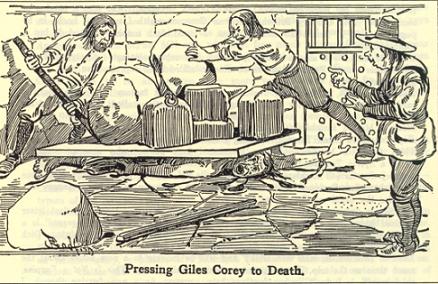
GilesCorey5

by Kristian Williams (published 2-20-14)

A year ago, on February 28, 2013, at an event titled “Patriarchy and the Movement,” I watched as a friend of mine attempted to pose several questions based on her experience trying to address domestic violence and other abuse in the context of radical organizing.

“Why have the forms of accountability processes that we’ve seen in radical subcultures so regularly failed?” she asked.  “Is there a tension between supporting a survivor’s healing and holding perpetrators accountable?”  

At that point she was, quite literally, shouted down. An angry roar came up from the crowd, from both the audience and the panelists.  It quickly became impossible to hear her and, after a few seconds, she simply stopped trying to speak.

Witchunt

The weeks that followed produced an atmosphere of distrust and recrimination unlike anything I had experienced in more than twenty years of radical organizing.  A few people were blamed for specific transgressions.  (My friend was one: she was accused of violating the venue’s “Safer Space” policy, “triggering” audience members, and employing “patriarchal mechanisms” in her statement.)  Others were called out for unspecified abusive or sexist behavior.  And a great many more were alleged to have supported or defended or coddled those guilty of such offenses.

The ensuing controversy destroyed at least one political organization, and an astonishing number of activists––many with more than a decade of experience––talked about quitting politics altogether.  I know people who lost friends and lovers, often not because of anything they had done, but because of how they felt about the situation. Several people––mostly women, interestingly––told me they were afraid to say anything about the controversy, lest they go “off-script” and find themselves denounced as bad feminists.

GilesCorey

Questioning

One might expect that in the midst of conflict questions about how we address abusive behavior and hold each other accountable would seem particularly relevant.  Instead, in a statement released after the event, the unnamed “Patriarchy and the Movement” organizers tried to bar such questions from being raised at all. They wrote:

We also feel that framing the discourse around survivor’s needs as ‘political disagreements’ or ‘political arguments’ is in of itself sexist––as it pretends that this conversation should be emptied of subjective narrative, or that there is an equal playing ground in the conversation because the conversation itself isn’t about real power, or that this conversation itself isn’t already racialized and gendered. It is also problematic, in that it suggests that there is a neutral or objective rationality in this debate, rather than the possibility that the debate itself and the content of the debate is a socially contingent result of prevailing power dynamics. [If this line of argument isn’t from a religious ascetic, it’s a distinction without a meaningful difference. It sounds like a lyrical line from ‘Nearer My God To Thee’, with the only question remaining being what brand of greater r@dical ‘purity’ will bring salvation most quickly.]

GilesCorey2

If political framing does all that––assumes objectivity, equality, ahistoriocity, race and gender neutrality, and an absence of power––then it becomes hard to see how political discussion is possible, not only about gender, but at all.  On the other hand, if political discussion relies on those conditions, then not only would it be impossible, it would also be unnecessary.  For it is precisely the disputes over truth, the contested facts of history, identity, inequality, and power that give politics its shape, its content, and its significance.  The second sentence of the above quotation contradicts the first:  the argument runs that this discussion cannot be political, because it is necessarily political.  

GilesCorey3

Their statement continues:

There are direct consequences to these ‘debates’, and there [are] physical bodies involved. As survivors and feminists, we must become cautious when our bodies[,] our safety, and our well-being, as well as our needs around our bodies, safety, and well beings, become the subject of ‘political debate’. For us, there is more at stake here than just the merits of a ‘debate’. Our bodies, safety, health, personal autonomy, and well-beings are at stake. We do not agree with people having a ‘political argument’ at our expense. The outcome could be life or death for us.

That is true: There are serious consequences to the debate about accountability.  There are lives, and not merely principles, at stake.  But rather than being a reason not to argue these issues, that is precisely the reason that we must.  

If politics means anything, it means that there are consequences––sometimes, literally, life or death consequences––to the decisions we make.  When it comes to war, climate change, immigration, policing, health care, working conditions––in all of these areas, as with gender, “bodies, safety, health, personal autonomy, and well-beings are at stake.”  That is why politics matters.

GilesCorey6

Fallacies

While attempting to elevate feminism to a place above politics, the organizers’ statement in fact advances a very specific kind of politics.  Speaking authoritatively but anonymously, the “Patriarchy and the Movement” organizers declare certain questions off-limits, not only (retroactively) for their own event, but seemingly altogether. These questions cannot be asked because, it is assumed, there is only one answer, and the answer is already known. The answer is, in practice, whatever the survivor says that it is.

Under this theory, the survivor, and the survivor alone, has the right to make demands, while the rest of us are duty-bound to enact sanctions without question.  One obvious implication is that all allegations are treated as fact.  And often, specific allegations are not even necessary.  It may be enough to characterize someone’s behavior ––or even his fundamental character––as “sexist,” “misogynist,” “patriarchal,” “silencing,” “triggering,” “unsafe,” or “abusive.”  And on the principle that bad does not allow for better or worse, all of these terms can be used more or less interchangeably.  After all, the point is not really to make an accusation, which could be proved or disproved; the point is to offer a judgment.  Thus it is possible for large groups of people to dislike and even punish some maligned person without even pretending to know what it is, specifically, he is supposed to have done.  He has been “called out” as a perpetrator; nothing else matters.

This approach occludes––and herein, perhaps, lies its appeal––the complexities of real people’s lives, the multiple roles we all occupy, the tensions we all embody and live out, and the ways we all participate in upholding systems of power even as they oppress us.  

Under this schema, it is taken for granted that no survivor is ever also an abuser, and no abuser is the survivor of someone else’s violence.  Naturally, no past victimization can justify or excuse present abuse, but the strict dichotomy implied here too neatly defines the past away; by the same reasoning, it also forestalls the potential for future healing or growth.  

What it offers, instead, is a reassuring dualism in which survivors and abusers exist, not only as roles we sometimes fill or positions we sometimes hold, but as particular types of people who are essentially those things, locked forever into one or the other of these categories, and (not incidentally) gendered in a conventional, stereotyped binary.  Each person is assigned a role and, to some degree, reduced to their position in this story.  One is only a perpetrator/abuser; the other is only a victim/survivor.  They are each defined by the suffering they have caused, or the suffering they have endured––but never by both.

A double transformation occurs.  Patriarchy ceases to be a mode of power and system of social stratification and becomes, instead, identified with the behavior of an individual man and is even thought to be personified by him.  At the same time, both perpetrator and survivor are depersonalized, abstracted from the context and the narratives of their lives, and cast instead as symbolic figures in a kind of morality play.  

Our scrutiny shifts, then, from the abuse to the abuser, from the act to the actor.  Instead of seeking out ways to heal the harm that has been done, we invest our collective energy in judging the character of the man responsible.  Support for the survivor is equated with, and then replaced by, castigation of the perpetrator.  These displays of moral outrage serve above all as pronouncements of the innocence and testaments to the virtue of those who issue them.  And as such, they have a way of becoming weirdly obligatory.  Since we are not asking whether some particular person committed some identifiable act, but instead whether he is fucked up, then it makes a certain kind of sense to think that anyone who “coddles,” or “defends,” or “supports,” or even just likes him–– or who merely fails to denounce him––must take a share of the blame.  So there is a powerful impulse to line up on the “right” side, to join in the denunciation before one finds oneself called out as well. [The same dynamics are found at work in the mob psychology of prison gangs, et al, even our criminal ‘justice’ system. This is well known and used by agent provocateurs.]

Implications

The ideology at work here is self-defeating, producing a movement that is less, rather than more, capable of handling the issues surrounding sexual assault, domestic violence, and other effects of patriarchy.  Barring questions from discussion does not encourage learning or improvement.  And an atmosphere of public shaming provides strong incentives for people who have done wrong not to admit to it or try to atone.  The charged environment makes things harder for those who take on accountability and support work; it stigmatizes individuals who willingly enter into accountability processes; and it may reduce survivors of abuse, their experiences, and their needs to political symbols used by others to advance some specific ideological line.  

The politics involved are also deeply authoritarian, barring from consideration a range of questions concerning authority, accountability, punishment, and exclusion.  Its advocates effectively claim a monopoly on feminist praxis and exclude other feminist perspectives.  And so they silence those who disagree––literally, in the “Patriarchy and the Movement” episode.

In the situation I’ve described here, these moves are being made in the name of feminism, but there is no reason to believe the pattern will stop there.  The same tactics are available to any identity politics camp, or any ideological sect seeking to rid itself of bourgeois influences, or pacifists wishing to make a total break from the culture of violence, or environmentalists looking to escape from civilization, or really anyone whose radicalism consists of decrying other people’s purported shortcomings.  The obsessive need for political conformity, the mutual fault-finding that animates it, and the sense of embattled isolation that results––combined with a kind of self-righteous competitiveness (on the one hand) and a masochistic guilt complex (on the other)–– practically guarantees the sort of internecine squabbling we’ve seen emerge, not only in Portland, but in Oakland, Minneapolis, and New York as well.  

The totalitarian impulse has found its expression, and it has proven so destructive, in part because we have consistently failed to find the means for handling disagreements, for resolving disputes, for responding to violence [some glory in it], and (yes) for holding each other accountable.  Without those tools, we rely––far too often––on ideological purity tests, friend-group tribalism, peer pressure, shaming and ostracism, as well as general shit-talking and internet flame wars.  Such behavior has been part of our political culture for a long time.  

It is unsurprising, then, that our tendency is to push people out, rather than draw them in; but when we do that, our capacity for meaningful action diminishes.  A cycle of suspicion and exclusion takes hold.  As we grow less able, and even less interested, in having an effect on the larger society, we become increasingly focused on the ideas and identities of those inside our own circle.  We scrutinize one another mercilessly, and when we discover an offense––or merely take offense––we push out those who have lost favor.  As our circle grows ever smaller, minor differences take on increasing significance, leading to further suspicion, condemnation, and exclusion––shrinking the circle further still.

We behave, in other words, not like a movement but like a scene––and a particularly cliquish, insular, and unfriendly scene at that.

Visions

At issue here are strikingly different visions of what a political movement ought to be.  

In one vision, a movement and the people who make it up should be in every respect beyond reproach, standing as an example, a shining city on a hill, apart from all the faults of our existing society.  To achieve this perfection, we have to separate the sheep from the goats, the good people from the bad, the true feminists from everyone else. This outlook produces, almost automatically, a tendency to defer to the dogma of one’s in-group. It is not enough simply to do the right things; one must also think the right thoughts and find favor with the right people. […to LOVE ‘big brother’]

In contrast, in the other vision, a movement should attract people to it, including damaged people, people who have done bad things [e.g. Saul of Tarsus], and those who are still in the process of figuring out their politics.  It will require us, therefore, to address sexual assault and other abuse by actually engaging with the people who do such things.  We have to struggle with them as much as we struggle against oppression.  

Neither approach is likely to be easy.  They each face the challenge of developing a feminist praxis in the midst of a sexist society.  But where one vision imagines that the authors of that praxis must be individuals free of the taint of patriarchy, the latter begins by acknowledging that we are all shaped by the forces we struggle against and that we are implicated in the systems of power that oppress us.  The first seeks to defeat patriarchy chiefly through exclusion; the latter, through transformation.

The question we face, in other words, is this: Do our politics aim at purity or change?

***

Bio: Kristian Williams is the author Our Enemies in Blue: Police and Power in America, American Methods: Torture and the Logic of Domination, and Hurt: Notes on Torture in a Modern Democracy. He lives in Portland, Oregon.

Posted in Uncategorized | 2 Comments

L@w & Disorder Free For (A)ll: Censorship & Witch Hunts

Portland, OR — It’s looking like another annual free for all at PSU’s Law & Disorder Conference this year.

The schedule is listed elsewhere on this blog; the the fireworks have already begun on their FB Event page replete with denunciations of well known author, self described anarchist and invited speaker Kristian Williams. His critics threaten to make his experience there “Hell” if he’s permitted to speak and to trash/disrupt the event if they don’t dissuade the organizers.

The organizers, for their part, have taken to deleting comments on their page by the respective factions in an effort to turn down the heat and prevent the event from imploding before it even begins.

The text of the acrimonious exchanges is too long to re-post even a small part of its entirety here, but the following is an example of the tensions and cliched tropes that have entered the invective there:

5th Annual Law & Disorder Conference May 9-11th 2014
All events will be held at Portland State University 
Smith Memorial Student Union Building (SMSU) 
1825 Southwest Broadway, Portland, OR 97201

Dave Negation’s comment on Kristian Williams’ article ‘The Politics of Denunciation’ in its entirety is below. Please note that the pertinent links were embedded, and so don’t show up here. You will need to go to the comment thread to follow the links, but if context is what you want, it’s for sure useful.


One common response to Kristian Williams’ piece is that,whatever the specifics of what occurred in Portland, Williams’ piece is nevertheless valuable and makes some good general points. I disagree. It is extremely difficult to pry apart the content of Williams’ piece from facts about what happened in Portland. Williams’ account is utterly dishonest, and his article obscures Williams’ own role in what occurred. On the occasions where political content may be examined separately from Williams’ distortions, his commentary plays to typical sexist caricatures, such as of women as manipulative and unreasonable. The article is also unbalanced in its emphasis on doubting survivors. Williams does not argue for generalized suspicion, butwants suspicion to be focused on survivors. In other contexts where suspicion develops, Williams portrays this as a destructive breakdown of trust that is harmful to the community.


A longer criticism of Williams’ article is necessary, because to the extent that his politics are clear (and potentially separable from context) they are very bad indeed. In general, however, Williams’ article is not good faith contribution to discussions about gender, patriarchy and abuse. Rather, it is an attempt to circulate lies about what occurred in Portland and to harass a local survivor and her supporters. Williams’ motivations are much clearer once we examine some of his distortions as well as Williams’ own role in the events he wrote about. Providing such context is the task of my comments here.

Williams omits that he helped to edit the anti-survivor statement that was read aloud at the Patriarchy and the Movement event. In conversation, Williams admits to having helped prepare the statement. However, Williams writes his “Politics of Denunciation” article as though he was some sort of neutral bystander to the entire scene. Furthermore, Williams characterizes the prepared statement as being about the personal experience of Eleanor (who read it aloud) “trying to address domestic violence and other abuse in the context of radical organizing.” This is a tortured way to put things, to say the least.


The statement signed by ex-Bring the Ruckus (BTR) members Geoff and Eleanor was a direct response to the survivor’s experience plus Peter Little’s name having being mentioned. (See one version of the statement here.) The ex-Bring the Ruckus statement begins: “A lot has been said this evening regarding our comrade Peter Little and his behavior.” Note that this was a prepared statement, so it is clear that it was to be issued just in case Little’s name got mentioned at the event. The statement claimed that Geoff, Eleanor and the rest of the ex-BTR crew considered the matter to be closed, and that they wished to present general points so as to move away from “personalized attacks on comrades.” It is clear, firstly, that the statement co-edited by Williams portrayed the underlying situation as being about “personal attacks” not anything of substance. (To be clear about Williams’ relation to Bring the Ruckus: Williams was not a member but he worked closely with that organization.) Secondly, the more general points within the statement were a way of speaking about the specific situation without actually going into details, or they were red herrings to divert from the situation at hand.

When Eleanor, either going off-script or reading from a version of the statement that was different from the one subsequently circulated online, made a comment along the lines of “we think it’s important to be critical of survivors” (proximate quote, the ex-BTR intervention was not recorded) this comment was understood as a jab at the survivor, phrased in the typical indirect style of Portland Bring the Ruckus. People gasped and were upset because they understood the ex-BTR statement and Eleanor’s comments as an attack on the survivor, even though it was passed off as some sort of general comment (and then later denied altogether by Eleanor, despite a room full of people having heard her speak.)


Here, I should say something quick about the underlying situation. There is certainly more to say, but this is just a quick version for those who do not want to trudge through the various accounts online. Peter Little is not being accused of intimate violence against the survivor; they were never intimate. The issue is that Peter Little hijacked an “accountability process” regarding an abusive friend of his, with Little then portraying himself as the voice of the process while breaking all understandings that the “process” was founded on.

Instead, Little used his power and his self-presentation as the voice of “accountability” to demean and try to ostracize the survivor. As a result, Little was asked to leave the process, having in effect already sabotaged it.

The great majority of those involved in the process have, by this point, spoken out regarding Little’s behavior and identified it as highly damaging. Little continues to besmirch and organize against the survivor to this day, and has continued to escalate despite many opportunities to change his behavior.

As far as anybody can tell, Little’s actions are due to a grudge he has held against the survivor ever since she–long before the situation of abuse– made a snarky comment critical of Little and Bring the Ruckus.

It is simply not acceptable to use situations of abuse instrumentally, as a way to exact revenge upon a survivor for petty grudges and quarrels. Yet this is precisely what Peter Little did. (Peter Little’s own account is that he was acting gallantly to save a child from the survivor’s wrath, a threadbare and insulting story.)


Back to the Patriarchy and the Movement event: the ex-Bring the Ruckus statement was clearly an attempt to shut up a survivor and those who had supported her. Williams turns the situation on its head when he suggests that it was some sort of “totalitarian” feminism that was engaged in “silencing.” (Following some shock and uproar, Eleanor was given space to politically defend her statement, which she could not do.)

After the Patriarchy and the Movement event, Eleanor and Geoff even made an insincere apology for their intervention, admitting that “We can see how this was interpreted as an attempt to shield an individual and felt [like] silencing.”

Now, Williams has changed the narrative to his BTR friend having been “silenced” and, in fact, being a victim.

The apology made by Eleanor and Geoff was a cynical political move from the start, but their online post at least demonstrates what was actually considered as “silencing” at the time. The anti-survivor nature of the ex-BTR statement was not only noted by the organizers of the Patriarchy and the Movement event, but also by the Red & Black Café (where the event was hosted), the Patriarchy Resistance Committee of the Portland branch of the IWW, as well as other observers.


With all this in mind, how was the statement read by Eleanor actually about her “experience trying to address domestic violence and other abuse in the context of radical organizing” as Williams alleges?

As stated earlier, Williams’ wording is tortured. One of the reasons why people were so appalled by the statement signed by Eleanor and Geoff, is due to Geoff and Eleanor’s earlier role in this situation. Trying to address Little’s harmful conduct discretely, the survivor’s supporters attempted to talk with Bring the Ruckus about what was going on. The result was a meeting with Geoff and Eleanor, which is now Eleanor’s “experience” referred to by Williams. Yet the “personal experience” in that case is not one of opposing abuse, but rather of betraying a survivor! This needs to be further spelled out.


Bring the Ruckus constantly emphasized how everyone who knew of the situation needed to be quiet about it. The survivor’s close support did not accept the initial demand of Bring the Ruckus, which was: in order for BTR even to meet with you and hear you out, you must not talk to others about this matter. The survivor’s support team refused such a gag order, but tried to stay mostly quiet thereafter so as to create a situation favorable to what was needed: de-escalation, an apology from Little, and damage limitation. Instead, the BTR circles (including the clique which remained in Portland after that organization’s formal disbanding) from that point onwards just made excuses for Little and decided that the survivor was really the problem, for having dared to have a problem with their favored commissar.


It was protracted efforts against the survivor which led to one of her supporters finally talking about the situation openly at Patriarchy and the Movement, because relative quiet on this issue had only been used against the survivor. Prior to Patriarchy and the Movement, the ex-BTR people certainly did not practice the discretion which they expected of everyone else.

The survivor was presented by Little and his associates as [a] “political liability” to anybody who would listen (the phrase itself is vague, but was used for the purpose of borderline COINTELPRO-jacketing, when the survivor was not simply portrayed as crazy.)

In context of such ongoing efforts, the pre-written statement from Geoff and Eleanor (with Williams’ assistance) was a way of communicating to the survivor that their clique would throw all their efforts into opposing anyone who did not shut up. Williams had already been recruited for the purpose of their intervention, helping with the statement in case Little’s patriarchal behavior got referenced at the anti-patriarchy event.

Williams had not even heard from the survivor or her supporters before he threw himself into the conflict. So much for Williams’ pose of wanting “political discussion” or for people to examine situations critically!


Williams’ article claims to be about “The Politics of Denunciation” yet ignores the actual denunciation that has taken place since [the] Patriarchy and the Movement [event].

Soon after the Patriarchy and the Movement event, ex-BTR cadre[s] telephoned their contacts coast to coast in order to denounce the survivor. Within a couple of weeks of the Eleanor and Geoff pseudo-apology, Peter Little recruited his allies, Don Hammerquist and Janeen Porter, to issue a 2,700-word statement against the survivor to all their contacts on an international “revolutionary” listserv.

Hammerquist and Porter made clear that they would not tolerate any challenge to their account not backed by “supporting evidence,” while they broadly circulated lies from Peter Little without any proof except Little’s word for it! Those who could offer evidence contradicting Porter and Hammerquist’s repetition of Little’s dangerous claims were banned from the listserv. Also involved in harassment of the survivor was Seattle’s Black Orchid Collective, who wrote not one but two pieces on the topic, the final one wondering why the survivor’s supporters had not turned to them for help!

Peter Little’s new organization Hella503 also circulated a fantastic “report” against the survivor to their contacts. (When Hella503 began, it featured several alumni of Portland Bring the Ruckus, which suggests some of the pressure on the group to work against the survivor.)

None of these actions consist of “denunciation” to Williams, apparently.


Finally, it is ironic that at the start of Williams’ article as posted on Libcom, a “Trigger Warning” has been added to beginning of the text, presumably by some editor. (Libcom article [is] offline at time of posting here.)

A glance at Williams’ article will show that the word “triggering” is used in the article twice, both times in quotation marks. Williams’ article suggests that when people use the term “triggering” this is just to get what they want and to stop conversation.

Good luck involving survivors in your efforts, if that is you how you view things. You will need all the luck you can get.

Amicus Curia [says]:

Finally, a coherent more comprehensive case is offered for public consumption. It’s easy to see why the two factions are at sword’s point: their methodologies for resolving conflict/disagreements suck!–deeply.


It’s a case of a ‘hung jury’ where (much like the Anita Hill-Clarence Thomas case) some believe the alleged victims, others believe the accused. Then there’s the allegation certain prepared statements were coached or even written by Williams.

This is so reminiscent of the corruption in our judicial system. Rather than a genuine effort to seek the truth, each side (as typical in trials by combat) tries to WIN–at all costs. The dysfunction in the r@dical scene reflects that which is inherent in the greater legal/social context and our courts. One can even see the litigious nature of our society mirrored in the r@dical scene.

Get over it!

This piece is more thoughtfully explained and provides some sympathetic light with which both factions can be viewed. If you believed a victim of abuse, you’d be outraged when his/her character/credibility was disparaged or questioned, just as many were when Anita Hill was attacked by Clarence Thomas’ supporters. Yet that’s inherently the nature of what passes for our judicial system–one most people use as their model for resolving conflicts. It is a model taking its origins from trial by combat where the assumption is made God will protect the innocent, but in reality, might makes right. It’s most definitely NOT ‘revolutionary’, but archaic.

This ‘might makes right’ paradigm saturates r@dical group dynamics, just as is evident here. The ‘politics of denunciation’ is but an extension of that model just as our court system and trials are. Whoever is the most persuasively slanderous/libelous carries the day because the system is designed that way and our politics (both mainstream and r@dical) mirror this anachronism.

If Williams takes the time to dissect this stinking corpse, so much the better. Perhaps he has chosen the wrong horse to ride in on. Even scholars make mistakes. KW may have made one in choosing this particular situation to shed light on the problem. But the problem exists and Williams is to be commended for at least attempting to expose it. If his analysis is found wanting, he should be given a 2nd chance to correct it and make it accurate WITHOUT intimidation or threats of disruption or making his appearance “Hell” for him. Anything less is a regression back to the time of the divine right of kings and combat as the arbiter of truth/innocence.

Voltaire is erroneously attributed as having said, “I may not agree with what you say, but I’ll defend to the death your right to say it.” Still, the sentiment remains valid. What ails the r@dical community and what Williams criticizes is its penchant for a metaphor resembling trial by combat. i.e. denunciation.

Amicus Curia (also says):

It’s late. I’m unlikely to take the time in the future to give an illustration of a personal nature to serve as a window of understanding that might cut through all the polemics. So here’s my best effort, for now, if I don’t fall asleep first:

A conflict arose between a public official and myself. Eye witnesses (4) who say the incident of which SHE complained characterized her as a drama queen. She was a juvenile probation officer for Thurston County well known to the courts, schools, and parents in the community–a pink collar ghetto since it’s the locale of the State Capital. Biases in favor of public officials run amok there. Sara Dotson was counting on just that and, no doubt, the fact she was a woman and her alleged assailant a large male. She used that sword until it shattered while she was wielding it.

A young mother (Amy Cunningham) had a recalcitrant adopted underage daughter who wanted the Social Security payments from her dead adopted father sent directly to her instead of her mother. This came to a head when Amy (having been informed of what her legal rights as a parent were) demanded a couple harboring her runaway teen return her to her home before the school year began. This prompted the teen to file a petition for emancipation with the assistance of none other than Sara Dotson. The teen was not employed, was immature for her age, could not support herself without public assistance/Social Security, had a long track record of lying and stealing from her family (and neighbors), and successfully manipulated the local Social Security office. Worst of all, Amy had a traumatic brain injury with chronic symptoms from an accident some years earlier including what’s medically termed transient short term amnesia. In other words, she couldn’t remember, often, what had happened or been said 5 minutes ago.

Amy was disabled and an example of why the federal ADA was passed by Congress–a powerful law designed to eliminate the rampant discrimination suffered in every nook/cranny of our society by those with disabilities. Amy could not afford an attorney to defend her parental rights, which were at risk in the Petition for Emancipation action her adopted teen daughter had brought. She asked for my help. I sought no compensation from her as I’d watched her grow up with my daughter as her best friend. She’d been in my home numerous times and I liked her. But, I digress–on to the fabled land of white patriarchy.

Amy appeared in court, as did her daughter before Thurston County Family Court Commissioner Thomas–a woman…and a hack for someone sitting on the bench controlling the most critical intimate parts of people’s family life. The daughter had (I pointed out in private) failed to have Amy served according to court rules for original process. Amy pointed this out when it came her turn to be heard by Indu Thomas. Amy demanded 15 days notice (which she hadn’t gotten). “Where did you get the idea you were entitled to that?” challenged Thomas. “It’s in the RCW’s,” Amy quietly demurred. 

Thomas was unfamiliar with the very State law she was expected to adjudicate. She granted the continuance and directed both the teen and her mother speak (separately) with Sara Dotson, the woman who had been assisting the teen from the outset, with the expectation Dotson would provide the court a report outlining the situation/conflict. 

Christina (the teen girl) entered Dotson’s office first–in tears because the judge had granted a 2 week continuance AND because she’d been given a copy of her FB photo showing her holding an open container of beer in an automobile along w/her friends–not exactly a sterling example of maturity for a teen seeking emancipation.

Outside the courtroom, as we waited for Christine to emerge, with her entourage of ‘witnesses’ waiting in the hall along with Amy’s and myself, I asked her, “So what did the judge say?” “I don’t remember,” Amy replied. “But, Amy, this isn’t good. Your representing yourself. I though I heard the judge [commissioner] say she was granting a continuance. What date did she continue it to?” I prodded. “I don’t remember,” Amy repeated. “But…” I started. “Look, Amicus, it’s NOT that I don’t WANT to remember, I just CAN’T!” she admonished.

Amy seriously needed a lawyer to prevent the court from terminating her parental rights and destroying her family. She’d called me to help, and I agreed to accommodate her as was her right under the federal ADA. When Christina emerged, her face still red from tears of embarrassment and rage, Amy was motioned to enter Dotson’s office as we sat together in the hallway.

She got up and I got up to accommodate her. Dotson moved like a shark toward me to block my path from accompanying Amy. I tried, several times, to explain to Dotson (it turned she already KNEW this from conversations with Christina) Amy had a disability that required accommodation…and she could choose who she wished to assist her. “You’re not her lawyer,” snorted Dotson. “I don’t need to be to accommodate her,” I retorted. 

Nevertheless, Dotson blocked my path through the door to the anteroom to Dotson’s, et ux, office. There was a sign on it which said “Authorized personnel only”. I never crossed the threshold and could not since Dotson was standing in the doorway preventing me from entering it. I remonstrated with Dotson, explaining again Amy’s disability and need for accommodation. Amy confirmed this. Dotson remained intransigent. My voice was never raised, I made no physical threatening gestures, I uttered no threats, I did not resort to name calling or epithets or profanity. I remonstrated with Dotson for Amy’s sake, but to no avail. Dotson would not allow me to accompany/accommodate Amy. At one point, I offered an audio recorder to Amy to take with her so she could recall the conversation within later. Dotson pushed this aid and my hand away from Amy before closing the door between us leaving Amy on the inside, myself and Dotson on the outside. Dotson then stomped to the top of the 2nd floor banister to call a black female sheriff’s deputy to evict me from the courthouse hallway. As she did so, I attempted to take her photograph in this public area, which she, in turn, attempted to thwart.

I was escorted out of the building and ‘trespassed’ unlawfully (without due process). Four eye witnesses soon signed sworn statements confirming I had NOT threatened this public official (a felony in WA State), contrary to her later assertion and repeatedly shifting statements, each designed to parry, in turn, the objections to her inconsistent story. She was the complaining witness and there were no other eye witnesses to back up her lies. Nor, interestingly, was she every asked to record a statement to the investigating detective who worked only a few feet from her office…not even a sworn written statement. Nevertheless, an EX-PARTE order of probably cause was issued by Judge Tabor, a man who literally had a history of almost bankrupting the Thurston County Sheriff’s budget as a deputy prosecutor years earlier in search of WITCHE’S COVENS. (There’s an interesting 2-part article detailing this some years ago in the Paul Ingram as reported in the New Yorker magazine, “Remembering Satan”, also: http://www.religioustolerance.org/ra_ingra.htm)

THE CASE: 
“The 1988 charges against Ingram caused an absolute sensation among people who follow ritual abuse cases. This was the first known instance of a person actually pleading guilty to Satanic Ritual Abuse. Ingram was a sheriff’s deputy in Olympia, WA, and local official in the Republican party.”

“This inmate is innocent. There has never been any credible evidence that he led a satanic cult that murdered 25 babies. There has never been any credible evidence that he abused his children. Paul Ingram is simply the victim of Washington State’s most successful witch-hunt.” -Tom Grant-

Still, the rest of the hearings and discretionary rulings (after Judge Tabor recused himself in response to a motion objecting to his track record as witch persecutor general) were had before women presiding judges, including Judge Murphy, Judge Casey, and Judge Pomeroy, and deputy prosecutor Jennifer Lord–all women, BTW.

By the time the phony class-B felony charge (intimidating a public official) was filed, Amy had been denied an attorney after having twice noted up a motion before Thomas to have the court appoint one, especially given her disability and prospect for having her parental rights terminated. In the end, they WERE terminated, Indu Thomas refused to even acknowledge the properly brought on motions for court appointed counsel, and Amy’s family was decimated–she essentially disowned her daughter as a result of the court’s interference, manipulation and lies by her teen daughter, the the abuse of process she had to endure. Her rights under the ADA were egregiously violated, and her advocate, the man who was accommodating her had to defend himself against a trumped up felony charge (and 2 misdemeanors) maliciously acted on by a drama queen’s professional co-conspirators: Jennifer Lord and Detective Roland, both of whom couldn’t have worked closer on a daily basis unless they’d been sitting in Dotson’s lap! 

In the end, this bald attempt to pervert justice was defeated, WITHOUT having to go to trial, on the basis of pro se motions filed before judge Murphy who had opportunity, over time as the weeks ensured to take the measure of the defendant and his credibility. The crux of his case rested on two prongs: 1) How is it unlawful to do what one’s required to–in response to the charge(s) arising out of Dotson’s unsuccessful anti-harassment civil action, and 2) The complaining witness (Dotson) was exposed through a series of motions, evidence, and affidavits as a manipulative lying drama queen who’d calculated the defendant would never get a fair trial in her home town and workplace. 

When judge Murphy granted the defendant’s motion for a change of venue (to Mason County) the prosecution’s case, already teetering, collapsed and Lord filed a motion to dismiss WITH PREJUDICE, again EX PARTE without notifying the pro se defendant, and having the order entered AFTER Murphy had approved a change of venue before the very witch hunting judge (Tabor) who’d already recused himself from the case and had refused to officiate during the marriage of gays after the law in Washington State permitted it.

Where am I going with this long litany that only skims the surface of a court drama that resembled watching your grandmother wrestle and alligator and WIN!? Well, it resides in the often important detail of what you DON’T hear rather than what you DO. Where was the white male patriarchal privilege in all this? Sure, an factually and innocent pro se male defendant prevailed, but it was women who were initiating phony charges (or ONE, anyway), an arrogant female prosecuting attorney who ignored the sworn written statements of 4 eye witnesses to the incident referenced in the probable cause ex parte proceeding, and woman judges who allowed the defendant to go forward with standby court appointed counsel while he represented himself, and judge Murphy granting a rarely successful motion for a change of venue (15 such in WA State in 2010 out of 50,000 criminal cased filed that year). If THAT’s ‘partriarchy’, where do I find a substitute?

And was the woman ‘survivor’ telling the truth?–no way. She couldn’t even tell the SAME story twice. Four eye witnesses contradicted her. Upon pre-trial examination, when handed a blueprint of the 2nd floor of Thurston’s Family Court, and asked WHERE the defendant was standing when he supposedly ‘trespassed’ beyond the threshold of the “No Unauthorized Personnel” door, her mark and explanation indicating the same made no sense–was physically and obviously impossible considering measurements of the width of the doorway, and where the parties were standing (or alleged to be standing by Dotson).

The hoopla over the ‘institution of patriarchy’ ignores what’s going on, right now, in the real world and power centers saturated with corruption, as much by women apparatchiks as men! Men get shafted every day in Thurston’s Family Court…and so do women! It’s not right. Something must be done about it. But it’s going to be difficult to change it if the call for change isn’t supported by all the victims of it. Vilifying/denigrating half of them will only allow the corruption to continue. You want to talk about women being victimized? Talk to Amy. She can give you an earful. Want to talk about men being victimized for trying to accommodate a disabled young mother?–talk to me. I’ve documented it and am continuing to investigate it.

Finally, criticize Kristian Williams for his analysis, if you like, but don’t interfere with his right to speak or the right of others to hear him.

Posted in Uncategorized | 1 Comment

Law & Disorder Conference @ Portland State University-2014

Portland, OR (5-9-14 to 5-11-14 @ 6:30 pm) — The same venue (PSU) that, last year, resulted in women tabling for DGR (Deep Green Resistance) being assaulted, their literature being defaced, and their advocate having food and trash hurled at him soon thereafter, is hosting a sequel in the Student Union building from May 9th – 11th, billed as the 5th annual Law & Disorder Conference–FREE and OPEN TO THE PUBLIC. And while the organizers assert they have a ‘safer place’ policy, they did nothing to intervene in the assault on the women last year or to hold those responsible accountable. Nor did any of the men present who witnessed the assault lift a finger to stop it. Perhaps the constant barrage of shaming men has finally reached the threshold of converting them into self loathing males. Once upon a time, men would have defended/protected women from assault by a couple of self-aggrandizing male thugs. Not anymore–at least in the sick world of crotch debates and lifestyle (A)narchists. No, in fact, the assault has since been justified on the pretext the DGR line on gender (or cross-gender) politics was incorrect, the assailants described as ‘women’.

Currently, Kristian Williams, a prolific author, professed anarchist, and well researched theorist, is scheduled to speak at the event, but is under attack from obsessive identity politics f@natics. So far, the organizers have refrained from responding to posted threats to create “Hell” for Mr. Williams if he is allowed to give a presentation at the conference. Given the limp response to assault and disruption last year, it’s anyone’s guess how far the organizers will allow the intimidation to go. Mr. Williams would be well advised to bring his own security apparatus. Any controversial speaker at this event would be as well. These are d@ngerous elements. They’re proud of being able to intimidate and bully their way to forcing others to submit to their wishes no matter how great a violation of protocol or civil rights it may be.

So, what’s on the agenda for this crowd of carnivores?

May 9 – May 11 Starts at 6:30pm · Ends at 6:00pm

Smith Memorial Student Union

1825 SW Broadway, Portland, Oregon 97201
5th Annual Law & Disorder Conference May 9-11th 2014
All events will be held at Portland State University 
Smith Memorial Student Union Building (SMSU) 
1825 Southwest Broadway, Portland, OR 97201

Friday May 9th 2014 6:30pm-9:30pm
6:00pm-9:30pm (Parkway North Room SMSU 101)
The Politics of Solidarity: Lessons Learned from the Struggle
Bo Brown, Mark Cook, Scott Crow, Jonina Ervin, Lorenzo Ervin, Michael Kuzma, Ed Mead, Leslie James Pickering [Mark Cook & Ed Mead are released members from the George Jackson Brigade who spoke recently at TESC, hosted by ACAP.]Summary
What are the politics of solidarity? What does it mean to really be an ally? This facilitated event will kick off the 5th annual Law & Disorder with a truthful discussion about how we deal with problems in the movement. Organizing for social and environmental justice is always messy. But there have been many valuable lessons learned about how we deal with race, class, gender and sexual orientation in the movement from underground revolutionary armed struggle to above ground community and national outreach. [More ‘divisive’ crotch debates? Is identity/gender politics the only thing selling to a rather tiny obsessive niche which can’t get its head above its waistline? Is anybody else listening?]

Saturday May 10th 2013 9:00am-8:45pm
9:00am-10:00am (296)
Doors open, coffee, baked goods & tabling

10:00am-11:30am Panels 1,2 & 3 (236, 238 & 327)

Panel 1 (236)
An End to the “War on Drugs”: Staying on Top of a Shifting Carceral Landscape.
Colleen and Benjamin-
Summary
US Attorney General Eric Holder recently gave a well-publicized speech in which he called for an end to the “war on drugs.” He acknowledged that incarceration exacerbates cycles of violence and poverty, and also noted the disproportionate impact that criminalization has on people and communities of color. Eric Holder essentially called upon policymakers to get “smart” on crime instead of “tough” on crime. This speech is timely amidst significant policy shifts and reforms in several states that have sought to reduce prison-related expenses, especially in the case of nonviolent drug offenders. His rhetorical gestures have been symbolic thus far on the federal level, but we believe that this speech, along with recent state-level reforms, is pandering to long overdue liberal concerns about mass incarceration while signaling a transition to more efficient- though no more just- forms of social control. This workshop will use Holder’s speech as a jumping-off point for identifying these changing carceral discourses and mechanisms of punishment. We will ask participants how these looming shifts toward major reforms may impact the abolitionist work that they do.

Panel 2 (238)
Fighting for the Rights of People Experiencing Houselessness
Right 2 Survive- Portland based direct action group that educates both houseless and housed people on their civil, human and constitutional rights

Summary
This presentation will discuss the way government and city officials manipulate the law to try to enforce and regulate how and where the houseless community can exist. We will discuss past laws and regulations such as the Ugly law, Jim Crow, using “broken window policies to remove houseless from the public. We will also discuss the current situation and how the City of Portland is using Private patrol and security companies to regulate the houseless community. Lastly we will end with where we will go from here. What the struggles are and how they are interconnected with other struggles.

Panel 3 (327)
PFLAG Updates
Khalil Edwards- Portland Parents, Friends and Family of Lesbians and Gays
Summary
In 2012 the Urban League of Portland and PFLAG Portland Black Chapter partnered to lift the voices of the Black LGBTQ Oregonian experience through a research project study that was both quantitative and qualitative. After studying the environmental landscape of existing research there were some obvious gaps in the lack of data that existed LGBTQ Oregonians and especially people of color. Without data very little can be done to target resources for services which include housing, economic development, and health services. The Lift Every Voice policy brief presents concrete policy recommendations in the areas of health, education, and economic opportunity. For many this project was the first time that an intentional project like this had occurred in the African American community of Portland. This workshop will review our research methods, the process of partnership building, and the policy recommendations. [Question: When is an acronym too long? Skip this one.]

11:30am-1:00pm Panels 3,4, 5 & 6 (236, 238, 327 & 294)

Panel 3 (236)
An Introduction to Afrikan Hip Hop Caravan
Mic Crenshaw- President of Education WithOut Borders and Co-Founder of Global Fam

Summary
With EWOB as our 501c3 umbrella organization, Global Fam has been able to co-found a computer center in Burundi Central Africa. This important work was directed by Africans in Burundi who wanted to create a computer center to increase computer literacy in one of the most impoverished countries in Africa. The effort was a collaboration between African activists and Hip Hop artists in the US and Free Geek who donated the computers. Money was raised through cultural events to ship the computers.This project was conceived at a conference in Rwanda in 2004. The relationships Mic Crenshaw formed in Rwanda have led to further collaborations with Cultural Activists in Zimbabwe and South Africa where he was able to help organize and participate in the Afrikan Hip Hop Caravan, an international project combining arts, activism and education in numerous cities and countries in Africa. Mic will be presenting a multimedia presentation on the Afrikan Hip Hop Caravan with Q&A. [Too concrete and requiring actual time/effort for lifestyle @narchists.]

Panel 4 (238)
Informants: Types, Cases & Warning Signs
Kristian Williams, Jenny Esquivel, and Scott Crow
Summary
Based on their research and personal experience, the panelists will describe the effect of infiltrators on current social movements. Kristian Williams will begin by presenting a basic taxonomy of informant types (e.g., infiltrator, cooperating witness, agent provocateur), explain how their operations differ, and the dangers they present to movements pursuing social change. Jenny Esquivel will then present a synopsis of the work of “Anna,” an FBI plant who infiltrated the anarchist movement and entrapped environmentalists in a bombing conspiracy; she will also explain the role of cooperating witnesses in the case. After which, Scott Crow will outline the career of Brandon Darby, an activist who became an FBI informant, disrupting relief work in New Orleans and entrapping young anarchists protesting the 2008 Republican National Convention. Public discussion to follow. [Alleged privileged white patriarch (Kristian) to discuss ‘snitch hunting’]

Panel 5 (327)
Decolonizing Anarchism
Maia Ramnath- Author of Decolonizing Anarchism
Summary
Drawing on the themes listed above, which have been the focus of both my scholarship and activism, and using examples from various historical and contemporary sites of struggle, I want to elaborate on 1) the multiple meanings and implications of decolonization, 2) the principles and praxis of solidarity, making connections across intersecting but distinct struggles and locations, 3) linking ideas to action, and past to present to future, by means of our own agency. [Jargon Parade]

Panel 6 (294)
Educate to Liberate
Anthony Rayson-
Summary
Working closely with prisoner activists to support their struggles, empower their fellow captives and strengthen ties between inside and out. This workshop will highlight the work of several prisoner writers and artists, including statements by them to the conference, detail how this is done and have prisoners reveal its importance. Anthony will have several examples of prisoner zines and artwork, along with other explanatory material, available for later study. He will also table literature and show a DVD of prisoner artwork. Even under such harsh and restrictive conditions, we are building a culture of resistance, behind the razor-wired dungeons of America, with the written voice and artistry of those enslaved!

BREAK FOR LUNCH TIME: 1:00pm-2:00pm
Local farmer’s market located in the park blocks outside of the conference
2:00pm-3:30pm Panels 7, 8 & 9 (236, 238 & 327)

Panel 7 (236)
Organizing for Transgender Prison Justice
[Simple, unadorned, universal justice would be a good start.]
Ariel Howland-
Summary
Using an intersectional framework, this workshop provides a broad overview of how gender variant people are oppressed in the United States, how that relates to the prison industrial complex and what to do about it. Transphobia and cissexism are closely tied to white supremacy, patriarchy, and other systems of oppression. This workshop will discuss topics such as discrimination, poverty, colonization, state violence, sex work, exotification, stereotypes, self-esteem, immigration, healthcare, and activist communities among other topics. After an overview of the scope of the problem the workshop will shift to focus on activist communities and how they engage with (or don’t) the transgender community. Effective organizing for transgender justice follows empowered transgender and ally political communities. The conclusion of the workshop will discuss solutions to problems the transgender community faces in activist communities, the prison system, and in the broader culture. This workshop will include both presentation and group discussions. Transgender workshops often water things down to cater to a cisgender (non-trans) audience. While some vocabulary sheets will be provided this is not an appropriate space for trans 101 questions. If you don’t know much about trans people you are encouraged to look it up online or at the library before the workshop. As this workshop includes many heavy topics participants who feel upset are welcome to leave the room to take care of themselves.
[More sex and identity/gender politics: an endless road to nowhere–lots of whining.]

Panel 8 (238)
Getting the Goods: Stories of Direct Action in the Workplace
Portland Industrial Workers of the World
Summary
This panel discussion will feature five Portland I.W.W. members – Ryan W., C. Love, Ashley T., Casey E., and Adam K – who will share their stories of organizing with their co-workers to make improvements in their jobs in the food and retail industry. The purpose of this panel is to share work experiences that the audience can relate to, and show how it is possible to work together to meet demands. The format of this discussion will be to introduce the panel and briefly describe the FRWU and the IWW. Then each speaker on the panel will tell their organizing story. The panel will then conclude and take questions from the audience, and have a group discussion about steps others can take to make changes in their workplace. Facilitators and the Member/Organizer will present on the general approach the FRWU takes to organizing within the industry and what workers’ control could look like in Food & Retail industries. [A meaningfully real topic!]Panel 9 (327)
Political Prisoners and Mass Incarceration
Paulette Dauteuil- The Jericho Movement
Adam Carpinelli- The Jericho Movement
Summary
This presentation will cover many topics on prisoner support in response to mass incarceration. Topics will include solitary confinement, building of a medical team, post- 911 Muslim Political Prisoners and the attack on Assata Shakur. Members of the Jericho Movement will discuss the importance of building solid medical and legal support to PP’s and POW’s. [Good Stuff]

3:30pm-5:00pm Panels 10, 11,12 & 13 (236, 238, 327 & 294)
Panel 10 (236)
Resisting Federal Surveillance & State Repression: The Case of Leslie James Pickering, the Earth Liberation Front Press Office & Burning Books
Leslie James Pickering- Burning Books
Summary
Resisting Federal Surveillance & State Repression: The Case of Leslie James Pickering, the Earth Liberation Front Press Office & Burning Books. A decade after being under heavy federal surveillance for exercising free speech in support of the underground Earth Liberation Front, Leslie James Pickering discovered that his associates are being questioned by the FBI, the US Post Office is copying his incoming mail, he was put on a secret list for maximum security screening at airports and a federal grand jury subpoena was issued for records on him, his family and his bookstore, Burning Books. Leslie has launched an extensive legal and public campaign to resist this surveillance, which he believes is aimed to repress Burning Books and the surge of activism and awareness that the bookstore generates. This multimedia presentation will open eyes to methods used by the federal government to repress activists and freedom struggles, and how they can be resisted.

[Paranoia on steroids–not that they aren’t out to get them! Privacy is dead–get over it.]Panel 11 (238)
Prisoner Support: Inside and Outside Incarceration
Coyote Sheff and Petey- Former prisoners
Summary
Coyote Sheff was released from a Nevada state prison back in November of 2013. He never rested while in prison, starting an Anarchist Black Cross chapter at the prison he was in to actively sticking up for his comrades and taking part in prison rebellions to protest different policies or actions by the prison administration. Coyote Sheff and Petey will be talking about their own respective experiences, stressing the importance of prisoner support during incarceration and after, supporting prison struggles from providing reading material to an anarchist reading group inside the prison walls to the many ways those on the outside can support prison rebellions. [Nothing new, but worth rehearing–maybe]Panel 12 (294)
Educate to Liberate
Anthony Rayson-
Summary
Working closely with prisoner activists to support their struggles, empower their fellow captives and strengthen ties between inside and out. This workshop will highlight the work of several prisoner writers and artists, including statements by them to the conference, detail how this is done and have prisoners reveal its importance. Anthony will have several examples of prisoner zines and artwork, along with other explanatory material, available for later study. He will also table literature and show a DVD of prisoner artwork. Even under such harsh and restrictive conditions, we are building a culture of resistance, behind the razor-wired dungeons of America, with the written voice and artistry of those enslaved!

Panel 13 (327)
Towards Collective Liberation: Anti-Racist Organizing, Feminist Praxis, and Movement Building Strategy
Criss Crass-

Summary
This is a talk and discussion for activists engaging with dynamic questions of how to create and support effective movements for visionary systemic change. Drawing lessons for transformative organizing through firsthand looks at the challenges and the opportunities of anti-racist work in white communities, feminist work with men, and bringing women of color feminism into the heart of social movements, this talk draws on 25 years of personal activist experience. How can we transform divisions of race, class, and gender into catalysts for powerful vision, strategy, and movement building in the United States today.to help us see how divisions of race, class and gender can become bridges to help expand democracy and create healthier communities. From civil rights and women’s liberation to Occupy Wall Street and immigrant justice, Crass brings together effective strategies for social change that have put awareness of privilege into action that can further democracy for us. [Jargon, Theory]

5:00pm-6:30pm Panels 14, 15,16 & 17 (236, 238, 327 & 294)
Panel 14 (236)
Freedom of Information Act and You!
Michael Kuzma-
Summary
Mike has long viewed the law as being a tool to bring about social, political and economic change. For roughly three decades he has fought to make government more open and accountable through use of the Freedom of Information Act (FOIA). He has litigated a number of FOIA cases and has spoken throughout the United States and Canada about this topic. Mike’s presentation will revolve around FOIA. He will discuss FOIA, what it is and how it can be utilized by activists to pry loose documents from a host of federal agencies. Questions from the audience are welcome and will be taken during and at the conclusion of my presentation. [Good Stuff]


Panel 15 (238)
Community Corrections and the Barriers to Re-entry
Trisha Jordan- Red Lodge
Summary
The prison re-entry system is a revolving door. It is overwhelmed, underfunded and understaffed. Probation Officers are limited in providing attention and resources for minimum to medium risk individuals released from prisons and jails. Over 70% of the community corrections budget is spent monitoring and case managing high risk offenders. Low to medium risk individuals are left to “figure it out” on their own. A handful of agencies and organizations who specialize in re-entry find themselves overwhelmed with lines of formally incarcerated individuals who many times are told to “come back tomorrow.” The barriers to re-entry are many, and the old fashioned approach of “one size fits all” is slowly giving way to a case management. Red Lodge Transition Services works from a holistic model creating an innovative approach to shifting the tide on incarceration and working toward prevention as well as lifting individuals out of poverty, promoting community service, and sobriety. This panel will discuss returning to community in more detail from their personal experiences and perspectives. [Good Stuff]
Panel 16 (327)
An Evening with Portland Rising Tide
Portland Rising Tide
Summary
This workshop will explore contemporary currents in the climate justice movement. The panelists will discuss the work of Rising Tide, both nationally and locally, as well as recent actions against the tar sands megaloads in Eastern Oregon and the Keystone XL pipeline by the Tar Sands blockade. We will also discuss resistance to the dozen energy export terminals proposed in the Pacific NW and British Columbia as well as methods of repression used by the state against those fighting similar infrastructure in Texas. Over the last year the FBI has visited a variety of Rising Tide activists throughout the NW in an effort to stifle our climate justice work.
[Worth hearing if they’ve got the goods]Panel 17 (236)
Mass Imprisonment is Prison Slavery
JoNina Abron-Ervin & Lorenzo ErvinSummary
More people are incarcerated in U.S. prisons and jails than in any other country in the world. With just five percent of the world’s population, America has twenty-five percent of the world’s prison population. This workshop will examine how the “war” on drugs led to the current mass imprisonment of people of color, who comprise half of the over two million people incarcerated in U.S. prisons and jails; how mass imprisonment has devastated poor and low income communities of color; why mass imprisonment is slavery; and proposals for how to organize people of color to fight to end mass imprisonment. [Depressing and important]

6:30pm-7:30pm (238)
Supporting Prisoner Strikes from Palestine to Pelican Bay
Ed Mead- Prison Art
Bo Brown- Prison Activist Resource Center

Summary
From Palestine to Pelican Bay supporting prisoners of empire is difficult work. Effectively tending to the needs of incarcerated and detained persons takes a considerable amount of detail and patience. Day by day prisoners and detainees are brutalized in different ways such as solitary confinement and other forms of torture. What can be the most challenging solidarity work is supporting the collective efforts of prisoners engaged in strikes. Prisoners face the most difficult retaliation and backlash from the prison administration when on strike. This facilitated workshop will discuss the ins and outs of supporting Prisoners on hunger and work strikes. We will focus on recent examples such as Pelican Bay prison in Northern California and the more recently started strike at the regional Northwest I.C.E. detention center in Tacoma, WA. [Brutally critical to hear]

8:00pm-9:30pm (327)
From Quilombismo to Pan Africanism: African People’s Fight for Their Humanity and Liberation
Nehanda Imara- All African People’s Revolutionary Party
Summary
Pan Africanism is the philosophy based on the belief that African (Black) people share common historical and cultural bonds and objectives. Pan Africanism simply put is African Unity and African Liberation. African people share in common negative experiences of oppression from slavery and colonization. More importantly, Pan Africanism is the highest extension of Black Power and the African Personality. Pan Africanism is African people organized into a collective mass movement to reclaim the land, resources, and spiritual dignity of all African people in Africa and the African Diaspora. The Quilombo movement of African people in Bahia, Brazil provides a case study of African people’s Pan-African agency. Quilombo communities of Bahia similar to the Maroon societies of Jamaica are spaces where African people organized as liberated territories where they could grow their food, practice their religions and more importantly resist the oppression of slavery and exploitation. Thousands of Quilombo communities are still in Bahia today that continues to build upon this legacy of African people’s power. This workshop/presentation will explore the liberation strategies that the African community can develop from looking at the history of Quilombismo and Pan African organization.

[Historically Relevant]Sunday May 11th 9:00am-6:00pm
10:00am-11:30am Panels 1, 2, 3, 4 & 5 (236, 238, 323, 328 & 294)
Panel 1 (236)
Popular Education and In-Prison Organizing: Currently Imprisoned Women Facilitating Movement Growth
Colleen Hackett-
Summary
This discussion will explore how to build and use a popular education -based curriculum inside a prison setting, using the case of Colleen’s work with currently incarcerated women. The class is led by women on the “inside,” and introduces a radical, systemic analysis of structural and interpersonal violence, as opposed to a psychologized model of domestic violence that often blames the victim. Creating and maintaining political spaces on the “inside” is a tricky endeavor. This workshop will offer concrete strategies in navigating the prison bureaucracy. We will explore how to use radical pedagogy to facilitate in-prison political growth, as well as discussing how this maps on to prison abolitionist visions. [Inside the belly of the beast?]Panel 2 (238)
Indicting the Proverbial “Ham Sandwich”: Grand Juries 101
Lauren Regan- Civil Liberties Defense Center
This discussion is about the federal grand jury process and how it is abused to repress political movements and activists. Historically, activists have been targeted for their civic engagement. Government witch hunts went after activists in Minneapolis, Chicago and Oakland in the last few years. Recently NW activists have been targeted by the FBI, having their homes raided, computers seized, as well as being served grand jury subpoenas to testify against their fellow community members. Find out how you can resist political repression and support activists. [Arrogant lawyer who doesn’t respond to e-mail inquiries]

Panel 3 (328)
All-Volunteer Military or Poverty Draft?: Countering the War Machine
Recruiter Watch PDX Panel

Summary
“When the rich wage war, it’s the poor who die.” – Jean-Paul Sartre
In a crumbling economy, more and more young people are in danger of being lured into the military with false promises. How can we dialogue with young people about militarism without seeming to judge them or their life circumstances? What is truth-in-recruiting? What are the realities of military life? How is young people’s privacy currently being invaded by military recruiters and the Pentagon under the No Child Left Behind Act and JAMRS? Why is “equal access” so important in combatting military presence in Portland public high schools? How can allies help? Learn the answers to these questions and more at this Truth-in-Recruiting 101 workshop which includes a panel of civilian and veteran activists doing local truth-in-recruiting work. Resource materials will be available.
“Suppose they gave a war and nobody came.” – Carl Sandberg

[Worth hearing, alternative paths to military service are needed, however]

Panel 4 (323)
Zombies and the White Savior Complex
Jared Rhea-
Summary
Zombies have become a reality. The dead are walking and you are their menu. Now what? Do you have the skills necessary to survive in a world vastly different from the one you were raised to live in? Would you want to survive there? What would your vision of a brave new world look like? What type of world would you unwittingly recreate? Why is it that white guys always seem to safely lead the way away from zombie hordes? Why do these questions even matter? With the rise of zombie literature and media, a growing number of media makers have used this genre as a means of critiquing society as it currently exists, as it would under threat of extinction, and of envisioning the creation of an alternate reality. As individuals interested in combating zombie capitalism seek to create alternate ‘sustainable’ realities, perhaps it can be useful to explore zombie dystopias in order better understand utopian visions. Using anarchist ways of teaching/learning as a lens from which privilege, specifically white privilege, can be named and challenged, we will explore a few zombified creations and experiment with ways of gaining skills that can help prepare us to challenge privilege in the here and now while educating for the utopias that we hope to create. Because seriously, what is it with white saviors and zombie media? [Racist ‘white privilege’ dogma]
Panel 5 (294)
Educate to Liberate
Anthony Rayson-
Summary
Working closely with prisoner activists to support their struggles, empower their fellow captives and strengthen ties between inside and out. This workshop will highlight the work of several prisoner writers and artists, including statements by them to the conference, detail how this is done and have prisoners reveal its importance. Anthony will have several examples of prisoner zines and artwork, along with other explanatory material, available for later study. He will also table literature and show a DVD of prisoner artwork. Even under such harsh and restrictive conditions, we are building a culture of resistance, behind the razor-wired dungeons of America, with the written voice and artistry of those enslaved! [Prison Chronicles]11:30am-1:00pm Panels 6, 7, 8 & 9 (236, 238, 323 & 328)
Panel 6 (236)
Screening and Q&A of Project Censored
Nolan Higdon- Project Censored
Summary
This presentation will include the viewing of the short award winning film Project Censored the movie followed by a panel discussion and Q&A session. The discussion will focus on the rich value of media literacy and critical thinking in society. It will provide hands-on training in identifying, researching, and summarizing independent news coverage of significant stories that corporate media cover incompletely.

[Sounds good]

Panel 7 (238)
The Sex Worker’s Outreach Coalition
Steph Cascadia-
Summary
This presentation will be an introduction to the Sex Worker’s Outreach Coalition and its campaigns and events. The panel will be speaking to the intersections of sex work and the legal system in a broad sense as well as local sex work labor laws. In addition, the panel will include how sex workers span all social movements, and how sex workers have contributed significantly to these movements. [Possibly new material]
Panel 8 (328)
Black Flags and Windmills: Creating Power From Below
Scott Crow- anarchist organizer, activist and writer
Summary
This visual and engaging presentation drawn from Scott Crow’s book Black Flags and Windmills illustrates through stories, analysis and diverse political movement histories how individuals and communities can create collective liberation to change their own worlds by creating power from below. It covers how the It covers how the ideas, philosophies and practices of anarchism have grown shaping and influencing modern political movements and tendencies from the post-Seattle alternative globalization movements to the Common Ground Collective after Hurricane Katrina, the Occupy uprisings, environmental and animal rights movements and beyond. It also covers the rise of the surveillance state and the implications of political activism being labeled ‘terrorism’. The presentation which is equal parts personal story, radical history and organizing philosophies asks questions about how we engage in social change, the real and perceived challenges presented by the state and power and dares us to rethink how we engage in creating sustainable and liberatory futures. [Worth hearing proposed strategies for change by an established author]Panel 9 (323)
A community Response to Police Violence
Jo Ann Hardesty-
Summary
The AMA Coalition for Justice & Police reform came together in the summer of 2001 after Kendra James was killed by a Portland Police officer after attempting to drive away from a traffic stop where she was a passenger. James’ death was a touchstone for many in Portland who saw the shooting of an unarmed African American woman as a symptom of a Police Bureau needing major reforms. In 2010 after a rash of shootings by Portland Police officers of unarmed community members the AMA Coalition sought the U.S. Department of Justice, Civil Rights Division assistance to investigate the patterns and practices of Portland Police. After a fourteen-month investigation, they released findings that proved Portland Police officers used excessive force against people with and perceived to have mental health issues. While the community was delighted with what was uncovered through the investigation, community voices were excluded from determining the appropriate reforms. The AMA Coalition was granted friend of the court status, the first in the nation. The workshop will talk about that process, where we are now and how other communities can organize to take back control of local police forces. [Good Stuff]

BREAK FOR LUNCH TIME- 1:00pm-2:00pm

2:00pm-3:30pm Panels 10,11, 12, 13 & 14 (236, 238, 323, 328 & 294)
Panel 10 (236)
Prison Imperialism: How the US is Spreading a Repressive Incarceration Model Around the World
James Patrick Jordan- Alliance for Global Justice
Summary
The US Bureau of Prisons and USAID have been quietly investing in prison construction and helping restructure penal systems in a variety of countries around the world—usually countries with militaries that are heavily subsidized by the US government, that have been directly invaded by the US military, or that are linked to the US through Free Trade Agreements. These countries include Colombia, Pakistan, Iraq, Afghanistan, Honduras, Haiti, the Dominican Republic, Mexico and elsewhere. These efforts are often referred to as the “New Penitentiary Culture”. This “prison imperialism” has its roots in the 2000 accord known as the Program for the Improvement of the Colombian Prison System. Since this accord was implemented, there has been a disproportionately large increase in the general prison population and even more so in the number of political prisoners. Reports of torture in the jails have sky-rocketed. The first Colombian prison constructed with US funding, La Tramacua, is notorious for its bad conditions. In fact, UN, Colombian government agencies and an international NGO have, on three different occasions found fecal contamination of prison food. At La Tramacua, prisoners only have access to fresh water for an average of 10 minutes a day. This workshop will not only shed light on US “prison imperialism”, but will focus as well on the domestic and international struggle against the US model of mass incarceration, neglect and abuse of those we call “Prisoners of Empire.”

[Sounds like a critically important presentation–a must to attend]Panel 11 (238)
Know Your Rights: Train the Trainer
Portland Anarchist Black CrossSummary
The Know Your Rights training will give you the confidence to make decisions about how to engage your actions. Where is the line drawn between legal and potentially illegal protesting? Armed with knowledge, activists can make informed choices regarding their interactions with government agents and can best protect their rights should they end up in handcuffs and in the legal system.

[Important stuff if the trainer knows his]Panel 12 (328)
Breaking Down Political Barriers
Ahjamu R. Umi- All African Peoples Revolutionary Party
Summary
It is critically important for most activists have the idea for how they want the world to look, but they don’t have the experience and/or expertise in how to work with people who have different beliefs than they do. As a result, their efforts stall beyond the handful of people they already work with. So the question is how we develop positive working relationships with people to achieve mutually beneficial goals that advance the movement. This workshop will focus will be on concrete tactics to create alliances across ideological, racial, gender, etc, lines to build mass movements for positive change. [Good to know if genuine]Panel 13 (323)
Organizing Despite Death Threats: Injured GM Factory Workers in Colombia
Portland Central Solidarity Committee
Summary
How have a group of injured autoworkers managed to take on General Motors, one of the most powerful corporations in the world? Come and find out! Watch the documentary and hear the workers describe their struggle in their own words. See the tent encampment they’ve occupied for nearly 1000 days right in front of the U.S. Embassy in Bogota, Colombia. Watch cell phone footage of the assembly line that was smuggled from the plant. Hear about what led them to stitch their lips shut with a needle and thread and go on a series of extended hunger strikes to bring GM to the negotiating table. And get involved in local organizing efforts to support them in their struggle. [Excellent history to know]

Panel 14 (294)
Educate to Liberate
Anthony Rayson-
Summary
Working closely with prisoner activists to support their struggles, empower their fellow captives and strengthen ties between inside and out. This workshop will highlight the work of several prisoner writers and artists, including statements by them to the conference, detail how this is done and have prisoners reveal its importance. Anthony will have several examples of prisoner zines and artwork, along with other explanatory material, available for later study. He will also table literature and show a DVD of prisoner artwork. Even under such harsh and restrictive conditions, we are building a culture of resistance, behind the razor-wired dungeons of America, with the written voice and artistry of those enslaved!


3:30pm-5:00pm Panels 15,16 & 17 (236, 238 & 323)
Panel 15 (236)
Behind the Badge: A Theatrical Examination of Police and Prison in America
Benjamin Turk
Summary
What does it mean to be a compassionate, dedicated, humane police officer in the country with the world’s highest incarceration rate and a continuing tradition of racial injustice? Insurgent Theatre brings audiences behind the badge of a neighborhood liaison officer, using stripped-down interactive theatre and a radical analysis to peer into the inner life of a man in blue. [Interesting, Novel]
Panel 16 (238)
Tools to Identify Crypto-fascists
Rose City Antifa
Summary
The presentation will be an overview of current fascist and far right typologies. This will cover various subcultural and ideological niches in the far right, including religious varieties, suit-and-tie fascists, National Anarchists, and racist bioregionalists. The purpose of this presentation is to give the audience some idea of the current trends in fascist organizing. We hope to also show that the stereotypical nazi skinhead is an extreme minority in current white supremacist and fascist organizing. We hope to give radicals in particular some tools to identify crypto-fascists and other tendencies in the far right that are currently trying to gain purchase in certain sectors of the left as well as in numerous subcultural milieus. This is particularly important in the current period as we have seen the far right seizing upon the poorly defined politics of populist movements such as Occupy. The left in the U.S. really needs to develop a sharper analysis around this, as we are seeing many far right movements in the U.S. taking cues from their successful colleagues abroad. European fascists have long understood how to adapt the tactics and aesthetics of left militancy to garner recruits to the right. Fascists will seize upon the weaknesses of the left. We hope to start conversations on oppression, solidarity (Who are we in solidarity with and why? What criteria is necessary for solidarity?) and how to prevent right entryism in radical political spaces. [i.e. Left wing totalitarians will discuss strategies for how to exclude right wing totalitarians and what they look/smell/sound/taste like. Replay of Stalin vs. Hitler?–bring popcorn and a program. You can’t tell your Nazis without a blueprint…provided by your local r@dicals who know what’s best for you.]Panel 17 (323)
Organizing to Win: How Students Raise Their Voices
Portland State University Student Union

Summary
Organizers from the Portland State University Student Union (PSUSU) & the Portland Student Union (PDXSU, Portland high school students) explain how they used direct action tactics while organizing around teacher/faculty contracts, not only to win, but to change the conversation about student power and public education in Portland.

*5:30pm-7:30pm
*FREE DINNER for Law and Disorder and Queer Students of Color Conference participants!! Catering will be provided by local & vegan E’Njoni Café.
Native American Student and Community Center
710 SW Jackson Street, Portland OR 97201
*Please note that this is the only event for the weekend that will be in a different building!

Posted in Uncategorized | Leave a comment

Oly’s Sylvester Park Denizens – May Day 2014

Olympia, WA. @ Sylvester Park (5-1-14) — Another balmy day in the park with temperatures in the mid-80’s, blue skies, and about 50-60 idlers sucking up each other’s company on the ultra-green turf. There were the usual glares and stares at photojournalists, but the mood was mostly mellow–nothing like last year’s much more crowded venue replete with an army of law enforcement, weapons, clubs, attack dogs, masks, and the expectation something ‘big’ was planned. In the end, nothing dramatic happened, there were no arrests, and despite all the attention, no lasting resolution came of it all.

This year’s celebration was of an even lower key by an order of magnitude at least. Bruce and Nora tabled for preserving what’s left of the environment. ACAP’s (TESC’s Abolish Cops And Prisons student group) acolytes arrived. Both dropped banners from the gazebo’s banister, where the public was forbidden to go while it remained padlocked. More and more public facilities in Olympia are locked to prevent citizens from using them, particularly the homeless.

Songs were sung, speeches were given–courtesy of Mike Coday’s PA system. The cause was focused, mostly, on accentuating the positive and constructive remedies rather than smashing the state/private property. The WSP acted professionally and with great restraint, only pausing at one point late in the afternoon to admonish ACAP to stop blocking the park’s sidewalks with their literature and displays. ACAP pretty much ignored them and the police did not attempt to create a confrontation over it. WSP remains the best trained Washington law enforcement agency. One youth was heard asking, “So, where’s the action?” “Seattle,” came the reply.

Mainstream media (some) showed up to cover whatever came of all this. Photojournalists shook hands and introduced themselves to one another. War stories were swapped. No photojournalists were harassed, intimidated, bullied, assaulted, or robbed on this occasion. It remained a pleasant day, unusually sunny, and comfortable. Scott Yoos arrived to report on the event. Mary Spokane was present. Some Green Party advocates came. Mrs. Coday enjoyed the camaraderie in her husband’s company who shared his tattoo with the camera at one point. The WSP police looked young, fit, and attractive on their bicycles. Occasionally, a sheriff’s cruiser or City of Olympia police vehicle would slowly drive by. No one was ordered off the gazebo, despite the lack of a ‘permit’ and lock on it . The park had been cleaned. Common sense, if not good will, dominated the scene.

IMGP3024crp IMGP2857crp IMGP2858 IMGP2859crp IMGP2860crp IMGP2862crp IMGP2863crp1 IMGP2863crp2 IMGP2864crp IMGP2865crp IMGP2866crp IMGP2867crp IMGP2868crp IMGP2869crp IMGP2870crp IMGP2871crp IMGP2872crp IMGP2873crp IMGP2874crp IMGP2875crp IMGP2876crp IMGP2877crp IMGP2878crp IMGP2879crp IMGP2881crp IMGP2882crp IMGP2883 IMGP2884crp IMGP2885crp IMGP2886crp IMGP2887crp IMGP2888crp IMGP2889crp IMGP2890crp IMGP2891crp IMGP2892crp IMGP2893crp IMGP2894crp IMGP2895crp IMGP2896crp IMGP2897crp IMGP2898crp IMGP2900crp IMGP2901crp IMGP2902crp IMGP2903crp IMGP2904crp IMGP2905crp IMGP2906crp IMGP2907crp IMGP2908crp IMGP2909crp IMGP2910crp IMGP2911crp IMGP2912crp IMGP2913crp IMGP2914crp IMGP2915crp IMGP2916crp IMGP2917crp IMGP2918crp IMGP2919crp IMGP2920crp IMGP2921crp IMGP2922crp IMGP2923crp IMGP2924crp IMGP2925crp IMGP2926crp IMGP2927crp IMGP2928crp IMGP2929crp IMGP2930crp IMGP2932crp IMGP2933crp IMGP2934crp IMGP2935crp IMGP2936crp IMGP2937 IMGP2938crp IMGP2939crp IMGP2940crp IMGP2941crp IMGP2942crp IMGP2943crp IMGP2944crp IMGP2945crp IMGP2946crp IMGP2947crp IMGP2948crp IMGP2949crp IMGP2950crp IMGP2951crp IMGP2952crp IMGP2953crp IMGP2954crp IMGP2955crp IMGP2956crp IMGP2957crp IMGP2958crp IMGP2959crp IMGP2960crp IMGP2961crp IMGP2962crp IMGP2963crp IMGP2964crp IMGP2965crp IMGP2966crp IMGP2967crp IMGP2968crp IMGP2969crp IMGP2970crp IMGP2972crp IMGP2973crp IMGP2974crp IMGP2975crp IMGP2976crp IMGP2977crp IMGP2978 IMGP2979crp IMGP2980 IMGP2981 IMGP2982crp IMGP2983 IMGP2984crp IMGP2985crp IMGP2987crp IMGP2988crp IMGP2989crp IMGP2990crp IMGP2991crp IMGP2992crp IMGP2994crp IMGP2996crp IMGP2997 IMGP2999crp IMGP3000crp IMGP3001crp IMGP3002crp IMGP3004crp IMGP3005crp IMGP3006crp IMGP3007crp IMGP3009crp IMGP3010crp IMGP3011crp IMGP3012crp IMGP3013crp IMGP3014crp IMGP3015crp IMGP3016crp IMGP3017crp IMGP3018crp IMGP3019crp IMGP3020crp IMGP3021 IMGP3023crp

IMGP2998crp

Posted in Uncategorized | Leave a comment

Oly’s Sylvester Park Life & Chalking Bank of America

IMGP2781crp

Olympia, WA @ Sylvester Park & BOA (4-30-14) — A day in the park across from the elegant sandstone old State Capitol building was almost perfect except for a few quirks in some of the denizens there, one in particular. He’d done 17 years in prison, he told the photographer, and was suffering from PTS syndrome. It was a balmy afternoon, the temperature at 82 degrees, a light breeze, benches to sit on, a water fountain, emerald green manicured grass and very light traffic. What could be more perfect?

IMGP2782crp IMGP2784crp IMGP2783crp

Well, a couple of things, maybe more. Like Seattle, Olympia isn’t known for it’s hospitality when it comes to bathrooms or public toilets. Sylvester Park has none. Starbucks, across the street does, but the combination is only given to paying customers. Bubble Island, next door, offers apologies, but no relief. The public restrooms at Heritage park a few blocks away are fenced off for renovations, the gazebo in the park is barricaded and locked against potential public use (accompanied by WSP harassment for anyone who steps over the low wrought iron barrier to try), the wooden towers on the public boardwalk park are padlocked shut to prevent the public from enjoying them, and all the city’s public restrooms are locked promptly at 5:00 pm daily, reportedly to prevent the homeless and drug addicts from using them.

IMGP2788crp

Too Manicured, too much nice gear to be ‘homeless’

IMGP2787crp

Hip Hop Culture

IMGP2789crp

Spring Fever

IMGP2786crp

Young Lions

An employee at  Bubble Island explained it was the owner’s policy to refuse the public (even customers) the use of his toilet. Olympia is schizoid on this issue, preferring to remain in the stone age when it comes to public health. Nightly, its dispatcher calls patrol units after receiving various complaints ranging from “homeless woman defecating behind a dumpster” to “white man dancing in the street”. Officer Clancy is, no doubt, anxious to speed to the scene of the dumpster before she gets away. The city imagines locking the public toilets will prevent people from doing ‘bad’ things (needles/syringes)…at least there. So the needles now appear in parks, on parking lot pavement, the sidewalks and street corners. No medical treatment facilities for treatment of drug addicts are apparent. The police are charged with arresting and housing them in jail–not exactly an optimal situation to treat drug addiction or those with mental illness. Still, it’s popular with the ‘tough on crime’ set.

IMGP2791crp2

Nice Gear

IMGP2791crp1

Bikes, Camping Gear, and Guitars

IMGP2792crp

Family Affair

IMGP2790crp

Camera shy much?

Why city residents tolerate the padlocking of public and recreational facilities they have purchased with their hard earned tax dollars remains a mystery. The Artesian well on 4th is now fenced off too for gentrification. Community cynics suspect once completed, it too will be burdened with attenuated hours like Sylvester park where anyone visiting it after dark may be cited or arrested for trespass. Time will tell, but the historical track record of the municipality isn’t good. Right now, friends of the well must choke down the rubber taste of the water as they draw it from a hose the city has run through the chain link fence to prevent access to it. One local resident, when asked, while filling her 5-gallon container, how she felt about the fence replied, “I hate it!”

IMGP2794crp

Festive or Restive?

IMGP2796crp

Back lit highlight

IMGP2795crp

Blond Sounds the Alarm

IMGP2794crp1

Suspicious Glares

IMGP2793crp

Gearing Up

Quite a number of the homeless were sleeping on the lush grass, basking in the sun. Street sense has revealed the police do not harass them there during the day like they do at night when they’ll be forced to find less visible respite since the City of Olympia passed an ordinance criminalizing anyone found sleeping/’camping’ on public property anywhere within its limits. The City tried to prevent a young Native American minister from feeding the hungry in a vacant parking lot twice a week. Ben refused to heed their admonishment, and so far the City’s administrators have not moved to confront him. Ben happens to have the support of virtually all the Pacific Northwest tribes. A few of the town’s naysayers argue those being fed aren’t truly needy, but are simply ‘hanging out’ as a social outlet. Others, including Ben, are convinced not feeding the poor is NOT an option! Ben won’t back down. In an era when food stamps and others safety nets are being cut/eliminated, Ben may have better intuition than the town’s elected officials.

IMGP2803crp IMGP2800crp IMGP2798crp IMGP2797crp

IMGP2804crp

Barefoot in the Park

Sylvester park had considerable trash this day near one bench replete with broken shards of glass from what appeared to be Christmas ornaments embedded in the lawn. The upkeep is expensive when slobs abuse it. Spending over $200,000 annually on its maintenance, the State (current owner) would like to give it to the City of Olympia. So far, the town hasn’t taken the bait. Add to that the cost of arrests for those cited in the park for violations which currently fall to the WSP, and the State’s liability begins to soar.

IMGP2785crp

Trash & Broken Glass detract from Sylvester Park

A large group of young people were gathered in the park, “just chilling” according to one. One older gentlemen who lives on the street claimed 90% of them were homeless, stating he knew many there. Initially, considering they were young enough to be in school, it was early afternoon on a school day and Wednesday found most people with jobs at work, this opinion made sense, But the youths were too clean and had too much shiny gear and other assets to resemble hard core homeless. They weren’t the bored youth who show up downtown on Friday evenings or Saturdays for lack of anything else to do. But, they did resemble the kind of lifestyle (A)narchists and hip hop fans who show up for May Day gatherings. Moreover, they demonstrated the same kind of paranoia about street photography many (A)narchists nurture. Time and again their misapprehensions about photojournalism needed to be addressed.

IMGP2802crp

IMGP2799crp

A Fleeting Spring Moment

IMGP2805crp

Easy Rider

IMGP2801crp

Starbucks Window Display

One somewhat older man (pictured herein) aggressively approached the photographer, explaining he’d done 17 years in prison. He wasn’t asked why. He claimed to ‘know’ it was illegal to photograph in public without the consent/permission of the subject. When disabused of this misinformation, he refused to accept the facts while becoming more aggressive until he was invited to discuss where the legal boundaries lie with ‘experts’ on the matter. After asking who that might be, he was told the police were required to be knowledgeable enough about the law to enforce it. He stated he didn’t want to talk to the police (911) and left in a huff.

IMGP2806crp1 IMGP2810crp IMGP2809crp2 IMGP2807crp IMGP2806crp

IMGP2809crp

Kicking it in Olytown

IMGP2807crp2

No cameras were seen in this crowd

IMGP2808crp

Ex-con Glowers at Photographer

IMGP2811crp

2 Hazards of Street Photography

IMGP2811crp2

17 Years in Prison made him an expert in photojournalism law

Mainstream media in a crew are seldom, if ever, challenged in this manner. Perhaps independent photojournalists appear to be ‘low hanging fruit’ more easily intimidated. Appearances can be deceiving. Moreover, public parks/spaces are not venues belonging only to the strong or most menacing. It is vital for the public to reclaim them by exercising their rights there rather than relinquishing them by abandonment. Street photography has the virtue of not only exercising 1st Amendment rights, else we risk losing them, but by removing effective anonymity from those who would violate the rights of others in these public spaces. The state has demonstrated it can/will not protect these spaces and the public. Thus, the public MUST take responsibility to preserve them and protect themselves. This is best accomplished by removing such public venues and those who frequent them from the shadows. It is hoped that crowds and masks will not serve to shield those intent on committing crimes on May Day from accountability in Olympia.

IMGP2812crp

This Man’s Attire is more consistent with ‘homelessness’

IMGP2812crp2

Leaving in a Huff

Oly’s Downtown Bank of America Branch

IMGP2817

IMGP2829

The ‘chalking’ of Oly’s Bank of America was scheduled to begin at 4:00 pm. After waiting a half hour, hope was fading anyone would show up at all. A walk around the block found no one, but some side streets had their own stories. Traditions Cafe proudly displayed a poster supporting the “People’s House”.  Sidewalk cafe diners schmoozed with their families. A long abandoned downtown nursery and greenhouse was returning to nature. There were a lot of empty storefronts and an interesting antique store displaying flowers set on an artistically unvarnished wooden chair left on the sidewalk.

IMGP2818crp IMGP2820crp IMGP2819crp

Bank of America’s interior was photographed seconds before exiting to avoid being ejected. There were bulletproof walls and plexiglass shields between the customers and tellers. It had all the charm of an execution chamber. Exterior cameras surveilling the street commanded strategic points on the upper corners of the building. Text emblazoned on its glass entryway warned anyone entering for any reason other than banking was trespassing, cautioning the police had been so advised. But, like so many ill informed street elements who erroneously believe they have more control over public streets/spaces than they are entitled to, the bank demonstrated it too was a bully, but relied on the police to threaten and intimidate where no law had been broken.

IMGP2822crp

In a Family Kind of Way

IMGP2825crp

At Your Service

IMGP2824crp

A Touch of Class

IMGP2821crp

Once These Bones Danced As Quick As Foxes

IMGP2823crp

Art Deco

Two intrepid souls with a box of multi-colored chalk sticks finallyarrived to write the words of the prophets virtually on the bank’s doorstep. “War Profiteers” greeted pedestrians as they entered while “Hi There” on the  bank’s glass door tried to put customers at ease. Other sidewalk messages urged citizens to take their money to local credit unions and expressed great antipathy toward the war mongering corporate behemoth.

IMGP2828crp IMGP2827crp IMGP2826crp

A few young ladies sauntered by and even wavered when urged to express their opinions on the concrete. The City of Olympia had handed out chalk to children for just such purposes only days earlier during the Procession of the Species. Still, as it turned out, the bank was not amused. Ultimately, however, there were no takers and the two who arrived to express their displeasure with BOA were the only ones with chalked fingers when they left. Before they managed that, an interesting interlude occurred which revealed the relationship, as the bank sees it, between itself, the police, and citizen dissidents.

IMGP2833crp

No Comments

IMGP2831crp

No Takers to Add to the Sidewalk Script

IMGP2832crp

Anti-Chalk Brigade to the Rescue?

The photojournalist on hand noticed a man conservatively dressed talking on a cell phone while sitting on the edge of the bank’s concrete flower box around the corner. Not knowing what his relationship was to the bank, if any, or the police, his picture was snapped along with others as they happened by. He was heard, shortly thereafter, reporting by cell phone, that a photographer had taken his picture and describing him. The adjacent wall made the conversation easy to hear.

IMGP2842crp IMGP2839crp IMGP2838crp IMGP2837crp IMGP2835crp

About the time the two chalk artists were preparing to leave, one got out his tablet to take a few digital photos. A large employee of the bank came out the door and appeared to inspect the the front and side of the building, perhaps for photographers, before reentering the premises. The gentleman photographed earlier had ducked inside, perhaps to complain. And, although the bank had large surveillance cameras mounted on its walls to monitor people on the street, she confronted the chalking dissident while he held his tablet camera in hand, to threaten him with the police if he’d been or intended to photograph ‘customers’.

IMGP2843crp IMGP2847crp IMGP2846crp IMGP2845crp

First, she had the wrong guy as this photographer had now positioned himself across the street for a better camera angle. Second, the man she accosted had not broken any laws, nor had this photographer by recording faces on the street. Still, her attempt at intimidation spoke volumes as to who the police work for in reality and what their corporate masters expect of them. It was like looking at the privilege of the nobility through a time warp into colonial America. She felt at liberty, once she’d escorted the complaining ‘customer’ to safety after determining the coast was all clear, to bully the chalk bearer.

IMGP2848crp IMGP2851crp IMGP2850crp IMGP2849crp

A moment of levity occurred when a city firetruck tanker drove by the scene. For an instant, speculated was made they had been summoned to pressure hose the chalked text from the sidewalk. It would have made a great photo-op, but it was not to be. Evidently, the firemen had more important business elsewhere.

IMGP2855crp IMGP2854crp IMGP2853crp IMGP2852crp

“The words of the prophets are written on the subway walls, tenement halls…and echo in the sounds of silence.” -B. Dylan-

Posted in Uncategorized | Leave a comment

Ian Finkenbinder Condones Violence Against DGR Women

Ian Finkenbinder (aka: Ian Awesome/Fisher?) is a self described HIV positive ‘angry queer’ who maintains a blog and lives in the Seattle area near his family on Mercer Island. His published sentiments about the Portland State (PSU) incident last year where Deep Green Resistance (DGR) women, a radical environmentalist group who rejects the notion that transgender men are ‘women’, were assaulted and had their literature defaced and stolen while on the campus.

ianfinkhome

Mercer Island

Finkenbinder has an alibi to allegations he was involved in that assault. He was with  5 friends, he says, dining on his deck in Seattle at the time. Having engaged in some terse online exchanges and taken the measure of the man, Ian’s credibility is highly suspect. The violence the women experienced closely parallels his often repeated philosophy. Mr. Finkenbinder’s account of the incident reeks of gloating and familiarity.

The following excerpt taken from his blog he maintains (oneangryqueer.blogspot.com) is posted to preserve it for possible litigation and illustrative of the mindset so common among violently inclined (A)narchists, particularly those with gender identity issues:

 Deep Green Resistance: Transphobic Liars, Grasping at Straws

Well, this has been an interesting week.This year’s Law and Disorder conference, a radical political gathering in Portland, was particularly spectacular. While the program certainly had its merits and the organizers can likely call the event a success, the schedule was overshadowed by the controversial attendance of one organization and the community response to their presence.Deep Green Resistance, a “radical” environmentalist group led by such figures as Derrick Jensen and Lierre Keith, were tabling at the event. Their environmentalist politics weren’t the problem, though. Deep Green Resistance advocates a hardline “radical feminist” stance on transgender issues, essentially denying that “transgender” exists, instead equating all trans women as “men” who are posing as women in order to infiltrate female spaces, deny their socialized privilege, and rape “real” women. Or something. It’s pretty disgusting (click over to Decolonizing Yoga’s breakdown of their transphobic stances here). Anyway, they had literature to that affect at the conference, and some queer anarchists decided to confront them on the issue that weekend. The queers involved in the confrontation issued a statement that says:

On the first day of the Law and Disorder Conference in Portland, two anarchist genderqueers* approached the Deep Green Resistance Table to inform the two women of Lierre Keith’s rampant transphobia. The people who confronted DGR were met with transphobic claim after transphobic claim, upholding the gender analysis held by their leaders. An argument ensued in which members of DGR denied the validity of trans identities. Offended by this, one of the genderqueers took a paint pen out and defaced the official Deep Green Resistance book written by Aric McBay, Lierre Keith and Derrick Jensen. While said person was marking the book, a member of DGR grabbed the book back and was smudged by the pen. The person with the pen, knowing that DGR members are known for snitching (see Derrick Jensen & FBI and Lierre Keith & the pieing incident) and grabbed a stack of Lierre Keith zines and was not seen again.

Later that day, three anarchist genderqueers were sitting in the lobby of the Smith Memorial Hall of PSU laughing about how those transphobes got their book fucked up. While the queers were loling, a member of DGR** approached and started arguing with them. The DGR member even asserted that DGR believes that transpeople do not experience violence based on their trans identity. When he was challenged and given the tragically long list of transwomen murdered at the hands of transphobes, he had no retort. While he was walking away a burrito and some trash sailed through the air and landed on his head. Someone started a chant “DGR ARE TRANSPHOBES” and a dozen or so joined in. Laughter ensued!

The next day, near the end of the conference, a group of about 15 to 20 people approached the same two women from the first day and started a discussion about transphobia espoused by the group and it’s leaders. Some people yelled, others wrote down lists of zines and books to read so the members of DGR could educate themselves about the validity of transpeople and the daily oppression of transpeople. The DGR members decided to pack up their table at that point and go home. The DGR women proceeded to call Comczar Jensen and High Counselor Keith about their hurt feelings.

Deep Green Resistance and all of their fucked transphobic ideas will be confronted by anarchist queers at every turn. Get used to it.
*We do not believe that only trans people can confront transphobia. If the fact that the people who confronted them were genderqueer brings more legitimacy to the confrontation, then so be. DGR should be confronted by people of many identities in many ways for a multitude of reasons.

**This cult member was not one of the two women who were originally confronted at the DGR table.

The incident has sparked a Facebook shitstorm, with radfems spouting their transphobic idiocy, anarchists responding with humor and outrage, and even Twitter harassment from Cathy Brennan, DGR supporter and transphobic bigot extraodinaire:

So yes, I was involved in the online discussion of what occurred. However, Deep Green Resistance then published an interesting statement that, frankly, included something that made me howl with laughter.

The videos here were taken on Sunday. Below in italics are the direct words of the woman who took the video. She is the woman who Ian Awesome, aka Ian Finkenbinder, assaulted on Saturday. Ian has supported violence publicly in the past.

628x471

This publication will assist those seeking to hold the assailants of the DGR women accountable.

You can find the entire statement here.

Imagine my surprise… because I wasn’t even there. I didn’t even know about the conference until the controversy erupted. At the time of my alleged assault, so effortlessly placed right next to allegations of  rape threats (I’m absolutely positive they’re not trying to accuse me of being a would-be rapist, right?), I was having dinner with five other people. On my deck. In Seattle. A three-hour drive away.

Well, my burrito-throwing arm must be a lot stronger than I thought…

I can’t imagine what these people are thinking. I took place in the online debate, to include telling these disgusting human beings how horrible their politics are. However, I was nowhere near the conference, and am a distinctive-looking enough person that it would be hard for people to mistake someone else for me. I can only conjecture that they started looking for queer anarchists who appear in the media, grabbed a picture from an interview I did over a year ago, and decided to lie about who I am and what I do.

To be frank, this is an attempt to intimidate and harass voices who speak out against them online. That’s cool. It doesn’t work on me, and I don’t know anyone who these lies would sway.

So I’m not going to get into a debate of what violence is or isn’t, or what I have supported in the past (no, I have never ever stated support for violence, if you click on the link they provide I say nothing of the sort), but I would like to discuss violence and radical response to it, and how transphobia rightfully enrages those it affects.

Because let’s be real, transphobic politics actually feed a larger culture of violence and destruction against trans* people. When we deny someone’s identity and essentialize them to the sum of their body parts (IE, the “every person with a penis is a man”), we are actually reducing them to something less than normal, less than human. Tell me, are you more likely to assault a human? Or an inhuman object of ridicule?

In essence, the stance DGR takes against trans* folk actually and actively increases and empowers a culture that enforces gender assignment, victimizes them on the basis of their identity, and results in real-world physical, state, and institutionalized violence.Their politics aren’t a difference of opinion– they are a literal assault on trans* people. Frankly? A marker to the hand and a burrito to the head are not an immature response to a difference of opinion. It’s a legitimate expression of rage, it’s resistance to the violence these politics engender, it’s a BASH BACK, and a humorous one to boot.

Dear DGR: Not only are you losing focus– who the fuck even talks about your environmental work anymore? Do you even do any?– but you’re lying. I wasn’t there. I didn’t throw a burrito. I didn’t deface anything, much less anyone’s hand. The weakness of your position is frankly leaving you grasping at straws, attacking anyone you can for whatever you can make stick. What next, are you going to call the cops on me, as your bullshit group of people is so fond of doing?

While I’m owed a serious apology (sticking my picture next to allegations of rape threats is fucking disgusting, you creeps), I’m not bothered about the mischaracterization of myself as offering resistance to this bullshit.

Do I support that resistance, though? Do I support a lone, airborne burrito? Do I support bashing back?

Fuck, yeah.

UPDATE: 

Left comments on both the website that initially published this statement and on Cathy Brennan’s website, which reblogs the statement with my picture, and thus far I have been ignored in requests for retraction. The original post, in fact, did not allow my comment with this piece to go through moderation.  -Ian Finkenbinder-

Editor’s NOTE: [The editorial staff at this publication condemns all violence, bullying, and intimidation instigated or carried out in our colleges, universities, parks, and public spaces whether it is directed at women, transgender folks, men, photojournalists, the police, minorities, without regard to their race, religion, creed, political beliefs, or immigration status. The right to be safe and to exercise not only our inalienable, but civil rights, is absolute. It does not depend on the political posturing of any individual or group no matter what the pretext. Nor will those who work for Soul Snatcher ™ Productions turn a blind eye to felony assaults committed in their presence, or refuse to aid, assist, or cooperate with the aggrieved parties. It is said, a litigant is entitled to every man’s evidence. This well established legal principle is respected here and those involved with this company will not turn their back on it or the truth or the opportunity to demonstrate/reveal that truth in a court of law. Perpetrators are advised to take notice or ignore this warning at their peril.]

And from the Seattle PI (by Levi Pulkkinen):

A 23-year-old man suspected of spitting on a Seattle police officer during the May Day protests makes an initial court appearance Wednesday at the King County Jail. He was ordered held on $10,000 bail. Photo: LINDSEY WASSON, Lindsey Wasson/Seattlepi / SEATTLEPI.COM

A placard is visible during Wednesday's hearing for three protesters at King County Jail. Photo: LINDSEY WASSON, Lindsey Wasson/Seattlepi / SEATTLEPI.COM

Ian Finkenbinder is interviewed at the King County Jail in Seattle by the media following a bail hearing for three suspects arrested in yesterday's May Day protests on Wednesday, May 2, 2012. Finkenbinder was there to support a friend who was accused of assaulting a police officer. Photo: LINDSEY WASSON , Lindsey Wasson/Seattlepi / SEATTLEPI.COM

A black-clad protester breaks a window at a Wells Fargo branch during a May Day rally on Tuesday, May 1, 2012 in downtown Seattle. Photo: JOSHUA TRUJILLO / SEATTLEPI.COM

Police walk with a May Day protest in downtown Seattle on Tuesday, May 1, 2012. Photo: SOFIA JARAMILLO / SEATTLEPI.COM

Black-clad protesters break windows on the Federal Courthouse during a May Day rally on Tuesday, May 1, 2012 in downtown Seattle. Photo: JOSHUA TRUJILLO / SEATTLEPI.COM

Black-clad protesters break windows on the Federal Courthouse during a May Day rally on Tuesday, May 1, 2012 in downtown Seattle. Photo: JOSHUA TRUJILLO / SEATTLEPI.COM

Black-clad protesters break windows on downtown businesses including American Apparel and NikeTown during a May Day rally on Tuesday, May 1, 2012 in downtown Seattle. Photo: JOSHUA TRUJILLO / SEATTLEPI.COM

Protesters march on the streets of Seattle on May Day. Photo: SOFIA JARAMILLO / SEATTLEPI.COM

Protesters march on the streets of Seattle on May Day. Photo: SOFIA JARAMILLO

A man that was seen throwing a glass jar that hit an officer square in his face shield is carried away during a May Day rally on Tuesday, May 1, 2012 in downtown Seattle. The rally turned violent when black-clad protesters smashed windows and threw objects at police. One officer was hit in the head with a glass bottle. Photo: JOE DYER / SEATTLEPI.COM

A protester is arrested during the May Day rally in Westlake park in Seattle on Tuesday, May 1, 2012. Photo: SOFIA JARAMILLO / SEATTLEPI.COM

A protester is pepper sprayed while vandelizing the store American Apparel in downtown Seattle on Tuesday, May 1, 2012. Photo: SOFIA JARAMILLO / SEATTLEPI.COM

Protesters fill the streets of downtown Seattle for a May Day march on Tuesday, May 1, 2012. Photo: SOFIA JARAMILLO / SEATTLEPI.COM

A protesters are treated for pepper spray. Photo: SOFIA JARAMILLO / SEATTLEPI.COM

A protestor is relieved with a milky substance after getting pepper spray in her eyes on Tuesday, May 1, 2012. Photo: SOFIA JARAMILLO / SEATTLEPI.COM

A man gets  punched in the face by police for pushing an officer during a May Day rally on Tuesday, May 1, 2012 in downtown Seattle. Photo: JOE DYER / SEATTLEPI.COM

A protester gets arrested during a May Day rally on Tuesday, May 1, 2012 in downtown Seattle. Photo: JOE DYER / SEATTLEPI.COM

A protester moons others during a May Day rally on Tuesday, May 1, 2012 in downtown Seattle. The rally turned violent when black-clad protesters smashed windows and threw objects at police. One officer was hit in the head with a glass bottle. Photo: JOSHUA TRUJILLO / SEATTLEPI.COM

A man that was seen throwing a glass jar that hit an officer square in his face shield is carried away during a May Day rally on Tuesday, May 1, 2012 in downtown Seattle. The rally turned violent when black-clad protesters smashed windows and threw objects at police. One officer was hit in the head with a glass bottle. Photo: JOSHUA TRUJILLO / SEATTLEPI.COM

A man that was seen hitting an officer in his face shield with a glass jar is taken down by officers during a May Day rally on Tuesday, May 1, 2012 in downtown Seattle. The rally turned violent when black-clad protesters smashed windows and threw objects at police. One officer was hit in the head with a glass bottle. Photo: JOSHUA TRUJILLO / SEATTLEPI.COM

Officers arrest a man that threw a glass jar and hit an officer in his faceshield during a May Day rally on Tuesday, May 1, 2012 in downtown Seattle. The rally turned violent when black-clad protesters smashed windows and threw objects at police. One officer was hit in the head with a glass bottle. Photo: JOSHUA TRUJILLO / SEATTLEPI.COM

A black-clad protester attempt to break windows on a Bank of America during a May Day rally on Tuesday, May 1, 2012 in downtown Seattle. Photo: JOSHUA TRUJILLO / SEATTLEPI.COM

Black-clad protesters break windows on downtown businesses including American Apparel and NikeTown during a May Day rally on Tuesday, May 1, 2012 in downtown Seattle. Photo: JOSHUA TRUJILLO / SEATTLEPI.COM

Black-clad protesters break windows on downtown businesses including American Apparel and NikeTown during a May Day rally on Tuesday, May 1, 2012 in downtown Seattle. Photo: JOSHUA TRUJILLO / SEATTLEPI.COM

Black-clad protesters break windows on downtown businesses including American Apparel and NikeTown during a May Day rally on Tuesday, May 1, 2012 in downtown Seattle. Photo: JOSHUA TRUJILLO / SEATTLEPI.COM

Black-clad protesters break windows on downtown businesses including American Apparel and NikeTown during a May Day rally on Tuesday, May 1, 2012 in downtown Seattle. Photo: JOSHUA TRUJILLO / SEATTLEPI.COM

Dried red paint, left by protesters, falls down the side of the American Apparel storefront at 6th Ave. and Pike St. in Seattle on Tuesday, May 1, 2012. A small group of protesters dressed in black grew violent in the early afternoon, using flagpoles, rocks and paint bombs to damage local businesses downtown. Photo: LINDSEY WASSON / SEATTLEPI.COM

A man walks by a vandalized car at 6th ave and Pike st. in Seattle on Tuesday, May 1, 2012. A small group of protesters dressed in black grew violent in the early afternoon, using flagpoles, rocks and paint bombs to damage local businesses downtown. Photo: LINDSEY WASSON / SEATTLEPI.COM

Seattle Police Sgt. Paul Gracy shows some of the items confiscated from protesters during a press conference showing some of the weapons confiscated during a May Day march the previous day. The press conference was on Wednesday, May 2, 2012 at the Seattle Police Department's West Precinct. Photo: JOSHUA TRUJILLO / SEATTLEPI.COM

Seattle Police Sgt. Paul Gracy shows some of the items confiscated from protesters during a press conference showing some of the weapons confiscated during a May Day march the previous day. The press conference was on Wednesday, May 2, 2012 at the Seattle Police Department's West Precinct. Photo: JOSHUA TRUJILLO / SEATTLEPI.COM

Seattle Mayor Mike McGinn speaks during a press conference showing some of the items confiscated during a May Day rally the previous day. The press conference was on Wednesday, May 2, 2012 at the Seattle Police Department's West Precinct. Photo: JOSHUA TRUJILLO / SEATTLEPI.COM

A 30-year-old emergency room technician accused of punching a Seattle police officer.

A Seattle artist, previously convicted of drunkenly destroying construction equipment, now said to have spit in the face of another Seattle cop.

A photographer long involved in Occupy Seattle, alleged to have grabbed an officer who was attempting to arrest another May Day protester.

Among the hundreds who took part in Tuesday’s protests, the trio are the only ones who’ve been publicly identified as suspects in felony-level crimes. (Seattlepi.com does not generally name suspects unless charges are filed.)

A 23-year-old Vermont man suspected of vandalizing the old federal courthouse in Seattle’s downtown is currently in federal custody. He could face charges as early as Thursday for destruction of federal property.

Still, pre-May Day warnings from the mayor’s office that agitators might be “coming to Seattle” to riot or hijack the annual march don’t appear to be supported by the arrests thus far.

Speaking Wednesday after all three protesters appeared in court, an organizer of the protests described all three as “very great participants in Occupy Seattle.” Of the seven arrestees identified by police, all except the Vermont man have obvious ties to the Seattle area.

Police, though, have suggested that more arrests may be coming in the days ahead.

Beginning around noon on Tuesday, masked, black-clad men and women launched a vandalism spree that also saw police and bystanders attacked. Vandals are believed to have also thrown a rock through the window of Mayor Mike McGinn’s Greenwood home late in the day.

Among the vandals’ targets were a block of shops near the Washington Convention Center, a Wells Fargo Bank office and – somewhat inexplicably – the William Kenzo Nakamura Courthouse on Fifth Avenue, a federal building used sparingly since the new downtown U.S. Courthouse opened in 2004.

Speaking Wednesday, Seattle police officials said a task force formed to investigate the  violence will be reviewing hours of video taken during the protests.

“I am convinced there are a lot of people who will be spending some quality time in prison for what they did yesterday,” Seattle Police Chief John Diaz said.

Prison doesn’t appear to be on the horizon for any of the three protesters now accused of attacking Seattle officers. While none has been charged, each is suspected of third-degree assault; were any to be convicted on that charge, none is likely face more than three months in jail.

At an initial court appearance Wednesday, a King County prosecutor described all three suspects as having helped to turn a peaceful protest violent by attacking officers.

Speaking following the hearing, Occupy Seattle organizer Ian Finkenbinder described all three as “comrades” to the Occupy movement and suggested the allegations against them are “spurious and trumped up.” He also declined to condemn Tuesday’s vandalism spree.

“I believe people are very angry right now,” said Finkenbinder, who went on to describe the arrestees as “great participants in Occupy Seattle.”

Police contend a 23-year-old Central District man, one of the three facing potential felony charges, spit in a police officer’s face after the officer demanded he hand over a wooden pole with metal bolts fixed to it.

“These poles had already been used by many protesters to cause tons of damage to the downtown core of Seattle, and were used in assaults,” a Seattle detective told the court, describing the man’s arrest at 4:30 p.m. in the 100 block of Pike Street.

Court records show Tuesday’s arrest was the man’s second of the year.

At 5 a.m. on New Year’s Day, the man was arrested at a Capitol Hill construction site after breaking the windows on two excavators there.

He told police at the time that he was intoxicated and “exploring.” He later admitted to the vandalism, plead guilty to a pair of misdemeanor charges and was sentenced to 25 days on home detention and community service; he also received a one-year jail term that was suspended on the condition that he not break the law again.

Hearing from prosecutors and the man’s private defense attorney, King County District Court Judge Anne Harper ordered he be held on $10,000 bail.

The other two felony suspects – a 28-year-old Wallingford man and a 30-year-old West Seattle woman – were released under the condition that they stay out of downtown Seattle for the time being.

The Wallingford man was arrested at 4:40 p.m. near the intersection of First Avenue and Pike Street during a large disturbance there. Police contend he grabbed an officer’s hand while the officer was attempting to make room for another arrest; according to police statements, the man’s action hurt the officer.

Described by his attorney as a photographer with a long history of documenting Seattle protests, the man was released without bail.

The woman, an emergency room technician working in Bellevue, is alleged to have punched an officer in the chest as the officer was attempting to form a barrier in the same location as the other incidents. According to police, the officer pulled the woman to the ground and arrested her at the scene.

Waiting to receive more information from Seattle police on two other suspects, city prosecutors have charged 19-year-old Jack Tierny with unlawful use of a weapon following allegations that Tierny was carrying a fixed-blade knife during the protest.

Police contend Tierny had the knife sheathed on his fanny pack during a noon protest at Westlake Center.  According to officers’ reports, Tierney, a California man, said he came to Seattle from Olympia to protest; he allegedly told police he was carrying the knife as a “utility tool” because he “spends a lot of time traveling in the woods.”

King County prosecutors have until Friday to charge or release the sole suspect currently in state custody. The Vermont man suspected of smashing windows at the federal courthouse also is expected in court in coming days.

Posted in Uncategorized | Leave a comment

Oly’s Procession of the Species 4-26-14

Olympia, WA (4-26-14) — A break in the Pacific NW April showers gave a pleasant respite except for the last 15 minutes of the procession when gentle rain graced the parade route as it snaked through the downtown streets of Olympia around Sylvester Park terminating by the fountain park near Heritage Park.

The Procession was considerably shorter than it has been previously. Whether this is due to there being fewer species than in years past or the failure of negotiations between Eli (the core organizer behind the Procession) and the City of Olympia administration is uncertain. Eli refused to place the City’s logo on any/all posters for the procession–insisting the event would remain non-commercial as always. The City’s administrators, in turn, withdrew the normal annual funding they’d previously contributed, drew a procedural distinction between the Procession and Art Walk, even though the former draws far more people downtown by an order of one or two magnitudes, and now mandates the organizers go through the City’s expensive cumbersome permit process, unlike what’s the consideration given Art Walk by the municipality. In short, the reduced funding and additional expense placed on the organizers has created a shortfall. The workshop space, utilities, supplies, and high permit fees now imposed by the City have set some high hurdles to be cleared. It’s not at all certain they can be.

Eli has given almost 20 years to the Procession. He feels it’s time for him to hang it up after two decades though he doesn’t appear to have groomed a successor.

Olympia may come to regret its passing. In fact, Eli is counting on just that to bridge the impasse. The benefits the business community and the municipality derive from the Procession are obvious despite the extra expense of police overtime and street cleanup.

The positive energy was intense. Smiles were abundant. Children were happy. Visitors spent money in local businesses. Nobody felt shortchanged, other than possibly City Manager, Steve Hall, by the lack of the City’s logo in the venue. It may be time for a new City manager–one who can see the light, not to mention the dancing in the street and the steady beat for new blood in an archaic City administration.

IMGP2775crp IMGP2774crp IMGP2772crp IMGP2771crp IMGP2770crp IMGP2769crp IMGP2768crp IMGP2767crp IMGP2766crp IMGP2765crp IMGP2764crp IMGP2763crp

IMGP2762crp
IMGP2761crp IMGP2760crp IMGP2759 IMGP2758crp IMGP2757crp IMGP2756crp IMGP2754crp IMGP2753crp IMGP2752crp IMGP2751crp IMGP2749crp

IMGP2748crp IMGP2746crp IMGP2745crp IMGP2744crp IMGP2743crp IMGP2742crp IMGP2741crp IMGP2740crp IMGP2739crp IMGP2738crp IMGP2737crp IMGP2736crp IMGP2735crp IMGP2734crp IMGP2733crp IMGP2732crp

IMGP2731crp
IMGP2730crp IMGP2729crp IMGP2728crp IMGP2727crp IMGP2726crp IMGP2725crp IMGP2724crp IMGP2723crp IMGP2723crp2 IMGP2722crp IMGP2721crp IMGP2720 IMGP2719crp IMGP2718crp IMGP2717crp IMGP2716crp IMGP2715 IMGP2714crp IMGP2712crp

IMGP2711crp IMGP2710crp IMGP2709 IMGP2708crp IMGP2707crp IMGP2706crp IMGP2705crp IMGP2704crp IMGP2703crp IMGP2701crp IMGP2700crp IMGP2699crp IMGP2698crp IMGP2697crp IMGP2696crp IMGP2695crp IMGP2694crp IMGP2693crp IMGP2692crp IMGP2691crp

IMGP2690crp IMGP2689crp IMGP2685crp IMGP2684crp IMGP2683crp IMGP2682crp2 IMGP2682crp1 IMGP2681crp IMGP2680crp IMGP2679crp IMGP2678crp IMGP2677 IMGP2674crp IMGP2673crp IMGP2672crp IMGP2671crp IMGP2670 IMGP2669 IMGP2668crp IMGP2667

IMGP2666 IMGP2665crp IMGP2664crp IMGP2663crp IMGP2662crp IMGP2661crp IMGP2660crp IMGP2659crp IMGP2658crp IMGP2657crp IMGP2656crp IMGP2655crp IMGP2654crp IMGP2653crp IMGP2652crp IMGP2651crp IMGP2649crp IMGP2648crp IMGP2647crp IMGP2646crp

IMGP2645crp IMGP2644crp IMGP2643crp IMGP2642crp IMGP2641crp IMGP2640crp IMGP2639crp IMGP2638crp IMGP2637crp IMGP2635crp IMGP2634crp IMGP2633crp IMGP2632crp IMGP2631crp IMGP2630crp IMGP2628crp IMGP2627crp IMGP2625crp IMGP2624crp IMGP2623crp

IMGP2620crp IMGP2618crp IMGP2617crp IMGP2614crp IMGP2613crp IMGP2612crp IMGP2611crp IMGP2610crp IMGP2609crp IMGP2608crp IMGP2607crp IMGP2606crp IMGP2604crp IMGP2603crp IMGP2602crp IMGP2601crp IMGP2600crp IMGP2598crp IMGP2597crp IMGP2596crp

IMGP2593crp IMGP2592crp IMGP2591crp IMGP2590crp IMGP2589crp IMGP2587crp IMGP2586crp IMGP2585crp IMGP2584crp IMGP2583crp IMGP2582crp IMGP2581crp IMGP2580crp2 IMGP2580crp1 IMGP2579crp IMGP2578crp IMGP2577crp IMGP2576crp IMGP2575crp IMGP2574crp

IMGP2573crp IMGP2572crp IMGP2571crp IMGP2570crp IMGP2569crp IMGP2567crp IMGP2566crp IMGP2565crp IMGP2564crp IMGP2563crp IMGP2562crp IMGP2561crp IMGP2560crp IMGP2559crp IMGP2558crp IMGP2557crp IMGP2556crp IMGP2554crp IMGP2553crp IMGP2552crp

IMGP2551crp IMGP2550crp IMGP2549crp IMGP2548crp IMGP2547crp IMGP2546crp IMGP2545crp IMGP2544crp IMGP2543crp IMGP2542crp IMGP2541crp IMGP2540 IMGP2539crp IMGP2538crp IMGP2538crp2 IMGP2537crp IMGP2536crp IMGP2535crp IMGP2534crp IMGP2533crp

IMGP2532crp IMGP2530crp IMGP2529crp IMGP2528crp IMGP2527crp IMGP2526crp IMGP2525crp IMGP2524crp IMGP2523crp IMGP2522crp IMGP2521crp IMGP2520crp IMGP2519crp IMGP2518crp IMGP2517crp IMGP2516crp IMGP2515crp IMGP2514crp IMGP2513crp IMGP2512crp

IMGP2511crp IMGP2510crp IMGP2509crp IMGP2508crp IMGP2507crp IMGP2506crp IMGP2505crp IMGP2504crp IMGP2503crp IMGP2502crp IMGP2501crp IMGP2500crp IMGP2499crp IMGP2498crp IMGP2497crp IMGP2496crp IMGP2495crp IMGP2494crp3 IMGP2494crp2 IMGP2494crp1 IMGP2493crp IMGP2492crp IMGP2491crp IMGP2490crp IMGP2489crp IMGP2488crp IMGP2487crp IMGP2486crp IMGP2485crp IMGP2484crp IMGP2483crp IMGP2481crp IMGP2480crp IMGP2479crp IMGP2478crp IMGP2477crp IMGP2475crp IMGP2473crp IMGP2472crp IMGP2470crp IMGP2469crp IMGP2776crp

Posted in Uncategorized | Leave a comment

With God On Their Side

“…In world war II, six million they fried. But, the Germans now too have God on their side.”                          -B. Dylan-

Why anyone would want God on their side is a bit of a mystery when considering far more people have been killed in the name of God than Satan. Nevertheless, the U.S. Constitutional mandate for a separation of Church and State continues to be challenged in certain locales such as the following:

Arkansas, Article 19, Section 1:
No person who denies the being of a God shall hold any office in the civil departments of this State, nor be competent to testify as a witness in any Court. (Is ‘miscegenation’ still on the books there as a criminal offense?)

Maryland, Article 37:
That no religious test ought ever to be required as a qualification for any office of profit or trust in this State, other than a declaration of belief in the existence of God; nor shall the Legislature prescribe any other oath of office than the oath prescribed by this Constitution.
(Wait what?!?!?!? No religious test ought ever be required… yet one is?!?!?)

Mississippi, Article 14, Section 265:
No person who denies the existence of a Supreme Being shall hold any office in this state.
(Catch 22 for this one, people of Mississippi! Just say you believe yourself as to be the supreme being of your world… What could they say to that omission????)

North Carolina, Article 6, Section 8:
The following persons shall be disqualified for office: Any person who shall deny the being of Almighty God.

South Carolina, Article 17, Section 4:
No person who denies the existence of a Supreme Being shall hold any office under this Constitution.

Tennessee, Article 9, Section 2:
No person who denies the being of God, or a future state of rewards and punishments, shall hold any office in the civil department of this state.

Texas, Article 1, Section 4:
No religious test shall ever be required as a qualification to any office, or public trust, in this State; nor shall any one be excluded from holding office on account of his religious sentiments, provided he acknowledge the existence of a Supreme Being.

Posted in Uncategorized | Leave a comment

Bill Moyer w/Backbone Grand Strategies & Creative Tactics

Olympia, WA @ Media Island (4-24-14) — This short clip is from a 4-hour presentation by Bill Moyer, a powerful motivational speaker & graduate of TESC, teaching non-violent tactics emphasizing creative defense of the environment and organizing opposition to its destruction–good stuff. His illustrations were instructive as was his style. He offers 1-week long workshop camps at his home on Vashon Island for $200. Registration can be found on backbonecampaign.org.

IMGP2461crp

2 Free Spirits

Posted in Uncategorized | 1 Comment