
Disturbing Highlights from ‘Confessions of a Drone Warrior’

Rania Khalek

Rania Khalek

by Rania Khalek [written last fall]

Journalist Matthew Power wrote a chilling piece for GQ profiling Brandon Bryant, a former drone operator who flew Predator drones for the US Air Force until his conscience couldn’t take it anymore. I highly recommend reading the entire article because it sheds much needed light on the secretive drone strike process. Nevertheless, I’ve highlighted the parts that stood out to me the most.

Bryant’s description of his first kill caused knots in my stomach. The video game-like disconnect that reduces the murder of human beings to the disappearance of their infrared heat signatures—which appear “ghostly white against the cool black earth” when they’re alive—on a TV screen, is unsettling on so many levels.

After firing his first hellfire missile at complete strangers from the safety of a Las Vegas, Nevada, Air Force base, Bryant watched a disturbing scene unfold (emphasis mine):

“The smoke clears, and there’s pieces of the two guys around the crater. And there’s this guy over here, and he’s missing his right leg above his knee. He’s holding it, and he’s rolling around, and the blood is squirting out of his leg, and it’s hitting the ground, and it’s hot. His blood is hot. But when it hits the ground, it starts to cool off; the pool cools fast. It took him a long time to die. I just watched him. I watched him become the same color as the ground he was lying on.

That was in 2007 when Bryant had just turned 21. By 2011, his scorecard, or “list of achievements,” had reached 1,626 “Total enemies killed in action.”

Bryant goes on to detail another strike that he’s certain killed a child. But the higher ups refused to acknowledge it, convincing themselves that it was a dog rather than a little kid.

“We get this word that we’re gonna fire,” he says. “We’re gonna shoot and collapse the building. They’ve gotten intel that the guy is inside.” The drone crew received no further information, no details of who the target was or why he needed a Hellfire dropped on his roof.

Bryant’s laser hovered on the corner of the building. “Missile off the rail.” Nothing moved inside the compound but the eerily glowing cows and goats. Bryant zoned out at the pixels. Then, about six seconds before impact, he saw a hurried movement in the compound. “This figure runs around the corner, the outside, toward the front of the building. And it looked like a little kid to me. Like a little human person.”

Bryant stared at the screen, frozen. “There’s this giant flash, and all of a sudden there’s no person there.” He looked over at the pilot and asked, “Did that look like a child to you?” They typed a chat message to their screener, an intelligence observer who was watching the shot from “somewhere in the world”—maybe Bagram, maybe the Pentagon, Bryant had no idea—asking if a child had just run directly into the path of their shot.

“And he says, ‘Per the review, it’s a dog.’ ”

Bryant and the pilot replayed the shot, recorded on eight-millimeter tape. They watched it over and over, the figure darting around the corner. Bryant was certain it wasn’t a dog.

If they’d had a few more seconds’ warning, they could have aborted the shot, guided it by laser away from the compound. Bryant wouldn’t have cared about wasting a $95,000 Hellfire to avoid what he believed had happened. But as far as the official military version of events was concerned, nothing out of the ordinary had happened. The pilot “was the type of guy to not argue with command,” says Bryant. So the pilot’s after-action report stated that the building had been destroyed, the high-value target eliminated. The report made no mention of a dog or any other living thing. The child, if there had been a child, was an infrared ghost.”

Just imagine how often a scenario like this plays out, how often innocent people, children, are killed by US drone strikes, people who the world will never know even existed. I suppose such callous disregard for the lives of “the other” is necessary conditioning in a nation perpetually at war, but for fuck’s sake, what if it was your kid?

Bryant also spent time flying drones over Iraq from Balad Air Base, often targeting insurgents. As Power notes, “One of the issues with targeting insurgents was that they often traveled with their families, and there was no way to tell who exactly was in any given building.” This aspect of drone strikes does not receive nearly enough attention. The fact that the US targets individuals for execution while they’re driving in their cars or sleeping at home, likely with their families, is criminal and justifying it is tantamount to arguing that civilians are fair game based on their proximity to suspected militants. (Children have been killed due to this outrageous mindset.)

Power goes into great detail about the psychological impact of Bryant’s job. He suffers from severe PTSD just like a combat soldier, which is tragic. But not to worry, there are twisted sociopaths out there with a potential fix for the drone operator’s guilty conscience. On drone operators with PTSD, Power writes, “[T]o mitigate these effects, researchers have proposed creating a Siri-like user interface, a virtual copilot that anthropomorphizes the drone and lets crews shunt off the blame for whatever happens. Siri, have those people killed.”

That’s just sick!

When Bryant first went to the media with information about his time as a drone operator, the backlash from the military community was overwhelming. He spent hours reading mean comments about him on social media and scouring the comments sections of articles. Eventually, he’d had enough and responded (emphasis mine):

>I’m ashamed to have called any of you assholes brothers in arms.
>Combat is combat. Killing is killing. This isn’t a video game. How many of you have killed a group of people, watched as their bodies are picked up, watched the funeral, then killed them too?
>Yeah, it’s not the same as being on the ground. So fucking what? Until you know what it is like and can make an intelligent meaningful assessment, shut your goddamn fucking mouths before somebody shuts them for you.

So there you have it, directly from a drone operator. The US bombs funerals. Even more disturbing is the industry profiting off of drone warfare.

“By 2025, drones will be an $82 billion business, employing an additional 100,000 workers,” reports Power.

Drones have the potential for good. They could be adapted to help monitor wildfires and assist in search in rescue operations. Instead, their primary purpose has been to spy and kill.

As much as I appreciated the GQ article, I’d like to know more about drone strike victims, both the dead and those who have survived. This Tuesday, October 29, a Pakistani family of drone strike survivors will be addressing congress at a briefing held by Rep. Alan Grayson (D-Fla.). I will be there live-tweeting and will post about it on Dispatches from the Underclass. Stay tuned.

Posted in Uncategorized | Leave a comment

Torture: G.W. Bush Cancels Europe Trip to Evade Lawsuit

Bush’s Shrinking World: George W. Bush Cancels Europe Trip as Human Rights Lawyers Threaten Legal Action over Torture

Former President George W. Bush has been forced to cancel a planned trip to Switzerland after human rights attorneys threatened to take legal action against him for sanctioning the use of torture. The Center for Constitutional Rights said they had planned to bring a complaint on behalf of two men who were tortured by U.S. interrogators and held at the military base at Guantánamo Bay, Cuba. “It was disappointing that we’re not able to actually prosecute him,” says CCR legal director Bill Quigley. “But I think it has shown worldwide that even though he was the president of the United States, if you engage in torture… there are consequences.”

TRANSCRIPT:

[This is a rush transcript. Copy may not be in its final form.]

JUAN GONZALEZ: Former president George W. Bush was scheduled to be heading to Switzerland this weekend for his first trip to Europe since leaving office. He was set to speak on Saturday at a dinner in Geneva in honor of United Israel Appeal. But Bush canceled the trip after human rights attorneys threatened to take legal action against him for sanctioning the use of torture.

One of the key pieces of evidence against the former president has been his own words. In an interview last November with NBC’s Matt Lauer, Bush openly admitted authorizing the use of torture on prisoners.

MATT LAUER: Why is waterboarding legal, in your opinion?

GEORGE W. BUSH: Because the lawyers said it was legal, said it did not fall within the Anti-Torture Act. I’m not a lawyer. And — but you got to trust the judgment of people around you. And I do.

MATT LAUER: You say it’s legal, and the lawyers told me.

GEORGE W. BUSH: Yeah.

MATT LAUER: Critics say that you got the Justice Department to give you the legal guidance and the legal memos that you wanted.

GEORGE W. BUSH: Well —

MATT LAUER: Tom Kean, who was the former Republican co-chair of the 9/11 Commission, said they got legal opinions they wanted from their own people.

GEORGE W. BUSH: Well, he obviously doesn’t know. I hope Mr. Kean reads the book. That’s why I’ve written the book. He can — they can draw whatever conclusion they want.

MATT LAUER: If it’s legal, President Bush, then if an American is taken into custody in a foreign country, not necessarily a uniformed American —

GEORGE W. BUSH: Look, I’m not going to debate the issue, Matt. I really —

MATT LAUER: I’m just asking. Would it be OK for a foreign country to waterboard an American citizen?

GEORGE W. BUSH: It’s — all I ask is that people read the book. And they can reach the same conclusion if they would have made the same decision I made or not.

MATT LAUER: You’d make the same decision again today?

GEORGE W. BUSH: Yeah, I would.

AMY GOODMAN: That was former president George W. Bush speaking with NBC’s Matt Lauer.

Well, on Monday, the Center for Constitutional Rights and the Berlin-based European Center for Constitutional and Human Rights issued a 42-page document they call a preliminary indictment against Bush. Human rights lawyers say Bush could now face a lawsuit wherever he travels outside the United States.

We’re joined by Bill Quigley, legal director for the Center for Constitutional Rights.

Were you disappointed by the cancellation of Bush’s trip?

BILL QUIGLEY: Well, yes and no. I mean, we really hoped that we could persuade Swiss prosecutors to actually charge him with criminal acts and to issue an arrest warrant. At the same time, everybody knew all along that one of the ways that people who are facing criminal charges in a certain jurisdiction, one of the ways they react is by not going to that place. And so, it was disappointing that we’re not able to actually prosecute him, but I think it has shown worldwide, really, that even though he was the president of the United States, if you engage in torture, which is universally felt to be illegal and unjust and immoral, that there are consequences for that.

So, we filed, along with 60 human rights organizations from around the world, this complaint and backed it up with 2,500 pages of documentation that shows his participation in torture, not to mention his own admission of it in his own book about that. And so, I think it is a big step forward in terms of human rights accountability for torture. As you know, CCR and other groups have been pursuing Bush and a number of the top lawyers in Spain, we’ve tried in Germany, tried in France. And this is really about the closest that we’ve gotten so far. So, he can run, and if he stays at the Super Bowl or whatever, you know, he may not face problems in Texas, but if he goes outside the United States, there are people all over the world that want to try to hold him accountable.

JUAN GONZALEZ: I was going to ask you about that. How many countries effectively now are off-limits to not only Bush, but some of the other former members of his administration, in terms of where the potential for these kinds of prosecutions actually being taken up are?

BILL QUIGLEY: Well, there’s quite a number of places in Europe where there are groups that have already started, some with our participation, some on their own. There’s even a group in Canada. You know, Bush is supposed to go to Canada later this year, and a group that is going to try to engage that there. I think the world is shrinking for him, as it has shrunk in the past for Kissinger and other people who have engaged in what the world understands as human rights violations. And so, it’s exciting, because human rights work is — it’s a growing thing, and it depends on the understanding of people, depends on the approval of other countries. Here, we had two Nobel laureates joined us. We had the previous special rapporteur on torture, had the current rapporteur — U.N. rapporteur on torture saying, “It doesn’t make any difference if he’s the president of a country or not. Nobody has impunity when this happens. People are responsible, and they’re going to have to face the consequences.”

AMY GOODMAN: WikiLeaks has been very significant in letting you know what the U.S. government is doing behind the scenes, as in Spain, the — I think his name was [Eduardo] Aguirre, the Cuban American banker who was appointed by President Bush to be the ambassador to Spain, intervening at every level of the government to try to stop these lawsuits from moving forward in Spain against Rumsfeld and Gonzales, when he was attorney general, etc.

BILL QUIGLEY: Right. WikiLeaks has been a tremendous new spotlight for those of us who are fighting for human rights, a tremendous addition, I think, to democracy and human rights. And it showed that in Spain, in exact opposite to what both the United States and the Spanish government has said, the United States consistently intervening into that case to try to stop it, to remove an activist judge who was one of the overseers of those proceedings.

AMY GOODMAN: If 147 countries have signed the Convention Against Torture, does that make President Bush subject to prosecution in all of those countries?

BILL QUIGLEY: We would say yes. I mean, every country has their own sort of decision about how they’re going to prosecute people from other countries. Switzerland has one: if there is somebody who is a human rights abuser on your soil, then you can bring an action against him. So, that was the action that was being taken in Geneva.

Posted in Uncategorized | Leave a comment

Study: US Doctors Designed & Facilitated Torture

Rania Khalek

Rania Khalek

by Rania Khalek

In violation of international law and medical ethics, US military physicians, psychiatrists and psychologists designed and facilitated the torture of detainees at US detention facilities around the world under both the Bush and Obama administrations, according to a study released today.

The findings are the result of a two year investigation carried out by the Task Force on Preserving Medical Professionalism in National Security Detention Centers, a body made up of 19 medical, military and ethics experts and formed by the Institute on Medicine as a Profession (IMAP) and the Open Society Foundations.

Based on an examination of publicly available Department of Defense (DoD) and CIA documents, congressional reports and independent investigations by journalists and human rights organizations, the report concludes that since the 9/11 terrorist attacks, US military and intelligence agency health professionals  collaborated with the CIA and defense department in “designing, participating in, and enabling torture and cruel, inhumane and degrading treatment” of detainees.

This isn’t exactly new information. We’ve known for quite some time that from the very beginning of the so-called “war on terror”, psychologists worked with CIA interrogators to develop torture techniques based on the Survival, Evasion, Resistance, Escape (SERE) program, which trains US soldiers to resist abusive interrogation if captured. As the report puts it, “The interrogators and health professionals transformed training methods used to resist torture into abusive methods of interrogation to be used on detainees.”

But the Task Force also notes that despite steps taken in recent years to re-assess the use of these practices, little has changed. The defense department, under President Obama, “continues to uphold policies that undermine standards of professional conduct in the context of interrogation, response to hunger strikes, and reporting abuse,” the study finds.

In other words, that time President Obama declared, “under my administration the United States does not torture,” was bullshit.

The report, titled, “Ethics Abandoned: Medical Professionalism and Detainee Abuse in the War on Terror,” goes on to accuse the DoD and CIA of institutionalizing policies and practices for military health personnel that violate ethical standards for medical conduct, like using medical information for interrogations purposes, consulting with physicians and psychologists about techniques for manipulating conditions of confinement to worsen detainees’  anxiety and disorientation and force-feeding hunger strikers, to name just a few.

On top of that, the report points out that the DoD and CIA made it nearly impossible for medical professionals to report or challenge abusive practices and stood in the way of efforts to provide proper medical care to detainees.

The report’s findings are damning but the report’s recommended fix— that the US government conduct a thorough investigation into its own practices and the CIA and DoD reform their policies—is laughable.

Concluding that war crimes may have been committed and then recommending that the criminals investigate themselves seems to be a pattern among nongovernmental organizations. Just a couple weeks ago, Human Rights Watch and Amnesty International accused the US government of committing possible war crimes in its drone strikes on Pakistan and Yemen, yet neither group recommended anything beyond an internal investigation into the drone program.

They should know that extensive and systemic breaches of international law require more than internal investigations and reforms. Those who institutionalize and engage in crimes against humanity need to be held accountable. Anything less makes a mockery of international law and guarantees its continued violation with impunity.

The doctors who engaged in torture should be named and prosecuted as well as the US officials responsible for creating, legalizing and maintaining such a program. It’s that simple.

Posted in Uncategorized | Leave a comment

Bon Appe’tit: Oly’s Filthiest Restaurants, 1-8-2014

Food poisoning isn’t as uncommon in Olympia as residents like to think. Too many restaurant/deli owners try to make that slice of ham or bowl of chicken gumbo stretch another day or two in an effort to cut costs. The fact the refrigerator may be too warm or the facilities unclean or the cook’s nose is wiped w/unwashed hands doesn’t help.

The following list may be bistros you want to stay away from if you value your health/life. Food poisoning CAN be fatal. Many sufferers mistake it for flu symptoms. Additionally, the effectiveness of ‘hand sanitizers’ has come under scrutiny and been challenged by recent research.

Comments are taken directly from the latest Thurston County inspection reports, which are available at each food establishment and at the Thurston County Environmental Health Office. For questions concerning these reports, contact the health office at 360-867-2667.

Reading Inspection Scores:

  •  As of May 2013, Compliance Ratings (percentage scores) will no longer be given due to changes in the state food code.
  •  Attention should be given to the type of violation (red versus blue) and whether the restaurant has a history of red violations or repeat violations.
  • Red violations are those most likely to cause food-borne illness and must be corrected immediately if feasible or according to a compliance schedule established by the health officer. Example: not keeping food at the right temperature.
  • Blue violations relate to the overall cleanliness and condition of operation and must be corrected according to a compliance schedule established by the health officer. Example: floor is worn and needs replacing.

HISSHO SUSHI

1313 Cooper Point Road SW, Olympia

Dec. 16: Routine check.

5 red; 0 blue.

Comments: Red — The only employee, who is new and manages this location, is without a food handler card.

SAGES

903 Rogers St., Olympia.

Dec. 19: Routine check.

20 red; 10 blue.

Comments: Red — Back restroom has no paper towels. Small black refrigerator temperature was at 46-47 degrees. Cold storage must be 41 degrees or colder. Blue — Santizer bucket was without any level of concentration. Back employee restroom is poorly maintained. Increase lighting over food preparation areas as mentioned in last inspection.

BLACK BEAR DINER

955 Black Lake Blvd., Olympia

Dec. 19: Routine check.

0 red; 18 blue.

Comments: Blue — Hole in ceiling inside dry storage must be sealed. Tongs used for deep fryer stored beneath grill on surface that is very unclean with old grease and food residual. Drawers to large food preparation cooler on left lower side do not close completely, allowing cold air to escape. Cook line equipment is extremely filthy with grease, food, trash and debris accumulating beneath the equipment on the floor. This is similar to past inspections when cook line was being neglected. As discussed in the hearing in 2012, management needs to confirm that employees are following the cleaning schedule as posted. Due to continual problems with cleaning and maintenance, the probationary period is extended for another year.

SUSHI TRAIN

8765 Tallon Drive NE, Suite R, Lacey.

Dec. 19: Routine check.

5 red; 5 blue.

Comments: Red — Crab meat in small black refrigerator was 45 degrees. Cold storage should be 41 degrees or colder. Blue — No sanitizer was found.

HAPPY TERIYAKI

8205 Martin Way E., Lacey.

Dec. 19: Routine check.

5 red; 6 blue.

Comments: Red — Bean sprouts in top of make case were 45 degrees. Cold storage should be 41 degrees or colder. Blue — Many surfaces in dry storage area have oily grime. Knives stored between make case and table, an area where blades are not cleaned and sanitized after each use.

WOK ON FIRE

2640 Martin Way E., Lacey.

Dec. 19: Routine check.

10 red; 0 blue.

Comments: Red — Bean sprouts were 47 degrees in top of make case. Cold storage must maintain 41 degrees or colder.

ITALIA PIZZERIA

2505 Fourth Ave., Olympia.

Dec. 18: Routine check.

0 red; 5 blue.

Comments: Blue — Bread stored on floor behind salad/sandwich bar next to oven. Food should not be stored on the floor.

BUZZ BAR & GRILL

5018 Mud Bay Drive, Olympia

Dec. 18: Routine check

0 red; 5 blue

Comments: Blue — Couple of turkeys stored on floor inside walk-in cooler. Food should not be stored on the floor.


Posted in Uncategorized | Leave a comment

Why Police Lie Under Oath

‘Bending’ the law to enforce it?

By Michelle Alexander

THOUSANDS of people plead guilty to crimes every year in the United States because they know that the odds of a jury’s believing their word over a police officer’s are slim to none. As a juror, whom are you likely to believe: the alleged criminal in an orange jumpsuit or two well-groomed police officers in uniforms who just swore to God they’re telling the truth, the whole truth and nothing but? As one of my colleagues recently put it, “Everyone knows you have to be crazy to accuse the police of lying.”

But are police officers necessarily more trustworthy than alleged criminals? I think not. Not just because the police have a special inclination toward confabulation, but because, disturbingly, they have an incentive to lie. In this era of mass incarceration, the police shouldn’t be trusted any more than any other witness, perhaps less so.

That may sound harsh, but numerous law enforcement officials have put the matter more bluntly.  Peter Keane, a former San Francisco Police commissioner, wrote an article in The San Francisco Chronicle decrying a police culture that treats lying as the norm: “Police officer perjury in court to justify illegal dope searches is commonplace. One of the dirty little not-so-secret secrets of the criminal justice system is undercover narcotics officers intentionally lying under oath. It is a perversion of the American justice system that strikes directly at the rule of law. Yet it is the routine way of doing business in courtrooms everywhere in America.”

The New York City Police Department is not exempt from this critique. In 2011, hundreds of drug cases were dismissed after several police officers were accused of mishandling evidence. That year, Justice Gustin L. Reichbach of the State Supreme Court in Brooklyn condemned a widespread culture of lying and corruption in the department’s drug enforcement units. “I thought I was not naïve,” he said when announcing a guilty verdict involving a police detective who had planted crack cocaine on a pair of suspects. “But even this court was shocked, not only by the seeming pervasive scope of misconduct but even more distressingly by the seeming casualness by which such conduct is employed.”

Remarkably, New York City officers have been found to engage in patterns of deceit in cases involving charges as minor as trespass. In September it was reported that the Bronx district attorney’s office was so alarmed by police lying that it decided to stop prosecuting people who were stopped and arrested for trespassing at public housing projects, unless prosecutors first interviewed the arresting officer to ensure the arrest was actually warranted. Jeannette Rucker, the chief of arraignments for the Bronx district attorney, explained in a letter that it had become apparent that the police were arresting people even when there was convincing evidence that they were innocent. To justify the arrests, Ms. Rucker claimed, police officers provided false written statements, and in depositions, the arresting officers gave false testimony.

Mr. Keane, in his Chronicle article, offered two major reasons the police lie so much. First, because they can. Police officers “know that in a swearing match between a drug defendant and a police officer, the judge always rules in favor of the officer.” At worst, the case will be dismissed, but the officer is free to continue business as usual. Second, criminal defendants are typically poor and uneducated, often belong to a racial minority, and often have a criminal record.  “Police know that no one cares about these people,” Mr. Keane explained.

All true, but there is more to the story than that.

Police departments have been rewarded in recent years for the sheer numbers of stops, searches and arrests. In the war on drugs, federal grant programs like the Edward Byrne Memorial Justice Assistance Grant Program have encouraged state and local law enforcement agencies to boost drug arrests in order to compete for millions of dollars in funding. Agencies receive cash rewards for arresting high numbers of people for drug offenses, no matter how minor the offenses or how weak the evidence. Law enforcement has increasingly become a numbers game. And as it has, police officers’ tendency to regard procedural rules as optional and to lie and distort the facts has grown as well. Numerous scandals involving police officers lying or planting drugs — in Tulia, Tex. and Oakland, Calif., for example — have been linked to federally funded drug task forces eager to keep the cash rolling in.

THE pressure to boost arrest numbers is not limited to drug law enforcement. Even where no clear financial incentives exist, the “get tough” movement has warped police culture to such a degree that police chiefs and individual officers feel pressured to meet stop-and-frisk or arrest quotas in order to prove their “productivity.”

For the record, the New York City police commissioner, Raymond W. Kelly, denies that his department has arrest quotas. Such denials are mandatory, given that quotas are illegal under state law. But as the Urban Justice Center’s Police Reform Organizing Project has documented, numerous officers have contradicted Mr. Kelly. In 2010, a New York City police officer named Adil Polanco told a local ABC News reporter that “our primary job is not to help anybody, our primary job is not to assist anybody, our primary job is to get those numbers and come back with them.” He continued: “At the end of the night you have to come back with something.  You have to write somebody, you have to arrest somebody, even if the crime is not committed, the number’s there. So our choice is to come up with the number.”

Exposing police lying is difficult largely because it is rare for the police to admit their own lies or to acknowledge the lies of other officers. This reluctance derives partly from the code of silence that governs police practice and from the ways in which the system of mass incarceration is structured to reward dishonesty. But it’s also because police officers are human.

Research shows that ordinary human beings lie a lot — multiple times a day — even when there’s no clear benefit to lying. Generally, humans lie about relatively minor things like “I lost your phone number; that’s why I didn’t call” or “No, really, you don’t look fat.” But humans can also be persuaded to lie about far more important matters, especially if the lie will enhance or protect their reputation or standing in a group.

The natural tendency to lie makes quota systems and financial incentives that reward the police for the sheer numbers of people stopped, frisked or arrested especially dangerous. One lie can destroy a life, resulting in the loss of employment, a prison term and relegation to permanent second-class status. The fact that our legal system has become so tolerant of police lying indicates how corrupted our criminal justice system has become by declarations of war, “get tough” mantras, and a seemingly insatiable appetite for locking up and locking out the poorest and darkest among us.

And, no, I’m not crazy for thinking so.

Michelle Alexander is the author of “The New Jim Crow: Mass Incarceration in the Age of Colorblindness.”

Posted in Uncategorized | Leave a comment

Broward Cop Robs Latinos to Destroy Cell Phone Evidence

Deputy Paul Pletcher robs latinos, while disparaging their Spanish, to seize and destroy cell phone evidence of his misconduct. Mr. Pletcher is now facing felony charges carrying penalties of up to 11 years in prison.

WSVN-TV – 7NEWS Miam Ft. Lauderdale News, Weather, Deco

by Carlos Miller

Broward County, FL — Broward County sheriff’s deputy Paul Pletcher was off-duty when he got into a road rage altercation with an Hispanic woman, so he pulled her over, stormed up to her truck and began berating her.

Her passenger pulled out a cell phone and began video recording, clearly capturing him saying, “give me the phone,” three times before reaching into the vehicle and snatching the phone.

Pletcher then drove off, smashing the phone in a nearby parking lot, where it was later retrieved by Plantation police officer, whom were responding to the woman’s call.

Pletcher was eventually arrested and charged with several felonies where he is facing 11 years in prison.

His trial began this week.

His defense: He thought the phone was a concealed weapon, which caused him to fear for his life.

That ‘fear’ is evident from the recovered video, which captured the following exchange:

“Give me the phone!” he repeated, reaching into the car and toward the camera lens.

“No talking to me like that.”

“Give me the phone, Now!”

“Don’t touch me.”

“Give me the phone!”

“Wait! Wait!”

Despite the visual and audio evidence against him that he was committing strong-armed robbery, his attorney is still able to look the jury in the eye and state the following:

”Paul Pletcher saw somebody who was driving erratically … Paul Pletcher took the position that when that cell phone was out and being used it could have been a concealed weapon.”

Pletcher has gotten away with stealing cameras from citizens before, so he is confident he will get away with this crime, especially considering it took authorities seven months to charge him after the 2011 incident and more than a year to fire him, which might explain his smirking mugshot and his celebratory Facebook page.

Paul Pletcher

ex-deputy Paul Pletcher

Posted in Uncategorized | Leave a comment

Hidden Photographer Tapes Omaha Police Brutality/Terrorism

A hidden photojournalist captures Omaha police terrorizing black residents for filming the beat-down of their brother.

[One of the officers can be heard shouting, “Kill the f**king Dog!” @ ~3:34  into the clip.]

by Carlos Miller

Omaha – A lawsuit was filed in an Omaha incident so brazen it not only got four officers fired, but led to felony criminal charges against two officers for confiscating a cell phone from a citizen recording them before disposing of it and its memory card.

The incident would have never come to light had it not been for another citizen video secretly recording from an upstairs bedroom window, showing cops beating a man over a parked car before chasing another man into his home for video recording the arrest.

The six-minute video shows the man with the camera recording from the sidewalk while the cops beat the other man in the street. Eventually several more cops come pulling up, which is when they all chased him into the house and destroyed the evidence.

The family is being represented by the ACLU, who posted the following press release Monday:

Members of an Omaha family (Johnsons) filed a lawsuit in federal court today alleging that excessive force, a warrantless search and seizure were used in response to a parking incident in March, 2013. The Johnson family was never compensated for the damages to their property or their medical expenses resulting from this incident. All charges against the Johnsons were hastily dropped. An internal investigation resulted in the termination of four of the officers and criminal charges were brought against two of the officers for either tampering with evidence or being an accessory.

The lawsuit was filed by the ACLU of Nebraska and Diana Vogt of Sherrets, Bruno & Vogt on behalf of five members of the Johnson family. It names Todd Schmaderer, Chief of Police, eight named officers, and 24 unnamed officers.

A neighbor captured video of the incident across the street from the Johnsons. His recording was posted on YouTube and circulated through several national media outlets. Throughout spring 2013, multiple rallies and demonstrations were held in support of the Johnsons, calling for reforms to OPD practices.

On Mar. 21, 2013, two officers responded to a request from a tow-truck driver who was removing unregistered vehicles. The lawsuit alleges that when Octavius Johnson walked up to try to determine what was happening to the family’s cars, Octavius was placed in a chokehold, thrown to the ground and beaten. In the video, it appears as if the officer who struck Octavius looks around to ensure he is alone and then begins to hit Octavius. Brothers Juaquez and Demetrius Johnson filmed the incident from either the sidewalk or the front porch of their home at 33rd and Seward.

Over twenty additional officers, including a command officer, arrived on the scene. Officers chased Juaquez into his home and conducted a search without a warrant. Inside the home, Sharon Johnson, aunt to the Johnson brothers, was thrown from her wheelchair while Juaquez was thrown to the floor and repeatedly struck. Officers did not help Sharon back into her wheelchair and instead placed her in handcuffs. The phone and video cameras used by Juaquez and Demetrius were confiscated and have never been returned. Criminal charges were filed against the officers involved in the conspiracy to destroy or hide the material. Sharon was taken to the hospital and the Johnson’s two dogs were taken into custody at the Johnson’s expense.

“Despite the fact that no crime, drugs, or weapons were involved, more than twenty officers arrived at the Johnson’s home, invaded their privacy, confiscated their property and unnecessarily injured four members of the family,” said cooperating attorney Diana Vogt. “You do not lose your right to be treated with respect by law enforcement simply because of where you live in Omaha or the color of your skin.”

“Pulling over twenty officers away from other parts of the city should sound an alarm for taxpayers,” said ACLU of Nebraska Legal Director Amy Miller. “Omaha Police have already been warned by the ACLU about their failure to respect the rights of those filming law enforcement. This incident further reinforces that independent oversight is needed to help evaluate training practices and provide for responses when officers depart from their training and standards.”

James-Kinsella-and-Aaron-Von-Behren2

1983_ACLU_Complaint

UPDATE:

Erin Golden

by Erin Golden

Fifth Omaha police officer loses job over 33rd, Seward arrests

A fifth Omaha police officer has been fired over the controversial arrests of three brothers at a north Omaha home last year.

Officer Dyea L. Rowland was terminated Thursday, people with knowledge of the investigation told The World-Herald.

The termination comes as the Police Department is wrapping up a lengthy investigation into the incident at 33rd and Seward Streets — some of which was captured on video by a neighbor.

Rowland was one of four officers placed on administrative leave or reassigned after the incident.

The March 2013 incident began with a parking complaint and escalated into a chaotic scene to which 32 officers responded.

This week, the American Civil Liberties Union, working on behalf of Octavius, Juaquez, Demetrius, Sharee and Sharon Johnson, filed suit in federal court against the city and all the responding officers. They allege the officers used excessive force and completed a search without a warrant.

Four other officers were fired in April; two were later charged with crimes.

Officer James Kinsella, who reportedly destroyed a memory card and camera used by the Johnsons to record the arrests, was charged with felony evidence tampering and misdemeanor obstruction and theft. His supervisor, Sgt. Aaron Von Behren, faces misdemeanor charges for allegedly arranging a cover-up.

Kinsella, Von Behren and a third fired officer, Justin A. Reeve, didn’t appeal their terminations.

In June, a judge ordered Rowland to cooperate with prosecutors in the case against Kinsella. Authorities asked for the order because they believed Rowland would refuse to testify in order not to incriminate herself.

Officer Bradley D. Canterbury, who was filmed punching Octavius Johnson after the officer had thrown Johnson to the ground, appealed his firing and is awaiting an arbitrator’s decision.

In addition to Rowland, Officers Matthew C. Worm, John D. Payne and Joseph A. Koenig were reassigned or placed on administrative leave.

Posted in Uncategorized | Leave a comment

Recipes for Dis@ster


A Revised Anarchist’s Cookbook

by
CrimethInc

PO Box 1963, Olympia, WA 98507

[DISCLAIMER: Neither this site, its editorial staff, nor Soul Snatcher Productions ™ & affiliates take any responsibility for views expressed by the authors of the following book nor advocate any of the contents therein.]

Posted in Uncategorized | Leave a comment

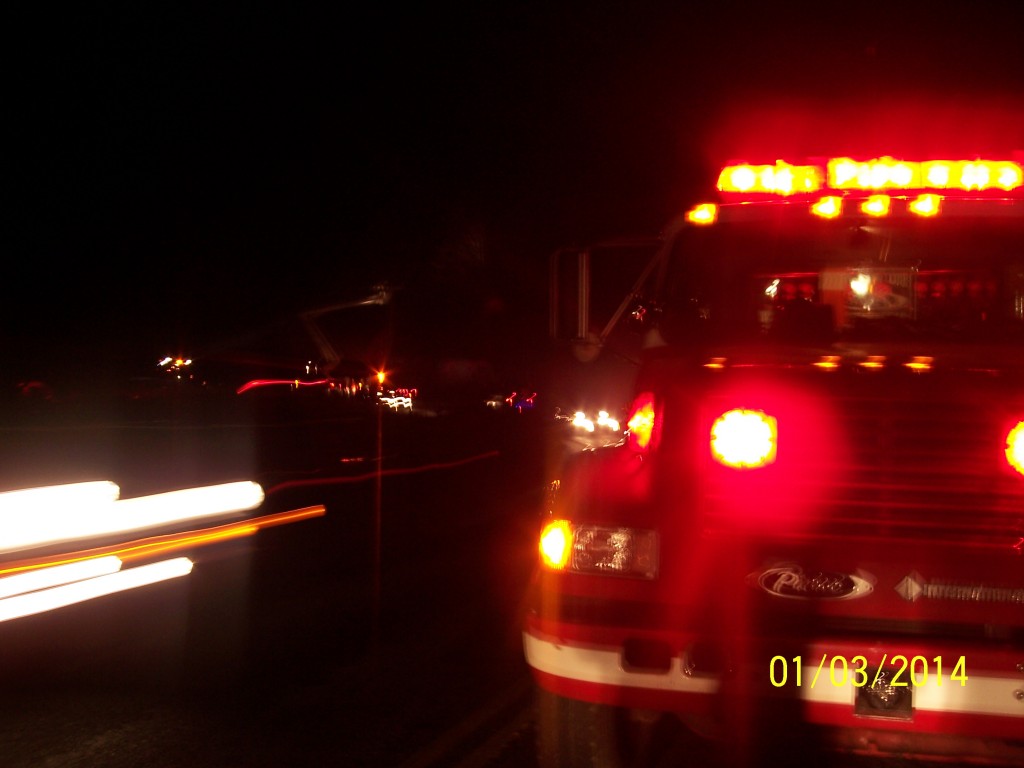
Power Outage: Youth Airlifted to Harborview Trauma Center

Dist. 9 Fire Truck

Dist. 9 Fire Truck

Mason County, WA. 1/3/14 — Skokomish Valley residents were without power for several hours Friday night due to a collision involving a 17 year old driver shearing off a transmission pole near the Vance Creek bridge while traveling east on a dark frigid evening down the valley’s county road. The high voltage lines (7,200 volts) lying on the frozen roadbed prevented ingress and egress, blocking traffic for at least a couple of hours while utility crews cleared the wreckage and erected a new transmission pole to restore power for residents.

The medical condition of the youth, who was airlifted to Harborview Trauma center in Seattle, is not presently known and first responders were hesitant to provide names pending notification of next of kin. The single vehicle accident occurred on a road bend notorious for its treacherous black ice during cold snaps due to it remaining in the shade throughout the day. It is a potential death trap for the unwary.

Posted in Uncategorized | Leave a comment

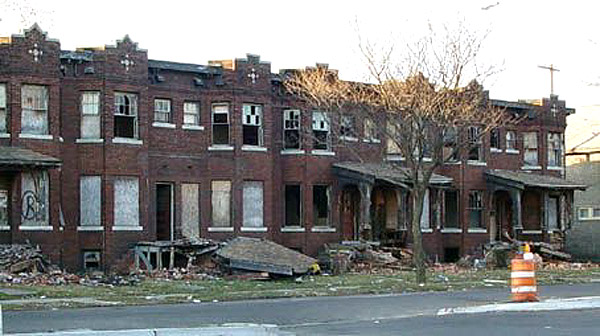
Tourists Flock to Detroit’s Post Apocalyptic Blight

by Alana Semuels

Detroit has seen an uptick in history buffs and photographers visiting its ruins since its bankruptcy filing.

DETROIT — He’d heard stories of ruin and blight, but that didn’t prepare Oliver Kearney for what he saw:

Prostitutes roaming the streets at 8 a.m., rubble-strewn parking lots overrun with weeds, buildings taken over by bright pink graffiti, the message scrawled on blackboards in deserted schools: “I will not write in vacant buildings.”

He took 2,000 photographs his first day.

“No other American city has seen decline on this scale,” Kearney said. “It’s really a once-in-a-lifetime thing you’re going to see.”

And he saw it all on a tour.

Kearney, an 18-year-old aspiring architect, persuaded his father to travel with him from Britain to Detroit to participate in one of the city’s few burgeoning industries: tours of abandoned factories, churches and schools.

Led by tour guide Jesse Welter, they crawled on their hands and knees to peek inside a train station closed long ago; they squeezed through a gap in a fence to climb the stairs of what was once a luxury high-rise; they ducked under crumbling doorways to see a forgotten ballroom where the Who held its first U.S. concert.

“In Detroit, you can relate, you can see traces of what’s happened, you can really feel the history of a city,” Kearney said. “In Europe, when things become derelict, they’ll demolish them.”

That’s not possible here. The city estimates it has 78,000 vacant structures, and demolishing each derelict residential building costs $8,000 — money the bankrupt city can’t afford.

The city says that 85% of its 142.9 square miles had “experienced population decline” over the last decade, and efforts to persuade investors to buy commercial buildings and rehabilitate them have been mixed, at best. For example, plans to turn the Michigan Central Depot, a once-grand train station, into a casino and then into police headquarters have gone nowhere, and it’s stood empty since 1988.

Photographers have flocked to the city to capture the decline; two French photographers even produced a book, “The Ruins of Detroit.” But since the city declared bankruptcy in July, hotels say they’ve seen an uptick in visitors inquiring about the ruins. So have restaurants in the up-and-coming district of Corktown, near the abandoned train station.

Welter says he had to buy a 12-seat van to accommodate the growing interest.

Welter once worked as an aircraft mechanic and then an ATM repairman. He dabbled in photography and began venturing into the city from his home in the suburb of Royal Oak, taking pictures of derelict buildings and selling the shots at an artists market.

The photos, though grim, brought back sweet memories: Viewers would remember passing through the train station in its glory, or recall photographs of their grandparents honeymooning at a posh hotel, depicted in Welter’s photos as a decaying tower.


Welter, 42, figured that if other people were interested in seeing the buildings, he could guide them around and, perhaps more important, keep them safe. In October, two tourists were carjacked while visiting an abandoned factory; others have been assaulted there.

Welter guided his first tour in late 2011, but the business has really picked up this year. His clients pay $45 for a three-hour tour and explore some of Detroit’s most famously blighted structures: the Packard Automotive Plant, the train station and the East Grand Boulevard Methodist Church, which features peeling paint and vast balconies.

Welter, who is bearded and slim, knows how to sneak into buildings closed to the public. He knows which neighborhoods are plagued by packs of feral dogs, and which ramshackle building contains a recording studio with equipment still set up as if its occupants just left for lunch. He knows the churches so well that he helped a young couple find an abandoned one in which to conduct their wedding.

It’s not legal, per se, to enter these buildings. Police will give $225 tickets for trespassing if people enter schools, Welter says, but have otherwise told him they don’t mind him going into other buildings.

On a recent weekday morning, he brought a visitor to one of his favorite spots, St. Agnes Catholic Church, a rotting structure where graffiti vandals have made their mark. A beam of sunlight shone through the windows, falling on the one remaining pew in the church, a haunting image that illuminated the church’s destruction. Then Welter heard a motor idling outside and quickly ushered his guest toward the exit.

“Someone’s pulling up out there; let’s start walking this way,” he said, moving toward the crumbling staircase that leads to the church’s courtyard, which was littered with soda cans and food wrappers.

He’s not afraid of the authorities — they’re in short supply in this cash-strapped city — but of scavengers, vagrants and others who might take advantage of someone with an expensive camera. That’s why he usually begins his tours at 7 a.m., the best time to avoid other humans, he says.

Next, he headed into a girls’ school attached to the church, climbing the stairs to a hall of classrooms where rubble was everywhere, as if a bomb had gone off. Some books and magazines dated to 1962 and told outdated stories of boys living on the prairie. A bird’s nest sat in one of the large windows where a pane used to be.

Locals use a derogatory term, “ruin porn,” to describe the phenomenon of people gawking at the decay. They want visitors to see the positive parts of Detroit, such as the vacant fields that enterprising farmers have turned into urban gardens. If tourists are going to look at the ruins, they should then volunteer in the community, many Detroiters say.

“The decay is not cool, not arty-farty,” Jean Vortkamp, a community activist and onetime mayoral candidate, said in an email. “I see the lady with bags and three layers of clothes on, and then I see a group of white young people climb out of their dad’s cars with cameras that are worth so much.”

Some Detroiters, including a group of urban explorers, have a beef with Welter in particular. They scrawled a message on the walls of the St. Agnes Church, “Go Home Jesse … We HATE you and your tour bus.”

Welter says he’s opening visitors’ eyes to the problems of Detroit, which could potentially drum up political will to help the city.

“People are going to do this anyway. Why not do it in a way that’s going to be safer, easier for everyone?” he said.

Jason Schlosberg went on a tour with Welter when he was visiting Detroit on a business trip. Schlosberg, a lawyer and photographer from Washington, D.C., said he had long looked forward to exploring the “mecca” of run-down buildings that is Detroit.

But his experience touring crumbling ballrooms and onetime high-end residences caused him to think long and hard about what lessons Detroit can teach the rest of the country.

“It makes you question your mortality as a species. We try to make our mark on the planet by building these concrete and brick structures, but Rome obviously fell,” he said. “What is Manhattan going to look like in 300 years? Is it still going to be a bustling metropolis?”

Whether Detroit will seek to capitalize on the tourists, or stop them, is unclear. The office of Kevyn Orr, the state-appointed emergency manager of the city, declined to comment for this story. Another city full of ruins, Gary, Ind., has taken advantage of the photographers flocking to its abandoned buildings. It charges $50 for a photography permit.

Posted in Uncategorized | 1 Comment