Shelton Thief Robs Church, Downtown Businesses

Sometime in the wee hours of Thursday, 11-15-12 between 11:30 pm – 3:30 am, a burglar broke into Shelton’s Ming Tree Restaurant and Todd’s Shoe repair on Railroad Ave. The downtown Baptist Church on Cota was also hit. An array of quality wool socks and an undisclosed amount of minor cash was stolen from Todd’s. Police believe the burglar may have used the cover of construction renovation to hide from the view of passing motorists.

Judging from the nature of items stolen, the thief may be homeless and exposed to the elements. The door lock from Todd’s was removed and is missing. Anyone with information regarding the break-ins may contact the Shelton Police Dept. The vandals who broke into and destroyed a number of downtown Post Office boxes in its lobby some months ago late one night have yet to be apprehended.

Has the City of Shelton crime rate grown to the point the town now requires municipal surveillance cameras?

The identity theft burglary of a single retired woman’s downtown home while she was on vacation for the holiday weekend reported a couple of months ago remains unsolved despite her bank account being tapped as a result and the mail associated with the fraud being delivered to a large mail box located adjacent to a homeless encampment on E. Deagan Rd. near Hwy 101.

Pat Carpenter is a long time Shelton resident recovering from knee surgery whose home @ 130 W. Pine St. was burglarized when she was gone celebrating the labor day weekend. The window to her home was pried open and her jewelry was stolen. The thief also stole her identity documents which led to the loss of $3,000 from her Shelton Bank of America account.
Posted in Uncategorized | Leave a comment

Logical Fallacies: What to Watch for

Don’t commit logical fallacies. Learn to spot them.

Logical Fallacy Chart

A logical fallacy is a flaw in reasoning. Strong arguments are void of logical fallacies, whilst arguments that are weak tend to use logical fallacies to appear stronger than they are. They’re like tricks or illusions of thought, and they’re often very sneakily used by politicians, the media, and others to fool people. Don’t be fooled! The following index has been designed to help you identify and call out dodgy logic wherever it may raise its ugly, incoherent head.

Strawman: Misrepresenting someone’s argument to make it easier to attack.

By exaggerating, misrepresenting, or just completely fabricating someone’s argument, it’s much easier to present your own position as being reasonable or valid. This kind of dishonesty not only undermines rational discourse, it also harms one’s own position because it brings your credibility into question – if you’re willing to misrepresent your opponent’s argument in the negative, might you also be willing to exaggerate your own in the positive?

Example: After Will said that we should put more money into health and education, Warren responded by saying that he was surprised that Will hates our country so much that he wants to leave it defenseless by cutting military spending.

False Cause: Presuming that a real or perceived relationship between things means that one is the cause of the other.

One such mistake in thinking is the ‘cum hoc ergo propter hoc’ (with this, therefore because of this) fallacy in which someone presumes that because things are happening together that one thing is therefore the cause of the other. The mistake lies in ignoring the possibility that there may be a common cause to both things happening, or, as per the example below, that the two things in question have no causal relationship at all, and their apparent connection is just a coincidence. Another common variation is the ‘post hoc ergo propter hoc’ (after this, therefore because of this) fallacy in which a causal connection is assumed because one thing happens prior to another thing happening, therefore the second thing must be caused by the first thing.

Example: Pointing to a fancy chart, Roger shows how temperatures have been rising over the past few centuries, whilst at the same time the numbers of pirates have been decreasing; thus pirates cool the world and global warming is a hoax.

Appeal to Emotion: Manipulating an emotional response in place of a valid or compelling argument.

Appeals to emotion include appeals to fear, envy, hatred, pity, pride, and more. It’s important to note that sometimes a logically coherent argument may inspire emotion or have an emotional aspect, but the problem and fallacy occurs when emotion is used instead of a logical argument, or to obscure the fact that no compelling rational reason exists for one’s position. Everyone, bar sociopaths, is affected by emotion, and so appeals to emotion are a very common and effective argument tactic, but they’re ultimately flawed, dishonest, and tend to make one’s opponents justifiably emotional.

Example: Luke didn’t want to eat his sheep’s brains with chopped liver and brussel sprouts, but his father told him to think about the poor, starving children in a third world country who weren’t fortunate enough to have any food at all.

The Fallacy Fallacy: Presuming that because a claim has been poorly argued, or a fallacy has been made, that it is necessarily wrong.

There are few things more frustrating than watching someone poorly argue a position one holds. Much of the time a debate is won not because the victor is right, but because s/he is better at debating than their opponent. If we’re to be honest and rational, we must be mindful that just because someone made a mistake in their defence of an argument, it doesn’t necessarily follow that the argument itself is wrong.

Example: Recognizing that Amanda had committed a fallacy in arguing that we should eat healthy food because it was popular, Alyse resolved to eat bacon double cheeseburgers every day.

Slippery Slope:  Asserting that if we allow A to happen, then Z will consequently happen too, therefore A should not happen.

The problem with this reasoning is that it avoids engaging with the issue at hand, and instead shifts attention to extreme hypotheticals. Because no proof is presented to show that such extreme hypotheticals will in fact occur, this fallacy has the form of an appeal to emotion fallacy by leveraging fear. In effect the argument at hand is unfairly tainted by unsubstantiated conjecture.

Example: Colin Closet asserts that if we allow same-sex couples to marry, then the next thing we know we’ll be allowing people to marry their parents, their cars and even monkeys.

Ad Hominem:  Attacking your opponent’s character or personal traits instead of engaging with their argument.

Ad hominem attacks can take the form of overtly attacking somebody, or more subtly casting doubt on their character or personal attributes. The desired result of an ad hom attack is to undermine one’s opponent without actually having to engage with their argument or present a compelling argument of one’s own.

Example: After Sally presents an eloquent and compelling case for a more equitable taxation system, Sam asks the audience whether we should believe anything from a woman who isn’t married, was once arrested, and smells a bit weird.

Tu Quoque:  Avoiding having to engage with criticism by turning it back on the accuser — Answering criticism with criticism.

Pronounced too-kwo-kee. Literally translating as ‘you too’ this fallacy is commonly employed as an effective red herring because it takes the heat off the accused having to defend themselves and shifts the focus back onto the accuser themselves. The implication is that if one’s opponent also does the thing that they are accused of, then their opponent is a hypocrite. Irrespective of whether this might be true or not, the problem lies in the fact that it is effectively a tactic to avoid recognising and responding to the criticism of one’s argument – by turning it back on the accuser, the accused doesn’t need to answer the accusation.

Example: Nicole identified that Hannah had committed a logical fallacy, but instead of addressing the substance of her claim, Hannah accused Nicole of committing a fallacy earlier on in the conversation.

Personal Incredulity:  Saying that because one finds something difficult to understand that it’s therefore not true.

Because you found something difficult to understand, or are unaware of how it works, you made out like it’s probably not true.

Complex subjects like biological evolution through natural selection require some amount of understanding of how they work before one is able to properly grasp them; this fallacy is usually used in place of that understanding.

Example: Kirk drew a picture of a fish and a human and with effusive disdain asked Richard if he really thought we were stupid enough to believe that a fish somehow turned into a human through just, like, random things happening over time.

Special Pleading:  Moving the goalposts or making up exceptions when a claim is shown to be false.

Humans are funny creatures and have a foolish aversion to being wrong. Rather than appreciate the benefits of being able to change one’s mind through better understanding, many will invent ways to cling to old beliefs. One of the most common ways that people do this is to post-rationalize a reason why what they thought to be true must remain to be true. It’s usually very easy to find a reason to believe something that suits us, and it requires integrity and genuine honesty with oneself to examine one’s own beliefs and motivations without falling into the trap of justifying our existing ways of seeing ourselves and the world around us.

Example: Edward Johns claimed to be psychic, but when his ‘abilities’ were tested under proper scientific conditions, they magically disappeared. Edward explained this saying that one had to have faith in his abilities for them to work.

Loaded Question:  Asking a question that has a presumption built into it so that it can’t be answered without appearing guilty.

Loaded question fallacies are particularly effective at derailing rational debates because of their inflammatory nature – the recipient of the loaded question is compelled to defend themselves and may appear flustered or on the back foot. Not only is this fallacy a kind of appeal to emotion, it also insidiously frames the argument in a misleading way, like a pre-emptive strawman fallacy.

Example: Grace and Helen were both romantically interested in Brad. One day, with Brad sitting within earshot, Grace asked in an inquisitive tone whether Helen was having any problems with a drug habit.

Burden of Proof:  Saying the burden of proof lies not with the one making the claim, but with someone else to disprove.

The burden of proof lies with someone who is making a claim, and is not upon anyone else to disprove. The inability, or disinclination, to disprove a claim does not render that claim valid, nor give it any credence whatsoever. However it is important to note that we can never be certain of anything, and so we must assign value to any claim based on the available evidence, and to dismiss something on the basis that it hasn’t been proven beyond all doubt is also fallacious reasoning.

Example: Bertrand declares that a teapot is, at this very moment, in orbit around the Sun between the Earth and Mars, and that because no one can prove him wrong, his claim is therefore a valid one.

Ambiguity:  Using double meaning or ambiguities of language to mislead or misrepresent the truth.

Politicians are often guilty of using ambiguity to mislead and will later point to how they were technically not outright lying if they come under scrutiny. The reason that it qualifies as a fallacy is that it is intrinsically misleading.

Example: When the judge asked the defendant why he hadn’t paid his parking fines, he said that he shouldn’t have to pay them because the sign said ‘Fine for parking here’ and so he naturally presumed that it would be fine to park there.

The Gambler’s Fallacy:  Believing that ‘runs’ occur in statistically independent phenomena such as roulette wheel spins or dice.

This commonly believed fallacy can be fairly said to have created an entire city in the desert of Nevada USA. Though the overall odds of a ‘big run’ happening may be low, each spin of the wheel is itself entirely independent from the last. So whilst there may be a very small chance that heads will come up 20 times in a row if you flip a coin, the chances of heads coming up on each individual flip remain 50/50, and aren’t influenced by what happened before.

Example: Red had come up six times in a row on the roulette wheel, so Greg knew that it was close to certain that black would be next up. Suffering an economic form of natural selection with this thinking, he soon lost all of his savings.

Bandwagon:  Appealing to popularity or the fact that many people do something as an attempted form of validation.

The flaw in this argument is that the popularity of an idea has absolutely no bearing on its validity.

If it did, then the Earth would have made itself flat for most of history to accommodate people’s popular belief.

Example: Shamus pointed a drunken finger at Sean and asked him to explain how so many people could believe in leprechauns if they’re only a silly old superstition. Sean, however, had had a few too many Guinness himself and fell off his chair.

Appeal to Authority:  Using the opinion or position of an authority figure, or institution of authority, in place of an actual argument.

It is important to note with this fallacy that authorities in given fields may very well have valid arguments, and that one should not dismiss another’s experience and expertise. To form an argument, however, one must defend it on its merits i.e. know why the person in authority holds the particular position that they do. It is, of course, entirely possible that the opinion of a person or institution of authority is wrong; therefore the authority that such a person or institution holds does not have any intrinsic bearing upon whether their claims are true or not.

Example: Not able to defend his position that evolution ‘isn’t true’ Bob says that he knows a scientist who also questions evolution (and presumably isn’t a primate).

Composition/Division:  Assuming that what’s true about one part of something has to applied to all, or other parts of it.

Often when something is true for the part it does also apply to the whole, or vice versa, but the crucial difference is whether there exists good evidence to show that this is the case. Because we observe consistencies in things, our thinking can become biased so that we presume consistency to exist where it does not.

Example: Daniel was a precocious child and had a liking for logic. He reasoned that atoms are invisible, and that he was made of atoms and therefore invisible too. Unfortunately, despite his thinky skills, he lost the game of hide and go seek.

No True Scotsman:  Making what could be called an appeal to purity as a way to dismiss relevant criticisms or flaws in an argument.

In this form of faulty reasoning one’s belief is rendered unfalsifiable because no matter how compelling the evidence is, one simply shifts the goalposts so that it wouldn’t apply to a supposedly ‘true’ example. This kind of post-rationalization is a way of avoiding valid criticisms of one’s argument.

Example: Angus declares that Scotsmen do not put sugar on their porridge, to which Lachlan points out that he is a Scotsman and puts sugar on his porridge. Furious, like a true Scot, Angus yells that no true Scotsman sugars his porridge.

Genetic:  Judging something bad or good on the basis of where it comes from, or from whom it comes?

This fallacy avoids the argument by shifting focus onto something’s or someone’s origins. It’s similar to an ad hominem fallacy in that it leverages existing negative perceptions to make someone’s argument look bad, without actually presenting a case for why the argument itself lacks merit.

Example: Accused on the 6 o’clock news of corruption and taking bribes, the senator said that we should all be very wary of the things we hear in the media, because we all know how very unreliable the media can be.

Black or White:  Where two alternative states are presented as the only possibilities, when in fact more possibilities exist.

Also known as the false dilemma, this insidious tactic has the appearance of forming a logical argument, but under closer scrutiny it becomes evident that there are more possibilities than the either/or choice that is presented. Binary, black-or-white thinking doesn’t allow for the many different variables, conditions, and contexts in which there would exist more than just the two possibilities put forth. It frames the argument misleadingly and obscures rational, honest debate.

Example: Whilst rallying support for his plan to fundamentally undermine citizens’ rights, the Supreme Leader told the people they were either on his side, or they were on the side of the enemy.

Begging the Question:  A circular argument in which the conclusion is included in the premise.

This logically incoherent argument often arises in situations where people have an assumption that is very ingrained, and therefore taken in their minds as a given. Circular reasoning is bad mostly because it’s not very good.

Example: The word of Zorbo the Great is flawless and perfect. We know this because it says so in The Great and Infallible Book of Zorbo’s Best and Most Truest Things that are Definitely True and Should Not Ever Be Questioned.

Appeal to Nature:  Making the argument that because something is ‘natural’ it is therefore valid, justified, inevitable, or better.

Just because something is natural does not mean that it’s good. For instance murder is very natural, but most of us agree that we don’t think it’s a very good thing to be doing, nor does its ‘naturalness’ constitute any kind of justification for it.

Example: The medicine man rolled into town on his bandwagon offering various natural remedies, such as very special plain water. He said that it was only natural that people should be wary of ‘artificial’ medicines such as antibiotics.

Anectodal:  Using personal experience or an isolated example instead of a valid argument, especially to dismiss statistics.

It’s often much easier for people to believe someone’s testimony as opposed to understanding complex data and variation across a continuum. Quantitative scientific measures are almost always more accurate than personal perceptions and experiences, but our inclination is to believe that which is tangible to us, and/or the word of someone we trust over a more ‘abstract’ statistical reality.

Example: Jason said that that was all cool and everything, but his grandfather smoked, like, 30 cigarettes a day and lived until 97 – so don’t believe everything you read about meta analyses of methodologically sound studies showing proven causal relationships.

Texas Sharp Shooter:  Cherry picking data clusters to suit an argument, or finding a pattern to fit a presumption.

This ‘false cause’ fallacy is coined after a marksman shooting randomly at barns and then painting bullseye targets around the spot where the most bullet holes appear, making it appear as if he’s a really good shot. Clusters naturally appear by chance, but don’t necessarily indicate that there is a causal relationship.

Example: The makers of Sugarette Candy Drinks point to research showing that of the five countries where Sugarette drinks sell the most units, three of them are in the top ten healthiest countries on Earth, therefore Sugarette drinks are healthy.

Middle Ground:  Saying that a compromise or middle ground between two extremes is the truth.

Much of the time the truth does indeed lie between two extreme points, but this can bias our thinking: sometimes a thing is simply untrue and a compromise of it is also untrue. Half way between truth and a lie, is still a lie.

Example: Holly said that vaccinations caused autism in children, but her scientifically well-read friend Caleb said that this claim had been debunked and proven false. Their friend Alice offered a compromise that maybe vaccinations cause some autism, just not all autism.

Posted in Uncategorized | 1 Comment

(A)LF’s Case: Mercy vs. Auschwitz

What the Corporate Meat & Dairy Industry Doesn’t Want You to See

**WARNING: The video included in the following article contains shocking graphic cruelty and violence. Viewer discretion is advised and parents may want to prevent their children from viewing it.

ALF is the accepted acronym for Animal Liberation Front, a radical underground movement opposed to animal cruelty, slaughter, and exploitation. The illegal actions against the industry responsible for these abuses has been controversial and given rise to laws in a few state jurisdictions criminalizing the covert filming of animal cruelty as documented in the video below.

ELF (Earth Liberation Front), ALF, and (A)narchists consider themselves ‘affinity’ groups–meaning they tend to like each other or the cause each represents. Ironically, the Pacific NW (A)narchists spearheading the protests against the federal Grand Jury inquiries/subpoenas into the Seattle May Day street violence have issued ‘fatwas’ against photojournalists who video record/photograph these events (including rallies/vigils) in public venues. Yet, the same elements would be the first to applaud the publishing of police/state violence/abuse or cruelty to animals. In the same breath, they’ll argue (sometimes violently) they’re entitled to prevent their photos from being taken. It’s a given the police and abattoirs don’t either. Each conveniently ignores those guarantees enshrined in the 1st Amendment.

The following video displays ample reason why investigatory photojournalists must be protected:

ALL CREATURES, GREAT & SMALL

“Journalism is the printing of what someone doesn’t want published. Everything else is Public Relations.” -George Orwell-

Gary Yourofsky Argues Animal Rights

Posted in Uncategorized | 5 Comments

The Man Who Saved the World

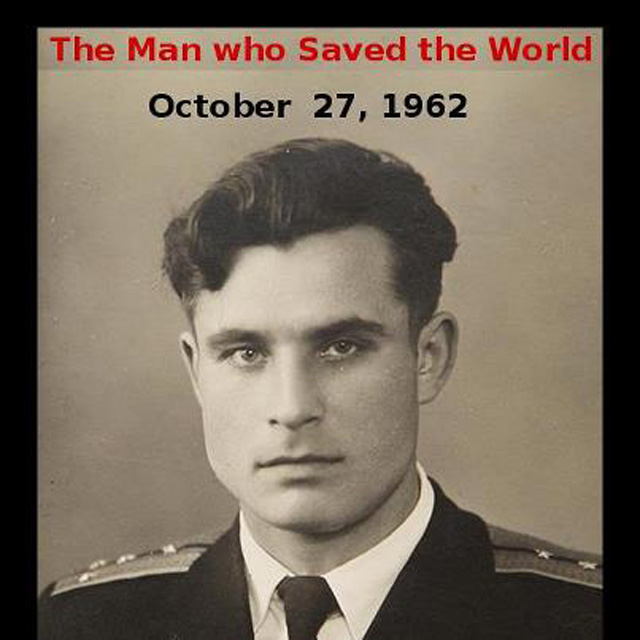
The Jewish faith holds that he who saves one man saves the entire world. But Vasilli Arkhipov was one man who, by saving the entire world, saved each and every one of us.

Vasilli Alexandrovich Arkhipov 1926-1998

50 years ago today, at the height of the Cuban Missile Crisis, second-in-command Vasilli Arkhipov of the Soviet submarine B-59 refused to agree with his Captain’s order to launch nuclear torpedos against US warships and setting off what might well have been a terminal superpower nuclear war.

The US had been dropping depth charges near the submarine in an attempt to force it to surface, unaware  it was carrying nuclear arms. The Soviet officers, who had lost radio contact with Moscow, concluded that World War 3 had begun, and 2 of the officers agreed to ‘blast the warships out of the water’. Arkhipov refused to agree – unanimous consent of 3 officers was required – and thanks to him, we are here to talk about it.

Thomas Blanton (then director of the National Security Archive) said in 2002 that “a guy called Vasili Arkhipov saved the world.”

K19 accident

In July 1961. Arkhipov was appointed deputy commander or executive officer of the new Hotel-class ballistic missile submarine K-19. During its nuclear accident, he backed Captain Nikolai Vladimirovich Zateyev during the potential mutiny. While assisting with engineering work to deal with the overheating reactor, he was exposed to a harmful level of radiation. This incident is depicted in the American film K-19: The Widowmaker.

Involvement in Cuban Missile Crisis

On October 27, 1962, during the Cuban Missile Crisis, a group of eleven United States Navy destroyers and the aircraft carrier USS Randolph located the diesel-powered nuclear-armed Soviet Foxtrot-class submarine B-59 near Cuba. Despite being in international waters the Americans started dropping practice depth charges, explosives intended to force the submarine to come to the surface for identification. There had been no contact from Moscow for a number of days and, although the submarine’s crew had earlier been picking up U.S. civilian radio broadcasts, once B-59 began attempting to hide from its U.S. Navy pursuers, it was too deep to monitor any radio traffic, so those on board did not know whether war had broken out. The captain of the submarine, Valentin Grigorievitch Savitsky, believing that a war might already have started, wanted to launch a nuclear-tipped torpedo.

Three officers on board the submarine – Savitsky, the political officer Ivan Semonovich Maslennikov, and the second-in-command Arkhipov – were authorized to launch the torpedo if agreeing unanimously in favor of doing so. An argument broke out among the three, in which only Arkhipov was against the launch. Although Arkhipov was only second-in-command of submarine B-59, he was actually Commander of the flotilla of submarines including B-4, B-36, and B-130, and of equal rank to Captain Savitsky. According to author Edward Wilson, the reputation Arkhipov gained from his courageous conduct in the previous year’s K19 incident also helped him prevail in the debate.  Arkhipov eventually persuaded Savitsky to surface the submarine and await orders from Moscow. This presumably averted the nuclear warfare which could possibly have ensued had the torpedo been fired. The submarine’s batteries had run very low and the air-conditioning had failed, so it was forced to surface amidst its U.S. pursuers and head home. Washington’s message that practice depth charges were being used to signal the submarines to surface never reached B-59, and Moscow claims it has no record of receiving it either.

Aftermath

When discussing the Cuban missile crisis in 2002, Robert McNamara stated that we came “very close” to nuclear war, “closer than we knew at the time.”

In Aleksandr Mozgovoy‘s 2002 book, Kubinskaya Samba Kvarteta Fokstrotov (Cuban Samba of the Foxtrot Quartet), retired Commander Vadim Pavlovich Orlov, a participant in the events, presents them less dramatically, saying that Captain Savitsky had merely lost his temper, but eventually calmed down.

Later life

Arkhipov continued in Soviet Navy service, commanding submarines and later submarine squadrons. He was promoted to rear admiral in 1975 and became head of the Kirov Naval Academy. He was promoted to vice admiral in 1981 and retired in the mid 1980s. He subsequently settled in Zheleznodorozhny, Moscow Oblast, where he died on 19 August 1998.

Vice Admiral Vasili Alexandrovich Arkhipov, Jan. 30, 1926 – Aug. 19, 1998

Posted in Uncategorized | Leave a comment

(A) Different Kind of (A)narchy

Wayne Mellinger: Anarchy in the USA

anon – Thu, 2012-11-08 18:24
From Nooz Hawk – The only time we hear of anarchists in the popular press is when they have committed acts of violence and destruction. Hence, to many people the word “anarchist” means “bomb-throwing kook” or “terrorist.”The media present a disparaging stereotype of anarchists as black-clad youth with masks over their unshaven faces, fists raised in the air, typically behaving poorly and probably getting ready to smash some bank’s window. Historical research reveals this cultural representation has roots in the 19th century. Moreover, anarchy has come to denote the dog-eat-dog chaos that emerges when the State’s forces of social control are absent. “Anarchy” in popular media culture is typically violent street crowds getting away with murder and other forms of destructive lawlessness. So pervasive are these connotations that most would not associate anarchism with any utopian image of a future society that is just, equal and peaceful at all.

Recently, several major newspapers have reported the detention of three “self-described anarchists” in a federal facility near the Seattle-Tacoma International Airport. The three have refused to testify before a grand jury and are suspected of damaging a federal appeals courthouse during the May Day protests in Seattle (Los Angeles Times, Oct.19). [This is inaccurate. Leah has since been released after, possibly, cooperating with the Grand Jury. ALL were granted immunity from prosecution in order to strip them of their 5th Amendment rights before being imprisoned for contempt…i.e. silence…something the state typically refuses to do for suspects/participants in a crime.]

Given our media portrayals of anarchists, one might never suspect that the most frequently cited living scholar in the world is Noam Chomsky, a noted MIT linguist, respected anarchist thinker and tireless social justice activist.

So what is anarchism, and what do anarchists believe?

Anarchism as a term means “no state” or “no rulers,” and anarchists are generally against all organized governments and the power that they have over us. Anarchism is a vision of a future without domination, a critique of hierarchical forms of social organization, and a mode of praxis guiding us on how we are to move forward in the present moment.

Anarchism provides a critique of all forms of domination. While classical Marxism provided many leftist political thinkers with much insight into the machinations of capitalism and class domination, from an anarchist perspective Marxism bought into an acceptance of the ability of the State to serve the needs of a populace.

Moreover, considering the issues of gender inequality, racism, ecological ruin, homophobia, etc., has led many contemporary activists and philosophers to think that, rather than attempting to salvage Marxism, we need a theoretical approach inherently concerned with all forms of oppression.

Anarchism, I believe, can allow us to examine all aspects of modernity, including many that are ignored by other strands of critical social theory. Anarchism questions the very premises of modernity, including our notions of progress, rationality, civilization, democracy, freedom and justice.

Anarchism is not merely a critique of domination in modern society. It provides a vision of what human beings are capable of becoming, how we might organize our lives and how our potential is squashed by hierarchical social relationships. Anarchism is a vision of a social world in which each person actively participates directly in the decisions that affect their own everyday lives. It is a vision of society without authority.

Seven key ideas of anarchism include:

» 1. mutual aid — voluntary reciprocal cooperation for mutual benefit;

» 2. anti-hierarchy — opposed to any system of stratification in which one group has power over another;

» 3. libertarian — individual liberty, especially freedom of expression and action, is upheld;

» 4. decentralization — power is dispersed among the populace;

» 5. consensus decision-making — a method of group decision-making that seeks consent, not necessarily agreement on laws and policies;

» 6. rejection of the idea that the ends justify the means;

» 7. direct action —  when a group of people take an action which is intended to reveal an existing problem.

Of course, there are many different definitions of these terms and many different varieties of anarchism, and not all would agree with my listing above. We live in times in which there are healthy debates in a lively anarchist political movement.

Anarchist modes of praxis involve “walking the talk.” This means that we cannot achieve liberating and non-hierarchical goals through oppressive and non-consensual forms of organizing. Anarchists, unlike some other radical perspectives, do not simply hope to grab power and force their way of doing things on others.

Anarchism provides a way to move forward through voluntary association, consensus decision-making, decentralized and non-hierarchal organization. “How we get there” is very important! Moreover, there is a carnivalesque, Dionysian and celebratory aspect to much of the contemporary anarchist social movement, in which politics is often infused with performance, poetry and parade.

By all standard indicators of a healthy country, the United States has fallen behind other industrialized nations. To many of us, it is clear that we are on the wrong path. The attempted reforms of the past 30 years have largely been offset by exacerbations in other social ills.

We need a new operating system — a new political economy built upon sustainability, fairness and justice. To me, anarchists are people who have given up on reform and are committed to major transformations in how things work. They have lost faith in the current system and in our ability to salvage it. Anarchists want a New American Dream, one built on social justice, economic democracy and environmental sustainability. Rather than vilifying them, I think we should thank them.

The next time you read or hear about anarchists in the popular media, know that many of these folks are peaceful, progressive activists working hard to bring about a more just social world and that most of them are largely law-abiding. And many of us are pacifists.

— Wayne Mellinger, Ph.D., is a board member of Clergy and Laity United for Economic Justice and is an active advocate for all those who suffer on the streets. He holds a certificate in alcohol and drug counseling from Santa Barbara City College.

Response:

Perhaps (A)narchists spend

anon – Fri, 2012-11-09 07:51

Perhaps (A)narchists spend too much time on whether the body politic acknowledges them and should focus on constructing a working community, no matter how insular?

This would involve some paradigm resolving how to live within a repressive society without becoming a part of it–living in a state of ‘grace’ something like the hill people in many nations do by utilizing elevation as their shield. Perhaps a combination of mountainous public lands, abandoned urban structures, and homeless encampments could become the matrix for such a coalition of the willing?

Altering the assumptions of the unenlightened is a hard slog. Best to teach by example rather than rhetoric. Plus, implementation, no matter how minuscule, has the advantage of simultaneously loosening the clutches of and starving the beast. After all, didn’t the Soviet Union collapse (at least in part) by what its denizens perceived (no matter how falsely) the benefits of capitalism to be? Example/Perception can be infinitely more powerful than rhetoric.

  • amicuscuria.com/wordpress
Ah, but that’s not to say all (A)narchists are enlightened either. Some of the very folks who demand their rights to associate/organize/deliberate/communicate be respected are the 1st to deny the rights of others to speak out, remain safe, own private property, etc. Moreover, they decry the existence of the state but are the 1st to use it through the auspices of state salaried college professors (e.g. @ TESC) to plot criminal ‘direct action’ such as smashing car/business windows, physically assaulting journalists, and promoting theft, robbery, and criminal conspiracies at state owned/funded institutions of higher learning such as TESC. 
.
While academic freedom is respected by the State, they use this as a shield to plot criminal acts. They (in theory) deplore force but effectively use tax dollars wrested from citizens by state force to plot more force/assaults/property destruction. Is this a great country, or what? The following excerpts from anarchistnews.org comments makes the point:

SDS are the type of people

anon – Fri, 2012-11-09 13:01

SDS are the type of people that will make fun of anarchists for not voting (an anarchist or anti-state individual will be referred to as “purist” for advocating a really basic idea of Anarchy or anti-state ideas.)

» 

Again it’s different on each

anon – Fri, 2012-11-09 16:35

Again it’s different on each campus. One of the SDS coordinators at evergreen wrote a piece in the campus paper about how voting is bullshit, but seriously you only know what you’ve read online and in practice the current SDS community in Oly are basically a bunch of Anarchists using an institution to get radical events funded and scheduled. Yeah SDS as a whole is shit and is way less radical then it was, but not every chapter is a bunch of reactionaries. Fuck off.
“We will not sit quietly while the state kidnaps our comrades and close friends and locks them in cages. Now is not the time for silence and isolation. Solidarity means Attack!”-SDS evergreen

» 

Why do you feel the need to

anon – Fri, 2012-11-09 16:38

Why do you feel the need to prove something (in writing) to a random @news commenter about this on an article about the grand jury investigation?

If folx are trying to do rad work under the radar, ZIP IT AND LET THEM

» 

seriously shut the fuck up

anon – Fri, 2012-11-09 16:43

seriously shut the fuck up people and do not feed these stupid commenters. you know what’s up and I bet you didn’t learn it on an @news comment. use your fucking head. keep it on the DL. stay fucking shifty.

» 

this is the problem of the

anon – Fri, 2012-11-09 18:49

this is the problem of the milieu and its stupid cult of virility. everyone wants to prove how anarchist they are, reaffirm their anarchist identity. people who got something to prove are fucking suspect.

And (in the ‘325 #10 – Out now!’ post) even more pointedly, from the same source:

 In these moments of chaos

anon – Fri, 2012-11-09 13:29

In these moments of
chaos it’s also possible to seize
resources for ourselves through
break-ins and armed robberies with
greater chances of success and it’s
possible to hit targets of particular
significance to us.

–favorite line ever ever ever 4 eva

go pack

This is one, of many, reasons these boards censor those with different more rational viewpoints or openly criticize their narrative. It also helps explain why federal authorities have labeled them (without sufficiently distinguishing differences under the covers) ‘domestic terrorists’ and ‘criminals’ using politics as a pretext/excuse.

Yes, some of the most violent underground elements are using State funded college campuses such as TESC to plan/conspire–effectively utilizing State facilities for organized crime. But, quietly, the feds are creating a snare and drawing the noose tighter around those privileged TESC professors at the center of this type of activity.

It would be relatively easy to simply capture the vacuous neophytes doing the damage on Seattle’s/Portland’s streets. The feds are aiming higher, fashioning their nets for bigger fish. You will see some of these professors ultimately indicted for criminal conspiracy under the State and federal RICO statutes. That may be as it should for those who, like some Dickens Fagin-like character, manipulate our youth into committing the kind of street violence intended to gather publicity and terrify citizens who rely on the state to prevent force & fraud…a low grade form of urban warfare and insurrection.

We Got the Guillotine

Posted in Uncategorized | 20 Comments

Mason County Owned: Sheldon, Jeffreys, Neatherlin

Despite a failure to ‘listen’ and being out of step w/constituents’ overwhelming support of a 2/3rds super-majority mandate for tax increases, Kathy Haigh eked out a narrow victory over Dan Griffey for 35th Dist.  State Rep.

Statewide Initiative Measure No. 1185
Concerns tax and fee increases imposed by state government
Measure Vote Vote %
Yes
15,420 73.02%
No
5,697 26.98%
Total Votes (County) 21,117 100
Candidate Vote Vote %
(Prefers Democratic Party)
23,604 51.49%
(Prefers Republican Party)
22,234 48.51%
Total Votes (Statewide) 45,838 100%

Sheldon, Inc. swept Mason County, shutting out all green/progressive candidates.

Mason County County Commissioner District 1
Candidate Vote Vote %
Denny Hamilton
(Prefers Democratic Party)
9,523 47.15%
Randy Neatherlin
(States No Party Preference)
10,676 52.85%
Total Votes 20,199 100%
Mason County County Commissioner District 2
Candidate Vote Vote %
Tim Sheldon
(Prefers Democratic Party)
10,815 54.04%
Roslynne Reed
(Prefers Democratic Party)
9,197 45.96%
Total Votes 20,012 100%
Mason County County Commissioner District 3
Candidate Vote Vote %
Ross Gallagher
(Prefers Democratic Party)
9,588 48.08%
Terri Jeffreys
(Prefers Independent Party)
10,353 51.92%
Total Votes 19,941 100%

Voters did not forget the emotionally/temperamentally fragile Lynda Ring-Erickson who stonewalled their objections to a major biomassacre polluter (Adage), defeating her bid handily by a 5% margin.

Legislative District 35 – State Representative Pos. 2

Candidate Vote Vote %
(Prefers Republican Party)
23,581 52.31%
(Prefers Democratic Party)
21,501 47.69%
Total Votes (State) 45,082 100%

Similar recollections of Ross Gallagher’s stonewalling voters on the same issue, despite his recent turnaround embracing clean air, along with actions that lead to the current spate of lawsuits against the County, likely lead to his defeat.

Posted in Uncategorized | 1 Comment

2nd Amendment: Then & Now

In February of 1967, Oakland police officers stopped a car carrying Newton, Seale, and several other Panthers with rifles and handguns. When one officer asked to see one of the guns, Newton refused. “I don’t have to give you anything but my identification, name, and address,” he insisted. This, too, he had learned in law school.

“Who in the hell do you think you are?” an officer responded.

“Who in the hell do you think you are?,” Newton replied indignantly. He told the officer that he and his friends had a legal right to have their firearms.

Newton got out of the car, still holding his rifle.

“What are you going to do with that gun?” asked one of the stunned policemen.

“What are you going to do with your gun?,” Newton replied.

NOTE: California’s legislature has since changed their Terry Stop laws. Your mileage in other states may vary. i.e. Don’t try this at home–you may be right, but dead right! Cops have been given a license to kill, and many (watch the news) are too fond of their guns.

Posted in Uncategorized | Leave a comment

Japan’s Schindler’s List

Labels, despite their convenience, are dangerous.

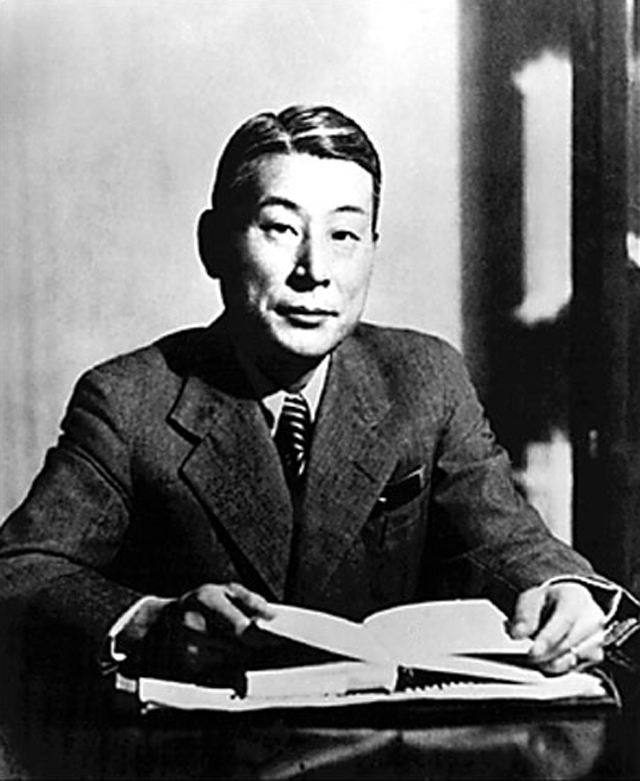
Chiune Sugihara

Chiune Sugihara (杉原 千畝1 January 1900 – 31 July 1986) was a Japanese diplomat who served as Vice-Consul for the Empire of Japan in Lithuania. During World War II, he helped several thousand Jews leave the country by issuing transit visas to Jewish refugees so that they could travel to Japan. Most of the Jews who escaped were refugees from German-occupied Poland and residents of Lithuania. Sugihara wrote travel visas that facilitated the escape of more than 6,000 Jewish refugees to Japanese territory, risking his career and his family’s lives.

Posted in Uncategorized | Leave a comment

Why Firing a Bad Cop is Hard

Unlike a member of the public, the officer gets a “cooling off” period before he has to respond to any questions. Unlike a member of the public, the officer under investigation is privy to the names of his complainants and their testimony against him before he is ever interrogated. Unlike a member of the public, the officer under investigation is to be interrogated “at a reasonable hour,” with a union member present. Unlike a member of the public, the officer can only be questioned by one person during his interrogation. Unlike a member of the public, the officer can be interrogated only “for reasonable periods,” which “shall be timed to allow for such personal necessities and rest periods as are reasonably necessary.” Unlike a member of the public, the officer under investigation cannot be “threatened with disciplinary action” at any point during his interrogation. If he is threatened with punishment, whatever he says following the threat cannot be used against him.

When the police argue that the interrogation techniques they use produce the truth, you have to wonder why such things aren’t good for finding the truth when it comes to other police…

Posted in Uncategorized | Leave a comment

Liberals’ Wet Dream

If you needed any more proof that government bureaucracy is a horribly inefficient manger of money, new analysis of Federal spending shows that the government spends over $61,000 per year for every household below the poverty line.

from the Weekly Standard:

U.S. Liberal Wet Dream

Yep, you saw right–currently well over 65 million Americans!

“….that people think voting for Obama is somehow revolutionary is the biggest indicator of just how entrenched and well established the paradigm of neoliberal capitalism is in western society. The alternative to neoliberal capitalism is  neoliberal capitalism and if you don’t think so then you’re clearly a neoliberal capitalist.”

OK, so his name is Bernard von NotHaus, and he is a professed “monetary architect” and a maker of custom coins found guilty last spring of counterfeiting charges for minting and distributing a form of private money called the Liberty Dollar.

Described by some as “the Rosa Parks of the constitutional currency movement,” Mr. von NotHaus managed over the last decade to get more than 60 million real dollars’ worth of his precious metal-backed currency into circulation across the country — so much, and with such deep penetration, that the prosecutor overseeing his case accused him of “domestic terrorism” for using them to undermine the government.

Of course, if you ask him what caused him to be living here in exile, waiting with the rabbits for his sentence to be rendered, he will give a different account of what occurred.

“This is the United States government,” he said in an interview last week. “It’s got all the guns, all the surveillance, all the tanks, it has nuclear weapons, and it’s worried about some ex-surfer guy making his own money? Give me a break!”

Internet Future: Censored

Boeing’s New Missile Remotely Disables Computers as It Flies By

This is CHAMP: Boeing’s new missile otherwise known as the Counter-electronics High-powered Microwave Advanced Missile Project. It automatically disables PCs and other electronic devices as it soars through the skies, using a burst of powerful radio waves—and it was successfully tested last week.

Posted in Uncategorized | Leave a comment