From Radical Criminology – by Jeff Shantz
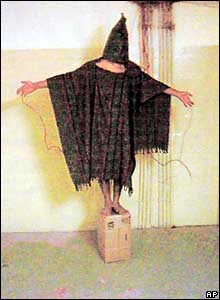
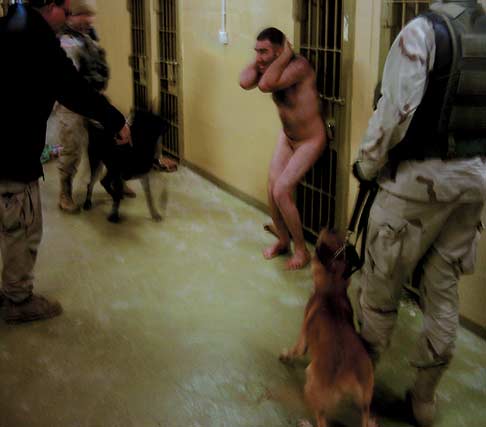
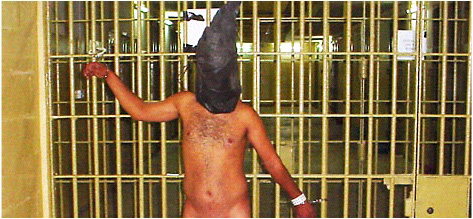
 Too Big to Fail In this period of state-sponsored austerity and suppression of resistance there is a great need for criminologists to speak out and act against state violence, state-corporate crime, and the growth of surveillance regimes and the prison-industrial complex. Criminologists also have a role to play in advancing alternatives to current regimes of regulation and punishment. In light of current social struggles against neo-liberal capitalism, and as an effort to contribute positively to those struggles, the Critical Criminology Working Group at Kwantlen Polytechnic University in Vancouver has initiated the journal Radical Criminology. We hope you will enjoy our first issue and find it to be a useful resource.
The present period represents an era of state capitalist offensives against the working classes and oppressed globally. It is played out in specific local maneuvers but is global in character. The main thrusts are austerity policies mean to break the infrastructures and resources on which the working classes and oppressed rely and to weaken possibilities for resistance and make people desperate and despairing. Conditions of austerity are effected through social and economic policies that limit the rights of workers on the labor market and at work and which remove alternatives to waged labor (such as welfare or low cost education). |
|
Along with austerity is the creation of crises and manufactured fear in the political fantasies of contagion (by terrorism, radicalism, or the foreign outsider). This fear is used to legitimize the deployment of repressive policies and practices (aggressive laws and policing patterns).
This is also an era in which the previous models of social change and resistance—notably Marxism/Leninism and the vanguard party, national liberation, and social democracy—have been discredited and/or discarded. New generations of people, with no particular prejudices, biases, or commitments toward the radical political models of the past and their associated claims on rightness (and righteousness) have become politicized on new terms and from new beginnings. This poses both great possibilities and great perils. On the one hand, there is the danger of starting over from scratch—of needlessly making the same mistakes that experience might avoid, of reinventing the wheel (as a flat tire), of pursuing false leads and getting caught in dead ends (reformism and adventurism, statism and electoralism, guerrilla moralism and vanguardism).
On the other hand, and more hopefully, there is the real possibility that new and more effective approaches will be developed, refined, and pursued. Forgotten voices and lost wisdom will once again be engaged in meaningful ways. This is already being realized in the widespread, and growing, engagement with anarchism, indigenous thinking, radical unionism, syndicalism, and horizontalism and direct action.
This period poses new challenges for intellectual workers, particularly academic social scientists. The challenges for criminologists (and criminology more broadly as a discipline) are even more pressing given that this is a period marked largely by punitive advances of capital and its (neo)liberal democratic management regimes. Criminal justice systems, and their diverse institutions, have been key weapons in the capitalist offensive against the working classes and oppressed. Criminologists, perhaps more than other social scientists, have an obligation to take a stand against the assaults of states on populations made increasingly vulnerable by the actions of economic and political powerholders.
It is now absolutely essential, as a matter of struggles for justice and against repression and criminalization, that criminologists take a firm and open stand against criminal justice policies and practices that serve capital at the expense of the working classes and oppressed. A radical criminology must act in solidarity with those individuals and groups targeted by the institutions of the state.
Radical criminology must not flinch in the face of condemnation by corporate mass media and political institutions. It is not enough to be a public criminologist. Criminology must go further to be an active, indeed an interested, player in contemporary struggles. Criminology must choose sides. It must stand with the movements of the exploited and against the exploiters. It must stand with the oppressed and against the oppressors. It must stand with the marginalized and against those who would claim (or impose) the privileged center. It must stand with the criminalized and against those who would criminalize them.
This discussion offers merely a sketch of some of the possible contours of a radical criminology. It is not meant as a final answer, but rather as an opening question.
Outlines of a Radical Criminology
1. Radical criminology must be anti-statist and anti-capitalist. It must not succumb to the myth, as libertarians do, that there is an opposition between capitalism and the state. The emergence, development, and continuance of capitalism have been entirely facilitated by state practices. Indeed, capitalism is unimaginable without the state. The expropriation of land, enclosure of commons, defense of privatized property, and repression of peasant and working class opposition—the very foundations of capitalism—are all acts of the state. Without the repressive apparatuses of the state, capitalism would quickly collapse. The idea that the state and capitalist market are oppositional forces is falsity that serves only to distort history and confuse matters.
Capitalism is founded on the dual mechanisms of force and law. Criminal justice systems deploy legal means to sanction the forced theft of land and labor.
Legislative and material violence are the twin foundations of criminal justice systems. From the Enclosure Acts in England and the military violence used to impose them through the legislative foundations of slavery, colonialism, and genocide to the anti-panhandling and poor laws and social cleansing of today, these dual features are deployed against poor and working class communities (often on racialized terms).
2. A radical criminology must again recognize exploitation—the social exploitation of labor—as the central organizing feature of capitalist societies. The underlying motive force of the economy, exploitation provides the raison d’être of liberal democratic governance—that is ensuring and extending the conditions of exploitation of labor by capital. This too provides the impetus of criminal justice system policies and procedures since the earliest days of liberal democratic government. This has always been the foundation of criminal justice systems in liberal democracies. This is at the heart of these systems. Such practices have been central components of criminal justice practices from the start. Examples include the various poor laws and anti-vagrancy acts as well as state work camps and prison workhouses.
3. Criminal justice systems are themselves profit maximizing machines. The manner of their profit-making is the processing and punishment of the poor. Without the criminalization of the poor—as poor—criminal justice systems in Western liberal democracies would collapse or wither on the vine. In Canada, around 10% of the population live under the poverty line (even more are actually poor). Yet, the poor make up nearly 100% of incarcerated people.
Policing is primarily a racket for soft crime mining. They pan for crime in poor neighborhoods (typically after instigating or stoking moral panics to criminalize harmless activities like squeegeeing or panhandling from which they can then profit by pursuing) to keep arrest rates and crime stats higher and thus justify appeals for greater spending on their services.
And the cost of policing in times of austerity, which is no small expense, shows the hypocrisy of governments that claim tight budgets and limited funding for social services. In Vancouver, for example, the police account for around 21% of the City budget. This expense is rising and politically untouchable as far as possible cuts are concerned.
The single act of issuing one anti-panhandling ticket to a homeless person sets in motion a money-making assembly line of punishment and profit. Along the way various sectors of the system receive (unequal) payment which represents a transfer of wealth upwards (as the taxes of the working classes are transferred to the state agencies). First, there are the police officers who issue the tickets. Then there are the lawyers, bailiffs, judges, and jail or prison guards (to say nothing of the lower status court workers such as clerks and stenographers). At the end are the subsequent demands for more police and prisons to deal with “the problem.” Prison construction companies, corporate food services, prison industries (slave labor firms) all follow along. Without this profitable foundation in the punishment of the poor the system of state capitalist criminal justice could not persist. Police, court, and prison budgets would lose their prop. At the same time we should not assume as liberals often do that diverted funds would be put toward socially necessary ends such as schools or hospitals.
This point is reinforced by the fact that 21% of charges in Canada are administration of justice charges such as failure to appear or boundary violations. Warrants and jail result from what was initially a minor charge due to the piling on of administrative charges (processing charges).
4. The state is a protection racket. That is its basic function. As with smaller gangs, the state leans on the population with displays of violence in a way to extract finances and support for “services rendered.” More people have been killed by states than by all of the street gangs, thugs, Mafioso, hooligans, and terrorists in history combined.
5. Radical criminology must be anti-colonial. It must confront the historic and ongoing assaults on indigenous communities globally by settler capitalist states and their criminal justice systems. Radical criminology must be clear in stating that criminal justice systems in settler democracies are founded in practices of colonialism. Not only has legislation been utilized to dispossess indigenous communities of their land and resources and displace them from traditional territories. Laws have dismantled indigenous systems of governance and community self-determination. Practices like slavery, also have legal underpinnings. The programs of cultural genocide unleashed against indigenous communities were founded in legislation and legal institutions. They were never against the law.
Criminal justice processes are part of ongoing colonial strategies of containment and extinguishment directed toward indigenous communities. Native people account for 4% of the population in Canada but make up 20% of those incarcerated. Policing, surveillance, and incarceration serve as successors to more blatant programs of cultural genocide such as residential schools. Presently, 41% of native people who are incarcerated are under the age of 25.
Capitalist economies and liberal democratic governments are founded on expansionist practices (and policies) of enclosure. The history of colonial states is a history of displacement, land theft, murder, and genocide—all legally sanctioned and normalized. The impetus is the opening up of new areas of profitability and economic opportunities for capital. This is the real and integral character of state capitalist liberal democracies.
These are not anomalies or digressions or mistakes or unfortunate features of less enlightened times. These are the pillars of capitalist economies and liberal democratic justice systems. Without such practices—the forced acquisition of cheap land and labor and the breaking of communal bonds—capitalism could not have developed. State capitalism requires, from the start, the dislocation of local communities and their sustenance systems and governance practices.
Radical criminology must stand on the side of indigenous communities that fight back and reclaim their lands as in the case of Six Nations in Ontario and the Secwepemc struggles in British Columbia.
6. Radical criminology must challenge national sovereignty and border controls by statist institutions. It must reject the statist construction of migrants as legal versus “illegal.” No one is illegal must be a clarion call for a radical criminology.
7. Radical criminology must be deep green. It must draw attention to and oppose the integral relationships between capitalist exploitation, business practices, and the destruction of the planet’s various ecosystems. It must also highlight the complicity of states and capital in this destruction and call out the refusal of states to hold economic elites accountable for the harms they perpetrate against human communities and nature. Too often criminology has focused on the low level crimes of non-elites. Harms have been constructed as violations of laws or impacts on individuals or their property. Radical criminology must shift focus to the harmful activities of corporations and businesses (and the people who direct them) which are often not criminalized or “against the law.” Radical criminologists must confront the hegemonic construction of the harm done by capital as simply part of business as usual. This includes confronting economic and political elites on the damage done to ecosystems, non-human nature, and other species—impacts that states and capital excuse as being mere externalities, part of the cost of doing business.
At the same time radical environmentalists, animal rights activists, and advocates of dark green resistance have been heavily targeted by states for criminalization. The repression of green activists today echoes the repression of anarchists and socialists during the Red Scare of the 1910s. Green activists have been subjected to lengthy prison sentences and their groups subjected to intense surveillance. In cases such as the bombing of green syndicalist Judi Bari, in which the Federal Bureau of Investigation (FBI) was involved, liberal democratic states have attempted to assassinate green activists. In addition, states in countries like the US have, under the guise of anti-terror concerns, devised laws to protect corporations from criticism for their ecologically destructive practices. These laws have been used to target even informational groups like Stop Huntington Animal Cruelty which simply try to expose corporate practices. In Canada the Minister of the Environment has labeled opponents of pipelines carrying tar sands oil as extremists in an effort to discredit them. Radical criminology must oppose the criminalization of green activists and point to the state complicity with capital motivating repressive measures against environmentalists.
8. Radical criminology is abolitionist; it must call for the abolition of all statist criminal justice systems. Systems of domination and exploitation cannot be reformed; there is no legitimate basis for reform or revision of policies and practices that are at heart founded in and based upon exploitation. There is no reasonable level of oppression. It is not enough to criticize such systems. Radical criminology must oppose and confront all statist institutions of criminal justice with an eye toward ending them. Such too is the case for institutions and relationships of capitalist exploitation.
Practice
A. There is a pressing urgency that radical criminologists get out of the offices and into the streets and communities in which struggles are occurring. We must put ourselves on the line to stand in solidarity with people in the communities and workplaces in which our campuses and offices are located.
B. We should also recognize that campuses are also sites of exploitation and struggle. Radical criminologists should oppose the corporatization of our various intellectual labours, including teaching as well as research. Among our efforts radical criminologists need to fight neoliberal policies that turn universities and colleges into prep schools for corporate expansion and financial markets.
This means opposing recruitment efforts by police, border services, prisons, private security firms, as well as the military on our campuses. It also means opposing attempts by co-operative education offices to determine curriculum and turn programs into mere training grounds for institutions of repression.
C. A radical criminology needs to refuse the false dichotomies of legal/illegal protest, of violence/non-violence, of legitimate/illegitimate resistance. In state capitalist societies violence is a constant reality of everyday life. Typically it is experienced disproportionately in working class and poor communities whose members are subjected to economic violence at work (and on the labor market), social and cultural violence in schools and in media portrayals, and political violence in policing and criminal justice system practices that punish them overwhelmingly (indeed, almost exclusively). To preach non-violent resistance in such a context is to justify the continuance of state and corporate violence and deny working class and poor people the dignity of self-defense.
In the wake of the popular mobilizations against the economic and political elites of the G8 and G20 meetings in Ontario during the summer of 2010, even noted critical commentators firmly situated on the activist Left called for police repression of more militant activists, particularly anarchists and the so-called black blocs of people supporting and engaged in direct actions against corporate and government targets. Naomi Klein infamously called on police in Toronto to do their “goddamned jobs” and protect property or arrest people intent on damaging property.
Even commentators long influenced by Marxism joined the chorus calling for the arrests of anarchists and others engaged in (or threatening to engage in) direct action. Judy Rebick, Sam Gindin Chair in Social Justice at Ryerson University and rabble.ca founder, suggested police should have preemptively arrested militant activists and angry residents involved in property destruction. Unfortunately, her plea was unnecessary as police had already done by arresting several prominent anarchist activists in the days prior to the G20 meetings in Toronto. Those committed organizers had their lives placed in turmoil for over a year and some received lengthy jail terms for having done nothing more than discuss the possibility of direct actions (in contexts in which police infiltrators were present). Thus the wish for preemptive arrests—which has no place among critical theorists or activists—had already been carried out.
Notions of legality and illegality reflect the priorities of states and capital and should not be the basis for assessing movements of resistance. In discussions of legalism/illegalism the state and its corporate backers set the terms of debate. Against statist definitions of ill/legality radical criminologists must assert the needs of people and their environments (including natural environments and their non-human occupants).
D. Property damage is not violence. Only a profoundly unjust society privileges property over the needs of people. Only a distorted system of justice allows property owners to sit on useable housing while arresting those who break into such property to meet their life and death needs for housing. These are the expression of specific decisions to protect property at the expense of human need.
On the other hand, abandoned workplaces do reflect acts of violence. Similarly, foreclosed homes.
E. Radical criminology must break down the barriers between inside and outside. Criminologists need to give explicit support to political prisoners criminalized for their engagement in social justice struggles, resistance, or revolutionary activities. This includes material support (such as prison visits, setting up books to prisoners programs, publishing prisoners’ works) as well as speaking publicly in defense of political prisoners and the state practices of repression deployed against them. Radical criminologists must work to show that economic prisoners are also political prisoners. Economic crimes of the poor and working classes result from political decisions and the preferences and choices of economic and political elites. Laws, policing, and prisons are political to the core. Those who are victimized by such political practices are by definition political prisoners.
Once again a radical criminology does not base support on legal judgments of the actions for which political prisoners have been criminalized. Again, we do not privilege some political prisoners over others on a statist basis of violence or non-violence. We do not withdraw support on the basis that a political prisoner has engaged in or advocated armed struggle, property destruction, or the violation of laws. We cannot allow ourselves to be sectarian in working with or supporting political prisoners. Political differences can be dealt with in direct discussion and debate. As the Industrial Workers of the World (IWW) used to say: “They’re in there for us; we’re out here for them.”
F. Radical criminology must be proactive in pursuing workable alternatives to statist forms of criminal justice. Indeed the notion of “criminal justice” should probably be discarded altogether. Radical criminologists have already innovated and advocated for various real world alternatives. These include restorative justice outside of statist institutions as well as healing circles. There are many overlooked, silenced, ignored, and suppressed traditions and tendencies that radical criminology can draw from and build upon. Indigenous governance practices have contributed much toward alternative understandings of communal justice and practical alternative relations. Radical criminology needs a deep and close engagement with indigenous experiences of governance. More work must be done in developing and pursuing community and workplace self defense practices.
G. Radical criminology must be prepared to oppose authoritarian manifestations within our own movements and organizations. We do not need a vanguard party or wannabe states-in-formation within our own ranks. The vast experiences of the twentieth century show rather starkly what a dead end such approaches, seductive though they might be for some, actually are. In any event, participants in the contemporary movements emerging globally are developing, experimenting with, and putting into practice alternative approaches. Radical criminologists will gain by engaging with, learning from, and debating those approaches. Among the important development of contemporary movements is the emphasis on horizontalism and participatory decision making.
Onward
A radical criminology should, in short, be an insurgent criminology. It should be a criminology that provides a useful resource for movements of resistance and communities in struggle against exploitation and oppression.
In times of crisis and intense social struggles—certainly in times of insurrection or uprising—radical criminologists must keep their heads and not succumb to moral backlash or fear, even of the Left and political progressives. It can be too easy for otherwise critical voices to lose confidence under the spotlight of state reaction and media outrage. In such times especially one must advance and sharpen—not lose or abandon—their politics.
Radical criminology is not simply a project of critique, but is geared toward a praxis of struggle, insurgence, and practical resistance. It is a criminology of direct action.