Monty Cobb is sworn in as Mason County’s Superior Court judge before a throng of well wishers on Thursday, 3-29-18, in the county courthouse. Monty is a very experienced attorney in almost all areas of law, has very positive judicial temperament and competence which should serve county residents well.
10-2-23045-6 | STATE EMPLOYMENT SECURITY VS WILLIAM R MCMULLEN
Case Number 10-2-23045-6
Court Thurston
File Date 10/20/2010
Case Type Tax Warrants
Case Status Completed/Re-Completed
Party
Plaintiff (Participant) STATE EMPLOYMENT SECURITY
Defendant MCMULLEN, WILLIAM R
Disposition Events
10/20/2010 Judgment
Judgment Type Tax Warrant
Monetary/Property Award
Creditors: STATE EMPLOYMENT SECURITY
Debtors: MCMULLEN, WILLIAM R
Signed Date: 01/01/1800
Filed Date: 10/20/2010
Effective Date: 10/20/2010
Current Judgment Status:
Status: Fully Satisfied
Status Date: 06/22/2017
Comment: Judgments this case: 1 2010-10-20 WOBES WARRANT OVERPAID BENEFITS EMPLY SEC JCR0001 STATE EMPLOYMENT SECURITY JDB0001 MCMULLEN, WILLIAM R 2,678.00. INT PER WARRANT
02-2-20878-6 | STATE L&I VS WILLIAM R MCMULLEN Case Number 02-2-20878-6
Court Thurston
File Date 06/19/2002
Case Type Tax Warrants
Case Status Completed/Re-Completed
Party
Plaintiff (Participant) STATE L&I
Defendant MCMULLEN, WILLIAM R
Disposition Events
06/19/2002 Judgment
Judgment Type Tax Warrant
Monetary/Property Award
Creditors: STATE L&I
Debtors: MCMULLEN, WILLIAM R
Signed Date: 01/01/1800
Filed Date: 06/19/2002
Effective Date: 06/19/2002
Current Judgment Status:
Status: Fully Satisfied
Status Date: 09/27/2002
Comment: Judgments this case: 1 2002-06-19 WOBLI WARRANT FOR OVERPD BENEFITS – L & I JDB0001 MCMULLEN, WILLIAM R 650.62. INT PER WARRANT 2002-09-27 SAT SATISFACTION
1 06/19/2002 Warrant for OverPaid Benefits Labor And Industries View Document WARRANT FOR OVERPD BENEFITS – L & I #02-00894-OP Comment 1: WARRANT FOR OVERPD BENEFITS – L & I; #02-00894-OP;
2 07/16/2002 Filing Fee Received View Document FILING FEE RECEIVED Comment 2: FILING FEE RECEIVED;
To win, political candidates must appeal to voters in swing states with strong gun cultures. Popular measures like Universal Background Checks may garner votes, but ineffective, unpopular ones like the Assault Weapons Ban are problematic.
One definition of insanity is to keep doing the same thing and expect a different result. Take the gun debate. After every mass shooting there are emotional calls for action, heated debates, legislative paralysis, and ultimately nothing is done. We could keep doing the same thing; but if we want to make any progress we need to consider doing something different. But what?
It turns out that when you look at specific measures to curb gun violence there is remarkable agreement on some of them across the political spectrum. For example ―
Universal background checks are favored by 92% of American voters, with 92% support among gun owners and 86% support among Republicans.
Laws preventing people with mental illness from purchasing guns garner 89% support, with 91% support among gun owners.
Extended waiting periods to purchase guns is also favored by a majority of gun owners and non gun-owners (57% and 84%, respectively).
And raising the age limit for purchasing a gun to 21 is popular with 81% of Americans, overall.
Look at this chart in the New York Times which maps gun control measures to a matrix using effectiveness and popularity.
Legislators – and presidential candidates – would probably not go wrong choosing gun safety measures in the top two deciles of the chart. At the same time, if they don’t make it clear that they are not going to try to push through the unpopular ones, they will leave themselves open to accusations that they are adopting an incremental approach that has confiscation as its final goal, which will exacerbate opposition to these gun safety measures. Basically, where the “opinion spread” between pro-gun and anti-gun voters is small is where they should focus their efforts. Here is an interactive quiz that shows how close Democratic and Republican voters actually are on various specific gun safety measures.
Part of the problem with passing any legislation is the fear that it is a step toward stricter laws and eventually gun confiscation. This is apparently baffling to gun control advocates who view their opponents’ intransigence as an irrational, knee-jerk reaction to any gun safety measure. However, gun control advocates often make statements that are construed as favoring confiscation; for example, they regularly cite Australia’s approach when discussing gun policy. President Obama mentioned it as a possible model after a shooting in 2015, and during the 2016 campaign Hillary Clinton suggested it was “worth considering.” Robert Reich has spoken favorably about it in a Facebook video, 5 Points to Counter the NRA.1
Such statements from establishment Democratic politicians and others praising the Australia model certainly leave the impression that they favor gun confiscation. Presumably, they believe such statements are popular with their base; but they have the counter-productive effect of making gun-rights people oppose even otherwise popular measures because they are seen as incremental steps toward more draconian measures. There really is a slippery slope, it’s not just a conservative fantasy, which explains their intransigence on any measure.
“Defeating an expansion of background checks means that the fight next time will once again be about background checks—not the item on the gun-control agenda after background checks. That’s how you defend a status quo you like. It’s reactionary, but given the reach of the administrative and regulatory state these days, not especially conservative.” New Republic: Slippery Slope Arguments: Not Just for Conservatives Anymore
Even proposals like the Assault Weapons Ban of 2018 (H.R. 5087) introduced in the House that explicitly grandfather existing semi-automatic weapons are going to be unpopular with pro-gun people. If you ban the “importation, manufacture, possession, sale or transfer” of such weapons, they reason, the next step is confiscation.
When Democrats at the national level are associated with such an unpopular policy, it creates obstacles for Democratic candidates running in parts of the country that have a more pro-gun orientation.
In addition, many of the measures that the Democrats have pushed through are ineffective, or only marginally effective, at addressing the problem of gun violence. For example, the idea of limiting magazine size to 10 rounds is hardly going to affect the incidence of mass shootings, or their lethality. The shooter’s simple expedient is carrying more magazines. Such laws have been found constitutional, but that doesn’t mean they do any good.
Beyond selecting measures with broad support, it is necessary to be explicit about which measures legislators do not intend to pursue.
The Federal Assault Weapons Ban
What is it that makes a rifle an “assault weapon”? The Federal Assault Weapons Ban, which was in effect from 1994–2004, defined “assault weapon” based on certain gun features. But ultimately, what makes the rifle effective is not whether it has a telescoping stock, or a pistol grip, a threaded barrel, or a bayonet mount. It’s that it is semi-automatic and has a detachable magazine. That means there are plenty of rifles that aren’t “assault weapons” that are just as deadly, but which would not be covered by an assault weapons ban.
Can you spot the “assault weapon” below? If you guessed the first one, you are correct. However, the second one is essentially the same rifle. It accepts the same magazines, and shoots the same .223 caliber rounds. The Mini-14 Ranch Rifle is just as lethal as the Tactical version, but it is legal under the definitions of the Federal Assault Weapons Ban (both the expired 1994 version and the proposed H.R. 5087). In fact, the Mini-14 Ranch Rifle was the weapon used by Anders Breivik to slaughter 69 people in Norway in 2011. Banning the one with the pistol grip and telescoping stock is useless if the one with the wooden stock remains legal and available. The same thing applies to variants of the AR-15 and AK-47.
Ruger Mini-14 TacticalRuger Mini-14 Ranch
It’s the fact that they are semi-automatic that makes them the weapon of choice. All those “features” are basically cosmetic and don’t contribute to the gun’s lethality.
For that matter, 63% of mass shootings have been perpetrated with semi-automatic pistols. The Virginia Tech shooting in 2007, with 32 fatalities the worst mass shooting to that date, was perpetrated with a Walther P22 and Glock 19. And in the Ft. Hood attack in 2009, the shooter used a single FN Five-seven to kill 13 and injure over 30. Rifles are not the most common weapon used in mass shootings by a long shot. From 1982–2017, rifles of any kind were only used about 22% of the time, and of those some percentage were not “assault weapons.”
The 1994 Federal Assault Weapons Ban had little, if any, effect on gun violence during the 10 years it was in effect. The idea that it did is a myth. This is open to some interpretation, but here is a good article examining the issue.
In any case, crimes with “assault weapons” make up a very small percentage of gun crimes. Therefore, even if an assault weapons ban were 100% effective (unlikely), and even if potential shooters didn’t simply choose a different weapon (very likely), there would be at best a minuscule decrease in the overall problem of gun violence and mass shootings.
Number of homicides, by weapon, in 2016. Data from FBI
As shown in the diagram above, rifles are only used in 2.5% of total homicides and only 3.4% of homicides with firearms. In 2016 there were only 374 homicides by rifle. (The Gun Violence Archive has a slightly higher number of 429 rifle homicides, of which only 180 were with rifles identified as “assault weapons” by law enforcement.)
The bulk of firearms homicides, over 65%, were due to handguns. The number is probably much higher, since the majority of cases in which the type of firearm is “Unknown” are probably handguns.
In short, even a strict assault weapons ban is not going to put a dent in mass shootings. The deranged individuals who perpetrate them can use rifles or pistols that aren’t banned to achieve the same ends, or they can obtain a banned weapon legally (because it was grandfathered in) or obtain one illegally.
The political cost
The political cost of the 1994 Federal Assault Weapons Ban turned out to be severe.
“When Congress passed the assault weapons ban, the NRA vowed vengeance. Months later, the Republicans, backed by the still-outraged NRA, romped the Democrats in the midterm election, gaining 54 seats and control of the House for the first time in 40 years. [President Bill] Clinton, for one, believed that voting for the assault weapons ban had cost about 20 House Democrats their seats–meaning that the measure had caused a political backlash that led to a GOP majority in the House.” MotherJones: What the Fight Over Clinton’s 1994 Assault Weapons Ban Can Teach Obama
Additionally, many people believe it was responsible for Al Gore’s loss to G.W. Bush in the 2000 presidential election. Like any counter-factual argument, this can’t be proved, but it was certainly a contributing factor. Passing the Assault Weapons Ban was political suicide for the Democrats. If there had been a corresponding benefit in terms of a decrease in gun violence it might have been justified, but that was simply not the case.
Has the situation changed enough between 1994 and 2020 that we can be confident that Democrats advocating an Assault Weapons Ban won’t meet the same electoral fate?
Mass shootings
As far as discouraging mass shootings like the one that happened in Parkland, Florida, it’s doubtful that an assault weapons ban would help. If the shooter had used a couple of semi-automatic pistols, or a semi-automatic rifle without any “assault weapon” features, would the toll have been any different? Probably not. Or the attack in Santa Fe, TX, where the shooter, armed with a shotgun and a .38 revolver, killed 10 fellow students. When your targets are unarmed school children at close range, any firearm is going to be devastating. That’s the brutal truth. An assault weapons ban that does not include other “non-assault,” semi-automatic weapons is thus ineffective at preventing or mitigating mass shootings.
Schools are safer than they were in the 90s, and school shootings are not more common than they used to be. If that sounds wrong it may be because the mainstream media are pushing the opposite narrative, and some politicians are eager to jump on board. Obviously, even one school shooting is a tragedy. But it is a very rare tragedy.
“[It] is nearly impossible to design a policy that can bring the incidence of an already exceptionally rare crime down to zero — and given the inherently limited nature of legislative time and resources, it would make little sense to prioritize such a marginal and difficult issue over public health challenges that kill exponentially more people.” New York Magazine: There Is No ‘Epidemic of Mass School Shootings’
Overall, mass shootings are a bad way to understand gun violence, because they happen rarely. Their contribution to the total number of firearms deaths is small (about 2.2% in 2017) compared to the large number of homicides that occur day to day. That day-to-day killing disproportionately impacts the African-American community.
“Mass shootings, unsurprisingly, drive the national debate on gun violence. But as horrific as these massacres are, by most counts they represent less than 1 percent of all gun homicides. America’s high rate of gun murders isn’t caused by events like Sandy Hook or the shootings this fall at a community college in Oregon. It’s fueled by a relentless drumbeat of deaths of black men.“Gun control advocates and politicians frequently cite the statistic that more than 30 Americans are murdered with guns every day. What’s rarely mentioned is that roughly 15 of the 30 are black men.” Pro Publica: How the Gun Control Debate Ignores Black Lives’
A Semi-automatic Ban
The measure that would actually reduce gun violence, at least hypothetically, would be a total ban on semi-automatic rifles and pistols. This is the path that Australia took, using a forced buy-back to confiscate over 600,000 weapons. This is the only way the US could attain low, European levels of gun violence.
However, this is a very unpopular proposition among gun owners, to say the least. Even a ban on new sales that grandfathered in existing weapons will be bitterly opposed by millions of Americans. Besides being unpopular it is impractical. It’s a political non-starter. But it has to be mentioned because some people are calling for it, or inadvertently call for it when they demand something like the Australian model.
Trying to enact a law like this would have some or all of the following consequences:
A nasty, emotional and potentially violent fight in which Americans were pitted against each other.
An immediate legal challenge. In the unlikely event that the case progressed as far as the Supreme Court, given the current makeup of the court and its recent decisions, it’s easy to imagine the law being struck down, thus setting a precedent. In order for a ban to be effective it would probably have to be unconstitutional.
If it were not struck down, there would be the question of enforcing it. Presumably, police would be forced to find and confiscate people’s guns when they didn’t comply voluntarily. What could possibly go wrong? There might be violent resistance, justifying increasingly heavy-handed government action.
Gun sales typically surge prior to the implementation of new regulations, flooding the market and filling the coffers of gun manufacturers.
There would be an increase in black market gun sales and gun smuggling, and probably illegal gun manufacturing. It’s not that hard to build your own AR-15. We could end up with a much more lethal version of Prohibition.
Some states might try to make it difficult or impossible to enforce the federal law. What would happen if a state refused to enforce a federal law?
Significant costs, if a buyback program were implemented. There are millions of privately owned semi-automatic weapons in the United States. According to this estimate, there are 3,750,000 AR-15-type rifles in the United States today. That represents approximately 1% of the total firearms ownership of 310 million, and that’s only talking about one specific type of rifle. That would mean spending $1.9 billion dollars just on buying back AR-15-types (at $500 per rifle, which is a below-market price).
One may believe the unintended consequences of such a law are manageable or are worth the cost. However, people who blithely advocate for an assault weapons ban or a semi-automatic ban often seem not to have really thought it through. It is really incumbent on people calling for these types of laws to address the likely outcomes, and possible consequences.
Politics
Part of the problem is that gun violence is a “hot button” issue for establishment Democrats and Republicans. It’s a dependable tool to drive their base to the polls. Neither party wants to give it up because polarization serves a purpose. There is more purely political value in not compromising than in passing the best legislation that can be negotiated, and then moving on.
Democrats have more to gain, politically, by proposing unpopular legislation and failing than in winning by passing broadly popular and effective measures. Meanwhile, Republicans have more to gain by preventing Democrats from passing any gun safety measure.
If Democrats were to cease being seen as the “anti-gun” party, it would take away one of the Republicans’ main talking points in our domestic culture war.
Trying to pass a new Assault Weapons Ban seems particularly short-sighted. If the Democrats try and fail they will have wasted valuable time and resources, suffered a significant political setback, and accomplished nothing. If they succeed it will have been at potentially great political cost, for a result that will have an insignificant impact on the problem of mass killings and gun violence in general. It is a high risk, low reward, endeavor.
If Democrats don’t intend to implement some kind of national ban on semi-automatic rifles and pistols, then it would be a good idea to definitively take it off the table. And if they do intend to pursue such a course, then they need to be clear about what exactly they are proposing, and how they expect to deal with the legal, social and political issues that are certain to arise.
The pragmatic position at this time is an acceptance, whether grudging or enthusiastic, that the Second Amendment applies to semi-automatic weapons. Then we can get on with taking measures at the federal level that are popular across the political spectrum that don’t infringe the Second Amendment ― as it has been interpreted by recent court decisions.
One should hope Democratic candidates would support popular gun safety measures and not jump on the bandwagon of unpopular and misguided proposals. It’s never too late to break from the failed policies of the past.
Swing states like Pennsylvania, Ohio, Michigan, Wisconsin, Florida and Iowa, happen to have strong pro-gun cultures. Favoring popular measures like Universal Background Checks may garner votes, but running on the ineffective and unpopular ones like the Assault Weapons Ban is running a needless risk. When people cite national statistics showing majorities in favor of some gun control measure, it’s important to remember that those voters are not distributed evenly. There is a pronounced difference between populous, solidly blue states on the coasts, and purple and red states elsewhere.
Finally, people need to realize that the fact that they are really, really upset by the latest mass shooting does not constitute a logical argument for implementing any arbitrary gun control measure. Anguished calls for political action may be cathartic, but they are counter-productive. People also need to realize that by calling for those measures that are ineffective and unpopular, they are strengthening the resolve of pro-gun activists to resist any gun safety measure. Forgive the metaphor, but a lot of well-intentioned gun control advocates are shooting themselves in the foot.
Let’s stop doing what has not been working.
1. The Robert Reich video asserts that the Assault Weapons Ban resulted in a 37% reduction in Gun Massacres, and its lapse resulted in a 200+% surge in 2004.The data on this question is inconclusive, at best. See Did the 1994 Assault Weapons Ban work? Reich did not respond to a request for clarification.
As adults, you all know these truths to be self evident. So, if you feel like applauding at the end of this recitation–just…DON’T! It’s really annoying.
TO court Karens everywhere–you know who you are:
You are a bastard-bitch of the universe and seriously messed up. You have no right to be here
Deteriorata. Deteriorata
Go wrathfully amid the poised and chaste,
And remember what mindless stimulation there may be in noise and owning a piece thereof.
Avoid quiet and passive persons, unless you are in need of sleep.
Get a mean dog.
Better yet, as far as possible, without surrender, alienate as many timorous little bastards as you can. So long as you are beautiful and in your prime, you can get away with it.
Rotate your tires.
Prevaricate at volume with Byzantine obfuscation, and listen not to others with their smarmy bilge: the dull and ignorant; say, Yo, whazzup with them?
While sucking up, speak glowingly of those greater than yourself
And heed well their advice, even though they be turkeys.
Avoid passive-aggressive personalities as you would the plague; it’s bad enough they are deadly boring; they’re also a royal pain in the @ss. Never miss an opportunity to control others, be it through histrionics, abuse of authority or intimidation. Life is that they may serve YOU.
Know what/who to kiss, and when–never give a sucker an even break. If caught, try to make it look like a virtue–never let them see you sweat. Admit no wrong doing–NEVER apologize. Reject all criticism as unjust. Compassion is for suckers.
Remember–the opposite sex is the ENEMY! Wade into them. Use their living guts to grease the axle of your chariot.
Consider that two wrongs never make a right, but that three do!
Wherever possible, put people on hold–your power is measured by how long you can keep them there. If you have a small child, they are ideal for implementing this tactic.
If you compare yourself with others, you may become vexed and bitter–some news flash there! For always will these bungling fools be lesser persons than yourself, better paid 9 out of 10 times too. Embrace hubris, for it is your key to the Kingdom. Humility is for the little people.
Be comforted that in the face of all aridity and disillusionment
And despite the changing fortunes of time
There is always a big future in computer maintenance, betraying your friends, and stepping on while using others. All their pain is just an illusion.
You are an attention whore.
You have no right to be here.
And whether you can hear it or not,
The universe IS laughing behind your back.
Enjoy your achievements, for what that’s bloody worth, and plan to be reassigned any day now.
Stay interested in your career, and don’t neglect to feign eating some Humble Pie unless you’re already overweight; it is a very nutritious snack say recent articles in Psychopathology Today.
Remember The Pueblo.
Strive at all times to bend, fold, spindle, and mutilate.
Know yourself.
If you need help, call the FBI
Exercise paranoia in your daily/business affairs–especially your affairs.
Especially with those persons closest to you –
That lemon on your left, for instance.
The world is full of high-strung corporate psychopaths.
But, let this not blind you to what fate truly holds in store: demented zombie fascist ghouls whose vaunted ideals conceal bloodthirsty plans for jingoistic genocide.
Be assured that a walk through the ocean of most souls
Would scarcely get your feet wet.
Therefore, Fall not in love. It will stick to your face.
Be yourself, but do not risk detection–EVER! Never tell the fuckers what you really think. Neither be clinical about love, especially with that Sweet 16 year old on Friendster, or your ass is grass.
Gracefully surrender the things of youth: birds, clean air, tuna, Taiwan, concern for others. Recall that you should like people in general, just not in the particular.
And let not the sands of time get in your lunch–or your crotch.
Hire people with hooks.
For a good time, call 866-6000 x-6399. Ask for Candy.
Take heart in the deepening gloom.
Eschew the questionable counsel of decrepit hosers, nor willingly follow their drooling downward stagger into the depths of sadly premature senility.
Know that your dog is finally getting enough cheese
And reflect that whatever fortune may be your lot
It could only be worse in Olympia.
Nurture unhinged hallucinations/suspicions that everything is A-OK to shield yourself from suddenly wising up. Neither be distressed you are imagining things–the recurring fear that fatigue and loneliness are merely prologues. Beyond a wholesome discipline, slip fully into mental bondage.
You are an orphan of the universe, no less than the trees, the ozone layer, the buffalo, or the Edsel. You are cattle, you are chattel. You are in the way.
You have no right to be here
And whether you can hear it or not
The universe is laughing behind your back.
Therefore, make peace with your god
Whatever you perceive him/her/it to be – hairy thunderer, or cosmic muffin.
With all its hopes, dreams, promises, and urban renewal,
The world continues to deteriorate.
Give up!
Whether it is clear to you or not, the economy is growing as it doubly should. Ergo, say your prayers, whatever you hope to gain by that, and whatever your deluded aspirations may have deemed, finding you are a certain loser in the bedlam of life’s lottery–now kiss your sorry @ss goodbye.
You are a pimple on the backside of the universe. You are all the candy bars ever eaten.
You have no right to be here.
And whether you can hear it or not
The universe is laughing behind your back.
And yet, for all its rampant spam, its government-sanctioned drug cartels and tranquilizer-stifled screams, it’s just too beautiful a deal. Double down, cheer up, dream on–as if you might ever get to cop a slice.
Gary Tabor was a Thurston County Superior Court judge and extreme fundamentalist who bankrupted the Thurston County Sheriff’s office when he was a deputy prosecutor in pursuit of prosecuting what he believed was a witch’s coven. The State legislature had to authorize special funding of the Sheriff after Gary had bankrupted them chasing witches. Once he was appointed to the bench, he refused to conduct marriages of gays even after it was authorized in law by Washington State’s Supreme Court.
Claims of sexual abuse and satanic ritual unravelled the Ingram family—and escalated into a landmark case in the national obsession with cults and “recovered” memory.
On the morning of Monday, November 28, 1988, the day that Paul R. Ingram was to be arrested, he dressed for his job, at the Thurston County Sheriff’s Office, where he had worked for nearly seventeen years, went downstairs and ate breakfast, and then, to his surprise, suddenly vomited. He thought at first that it must be the flu; then he realized that it was simply fear.
Ingram, who was forty-three, was already a familiar figure to most citizens of Olympia, Washington, but before long his face would begin appearing every morning in the Olympian as a self-admitted child molester and Satan worshipper. To most people who knew him, Ingram, who is tall and square-jawed, with oversized glasses and a brown mustache, might seem to be the least likely Satanist in the county. Until that day, he had served as the chief civil deputy of the sheriff’s department and the chairman of the local Republican Party. He had been active in the deputy sheriffs’ association and in the Church of Living Water, a Protestant fundamentalist denomination. He spent much of his time in schools talking to kids about the dangers of drug use. He was himself the father of five living children. (A retarded daughter had recently died in a state institution.) As a politician, he was seen as a bridge between moderate conservatives and the fundamentalist Christian right. As a police officer, he was regarded more highly by the public than by other cops. He had been known in his department for being the sort of hard-ass who enjoyed traffic patrol and would issue a speeding ticket to someone for driving just five miles over the limit, and yet his personnel file contained not a single complaint; instead, it was filled with commendations from citizens who wished to thank him for the courtesy he had shown while issuing their citations.
Now Ingram was about to be caught up in the escalating controversy in this country over the nature of memory—in particular, over the validity of “recovered” memories of what has come to be called “satanic-ritual abuse.” At eight o’clock on that Monday morning, Ingram drove into the parking lot of the courthouse complex, which sits at the very top of a hill beside Capitol Lake. Across the way, the capitol looms, ghostlike, above the low-lying town, and beyond it one can see the Olympic Mountains and Budd Inlet, which is the farthest-reaching finger of Puget Sound. Olympia, perhaps because of its beauty, its classical name, and a shroud of mystery that often hangs over it—in the form of fog or drizzle—has acquired a reputation as a spiritual center. J. Z. Knight, a well-known New Age channeller, owns a large estate east of the city. (She is widely regarded as the richest woman in the county; the local lore is that her horse stables have chandeliers in every stall.) Celebrity acolytes such as Shirley MacLaine and Linda Evans have sometimes passed through Olympia on their way to visit Knight. A small coven of witches runs a local herb shop. Like most Washingtonians, the people of Olympia pride themselves on their tolerance. It would be fair to say that the town is better known for its New Age believers than for its fundamentalist Christians, but both elements are deeply entwined with the life of the town, and are sometimes loudly at odds.
Fifteen minutes after Ingram arrived at work, he was summoned to the office of his boss, Sheriff Gary Edwards, who was one of the few Republican officeholders in the county, and who had personally appointed Ingram to the position of chief civil deputy in 1986. The No. 2 man in the department, Under-Sheriff Neil McClanahan, joined them and relieved Ingram of his automatic pistol, which he habitually wore in an ankle holster. “Paul, there’s a problem,” Edwards said when Ingram sat down. He asked if Ingram knew about the sexual-molestation charges that his two daughters, Ericka and Julie (then twenty-two and eighteen, respectively), had made. Ingram said that he did. He said that he could not remember having ever molested his daughters, but added, “If this did happen, we need to take care of it.” He said, “I can’t see myself doing this,” but added, “There may be a dark side of me that I don’t know about.” What is more, Ingram warned, if the charges were true, then not only his daughters but also his sons would need help. “I’ve never thought about suicide before, and I can handle just about anything, but if it turns out that I have done something I want you to get all my guns out of the house, just in case,” he said. He asked to take a lie-detector test, so he could “get to the bottom of this.”
“I hope you’re not going to make these girls go through a trial,” Edwards said.
Ingram answered that he just wanted to discover the truth and that he was willing to talk to detectives without a lawyer present. At 9 a.m., McClanahan escorted him to the office of Detectives Joe Vukich and Brian Schoening, who handled sex offenses. Both men knew Ingram well. Vukich had known Ingram since joining the force, in 1976; they had worked the same district, and Ingram had often invited Vukich, then a baby-faced rookie, over to his house for barbecue and card games. As far as Vukich could tell, Ingram was a decent, easy-going family man and all-American husband. Ingram was both men’s superior in the department, so from the beginning the interrogation was uncomfortable and conflicted for them and for him.
Several hours into the questioning, Vukich turned on a tape recorder in order to take Ingram’s official statement. Ingram now said, “I really believe that the allegations did occur and that I did violate them and abuse them and probably for a long period of time. I’ve repressed it.”
Vukich asked Ingram why he was confessing if he couldn’t remember the violations, and Ingram replied, “Well, number one, my girls know me. They wouldn’t lie about something like this. And, uh, there’s other evidence.”
“And what, in your mind, would that evidence be?” one of the detectives asked.
“The way they’ve been acting for at least the last couple years and the fact that I’ve not been able to be affectionate with them, uh, even though I want to be,” Ingram said. “I have a hard time hugging them, or even telling them that I love them, and, uh, I just know that that’s not natural.” Ingram went on to say that he had probably touched both Ericka and Julie in an inappropriate sexual manner, but when Schoening and Vukich pressed him to recall specific incidents he again said, “I don’t remember anything.”
It is not unusual in a police investigation for a suspect to say that he doesn’t remember having committed a crime, especially if the crime is a sex offense. Oftentimes, the explanation involves the use of alcohol or drugs, but the claim of a faulty memory can also be a ploy on the part of the suspect to flesh out the charges—to see what evidence, if any, the police have. It was the experience of Schoening and Vukich that a suspect who said he didn’t remember anything was either avoiding the truth or standing on the threshold of a confession, so at this point guilt was the tacit assumption that underlay the interrogation: Ingram wasn’t saying “I didn’t do it”; he was saying he couldn’t see himself doing it.
Vukich turned off the tape recorder while he and Schoening attempted to move Ingram to accept his guilt. During the next twenty minutes, they told him that his daughters were shattered by his abuse, and provided him with some of the details that the girls had included in their statements. Ingram would later recall Vukich’s having assured him that, if he did confess, the memories would come back. According to notes that Schoening took during the interrogation, Ingram was praying feverishly. When the detectives turned on the tape recorder again, Schoening noted that Ingram was staring at the wall, clutching his hands, and that he then went into a “trance-type thing.” He began describing a scene in which he came into his older daughter’s room and removed his bathrobe. Then, he said, “I would’ve removed her clothing, uh, at least the underpants or bottoms to the nightgown.”
“O.K., you say ‘would’ve,’ ” one of the detectives said. “Now, do you mean you would’ve, or did you?”
“I did,” Ingram said.
“After you pulled down her bottom, where did you touch her?”
“I touched her on her breasts and I touched her on her vagina. . . .”
“What did you say to her when she woke up?”
“I would’ve told her to be quiet and, uh, not say anything to anybody and threatened her to say that I would kill her if she told anybody about this,” Ingram said.
“O.K., you say you ‘would’ve.’ Is that would’ve or did you?”
“Uh, I did. . . .”
“And where did you go when you left her room?”
“I would’ve gone back to bed with my wife.”
By the time the interview ended, many hours later, Paul Ingram had confessed to having sex with both of his daughters on numerous occasions, beginning when Ericka was five years old. He had also talked about having impregnated his younger daughter, Julie, and taken her to have an abortion in the nearby town of Shelton when she was fifteen. All these statements accorded in a general way with the charges his daughters had made, although Ingram’s confessions were still maddeningly mired in subjunctive phrases. Brian Schoening, who is a talkative and emotional man, said later that he was deeply affected by Ingram’s detachment in describing his sexual abuse of his daughters. Schoening had never seen such apparent remorselessness on the part of an offender, and it was even more galling to him because Ingram wore the same uniform that he did. Still, there was nothing very unusual about a community leader’s being caught in a disgraceful act. If the case had ended that Monday, with Ingram’s tentative confession, it would doubtless have caused only a brief sensation. In the ordinary course of events, he would probably have been spared a prison sentence and assigned instead to psychological counselling. His case would have long since been forgotten. But no one realized then where the hole in Ingram’s memory would lead.
At four-thirty that afternoon, Ingram changed into the Thurston County jail’s high-visibility orange coveralls and entered an isolation cell, subject to a twenty-four-hour suicide watch. Detective Schoening and Sheriff Edwards then made the dismal trip to Ingram’s house, in East Olympia, to tell his wife, Sandy, the news.
The Ingrams owned ten acres off Fir Tree Road, near the Union Pacific Railroad tracks. The house, which they had built in 1978, was not visible from the road. Although later it would be laden with spooky associations (McClanahan would compare it to the house in “The Amityville Horror”), on that November evening it was nothing more than an attractive barn-shaped structure. Both Paul and Sandy had long made a fetish of self-sufficiency. Paul raised chickens, rabbits, a couple of cows, and even ducks in a pond behind the house. A small herd of goats kept the lawn trim. Sandy maintained a year-round vegetable garden. A neighbor described the property as “well used,” and it was indeed crowded with animal hutches and tools and a number of cars and trucks. For years Sandy had operated a day-care center in the house, so in addition to the normal clutter of family life the yard accommodated a swing set and a sandbox, and the house was full of plastic toys and rest mats.
Until that Monday, Sandy had thought of her marriage as happy, stable, and old-fashioned in a good sense. Paul’s word was law. Because Sandy seldom disagreed with him, they almost never quarrelled. Sandy had also done a turn in public service, having spent one term on the county school board, but for the most part her life was anchored in the home and the church. People who knew them described the Ingrams as a hardworking, Christian family; in fact, several later told the police that they had tried to model their own families on the Ingrams.
Paul and Sandy had met in 1964, at Spokane Community College. Both were putting themselves through school, Sandy as a part-time maid and Paul as a janitor in a dairy plant. Both came from large and devout Catholic families. Sandy had spent two years in a convent school and had seriously considered becoming a nun. Paul had always attended Catholic schools and had studied for the priesthood, but that was largely to please his mother. Whatever priestly vocation he might have had melted away on the day he gave Sandy a lift to work. She was outgoing and full of fun, and they had much in common. Paul was impressed that Sandy was such a hard worker. She also proved to be something of a tomboy; once, on a group outing, they went bobsledding down Mount Spokane on the hood of a ’48 Buick, and Sandy laughed at the wild recklessness of it. Paul had practically no experience with girls; he rarely dated and had spent three years in a seminary. He was a virgin. That changed on their third date. When Sandy became pregnant, they decided to marry, though both sets of parents were alarmed and thought they should wait. On their wedding day, in February of 1965, both were nineteen years old. They had known each other for less than five months.
The family that Paul would help create resembled in many ways the family in which he grew up. His father, Sylvester, was a carpenter, an accountant, and a Jack-of-all-trades who suffered from chronic ill health. His mother, Elizabeth, was a dietitian. Both were strict disciplinarians. She held the family together during hard times that followed a back injury to Sylvester in 1954. The children always had shoes and food, but little else. As the oldest of seven, Paul became the official babysitter and a virtual parent. His sister Robin recalls him as caring and self-sacrificing, and says he never expressed resentment at the extra burden he carried. But Paul felt that his parents showed each other much more love than they showed their children—a bitter observation that his own children came to echo.
Sandy had been the youngest of four children and very much the family pet. Although there had been a history of mental illness in her family, neither Sandy nor Paul worried about the possibility of a hereditary problem. Sandy, especially, wanted a large family; Paul wasn’t so sure, but he didn’t resist the idea. They rented a two-bedroom house in Spokane. When their first child, a son, was born, in September of 1965, Paul took a job as a building supervisor at a medical center. Soon afterward, Sandy learned that she was pregnant again, this time with twins. Ericka and Andrea were born in September of 1966. Andrea, the firstborn, was underweight and sickly; Ericka was plump and healthy. Sandy took Ericka home after a few days, but Andrea remained in the hospital for a week, and when she came home she remained listless. The doctors assured Sandy that there was nothing wrong—Andrea was merely small—but a few days later she seemed to stop breathing. Paul and Sandy rushed to the hospital with their gasping infant, who had turned blue as she struggled to breathe. Tests determined that she had spinal meningitis. A priest came to baptize her and administer last rites, but Andrea confounded the doctors’ expectations and survived. The meningitis, however, caused her brain to swell, with the result that her mental faculties were severely damaged and her skull was permanently enlarged.
The Ingrams quickly outgrew their little house. In early 1967, they bought, for sixty-nine hundred dollars, a three-bedroom house that had been repossessed by the Veterans Administration. The house was surrounded by a four-foot-high cyclone fence, which their son managed to scale while he was still in diapers. Sandy usually found him in the neighborhood, playing with other children, although twice she had to call in the police to locate him. After that, he was kept on a leash when he played outdoors.
Paul hit the road, selling cameras door-to-door. It was his first real chance to travel, and he loved it, but the income never really covered their expenses. Sandy started looking after other people’s children to take up the slack. Meanwhile, Andrea was in and out of the hospital with chronic attacks of pneumonia, and her needs became too great for the couple to handle. When she was still a baby, they sent her to a state institution, where she spent the rest of her life.
Sandy gave birth to a second son, Chad, in 1968. Paul, bowing to reality, took a more reliable job, as a field investigator with the Retail Credit Company. Later that same year, the company offered openings in several other cities. Moving would bring a pay raise and a chance for advancement for Paul. He and Sandy decided on Olympia, because it was small and semirural and appealed to their back-to-nature ideals. They bought a house trailer and moved to the Flying Carpet mobile-home park, in East Olympia. Soon Sandy was getting paid to look after other children in the camp. The income she provided was essential for the family, especially in those early days, but her own children came to feel that she paid more attention to the day-care children than to them.
Before long, the Ingrams were again eager to move to larger quarters. When their fifth child, Julie, was born, in 1970, they secured a bank loan of seventeen thousand five hundred dollars and built a three-bedroom house on a wooded lot in East Olympia. The boys shared one bedroom, and the girls shared another. Later they finished the basement, adding another bedroom and a recreation room. At last, they had room for Sandy’s garden and for the farm animals that Paul hoped would make them self-sufficient. He sold Amway products and, on the side, a brand of dehydrated food. Shadowed by need throughout his own childhood, he was relentless in his drive to create security. From his point of view, he was being a good provider and giving his children an opportunity he had never had. But they began to feel that he valued them more as workers than as sons and daughters.
In 1969, almost as a lark, Paul applied to the reserve corps of the Police Department in Lacey—a small (there were only eight stoplights) suburb of Olympia. He was accepted and began patrolling neighborhoods in the evenings and on weekends with a borrowed pistol, doing traffic duty and handling domestic disputes. He had never in his life enjoyed anything so much. In 1971, he moved from the Lacey Police Department to the Thurston County Sheriff’s Office, and a year later the sheriff asked him to join the staff full time. That meant a pay cut of a hundred dollars a month, which the family could scarcely afford, but Sandy supported Paul, because he so obviously enjoyed the work. For the most part, Paul did well and made friends easily. He and Neil McClanahan, then another rookie, shared a county car. Both joined a rotating poker game, along with several other deputies. Sometimes the game took place at the Ingrams’ house. The next morning, the children would scour the floor under the table for fallen change.
In 1972, Paul began having an affair with an older, divorced woman. Paul felt that he could talk to her about matters other than child-rearing. One of the things they often discussed was religion. The woman was a Lutheran, and she talked about her personal relationship with Jesus. The affair foundered when it became clear that Paul would never leave Sandy. He found he was going to Mass less and less often, but he was still enough of a Catholic not to believe in divorce.
Paul and Sandy’s frugality, meanwhile, was paying off. They bought an old Ford pickup with a camper shell, and the family began spending summer vacations camping in Idaho. In 1976, they bought five acres of logged-off property on Fir Tree Road, with an option on an adjacent five acres of land. With characteristic energy, they began clearing the land in their spare time. Friends from the Olympia Police Department helped them to grade a low spot into a pond and put in a septic tank. A nearby gravel pit provided material for a road at a bargain price. Carpenters built a two-story house on the property, and Paul and Sandy painted it inside and out. Jim Rabie, a detective in the Thurston County Sheriff’s Office and a friend of Paul’s, came to wire it, and Rabie’s father built the kitchen cabinets.
At last, Paul and Sandy’s hopes were realized. Their home was surrounded by fir, alder, ash, cottonwood, cedar, and hemlock. In the spring, the dogwoods bloomed, and deer poked around in the bush. The woods were full of raccoons and possums and grouse, and there was an occasional red fox. There were ducks and herons in the pond. Sandy expanded her garden, making room for fruit trees and flowering plants. In addition to the chickens and rabbits that Paul raised, there was enough land to graze a few cows. It felt like paradise to Paul and Sandy. But not to their children. They thought of the place as remote and isolated, and felt as if the chores never stopped.
The previous year, Sandy had begun attending services at the Evergreen Christian Center, which is affiliated with the Assemblies of God. Paul was surprised, because Sandy had been deeply involved with their Catholic church, singing in the choir and teaching the catechism class. But he noticed a change in her right away—a softening, which he found very appealing. She began taking the children to the center on Sunday mornings and Wednesday nights. Eventually, Paul went, too, and he liked the open, welcoming atmosphere, although the hand-waving and speaking in tongues put him off. A month later, Paul responded to an altar call and surrendered his life to Jesus. That fall, the entire family was baptized in the deep water.
The Ingrams were drawn to Pentecostalism in part because of its emphasis on the importance of the family. And yet, in the Ingram household, a troubling rift was developing between the parents and the children. Paul and Sandy were demonstrably affectionate with each other; indeed, there was a sexual charge between them that others could hardly miss. (They slept in the nude on a water bed, and according to Paul they had sex nearly every other day.) With their children, however, they were stern and emotionally reserved. Once the family joined the new congregation, Paul outlawed all sports activities and banned rock-and-roll music unless it was Christian. Tensions worsened in 1978, when Sandy found herself pregnant again. When the child, a third son, named Mark, was born, Paul decided that he was going to make an effort to be a better father. Over time, the older children came to feel that Mark was their father’s favorite; he was coddled rather than ordered about and put to work. Nearly every night, Paul read to Mark at bedtime—something he had never done with the others—and later bought him a computer and spent many evenings playing computer games with him. Ericka and Julie both complained that Mark was being spoiled.
The two older boys were rebellious and showed a disturbing tendency to live secret lives. In 1984, at the age of eighteen, the oldest turned down an appointment to West Point which his father had arranged, and then abruptly left home after wrecking his car for the third time in three months. He parked the car in a cemetery and left behind a note to Sandy saying that he had fallen in with a dangerous crowd. He warned his parents not to try to find him. “When you get this letter I’ll probably be somewhere in South America,” he wrote. Their second son, Chad, whom they considered the quietest and most even-tempered of their children, moved into an apartment in downtown Olympia for a short time during high school, and was arrested for shoplifting candy. Later, he went to Bible school in Tulsa, dropped out, and came back home to live.
Ericka and Julie, who shared a bedroom throughout their childhood, were often considered a pair, although Ericka is four years older than Julie and was by far the more assertive. One can see a family resemblance: they inherited dark-brown hair and eyes from both sides of the family, and have full, rounded faces, such as one might find in a portrait by Vermeer. What struck most people was how different their personalities were. Ericka was moody and self-absorbed, Julie bubbly and outgoing, if somewhat in the shadow of her sister. Certainly Ericka was the beauty of the family. She was still living at home when she turned twenty-two, and was working as a tour guide at the capitol and intermittently attending college—she studied sign language and sometimes served as an interpreter for the deaf—but she had her eye on the larger world. She bought stylish clothes and liked to travel. She had been to Greece, and in August of 1988 she had just returned from attending the Olympics in South Korea. Julie was a homebody, like her mother. People thought she was the image of Sandy, and she dressed like her mother, in jeans and sweatshirts. Two years in a row, Julie had won the state championship in the Future Homemakers of America contest and had gone on to the nationals; that constituted most of her travel experience, except for the family vacations. The two girls were alike in one respect, though: they rarely went on dates—Ericka had been out only twice in the previous three years—and they were extremely shy around boys. Both of them told their mother that they were virgins and intended to remain so until they married.
The Ingrams became a part of the extraordinary growth of Pentecostalism in America during the seventies and eighties. When the Evergreen Christian Center grew too large for the family’s taste, they transferred to the Church of Living Water, an affiliate of the International Church of the Foursquare Gospel, which had been founded by the well-known evangelist Aimee Semple McPherson in the nineteen-twenties. The Church of Living Water, too, grew quickly. Today it occupies eight buildings that take up most of a city block. Like many congregations that once endured the stigma of being “Holy Rollers” on the poor side of town, the church projects an atmosphere that is intended to be informal and inviting. The sanctuary is a windowless theatre called the Living Room, where the pastoral staff sits on a dais in easy chairs beside an artificial fireplace. It has the ambience of the set of a daytime television talk show. There is a small gospel choir and a band.
The Ingrams were regulars at the church every Sunday morning and every Wednesday evening, and also participated in countless socials and study groups and retreats. Sandy started a food-and-clothing charity called Twelve Baskets, which became an important part of the church’s community service. Frequently, Ericka would interpret the sermons for deaf members of the congregation. She also persuaded her parents to take in two deaf girls as foster children, which proved to be an awkward arrangement for Paul and Sandy, because communication was so difficult.
The Church of Living Water sponsored an annual two-day retreat for teen-age girls called Heart to Heart, held at a camp on a nearby lake. Julie and Ericka had attended for several years. Now, in August of 1988, Ericka was serving as a counsellor. Five years earlier, during a fellowship discussion, Ericka had related an incident of what she characterized as attempted rape by a man she knew. The subject of sexual abuse sometimes arose during these sessions, and counsellors took such revelations seriously. The authorities were alerted, and Jim Rabie, the detective from the sheriff’s office, followed up on Ericka’s charge. He determined that there wasn’t much substance to it—a married man had given Ericka a ride and put his hand on her knee—and the investigation was not pursued. In 1985, during another Heart to Heart retreat, Julie said she had been sexually abused by a neighbor who lived on the Ingram property. When word of that charge got back to Paul, he took Julie to the county prosecutor and helped her file a complaint. During that investigation, Ericka also accused the neighbor of improper sexual contact. Julie, however, became less and less able to speak about the alleged incident. In the meantime, inconsistencies in her story began to surface, and the county prosecutor eventually dropped the charges.
During the 1988 Heart to Heart, a woman from California named Karla Franko came to speak to the sixty girls in attendance. Franko, a charismatic Christian, believes she has been given the Biblical gifts of healing and spiritual discernment. Before going to Bible college, she had been a dancer and a standup comic as well as an actress, and had had parts in several sitcoms and TV commercials. Often in speaking to youth groups such as this one, Franko would feel herself filled with the Holy Spirit, and would make pronouncements that the Spirit urged upon her. Many extraordinary events took place at the 1988 retreat. At one point, Franko told the mesmerized group that she had a mental picture of a little girl hiding in a coat closet, and saw a crack of light under the door. Footsteps were approaching. Suddenly, there was the sound of a key locking the door. At that, a girl in the audience stood up, heaving with sobs, and cried out that she had been that little girl. Franko then had another vision. She said that someone in the audience had been molested as a young girl by a relative. Suddenly, a deaf girl rushed out of the room. A woman named Paula Davis, who, along with Ericka, was interpreting for the deaf campers, went after the girl, and found her in the bathroom with her head in the toilet, trying to drown herself. A short while later, a number of other girls came forward to say that they, too, had been abused. The counsellors had their hands full.
Late in the afternoon of the last day of the retreat, the campers boarded buses to return to the church. Ericka remained, in the conference center, sobbing disconsolately. She sat cross-legged on the floor of the stage with her head hanging between her knees. She would not say what was wrong. The other counsellors gave up trying to talk to her. They just gathered around her quietly to show their support. Finally, according to one of the counsellors, she declared, “I have been abused sexually by my father.”
“She seemed to be devastated just by having said those words,” the counsellor later told police.
Actually, that was only one version of the event—the version that the investigators placed in their files and later made available to defense attorneys. Another witness to the scene was Karla Franko, and she had a different account of what happened. Franko recalls that as she was getting ready to leave a counsellor came to her and asked her to pray over Ericka. “What does she need prayer for?” Franko asked. The counsellor shrugged. Franko went and stood over Ericka and began praying aloud. She felt the Lord prompting her with information. She stepped back and was silent. The word “molestation” presented itself to her.
“You have been abused as a child, sexually abused,” Franko announced. Ericka, she says, sat quietly weeping, unable to respond. Franko got another divine prompting, which told her, “It’s by her father, and it’s been happening for years.” When Franko said this aloud, Ericka began to sob hysterically. Franko prayed for the Lord to heal her. When Ericka’s weeping eventually began to subside, Franko urged her to seek counselling, in order to get to the memories that were causing her so much pain. At no time, says Franko, did Ericka utter a word; she was so devastated by Franko’s revelation that she could do little more than nod in acknowledgment.
Not long after the church retreat, both daughters abruptly moved out of the house. Ericka left during the last week of September. She left the two deaf girls behind, in her parents’ care. Julie left six weeks later. Both moved in with friends, but would not tell their parents where they were or give any explanation for their actions. Paul and Sandy were distraught, especially about Julie. It was becoming a pattern in the Ingram household for the children to suddenly flee and hide, although Ericka, at twenty-two, had remained in the house longer than any of the others.
Ericka arranged to meet her mother after the evening church services the Sunday before Thanksgiving. That night there was an open house to dedicate the new sanctuary. Julie was there, and Paul took the opportunity to ask her to lunch. He said he wanted to talk about why she had moved out. Julie seemed to be in a cheerful mood and readily agreed. Paul then took ten-year-old Mark home, and Sandy went to meet Ericka at a nearby Denny’s restaurant. She sat at a table and ordered a cup of tea. For months, she had sensed that Ericka was unhappy, but whenever she asked what was wrong the only response Ericka had been able to give was a cryptic “You don’t want to know.” Now Ericka arrived in the company of her best friend, Paula Davis, who had been on the retreat and who was to be her advocate in all that followed. Over the next two hours, Ericka talked of having been repeatedly molested by her father when she was young. In the last several years, she said, the older two of her brothers had molested her as well. Ericka linked her father’s abuse to the poker parties that had gone on in their old house. She said that the abuse had stopped when Paul was born again in the Pentecostal church, in 1975. As Ericka spoke, Sandy stared intently into her teacup. Finally, she asked Ericka why she had never spoken about this before. “Mom, I did tell you,” Ericka replied. “I tried to tell you, and you wouldn’t listen.”
“You’re the only one in the family who didn’t know,” Davis added.
Sandy went home and confronted Paul. He said, “I never touched those girls.” Chad was working late at the Y.M.C.A., and Sandy waited up for him. “You know I’ve always been a good boy, Mama,” he said when she told him of Ericka’s accusations. She called an assistant pastor, John Bratun, at her church, and found that he had already heard about the allegations from the retreat counsellors. According to Paul, the pastor told her that the charges were probably true, because children didn’t make up those kinds of things. Sandy and Paul had planned to drive to the Pacific Coast the next day for a week’s vacation. In the morning, Sandy picked Julie up at the house where she was staying and drove her to school. On the way, Julie confirmed that her father and her oldest brother had molested her, too. She said that she had last been molested by her father five years earlier, when she was thirteen.
Against her better judgment, Sandy agreed to go ahead with the vacation. That very afternoon, a counsellor from the local rape-crisis center took Julie to meet with police investigators, one of whom was Joe Vukich. The story she told them was somewhat different from what she had told her mother earlier that day, and far more detailed. She said that the abuse had begun when she was in the fifth grade; her father was working the graveyard shift then, and sometimes he would sneak into the room where Ericka and Julie slept. He would be either naked or wearing shorts or sweats. He would get into bed with one of the girls and have vaginal or anal sex with her. As Julie told the story, she hid her face behind a curtain of brown hair. Each response came after a lengthy pause. Some questions she refused to answer. Because the investigators were concerned about the statute of limitations, which then extended for seven years in the case of assaults on minors, they concentrated on the most recent events. Julie told them that the last time her father had sexually abused her was three years before, when she was fifteen. Detective Vukich asked Julie why she had never told anyone about the assaults, and she replied that her mother had never wanted to listen.
That evening, Vukich and Detective Paul Johnson, of the Olympia Police Department, interviewed Ericka at the home of a friend of hers from church. Vukich recalled later that he was immediately struck by how pretty Ericka was, and how vulnerable. She stated that her father had begun sexually abusing her when she was five years old. When Vukich asked her to recall the last incident of abuse, she said she thought that she must have been in the fourth grade. Unfortunately, that was well beyond the statute of limitations. Vukich kept pressing for more details. “Once, I felt like I hurt all over when I woke up—the bed was wet and yucky,” Ericka said. Suddenly she burst into tears and ran into the bathroom. The detectives could hear her sobbing loudly for ten minutes. When she came back into the room, she said, “I caught a disease from my dad about a year ago. The doctor is in California, and also there is a doctor in Olympia who treated me.”
The detectives left at about midnight. With the testimony of two victims in hand, and with the promise of medical evidence, they already had a strong case to give to the county prosecutor.
Ericka called Karla Franko in California, and Franko expressed surprise at hearing from her. Ericka repeated some of the details she had given to Vukich and then informed Franko, “It is all coming down. They have Julie’s confession.” When Franko asked Ericka what she thought would happen to her father, she said he was going to lose his job.
Vukich interviewed Ericka again, during the Thanksgiving weekend. This time, she said that the last incident of abuse had actually occurred during the final week of September, when she awoke to find her father kneeling beside her bed, touching her vagina. Vukich didn’t question why she hadn’t told him of this incident sooner; it’s not unusual for victims of sexual abuse to make partial disclosures. But it was notable that in the space of one week both girls had assigned several different dates to the last incidence of abuse. In Ericka’s case the time frame had moved from a decade earlier to a year earlier and then to just two months earlier.
Sandy tried to talk to Paul about the allegations while they were on vacation, but he was extremely reticent. He spent a lot of time reading his Bible and walking on the beach, but he had trouble concentrating. He said he felt as if there were a solid mass of fear in his stomach, as dense and impacted as a bowling ball. Sandy stayed in the condominium they had rented, and cried. Paul assured her that nothing had happened, and Sandy believed him, but she was filled with dread. At one point, Paul suggested that the girls were trying to split them up, but neither he nor Sandy could imagine why their daughters would want to do such a thing.
And so, when Sheriff Edwards and Detective Schoening knocked on the Ingrams’ door that afternoon of Monday, November 28th, and told Sandy that Paul had confessed, she went into shock. Her knees buckled, and she nearly fainted. She wobbled into the dining room and sat down at the table. Edwards and Schoening were afraid to leave her alone; she was so distraught that they feared she, too, might consider killing herself. They got in touch with the Ingrams’ pastor, Ron Long, and waited with Sandy until Long and one of his associates, John Bratun, arrived. The last image that Schoening recalls of that night is of Sandy still sitting at the table, pale and stricken, with her pastors standing on either side. His heart went out to her. He was glad that he had already gathered up the weapons in the house.
Schoening had not known Sandy well until then, having met her only occasionally, at the sheriff’s-office annual Christmas parties and summer picnics, and he was surprised at how deeply her agony affected him. The contrast between Sandy’s emotional collapse and Paul’s puzzled detachment was especially distressing. It had been a long and troubling day, but Schoening found that, unlike most cases he had handled, he couldn’t leave this one at the office. That night, he had the first of a series of nightmares.
“County g.o.p. leader faces sex-assault charge,” the front page of the Olympian proclaimed the next morning. The names of the victims were withheld, in accordance with the newspaper’s policy, but Olympia is a small town, and anyone who wanted to know the details had probably already heard them, and had also heard that the police were interviewing the children in Sandy’s day-care business, which she had immediately closed. In the chaos of the moment, few who knew Sandy remembered that November 29th was her forty-third birthday.
Sheriff Edwards was well aware of the consequences of seeming to protect one of his own—especially a political appointee whom he had jumped up through the ranks and made one of his chief deputies. Rather than turn the matter over to another agency, however, Edwards decided to have his own department conduct the investigation, and he hoped to ward off criticism by inviting detectives from other police departments in the area to participate. This decision would prove to be the first of many mistakes. The Thurston County Sheriff’s Office is a modest operation—at the time, seventy-three officers served a county of a hundred and sixty-five thousand residents—and a personal crisis in one employee’s family affected everyone else. No matter how objective Ingram’s co-workers might try to be, their passions were instantly engaged. They felt surprised, embarrassed, and betrayed by their colleague. This was not merely one family’s tragedy but a catastrophe for the morale of the whole department. To some extent, they, too, were victims in the case.
On the morning after his arrest, Paul Ingram met with Richard Peterson, a Tacoma psychologist who often works with the local police. Peterson interviewed Ingram to determine his mental state and decide whether it was safe for him to be at large. As they talked about the case, Ingram asked why, if he had committed these heinous acts, he had no memory of them. Peterson told him that it was not uncommon for sexual offenders to bury the memories of their crimes, because they were simply too horrible to consider. He went on to say that Ingram himself had probably been abused as a child. Ingram might recall being molested by an uncle, or even by his father, Peterson postulated. Ingram said that the only sexual memory he could recall from his early childhood was his mother’s cautioning him not to scratch his crotch in public. According to Ingram, Peterson assured him that, once he confessed, the repressed memories would come flooding back. But he had confessed already, Ingram said, and he didn’t remember any more today than he had remembered yesterday. He asked Peterson to attend the afternoon interrogation with Schoening and Vukich; perhaps Peterson could unblock whatever was keeping him from remembering.
That day, Vukich acquired two letters that Julie had written to a teacher, Kristi Webster, five or six weeks before. Webster had noticed a profound change in Julie’s behavior in the fall of 1988. The eager, hardworking student Webster had known the previous semester had become a morose and distracted girl, with a haggard and blank face, who dragged through her classes. Along with a friend, Julie had got in trouble for making long-distance calls from a school telephone. Because she had never broken a rule before, Webster asked Julie to write a note explaining why she was misbehaving. Julie wrote:
My feelings about this whole ordeal are totally wierd. Sometimes I feel good and sometime bad and then there are the day I feel totally confused and just wish I could move to a different state and start life all over w/ new friend and no one would have to know about my past. And I have time mostly at night when I’m so scared. I don’t sleep I just wait in my room for my dad. I hate it. I will never enjoy sex. It hurt so bad and it makes me feel very dirty.
Being a Christian I supose to forgive him for what he did and still does to me, but Its very hard he also says thing to me like “if your a good girl God will take care of you.” And if you tell you’ll pay for it I promise you.
The significant statement in this part of the letter was that the abuse was still occurring at the time it was written. What followed, however, was even more explosive and changed the course of the investigation entirely. For Julie’s memory now implicated people other than family members:
I can remember when I was 4 yr old he would have poker game at our house and alot of men would come over and play poker w/ my dad, and they would all get drunk and one or two at a time would come in to my room a have sex with me they would be in and out all night laughing and cursing. I was so scared I didn’t know what to say or who to talk to. The wierd thing was Ericka + I shared a room and they never touch her because she would say something and also at night most the time she slept on the top bed. And I think my dad + all his friend were afriad the bed might break.
A sex ring of pedophiles would in itself be big news in Thurston County, but Vukich realized that the letter was even more incriminating than it seemed. He knew about the poker games—Ericka had mentioned them in her confrontation with her mother—but he also knew that many of the poker players were colleagues of Ingram’s at the sheriff’s office. Lieutenant Tom Lynch, who was supervising the Ingram investigation, had been a regular at the games; so had Under-Sheriff McClanahan; even Vukich had sat in on some nights. The game had seemed to him completely innocent. Had it all been a charade, a front for a conspiracy of sex criminals operating out of the Thurston County Sheriff’s Office?
Julie’s second letter to Kristi Webster revealed the degree of her despair:
I am so freaked out I can’t even eat I have so much going through my head. It’s very hard to understand. I’m really scared about this whole situation I don’t know if I doing what is right I feel like this is all my fault that I cause this to happen I’m the problem and I wonder what going to happen to my family will my dad be lock up and my mom left behind w/ Mark or will this just blow over and no one will understand where I’m coming from. I’m at the edge of my rope.
ADVERTISEMENT
That afternoon, with this new information in hand, Vukich and Schoening renewed their interrogation of Paul Ingram. Peterson joined them. As the psychologist had predicted, the first memory Ingram produced was of an uncle who had sexually abused him when he was a child, in Spokane. Peterson then asked him about his use of alcohol, and Ingram said that he would put a keg of beer in the refrigerator before the poker parties. “I can’t say I never got intoxicated,” he said. “But I can remember, you know, some of the guys getting pretty wasted and over a period of four or five hours or more I might have four beers.”
“So the poker buddies that you played with would be who?” Peterson asked. “Friends from the department or—”
“Yeah, most of them were friends from the department, or friends of theirs,” Ingram agreed, and he named several men, most of whom were police officers.
“Anybody ever go up to see the kids?” Vukich asked.
“I just can’t think of anything where anybody—”
“The reason I ask, Paul, is that Julie told me about a time or two where there was a poker party and she was molested.”
“What we’re talking about, Paul, is she was molested by somebody other than you,” Schoening said. “She even remembers being— somebody tying her up on the bed and two people, at least, taking turns with her while somebody else watched, probably you.”
“I just don’t see anything,” said Ingram. “Let me think about this for a minute. Let me see if I can get in there. Assuming it happened, she would’ve had to have had a bed, bedroom, by herself I would think. . . . Uh . . .”
The pauses in Ingram’s statement sometimes lasted ten full minutes, intensifying the frustration on the part of the questioners. He would grab hold of his hair and lean forward, dead still, until his limbs went to sleep, while the investigators stood around, fuming with impatience. Schoening prodded Ingram by saying that even as they talked Julie was in fear for her life. “That person is still out on the street. That person is some friend of yours that worked or works for this department.” He added, “Apparently, it’s somebody that’s still close to you, Paul.”
Schoening’s remarks would have serious consequences, so it’s important to note the assumptions that are buried in them. Julie’s fears, insofar as she had expressed them, were about whether she was doing the right thing in coming forward with her story, and whether she would break up her family as a result. The only person she had seemed to be afraid of was her father. The extrapolations about her fear of someone else were only guesswork on Schoening’s part. The terms of the investigation had been redefined, however.
“Jim Rabie played poker with us. Jim and I have been fairly close,” Ingram said helpfully. James L. Rabie, the man who had done the electrical work on the Ingrams’ house as a favor, once worked sex crimes. As a matter of fact, he had once held the job that Schoening had now. Rabie and Schoening had a long-standing and well-known dislike of each other.
“Is Jim the person she’s talking about?” Vukich asked.
“Just—just don’t put words in my mouth,” Ingram responded. “I’m trying to get— to bring something up here. Uh, uh, Jim’s the only one that comes to mind. . . .”
“In this picture you have, Paul, do you see ropes?”
“Uh, you’ve, you put the ropes there and I’m trying to figure out what I’ve got,” said Ingram. “It kind of looks to me like she’d be lying face down . . . kind of like she’s hog-tied.”
“What else do you see? Who else do you see?”
“Maybe one other person, but I—I don’t see a face, but Jim Rabie stands out, boy, for some reason.”
Schoening went out in the hall to collect himself. Lieutenant Lynch saw him there and, because Schoening appeared so agitated, relieved him of his gun. “It’s not Paul Ingram I want to kill,” Schoening told him. “It’s Jim Rabie.”
As Schoening walked back into the office, he passed Peterson coming out, his eyes streaming with tears. The scenes of bondage that Ingram was describing—coupled with his infuriating detachment—were emotionally overpowering. Vukich, too, had tears in his eyes. But Ingram sat calmly, and he grinned in greeting when Schoening came back in. Schoening had never seen anything like this monstrous equanimity.
“Paul, have you ever had any sexual relations with Jim Rabie?” Schoening asked.
“I don’t think so,” Ingram said. “I’d just hate to think of myself as a homosexual.”
Peterson returned and asked Ingram if he was involved in black magic. Ingram replied that there was a time when he had read his horoscope in the newspaper. “I don’t know what you’re driving at,” he added.
“The Satan cult kind of thing,” Schoening said.
This was the first mention of Satanism in the Ingram case. Later, the detectives claimed that Ingram had previously brought the subject up himself, but it’s obvious that in this exchange he did not pick up the theme—at least consciously. All Ingram could recall was that as a child, on Halloween, he had tied a cat in a sack and hung it from a telephone pole.
Over the next hour, as Schoening, Vukich, and Peterson pressed him to respond to his daughters’ fears and emotional pain, Ingram’s mood changed dramatically. He began to pray and cry out. He asked that his pastor be called. Everyone in the room sensed that a breakthrough was approaching.
“It goes back to the poker games, Paul,” Vukich reminded Ingram as he closed his eyes and began rocking violently back and forth.
“Choose life over living death,” Peterson exhorted, lapsing into the religious language that seemed to reach Ingram. “You are as alone as Jesus was in the desert when he was comforted.”
“God’s given you the tools to do this, Paul,” Vukich said. “You’ve got to show him by what you do and what you say as to whether or not you’re worthy of his love and redemption and salvation.”
“Oh, Jesus!” Ingram cried in a frenzy. “Help me, Lord! Help me, Lord!”
“One of the things that would help you, Paul, is if you’d stop asking for help and just let yourself sit back, not try to think about anything,” Peterson said, in a tone that was suddenly quiet and calming. “Just let yourself go and relax. No one’s going to hurt you. We want to help. Just relax.”
In response, Ingram went visibly limp. He hunched over and put his face in his hands.
“Why don’t you tell us what happened to Julie, Paul?” Vukich said. “What happened at that poker game?”
“I see Julie lying on the floor on a sheet. Her hands are tied to her feet. She’s on her stomach,” Ingram said. His voice was high and faint. There was no doubt in anyone’s mind that he was in a trance of some kind. “I’m standing there looking at her. Somebody else is on my left.”
“Who is that?”
“The only person that keeps coming back is Jim Rabie.”
“Turn and look at that person,” Schoening said.
“He’s standing right next to you, Paul,” Vukich said. “All you have to do is just look to your left and there he is.”
“He—he’s standing up,” Ingram said. “I see his penis sticking up in the air.”
“Does he have any clothes on?”
“I don’t think so. . . .”
“What’s he doing to your daughter?” Schoening asked.
“. . . Uh, her legs are close together, but maybe she’s being rolled over onto her side. . . .”
“Is she clothed or unclothed?” Peterson asked.
“Unclothed, I believe. . . .”
“What’s this person doing?”
“He’s kneeling. His penis is by her stomach. Uh, he’s big. I mean, broad-shouldered, big person.”
“Does he have any jewelry on?” Vukich asked.
“May have a watch on his right hand.”
“What time does it say?”
“Uh, two o’clock. . . .”
“Is somebody taking pictures?” Vukich asked.
“Uh, pictures, is there somebody off to the right of me? Uh, it’s possible, let me look. I see, I see a camera.”
“Who’s taking the pictures?”
“I don’t know. I don’t see a person behind the camera.”
“That person’s very important,” Peterson said. “He’s the one that holds the key. . . .”
“Well, the person that I think I see is Ray Risch,” Ingram said. Raymond L. Risch, Jr., was a mechanic who worked for the Washington State Patrol.
This interview lasted until late in the evening. John Bratun, the associate pastor of the Church of Living Water, whom Ingram had asked to have summoned, arrived after dinner, as did Gary Preble, an attorney, whom Ingram had also asked for. Ingram knew Preble through the local Republican Party. Preble was a devout charismatic Christian, but he had practically no criminal experience and certainly had no idea that he was about to take on the biggest case in Thurston County history.
The little office where the interrogation took place became stale and overheated from the press of so many bodies. “Boy, it’s almost like I’m making it up, but I’m not,” Ingram said as the interview drew to a close. He had now implicated several people in addition to Jim Rabie and Ray Risch. He had produced several new memories of sexual abuse, one occasion as recent as the week before he left on vacation. He had also begun to see “weird shadows” and tombstones. “It’s like I’m watching a movie,” he said. “Like a horror movie.”
At five o’clock on Thursday, December 1st, Jim Rabie met his wife, Ruth, and Ray Risch at the County Seat Deli, across the street from the courthouse complex. Rabie and Risch were good friends; they met for lunch nearly every day and often got together for dinner with their wives. Rabie, who was forty-five years old, is a gregarious man with a plump face and sleepy eyes. Although it is not really detectable, one leg is an inch and a half shorter than the other, and he wears a built-up shoe. Risch, who was forty-one, is six feet four and thin, with a dark beard. He wears tortoiseshell glasses that are always sliding down his nose, and he has a shy habit of laughing and looking up and away. He never seems to know what to do with his long limbs, so when he relaxes he has a way of crossing his arms and wrapping his legs around each other at the knee and ankle, like vines. When round Jim Rabie and gangly Ray Risch are together, they have a certain Laurel and Hardy quality. Both are avid readers and like to work on cars.
That Thursday afternoon, Rabie was exhausted. He suffers from narcolepsy and usually requires two naps a day; in fact, that disease, and his propensity to fall asleep at inopportune moments, had caused his retirement from the sheriff’s office, in 1987, after fourteen years in the department. In the year since, he had been working as a lobbyist for the Washington State Law Enforcement Association and serving as the lieutenant governor of the local Kiwanis organization. That very day, Rabie had been to several Kiwanis meetings in different cities in the state, beginning early in the morning, and he had one more to go to that evening.
The table talk, of course, was about their friend Paul Ingram. Both men knew him well; Rabie had been Ingram’s campaign manager when he made a losing bid for the state legislature, in 1984. Rabie had just called Sandy to ask if there was anything he could do. “How could this have been going on and me not know it?” she had asked him plaintively. He didn’t know what to say. In his experience as a sex-crimes investigator, he had found that many awful things could go on in a family without their being acknowledged, even by the victims. Because of that, in fact, he had lobbied successfully to change the law in the State of Washington so that the perpetrator of a sex crime against a minor could be held liable for seven years, rather than three. (Later, the law was amended again, to allow charges to be brought for three years after a victim remembers a crime. It was a pioneering statute and has since been replicated by twenty-two other states.)
Rabie and Risch didn’t know at the time that either of them was under suspicion, but, as they were talking, Ingram was across the street in the interview room producing additional memories of their having molested his children. That morning, Julie had picked their faces out of a photo lineup and had described an incident in which, during one of the poker games, Rabie came into her room, raped her, and cut her with a knife.
When they finished chatting, Rabie went to his Kiwanis meeting and then drove across the street to return a slide projector to the sheriff’s office; he had borrowed it from the crime-prevention office, which Ingram headed. Since no one had ever asked Rabie to return his office key when he retired, he simply unlocked the back door and walked in. It was after seven. Rabie was wearing his red Kiwanis blazer. In the hallway, he saw Tom Lynch walking into the office that Schoening and Vukich shared. Rabie stuck his head in to say hello. The detectives looked startled.
“What are you doing here?” Lynch asked.
“Returning this,” Rabie said. “I’m a little surprised to see you here this late.”
He wasn’t nearly as surprised as they were.
“Can I ask a question?” Rabie continued earnestly, taking a seat in the same chair that many suspects had sat in when Jim Rabie was a detective in this very office. “I know that possibly you guys can’t answer it, but has Paul been honest? I mean totally honest, because unless he is he will not be amenable to treatment.” Then, according to Lynch’s notes, Rabie said, “Paul and I have been very close for a long time, and maybe it would help if I talked to him.”
At that point, Schoening told him, “You’ve been named.”
According to the detectives, instead of immediately and adamantly denying the charge Rabie undid his tie and opened his shirt and sat back in the chair with an immense sigh. Vukich and Schoening exchanged a look. They identified this as the “Oh, no, I’ve been caught” reaction.
According to the police report, Rabie’s initial response was eerily similar to Ingram’s. He said that he couldn’t remember the events he was being charged with, and he speculated that perhaps he had a “dark side.” Also like Ingram, Rabie asked several times to take a polygraph exam. At nine-thirty, Schoening turned on the tape and read Rabie his rights. “Individual people, separately, have corroborated that you masturbated in front of and on Julie. Julie tells us that; so does Paul Ingram tell us that,” Schoening said, selecting one of various conflicting stories. “Don’t you think you’re in a denial stage?”
“I must be, because I honestly do not have any recollection of that happening, and I do not believe that I could’ve done it and blocked it out. . . .”
“How do you feel right now?”
“Scared,” Rabie admitted. “Because I know from your end of it that if you’ve got what you tell me you have that I’m not leaving here. I’m gonna be in custody. And I have a firm belief that any cop that’s charged is guilty until proven otherwise.” The significance of his plight swiftly settled on him. “An ex-cop in prison is almost a sign of death,” he observed. Even if he got off, the fact that he had been charged would mean that his reputation was destroyed, his lobbying career was finished, his Kiwanis work was over, his marriage was placed in peril, and he might not be allowed ever to see his granddaughters again, because suspicion that he was a child molester would always hover around him. In short, his life was ruined.
“I can’t figure out why, if I did this, I wouldn’t remember it happening,” Rabie said, echoing the complaint of both Paul and Sandy.
“There’s photographs of it, Jim,” Schoening said, although this was not true. “How about a picture of you lying on the floor, nude, next to Julie?”
“If I saw a picture of that I would have to believe it had occurred,” Rabie said.
While Rabie was being interrogated, Detective Paul Johnson, of the Olympia Police Department, and Detective Loreli Thompson, of the Lacey Police Department, had been assigned to question Ray Risch. “Is this about Paul?” Risch asked when they knocked on his door. Soon he was sitting in an adjacent room of the sheriff’s office having his rights read to him. “I noted that Risch’s legs were crossed both at the knee and at the ankle,” Detective Thompson wrote in her report. To her, the suspect appeared to be protecting something. “I also noted that when questioning would become intense at points, his arms would cross tightly across his chest.”
On being confronted with what appeared to be overwhelming evidence against him, Risch offered the same sort of equivocal statements about memory that both Ingram and Rabie had. “I wasn’t present that I know of, unless I blocked it out of my head,” he said.
The interrogations went on into the early morning—Rabie in one room, Risch in another, and Peterson, the psychologist, shuttling back and forth. “We’re talking about a situation here, Jim, where you have, if you will, a cult,” Vukich told Rabie, offering what was becoming the official theory. “A cultist-type attraction and activity between these . . . individuals that has continued over a prolonged period of time.”
Eventually, each man was told that his friend had broken down and was implicating him, although this was not true. Risch began to weep. “This has gone far enough!” he cried.
“Paul said you guys bullied him and you made him do this and he didn’t want to do this,” Schoening told Rabie. “Ray is saying basically the same thing. Only, he’s saying that he was the one who was the weakling, and he’s saying you and Paul were the worst two.”
Rabie realized that this could be a bluff, but he was also aware that in a case like this, consisting of multiple suspects, one person could be offered a certain degree of immunity to provide testimony against the others—and that often it was a scramble to pin the ringleader tag on another suspect. “Give me the responsibility, because I’ve blocked it out enough—I must be the worst one,” Rabie said glumly. “The only option is to lock me up, and you’re going to have to throw away the key, because if I can’t remember this, then I am so damn dangerous I do not deserve to be loose.”
The next day, December 2nd, Ingram met in Vukich and Schoening’s office with Pastor John Bratun. “I know I have a demon in me,” Ingram said, and he asked Bratun to perform an exorcism.
“You don’t have a demon, but you’ve got several spirits,” Bratun told him. He set a wastebasket in the middle of the floor and called out from Ingram the spirits of sexual immorality and gluttony, among others. As he did, Ingram attempted to regurgitate into the wastebasket, with little success. Still, he felt “delivered,” he said, and when he went back into the interrogation room he produced a new memory. In this memory, Rabie, who is five feet eight inches tall, pushed Ingram, who is six feet two, down the stairs. “He wanted to do something that I didn’t want him to do,” Ingram said. “He said he wanted Chad. . . . Rabie shoved his way into Chad’s room and ripped the boy’s pants off. . . . I was powerless to do anything. He forced Chad down and had anal sex with him.”
That afternoon, Detective Loreli Thompson interviewed Chad, then twenty years old. The young man said that he had never been abused, sexually or in any other physical manner, by his father or anyone else. He said that Paul sometimes lost control and yelled at the children, but otherwise their relationship was “O.K.” Chad was beginning to have doubts about the veracity of his own recollections, though. Recently, he and his mother had been looking through family photographs and other household items in an effort to prompt their memories. So far, neither of them was able to remember anything extraordinary.
Paul’s memory, however, was becoming more and more active, aided by the visualizations that Peterson and the detectives encouraged and, he claims, by constant prayer and assurances from Pastor Bratun that God would not allow thoughts other than those which were true to come into his memory. Ingram began seeing people in robes kneeling around a fire. He thought he saw a corpse. There was a person on his left in a red robe and wearing a helmet of cloth. “Maybe the Devil,” he suggested. People were wailing. Ingram remembered standing on a platform and looking down into the fire. He had been given a large knife and was expected to sacrifice a live black cat. He cut out the beating heart and held it on the tip of the knife. “At one point, Ingram said the cat might have been a human doll,” Schoening wrote in his report. “This was related by Ingram as a third party looking at the scenario, i.e., I see; I feel; reminds me of; I hear, etc.” Ingram also produced a memory of himself and Jim Rabie murdering a prostitute in Seattle in 1983, thereby implicating both of them in an infamous unsolved murder spree known as the Green River killings. The bodies of at least forty women had been found in Washington and Oregon between 1982 and 1984, and the authorities thought it was the work of a serial killer. At Schoening’s request, the Green River Task Force looked into Ingram’s memories of the slaying but could find nothing that corresponded with any of the victims.
Where were all these memories coming from? Were they real or were they fantasies? If they were real, why couldn’t any two people agree on them? The Ingram daughters had said nothing about satanic rituals, but through the church grapevine they were getting the gist of their father’s latest revelations. Ericka confided to a friend that her father was talking too much and giving too many details—that he was saying things she didn’t want to remember, and she wished he would just be quiet.
Ericka herself was now saying that her father had sexually abused her on almost every night of the last week she lived at home. Detective Thompson interviewed one of the deaf girls who had been living with the Ingrams (and had since moved to another home). The girl said that the Ingram house was full of hate. “I don’t want, angry, ignore, don’t talk with me anymore,” she said through her interpreter. She remembered that Sandy and Ericka had bickered because Ericka wanted to leave,and that Ericka had been grounded. She had not, however, observed any abuse.
Since Jim Rabie’s retirement, Detective Thompson was regarded as the best sex-crimes investigator in the county. She had a master’s degree in clinical psychology, and her reports were full of telling observations. As the only female detective on the case, she was given the delicate task of interviewing Julie. In Thompson’s experience, there was nothing very bizarre about two little girls growing up in a house with a pedophile. She saw the effects of child abuse every day. Paul Ingram’s emerging satanic memories did sound a jarring note to Thompson, but then what else could explain the wreck of a girl who sat in her office, practically mute, idly shredding her clothing and pulling her hair? Julie was the most traumatized victim that Thompson had ever seen. She had had more success in getting statements out of four-year-old children who had been savagely raped. Julie would sometimes write about the abuse in her upright, legible script, but she simply could not speak about it aloud. Early on, Thompson came to believe that Julie had been tortured.
On December 8th, Chad went to see his father in jail. It was a shattering experience for him. Paul, who had always been so aloof from his children, was sobbing so hard that he could speak only in gasps. He managed to say that Chad had been a victim, and pleaded with him to try to remember the abuse. “You have to get it out,” he said.
“I’ve never seen him like that,” Chad later told Schoening. “It’s like it was a different person. It wasn’t my dad there. That wasn’t my dad there. That wasn’t my dad. . . . It didn’t even feel like him when I hugged him.”
Chad accompanied Schoening to the interrogation room, where Peterson was waiting. He began by again denying that he had ever been molested. He did acknowledge having attempted to commit suicide three years before, when he was seventeen. “Probably something my dad said. I can’t remember the specifics,” he said. He had a pale trace of a razor cut on his wrist.
“It was something very traumatic to you that your dad said that really hurt you,” Schoening said, theorizing. “Maybe it hurt your manhood.”
Chad tentatively replied that his father might have called him a loser. “But I don’t think he said that. I can’t remember.”
“You can remember what happened,” Peterson admonished him. “You can choose to remember that if you want to.”
“The memories are there,” Schoening added.
“I know, I know,” said Chad. “I just can’t.”
“Well, I’m not surprised,” Peterson said. “It’s not unusual with kids who’ve been through what you’ve been through to not be able to remember. Number one, they don’t want to remember. Number two, they’ve been programmed not to remember.”
“Mm-hm.”
Sometime later, Peterson said, “I can tell you that the way to being what you want to become—a healthy adult—is to deal with those memories.”
“Mm-hm.”
“Because they have—they—I say ‘they’ because I believe that there’s a ‘they’ who have done this to you.”
“Mm-hm.”
At moments, the conversation lurched into therapy or instant psychoanalysis, as Chad was urged to reveal his thoughts about his family and his rather limited sexual experience. Eventually, the interrogators prodded the young man into talking about his mental problems. He admitted that he had heard voices inside his head. Then, in a painfully halting manner, he described vivid dreams he had had as a child: “People outside my window, looking in, but I knew that wasn’t possible, because . . . we were on two floors and I would . . . I would have dreams of, uh, little people . . . short people coming and walking on me . . . walking on my bed . . . uh, I would look outside and . . . out of my door.” The little people reminded him of the Seven Dwarfs, he said.
“Those are dreams of being invaded,” Peterson declared.
“Yeah, and I would look out my door and I would see . . . a house of mirrors and . . . and no way of getting out.”
“Of being violated, trapped in an unescapable situation,” Peterson said, interpreting. “What happened to you was so horrible.”
“Right.”
“You want to believe it’s dreams,” Schoening said. “You don’t want to believe it’s real. It was real. It was real, Chad.”
“No, this was outside my window, though,” Chad protested, pointing out that his bedroom had been on the second floor. Also, his brother had slept in the same room—why hadn’t he ever seen anything?
“What you saw was real,” Schoening insisted. “This same type of stuff has come out of your dad, too. . . .”
“I couldn’t talk. I couldn’t move except to close the curtain,” Chad went on. “The only thing I could feel is pressure on my chest.”
“What was on your chest?” Peterson asked.
“Well, this is a different dream,” Chad said, recalling a recurring nightmare of his adolescence. “Every time a train came by, a whistle would blow and a witch would come in my window. . . . I would wake up, but I couldn’t move. It was like the blankets were tucked under and . . . I couldn’t move my arms.”
“You were being restrained?” Peterson asked.
“Right, and there was somebody on top of me.”
“That’s exactly real,” Schoening said excitedly. “That’s the key, Chad. That’s what was really going on.”
“Chad, these things happened to you,” Peterson insisted. “They assaulted your ability to know what was real.”
“O.K. . . .”
“Pretty hard to remember this?”
“No, it was like it was yesterday.” Chad then recalled that when the train whistle blew, he would find himself on the floor, and a fat witch with long black hair and a black robe would be sitting on top of him.
“Look at her face,” Schoening said. “Who is this person? Somebody who is a friend of your family’s?”
“It was usually dark. . . .”
“Who does this person remind you of?”
“I don’t know.”
“You don’t want to know or you don’t know?” Peterson asked.
“Probably I don’t want to know.”
“Somebody you respect?” Schoening asked.
“Right.”
“Is there something there physically to keep your mouth from making noise?” Schoening asked.
“No, because I remember breathing.”
“What’s in your mouth?”
“I don’t know. A cloth, maybe.”
“It’s very important, Chad. What’s it feel like in your mouth?”
“Uh, it’s not hard.”
“Just let the memory come,” Peterson advised. “It’s not what you think about; it’s what you’re trying not to think about.” When Chad resisted being steered any further, Peterson and Schoening told him that he had been programmed not to remember anything. “Why’d you have to run away from it?” Peterson demanded.
And Schoening added, “You wanted to go somewhere safe, right?”
“No, it was safe here,” said Chad. “I’ve always felt safe.”
“Even when all this was going on?” Schoening asked.
“Except for the dreams,” Chad said, obviously bewildered. “I— Because I thought they were, I put them off as dreams.”
“Destruction of his sense of reality,” Peterson said authoritatively. “Destruction of any ability to feel. Total, absolute obedience and subservience to the group.”
A few minutes later, Schoening said, “Let’s go back to when you were fourteen to sixteen and this person’s sitting on you.” How much room did Chad think there had been between the witch’s pelvic area and his chin? Chad supposed there had been a foot or so. “They would sit there real high,” Schoening reminded him. “And you got something in your mouth.”
“Yeah.”
“And it’s not cloth.”
“Right.”
“It’s not hard, like a piece of wood.”
“Right.”
“What is it?”
Chad thought a moment about this riddle and then began to laugh nervously. “You just made me think— Oh, golly.”
“What is it?” Schoening insisted.
“I don’t know. I don’t know.”
“What were you thinking? C’mon.”
“I thought it was a penis, O.K.? I— It could be.”
“O.K., don’t be embarrassed. It could be,” Schoening said. “Let it out. It’s O.K.”
“I don’t know what’s happening to me,” Chad said miserably.
Once the interrogators had been able to translate the nightmares into reality, the rest followed easily. The witch underwent a sex change, and Chad’s initial certainty that he had never been abused was completely overturned. The little people of Chad’s first dream, who had reminded him of the Seven Dwarfs, were reinterpreted as being members of a cult who regularly abused him over most of his life. But Chad had forgotten about all of it, the interrogators told him. He had been conditioned to accept the abuse and then to repress the memories.
“By God, those who’ve done this to you ought to pay for what they’ve done,” Peterson said. “And I’ll tell you something, you have the right to sue these fuckers and get as much as you want from them.”
“That’d be nice,” Chad said.
“You’re damn right it’d be nice. Pay for a college education.”
“Yeah.”
“Pay for a nice car. Get you started in life.”
“Well, I’ve already got a nice car.”
“Yeah, but do you have a BMW?”
“I want to see the faces so I can . . . say these are the ones that did it to me,” Chad concluded. “I have to put a face to it.”
At this point, the detectives turned off the tape.
Earlier, Chad had examined the same photo lineup that his sisters had seen, including some twenty driver’s-license pictures, mostly of former sheriff’s-office employees. Of those pictured, Rabie and Risch had been the closest friends of Paul Ingram and the ones most likely to be recognized by the children. Chad knew both men well; in fact, he had done odd jobs for them on several occasions. But when he was first presented with the lineup he couldn’t identify any abusers. During the interval while the tape was off, however, Chad examined the pictures again.
“Who’s the face in the dream?” Chad was asked when the tape was turned back on.
“Jim Rabie,” he answered.
The following day, Chad produced a memory of being assaulted by Ray Risch in the basement of the Ingrams’ house when he was ten or twelve years old. At this point, Chad leaned forward and stared at the floor “in a trance-like state,” Schoening’s notes record. “Sometimes he would go for 5-10 minutes without saying anything and at one point, drool came out of his mouth and onto the floor.”
Richard Peterson had never been involved in a police interrogation before, and he had no official role in this one beyond determining whether it was safe for the suspects to be at large. His active presence and that of Pastor Bratun at several key interviews would later become a subject of controversy in the defense of Rabie and Risch. At the time, however, the detectives were grateful for Peterson’s participation. They were groping to understand what was going on in their community—and, indeed, in their own department. All the familiar road signs of a typical police investigation had been turned upside down. The investigators were investigating not just one but several colleagues and former co-workers. The alleged central perpetrator was admitting to more depraved crimes than the victims were alleging. It seemed nearly impossible to coördinate all the accusations into a coherent set of charges. Moreover, the investigators realized that they were probing into strange and unsettling territory. Jaded detectives who regularly visited the worst precincts of the human psyche were thoroughly shaken by the emerging revelations of the Ingram case. Brian Schoening took to sleeping with the lights on. The hours and hours he spent interviewing members of the Ingram family were replayed in his mind as grisly nightmares. The memories that Paul Ingram was producing were at once fragmented and detailed: it was as if he could describe the ornate weave of an Oriental rug without being able to discern the over-all pattern. Even more disquieting to the investigators was a growing conviction that the Ingram case was, as they frequently said to each other, “the tip of the iceberg”—the iceberg being a nationwide satanic conspiracy.
Peterson, at least, had some experience in these matters. He was a familiar presence in the jails and courtrooms of Washington State, where he was often called upon to testify about a suspect’s mental condition. He also maintained a private practice in Tacoma. The year before, he had had the unnerving experience of encountering patients who remembered being victims of satanic abuse.
Thousands of therapists have reported similar cases in recent years, but to Peterson, in 1987, it was still rare enough to be surprising. “Survivor” stories began to surface with the publication, in 1980, of a book called “Michelle Remembers,” written by a thirty-year-old Canadian named Michelle Smith and her psychiatrist, Lawrence Pazder (who later became her husband). The book describes Smith’s memories of black-magic ceremonies and of atrocities she was subjected to by a satanic coven, which counted among its members Smith’s mother. Smith recovered these previously buried memories while she was in therapy, and usually during a kind of self-induced hypnotic trance. Her account became a model for the many survivor stories that would follow, although, characteristically, there was no evidence that any of her story was true.
Most accusations of satanic-ritual abuse in the early eighties were attached to allegations of sexual molestation in day-care centers. In January, 1988, Memphis’s daily paper, the Commercial Appeal, published one of the first skeptical examinations of the satanic-ritual-abuse phenomenon. The series reported that investigators and prosecutors in the day-care cases often used “Michelle Remembers” as a reference guide. The best-known of these cases involved the Virginia McMartin Preschool, in Manhattan Beach, California, and it engendered the longest and most expensive criminal-court case in American history. Peggy McMartin Buckey and her son, Raymond Buckey, along with five other child-care workers, were charged with molesting hundreds of children over a ten-year period. A number of children testified that they had been subjected to satanic rituals, such as animal sacrifices and sexual abuse inside churches. Michelle Smith and other “survivors” met with some of the children and the parents in the McMartin case. Eventually, most of the charges were dropped and the others resulted in acquittal or mistrial, but by then there had been more than a hundred cases around the country in which children made accusations of fantastic abuse, involving being taken on cross-country airplane trips and witnessing burials in open graves, cannibalism, and human sacrifices.
Peterson became sufficiently interested in the subject to conduct a casual survey of Tacoma and Seattle therapists in early 1988, and he found that a quarter of the respondents had treated victims of satanic-ritual abuse, or S.R.A., as it was coming to be known in the rapidly developing literature of the phenomenon. That same year, an influential paper appeared, under the title “A New Clinical Syndrome: Patients Reporting Ritual Abuse in Childhood by Satanic Cults.” The authors were two psychiatrists, Walter C. Young and Bennett G. Braun, and a psychologist, Roberta G. Sachs, who specialized in dissociative disorders. These are psychiatric disorders characterized by an unintegrated sense of identity, the best-known of which is multiple-personality disorder, or M.P.D. People who suffer from dissociative disorders also have disturbances of their memory function, which can range from dreamlike recall, to partial memory lapses—or fugue states—to complete psychogenic amnesia and out-of-body sensations. The authors interviewed thirty-seven people undergoing treatment for dissociative disorders who also spoke of having been victims of S.R.A. They found an astonishing similarity in the stories of the patients they analyzed. The most common abuses reported were of being forcibly drugged during rituals; of being sexually abused, often with sexual devices; of witnessing the abuse or torture of other people or the mutilation of animals; of being buried alive in coffins; of being forced to participate in the sacrifice of human adults or babies; of being ceremonially “married” to Satan; of being impregnated during a ritual and later having to sacrifice the fetus or infant to Satan; and of being made to eat human body parts. The stories also comprised a virtual checklist of the atrocities originally described in “Michelle Remembers.”
“The lack of independent verification of the reports of cult abuse presented in this paper prevents a definitive statement that the ritual cult abuse is true,” the authors wrote. “Despite the fact that some patients have discussed ritual abuse with other patients, and the fact that patients have had contact with referring therapists who may have provided information to them, it was our opinion that the ritual abuse was real.” Many other therapists, counsellors, and psychiatrists were also coming to that conclusion. Furthermore, Braun saw a link between multiple-personality disorder and S.R.A.; he believed that, of the two hundred thousand Americans that he estimated were suffering from M.P.D., up to one-fourth could be victims of S.R.A.
Dr. George K. Ganaway, who is the program director of the Ridgeview Center for Dissociative Disorders in Smyrna, Georgia, observed the same link but drew a different conclusion from it. Ganaway suggested that dissociative disorders might account for the S.R.A. phenomenon, because the alleged victims were highly hypnotizable, suggestible, and fantasy-prone. In a 1991 speech before the American Psychological Association called “Alternative Hypotheses Regarding Satanic Ritual Abuse Memories,” Ganaway warned, “When individuals are highly hypnotizable, they may spontaneously enter autohypnotic trance states, particularly during stressful interview situations. . . . Experimental hypnosis evidence indicates that memories retrieved in a hypnotic trance state are likely to contain a combination of both fact and fantasy in a mixture that cannot be accurately determined without external corroboration. Furthermore, hypnosis increases the subject’s confidence in the veracity of both correct and incorrect recalled material.” Highly hypnotizable individuals suspend critical judgment while in trance states and compulsively seek to comply with the suggestions of the interviewer, Ganaway said. There was thus an obvious danger that an unwary therapist might unconsciously guide patients to conclusions that already existed in the therapist’s mind. In an earlier paper, “Historical Versus Narrative Truth: Clarifying the Role of Exogenous Trauma in the Etiology of MPD and its Variants,” Ganaway had proposed that much of what was being remembered as satanic-ritual abuse was in fact an invented “screen memory” masking more prosaically brutal forms of actual abuse, such as beatings, rapes, deprivations, or incarcerations. This paper became a touchstone for mental-health workers who believed that something awful had happened to their anguished patients but that, whatever it was, it was something other than satanic-ritual abuse.
A 1991 survey of members of the American Psychological Association found that thirty per cent of the respondents had treated at least one client who claimed to have suffered from satanic-ritual abuse, and ninety-three per cent of those who completed a second survey believed their clients’ claims to be true. Another poll addressed the opinions of social workers in California. Nearly half of those interviewed accepted the idea that S.R.A. involved a national conspiracy of multi-generational abusers and baby-killers and that many of these people were prominent in their communities and appeared to live completely exemplary lives. A majority of those polled believed that victims of such abuse were likely to have repressed the memories of it and that hypnosis increased the likelihood of accurately recalling what had happened.
The question of whether S.R.A. is real has riven the mental-health field. On the one hand, there are those who compare survivors of satanic-ritual abuse to people who claim to remember past lives or to have been abducted by aliens: the evidence—or lack of it—is about the same in each instance. On the other hand, there are those who compare survivors of S.R.A. to the survivors of less spectacular forms of child abuse. They point out that in many cases memories of what one might call ordinary abuse are forgotten, and are recovered only in therapy, through the same process that produces memories of ritual abuse. If some recovered memories are deemed authentic, they ask, then why not others? Where does one draw the line in deciding what to believe?
How delicate this argument has become was apparent at the August, 1992, meeting of the American Psychological Association, in Washington, D.C. Michael Nash, an associate professor of psychology at the University of Tennessee, presented a clinical account of a patient who had reported remembering an abduction by aliens. “I successfully treated this highly hypnotizable man over a period of three months, using standard uncovering techniques and employing hypnosis on two occasions,” Nash, who took the position that the abduction story was relevant material but not literally true, reported. “About two months into this therapy, his symptoms abated: he was sleeping normally again, his ruminations and flashbacks had resolved, he returned to his usual level of interpersonal engagement, and his productivity at work improved. What we did worked. Nevertheless, let me underscore this: he walked out of my office as utterly convinced that he had been abducted as when he walked in. As a matter of fact he thanked me for helping him ‘fill in the gaps of my memory.’ I suppose I need not tell you how unhappy I was about his particular choice of words here.” Nash went on, “Here we have a stark example of a tenaciously believed-in fantasy which is almost certainly not true, but which, nonetheless, has all the signs of a previously repressed traumatic memory. I work routinely with adult women who have been sexually abused, and I could discern no difference between this patient’s clinical presentation around the trauma and that of my sexually abused patients. Worse yet, the patient seemed to get better as he was able to elaborate on the report of trauma and integrate it into his own view of the world.”
The conclusion that Nash drew from this experience was that “in terms of clinical utility, it may not really matter whether the event actually happened or not. . . . In the end, we (as clinicians) cannot tell the difference between believed-in fantasy about the past and viable memory of the past. Indeed there may be no structural difference between the two.” In reaction to Nash’s speech, someone in the audience asked if he had ever considered another hypothesis in his treatment of the young man, which was that the alien abduction actually had occurred.
Therapists were not the only source of information on S.R.A. in 1988. On October 25th, just before Julie wrote the second note to her teacher, disclosing the abuse by her father and the poker players, the Ingram family sat down together and watched a prime-time Geraldo Rivera special on NBC entitled “Devil Worship: Exposing Satan’s Underground.” It was one of the most widely watched documentaries in television history, although it was only one of many such shows. (The day before, the subject of Rivera’s daily program had been “Satanic Breeders: Babies for Sacrifice.”) “No region in this country is beyond the reach of the Devil worshippers,” Rivera said from Nebraska. “Even here in the heartland of America, stories of ritual abuse crop up. The children you’re about to meet were born into it. They say their parents forced them to witness bloody rituals and even, they say, to participate in ritual murder.” Then he showed a clip of a young girl who testified, “My dad was involved in a lot of it. He’s, like, one of the main guys; he’s a leader or something. He made us have sex with him and with other guys and with other people.”
That year also saw the publication of several more books on the subject, including “Satan’s Underground,” by a woman writing under the pseudonym Lauren Stratford, which purported to be a true account of abuse and sexual slavery she endured as a child. “Satan’s Underground” became a paperback best-seller, and it was widely read in fundamentalist Christian congregations. For many religious believers, stories of satanic-ritual abuse merely confirmed a world view they already strongly held. Hal Lindsey and Johanna Michaelsen, two other popular Christian authors, endorsed “Satan’s Underground,” and thereby added considerably to its credibility. “If there is one thing that cult satanists do well, it’s cover their tracks in such a way as to thoroughly discredit witnesses who might seek to come against them,” Michaelsen wrote in the foreword. She elaborated on what has become the standard explanation for the lack of evidence of cult crimes: “Animals are indeed killed and buried, but are later dug up and disposed of elsewhere. The children are frequently given a stupefying drug before the rituals so that their senses and perceptions are easily manipulated in the dim candlelight of the ritual scene. The pornographic photographs taken of the children don’t show up because they’re carefully kept in vaults of private collectors.” Eventually, however, the original publisher decided to withdraw “Satan’s Underground,” after a well-researched article in Cornerstone, a Christian magazine, attacked the book as a hoax, and portrayed the author as a deluded and unfortunate woman from a rigid, Presbyterian family, who had a history of self-mutilation and of making sexual accusations that were never verified. It chanced that in the summer of 1988 Ericka Ingram had noticed a copy of “Satan’s Underground” on the coffee table of a house where she was babysitting and had asked if she could borrow it. When she returned it, she said she had read it all the way through, but she later told police that she had read only a few chapters, then tossed the book into the back seat of her car, because the shock of recognition had been too great for her to bear.
Thus, two communities that normally have little to do with each other—fundamentalist Christians and a particular set of mental-health professionals—found common ground in the question dominating any consideration of satanic-ritual abuse: whether to believe that it actually exists. In the absence of evidence that these stories or memories of satanic-ritual abuse were real, one could either reject them as absurd, withhold judgment until evidence appeared, or accept them on faith. The middle ground was rapidly shrinking as the proselytizers for both groups spread the word that S.R.A. was real and anyone who doubted it either was “in denial” or was part of the satanic underground. (Interestingly, the rise in reports of S.R.A. coincided with the collapse of international Communism, to suggest that one external enemy was being replaced by another, closer to home. Braun made the connection explicit in a speech in 1988, describing the satanic conspiracy as “a national-international type organization that’s got a structure somewhat similar to the communist cell structure, where it goes from . . . small groups, to local consuls, regional consuls, district consuls, national consuls and they have meetings at different times.”)
The Los Angeles County Commission for Women formed a task force in 1988 to call attention to the purported rise in satanic-ritual abuse, thereby claiming S.R.A. as a women’s issue, ostensibly because women and children were the main victims of cult crimes. The commission issued a report that defined satanic-ritual abuse as “a brutal form of abuse of children, adolescents, and adults, consisting of physical, sexual, and psychological abuse, and involving the use of rituals,” and continued:
Ritual does not necessarily mean satanic. However, most survivors state that they were ritually abused as part of satanic worship for the purpose of indoctrinating them into satanic beliefs and practices.
Ritual abuse is usually carried out by members of a cult. The purpose of the ritual elements of the abuse seems threefold: (1) rituals in some groups are part of a shared belief or worship system into which the victim is being indoctrinated; (2) rituals are used to intimidate victims into silence; (3) ritual elements (e.g., devil worship, animal or human sacrifice) seem so unbelievable to those unfamiliar with these crimes that these elements detract from the credibility of the victims and make prosecution of the crimes very difficult.
The report goes on to say that the central feature of ritual abuse is mind control, which is achieved through the sophisticated use of brainwashing, drugs, and hypnosis: “The purpose of the mind control is to compel ritual abuse victims to keep the secret of their abuse, to conform to the beliefs and behaviors of the cult, and to become functioning members who serve the cult by carrying out the directives of its leaders without being detected within society at large.”
Elizabeth S. Rose (the pseudonym of a freelance writer who says she herself is an S.R.A. survivor) wrote in a recent cover story in Ms., “People would rather believe that survivors—particularly women survivors—are crazy. This keeps many survivors from coming forward.” The cover line read, “believe it! cult ritual abuse exists.” At Safeplace, the rape-crisis center where Julie Ingram sought refuge, counsellors say that the disbelief that usually greets such charges parallels the incredulity that often greeted bona-fide allegations of incest and sexual abuse only a few years ago. Nevertheless, the counsellors have frequent internal debates about whether the increasing numbers of women who come to them talking about satanic-ritual abuse and human sacrifice are telling the truth. “Here’s my dilemma,” Tyra Lindquist, the administrative coördinator of the center, said recently. “We are already struggling against a tidal wave of disbelief—it’s a tidal wave! Nobody wants to believe how bad it really is for women and children. Whoever walks in or calls us on the phone will tell us what she needs to tell us to survive this minute, this day. Our job is to help her survive through recovery. It’s not our role to believe or disbelieve.”
A fourth group to become concerned with the S.R.A. phenomenon were the police detectives charged with looking into the crimes of the alleged cults. Joe Vukich recalls going to a homicide seminar in Portland, Oregon, where a detective from Boise, Idaho, gave a presentation on cult crimes. “Folks, I’m here to tell you this stuff is going on!” the detective said. Vukich turned to an officer sitting next to him and remarked, “Not in my department. I’d know about it.” Soon dozens of police workshops around the country were discussing the phenomenon. Michelle Smith and Lawrence Pazder were often featured speakers, along with specialist “cult cops,” who were likely to be fundamentalist Christians. During the Ingram investigation Schoening and Vukich travelled to Canada to participate in an S.R.A. workshop. They were shocked to find themselves greeted as experts on the subject. Before long, they and other Olympia detectives were besieged by calls from police officers around the country who were engaged in investigating recovered memories of satanic-ritual abuse.
Early in the Ingram case, Under-Sheriff McClanahan called Supervisory Special Agent Kenneth V. Lanning at the behavioral-sciences unit of the Federal Bureau of Investigation Academy in Quantico, Virginia. Lanning, the F.B.I.’s research expert on the sexual victimization of children, had been hearing stories of sexual abuse with occult overtones since 1983. At first, he had tended to believe the stories, but as the number of alleged cases skyrocketed he had grown skeptical. Soon hundreds of victims were accusing thousands of offenders. By the mid-eighties, the annual number of alleged satanic murders had reached the tens of thousands. As a result of information provided by a prison official in Utah, word circulated in the police workshops that satanic cults were sacrificing between fifty and sixty thousand people every year in the United States, although the annual national total of homicides averages less than twenty-five thousand. Believers contend that no bodies are found because satanists often eat their victims and have access to sophisticated methods of disposal. It amazed Lanning that police officers, who regularly complained about inaccuracies in the media and often joked about tabloid-television accounts of “true” crimes, were susceptible to such material when it involved Satanism. Yes, there were psychotic killers who heard the voice of Satan, just as there were psychotic killers who heard the voice of Jesus, but that didn’t mean that they were members of an organized religious cult, Lanning argued. If satanic-ritual murder was defined as a killing that was committed by two or more people whose primary motive was to fulfull a prescribed satanic ritual, then Lanning could not find a single documented case of the phenomenon in the United States. He worried that many officers were allowing their personal religious beliefs to affect their judgment. (McClanahan, as it happened, had converted to Catholicism just a few months before the Ingram case broke, but he believes that religion had no effect on the investigation.)
Lanning told McClanahan that after looking into hundreds of similar stories he had come to the conclusion that they were merely a symptom of modern hysteria. McClanahan replied that the Ingram case was different: he had a perpetrator who was confessing to the crimes and implicating other members of the cult, and there was a likelihood that he would obtain other evidence, such as scars and photographs. “Well, you’ve got more than anybody else,” Lanning conceded. When McClanahan hung up, it struck him that the Ingram case was much more important than anyone had realized—that it was the one case in America that could prove, finally, that satanic-ritual abuse was real. ♦
(This is the first part of a two-part article.)Published in the print edition of the May 17, 1993, issue.
In the fall of 1988, Ericka and Julie Ingram, aged twenty-two and eighteen, accused their father, Paul R. Ingram, of sexual abuse. The Ingrams, who lived in East Olympia, Washington, were considered by many to be an exemplary family, and Ingram had been a well-respected deputy in the Thurston County Sheriff’s Office for sixteen years. The charges quickly shattered that image, however, and the Ingram case has since come to symbolize a growing controversy in this country over the nature of memory—in particular, over the validity of “recovered” memories, especially memories of what has come to be called “satanic-ritual abuse.” For after initially denying the charges, Ingram, at the urging of investigators and his pastor, began to produce memories not only of molesting his daughters but of subjecting them to horrifying abuse at the hands of a satanic cult. Ingram implicated in the crimes two of his friends, one of them a former colleague in the sheriff’s department named Jim Rabie, and the other a mechanic named Ray Risch. Before long, Ericka and Julie—neither of whom had mentioned satanic-ritual abuse previously—confirmed and elaborated upon their father’s gruesome memories. (Their brother Chad, meanwhile, said that he had been sexually abused by Rabie and Risch.) Ingram’s wife, Sandy, who had at first insisted that her daughters’ charges were false, later came to doubt the reliability of her own memory of family life. Virtually the entire police file on the case was eventually entered into the court record, and it was referred to for this article. (Paul Ingram, Julie, and Chad were interviewed. Sandy and Ericka declined to be interviewed; Paul Ross, the oldest son, could not be located.)
Although the revelations from Ingram and his daughters were frequently contradictory, investigators in the sheriff’s department became convinced that they were dealing with the first criminal case capable of proving, finally, that satanic-ritual abuse existed.
“Questions to Ask God,” Sandy Ingram wrote on a scratch pad next to a grocery list in December, 1988. “Has my life been a lie—Have I hidden or suppressed things bad things that have happened in the past. . . . Have I been brainwashed, oppressed, depressed—controlled—without knowing it.” What had once seemed to her a happy, normal life was no longer recognizable. Her husband and three of her five children were describing an existence she could hardly imagine. The police were still trying to find and interview Paul Ross, and how could she guess any longer what he might say? Her day-care license had been suspended. How was she going to support herself and the one child still at home, her nine-year-old son, Mark? “What I would like to do for a job,” she wrote. “Chore work, go to school, pediatrick nurse, art teacher.”
Two days after Paul’s arrest, Sandy had gone to see him in jail. She sat facing a milky sheet of Plexiglas. Paul came into the room beyond, wearing orange coveralls and looking pale and thin. He picked up the phone on his side of the divider. She felt that they would never touch each other again. It was as if Paul were in some other, unreachable realm of reality. They talked in generalities about the case, awkwardly trying to keep the conversation alive. Paul reminded Sandy to get her driver’s license renewed. Then he said that Pastor John Bratun, the assistant pastor of the family’s church, had instructed him to make a confession that had nothing to do with his arrest: he told her about an affair he had had, which had been over for thirteen years. Sandy was devastated. If she hadn’t known about the affair, she found herself thinking, then what else might she not have known about?
In an effort to crack the Ingram case, Under-Sheriff Neil McClanahan, of Thurston County, commissioned a graphic representation of his research into the phenomenon of ritual abuse.
The house on Fir Tree Road was so empty. During the day, Mark was in school, and, for the first time in her life, Sandy was alone. No day-care children, no husband coming home for lunch, no enormous loads of laundry to be done, no family dinners; there was so much silence and time. Sandy went to the mall and got her ears pierced.
That empty period was about to change, however. During the first couple of weeks in December, concerns arose on the part of the investigators about Sandy’s role in the abuse. Both Ericka and Julie had initially denied that their mother was involved, but as the investigators and others repeatedly questioned how so many dreadful things could have been going on in the house without Sandy’s knowledge, her daughters began making small disclosures.
They had described being abused by their father and his friends during poker games that were held at the Ingram house. Ericka now told a friend that sometimes when the men came into her room her mother would sit on the edge of the bed and watch.
“Your mother was a cheering section?” the friend asked.
“Well, she wouldn’t do anything,” Ericka explained. “She wouldn’t say anything. She’d just watch.”
“We’re talking about your mother!” her friend, who was a mother herself and simply couldn’t imagine such a scene, exclaimed.
“It was strange,” Ericka agreed.
The friend reported the conversation to the police.
Detective Joe Vukich, of the Thurston County Sheriff’s Office, interviewed another friend of Ericka’s, who had heard a similar account. Sandy would come in before the men arrived and “get her ready,” the woman told Vukich. “She said that her mother would be touching her vagina at times,” the woman said.
“Did she say if that was strictly for the purpose of getting her ready or her mother was, in fact, sexually abusing her?”
“She used the words ‘sexually abused.’ ”
“And how recent was that?” Vukich asked.
“She said it happened two times in the month of September,” the woman answered.
The woman also related that Ericka had wondered whether her parents had given her drugs that affected her memory. “She said sometimes she had a hard time remembering what happened, and then all of a sudden it’d come back to her, but she didn’t realize why she couldn’t remember in the first place.”
Vukich and Detective Loreli Thompson, of the nearby Lacey Police Department, had their next meeting with Ericka on December 8th. She was cheerful and talkative, according to Thompson’s notes, until they asked again about her mother’s role; then she became withdrawn, and communicated only with a few words or by shakes of the head. She recalled an evening, when she was nine or ten years old, on which her mother had entered her room, followed by her father, Rabie, and Risch. Rabie had stripped her and made her pose while he took photographs. Risch had held a gun. There had been many other photo sessions. Her mother had watched while this happened but had not participated.
Thompson left in the middle of the interview to meet with Ericka’s younger sister. Julie had never mentioned anything about Sandy’s being involved, nor had she spoken about photographs.
When Thompson asked Julie if her mother had ever been in the room when “bad things” happened to her, Julie said, “I don’t think so.” Thompson then asked when the last time had been that Rabie or Risch had photographed her. Julie slumped in her chair, drew her knees up to her chest, and wrote on a piece of paper, “Six years old.” Where? “My bedroom,” she wrote. Where was Ericka while this was happening? Julie shrugged. Where was her mother? No response. Then Julie wrote that Rabie and Risch had put their hands all over her body and told her she was special. Was anybody else in the room? Thompson asked again. Finally, Julie wrote, “My mom.” She began to shake. Thompson asked if her mother had said anything to her. “She told me to be a good girl and that no one was hurting me.” Then Julie began sobbing. Thompson ended the interview.
The next day, police investigators went to examine the Ingram house once again, hoping to find photographs of sexual abuse. Sandy was knitting at the dining-room table. Although the police search uncovered nothing incriminating, the officers informed Sandy of her rights and told her that they were investigating her involvement in photographing and sexually touching Ericka.
“Who are you most afraid of, Ray or Jim?” one of the detectives demanded when Sandy claimed to have no knowledge of what they were talking about.
“I’m not afraid of anybody,” Sandy said, although at that moment she was close to panic. She called a lawyer, and the detectives left.
Everything in Sandy’s life was flying to pieces. The marriage that she had once considered secure and happy had been exposed as a sham. Now her own daughters were accusing her of sexual abuse. Could such things have happened? Was there an unacknowledged “dark side” to Sandy, as there must have been to Paul?
What terrified Sandy most was the likelihood that she would lose Mark. Someone had called the state’s Child Protective Services and said that Mark had to be taken from Sandy before the same things happened to him. The police knew that the anonymous caller was Ericka; she had been demanding custody of Mark. Sandy was afraid that unless she admitted that abuse had taken place in her home, she would be declared to be “in denial” and therefore an unfit parent. When Sandy spoke to Paul about her dilemma, in early December, he said that maybe it was a good idea to surrender Mark. At that moment, Sandy stopped defending her husband. “The house is very cold—and my heart is broken broken over + over,” she wrote on a scrap of paper. “Things will not ever be the same.”
On December 16th, Sandy went to see Pastor John Bratun, in his office at the Church of Living Water. Bratun is a kindly-looking man, with a long face and a mustache; he reminded Sandy of Tennessee Ernie Ford. From the night of Paul’s arrest, when Bratun went with Pastor Ron Long to comfort Sandy at the house, and then visited Paul in his cell, Bratun had been intensely involved in the Ingram case. Often, he knew details well before the police did. Sandy would later say that she had always felt she could trust Pastor Bratun, and so she felt stung when he told her now that she was “eighty per cent evil.” He reiterated a speech that she had heard from the detectives: either she had known what had been going on in her house and ignored it or else she had participated in it. She was probably going to go to jail unless she made a confession. Sandy bridled at the threat. “That may work with some people, but it won’t work with me,” she said. Still, she left Bratun’s office feeling hurt and confused and even more afraid.
She was now almost completely alone; even her church had turned against her, and she could sense the relentless mechanism of the investigation bearing down upon her, ready to snatch her youngest child out of her hands and to grind away the small core of dignity that was left her in this sensational scandal. When she got home, she bundled Mark into the car and fled, forgetting to turn off the television in her haste. In a way, she felt, the escape was exhilarating. She had never driven even the short distance to Tacoma on her own, and now she was driving all the way across the state, through a snowstorm, to take refuge with relatives. She had never driven in snow before.
Sandy Ingram would later give her diary and correspondence to the police. “It is now Dec 17th—I am in Spokane,” she wrote the day after fleeing from them. “Brought Mark here in case I get arrested. So much has happen I don’t know If I can say it all—Jesus you know me better than I know myself—You know if all this is true. You know the truth—Please Jesus answer my hearts cry. Help me to get in touch with the truth with reality. I am afraid Jesus. I am afraid. Sometimes I am numb—sometimes I am excited about a new future. . . . Where have my children gone, my precious babies that I love—Forgive me Forgive me for not seeing—Oh Lord I do not understand. Help me to understand. Help! I took off my wedding ring Dec 16th in Ellenburg.”
On December 18th, Detectives Brian Schoening and Joe Vukich, of the Thurston County Sheriff’s Office, finally located Paul Ross, the eldest of the Ingram children, in Reno, Nevada, where he was working in a warehouse. They went by his apartment; he wasn’t home. Schoening left a note on the door asking him to call them at the motel where they were staying. He called at eight-fifteen the next morning. There was a warrant outstanding for him in Thurston County for malicious mischief—he was accused of having battered someone’s car with a baseball bat—and he wanted to know if that was why the officers had come. No, Schoening told him. There was a problem in his family, and his father and two other men, whom Schoening didn’t name, were in jail. His sisters were in protective custody. The rest of his family was safe. Schoening didn’t reveal what the charges were, but when Paul Ross met with the detectives several hours later he guessed that his father had been charged with a sexual offense.
There are no recordings of Schoening and Vukich’s interview with Paul Ross, only notes made by Schoening. The detectives found Paul Ross to be hostile, bitter, and evasive. “I’d like to shoot my dad,” he admitted. “I’ve always hated him.” He said he wasn’t surprised that his father was in jail, because his father had physically abused him. Specifically, the young man recalled an incident several years before in which his father had thrown an axe at him. Ingram had been standing on a deck behind the house, and Paul Ross and Chad, the middle son, had been in the back yard, below him. Angry because the blade was dulled, their father had thrown the axe from the deck, and if Paul Ross hadn’t moved it would have struck him. What was significant about this memory was that, unlike so many others that the detectives had heard, two people—both the sons—had remembered it, and remembered it in the same way. The father’s account was that he had only meant to toss the axe down to them and had been surprised when it landed right at the boys’ feet. He had always felt bad about the incident, he said, and supposed that this was the reason his eldest child had left home.
As the one person in the family who had not been exposed to the church grapevine, and who claimed not to have heard about his father’s arrest until that morning, Paul Ross was the least contaminated source the detectives had encountered. As they spoke to him, however, a now familiar fixated expression came over his face. He sat in the motel room, staring out at the foothills of the Sierra Nevadas, and his voice took on the monotonous quality of a trance-like state.
Vukich asked what he remembered about sexual abuse from his childhood. Nothing came to mind at first. He did recall the poker parties, and he mentioned the names of several of the players, including Rabie and Risch; then he picked out their photographs and those of others. He said that he hated Rabie. He called Risch “a gay guy.” When the detectives asked him to explain, Paul Ross recalled an evening, when he was ten or eleven years old, on which he heard a muffled cry or a yelp. He crept downstairs to investigate. The door to his parents’ bedroom was open just a crack. He saw his mother tied to the bed, with belts around her feet and what appeared to be stockings lashing her arms to the posts. “Jim Rabie was ‘screwing’ her,” Schoening’s report related, “and his dad had his ‘dick’ in her mouth.” Ray Risch and another man were “to the left, ‘jacking each other off.’ His dad came over and hit him so hard it almost knocked him out, yelled at him to leave them alone, and closed the door.” Paul Ross then got a fifth of whiskey and retreated to his room. He became an alcoholic that very night, he said.
ADVERTISEMENT
The detectives found this story to be both confirmatory of their suspicions and maddeningly contradictory. The presence of Rabie and Risch as abusers in the Ingrams’ house was crucial; on the other hand, Paul Ross could not remember any abuse at all connected with Ericka and Julie, nor could he recall being sexually abused himself. At one point, Schoening backed him up against the wall, and told him, “We know you’re a victim.” The young man demanded a break; he needed to be alone. He said he would be gone thirty minutes. He walked out and didn’t come back.
The next day, December 20th, back in Olympia, Joe Vukich and Loreli Thompson met with Ericka and Paula Davis, a friend who was acting as Ericka’s advocate, at the sheriff’s office. Given the victim’s state of mind, they thought it appropriate to conduct the session in a special room that had been set up—ironically, by Jim Rabie—for interviews with abused children. As they had done for nearly every interview concerning the case, the detectives turned on a tape recorder. Ericka and Paula sat in miniature chairs, amid the plastic toys and security blankets. Vukich asked Ericka if her brothers or her sister had ever discussed their abuse with her. “No.” Ericka was monosyllabic. Vukich managed to get her to say that the last time Rabie had molested her was three months earlier, in September. After a while, she whispered that she needed to stop for a moment. The detectives left her in the room with Paula. When Vukich glanced in through a small window in the door, he saw the two women sitting on the floor. Ericka was cuddled up in Paula’s lap, sobbing. His heart went out to her, he later said. He’d never seen a grown woman reduced to such a state.
“Do you remember what we asked you, Ericka, about what Mr. Rabie did when he came over to the bed?” Vukich said when the interview resumed.
Ericka sat mute, tugging at a thread on her jeans. A minute passed.
“And this was the last week of September,” Thompson said to break the silence.
“What was it that he did, Ericka?” Vukich asked again. “Did he make you do something to him?”
“Yes.” She hid her face in Paula’s shoulder.
“Did he make you touch him somewhere? You’re shaking your head. Is that yes or no?”
“Yes.”
“What part of his body did you have to touch, Ericka?” Thompson asked.
“Can we stop for a minute? I have to go to the bathroom,” Ericka suddenly announced, and she left the room. The detectives could hear her retching in the toilet. Davis went after her. The two women were gone for some time. When they came back, Ericka handed the detectives a sheet of paper on which she had written a detailed statement. Vukich read it aloud for the record:
I was asleep in my room in bed and heard Jim Rabie come in and that’s when I looked up and saw him. He started touching me with his hands first on the outside of my sweats, then underneath. He touched my chest and on my private parts, front and back. He inserted his fingers in my front and back private parts. . . . He forced my head to his front private part. . . . Then he stopped and said I knew what would happen if I told. Then he urinated all over my body in bed. He didn’t defecate on me this time.
Vukich could barely control his emotions as he read; he felt overwhelmed by the monstrousness of the scene Ericka had just described. “I think I’d like to start at the end, where you say ‘He didn’t defecate on me this time,’ ” he said gently. “Were there other times when this same scenario happened where he did defecate on you?”
“Yes.”
When Ericka left the interview room, Vukich took her handwritten statement down the hall and threw it on his lieutenant’s desk. “The son of a bitch shit on her!” he cried. His voice was quaking. He had never felt this way about a victim before. His feelings were more those of a protective older brother, he later recalled, or the loving father she had apparently never had—even though he was not that much older than she. When the other detectives observed how emotional Vukich became in speaking about Ericka, however, they joked nervously that he was falling in love with her.
On December 20th, Sandy drove back to Olympia and went straight to Pastor Bratun’s office. This time, Sandy later recalled, Bratun was more understanding. He explained to her that when he had said she was eighty per cent evil he was also saying there was a side to her that was twenty per cent good. This was the side that had brought her back. This was the side that was trying to remember. He revealed some of the new memories that Ingram was producing. Many of them concerned satanic scenes. One involved a former girlfriend of Ray Risch’s, who Paul said was a high priestess of the cult. He had remembered having sex with her after a ritual in a barn. He had signed an oath in blood, pledging loyalty to the cult. Sandy said she couldn’t remember any such scenes. Paul had also recalled Sandy having sex with Risch, Bratun told her. He asked if that had ever happened. Sandy said no, then hesitated for a moment. “Oh, no!” she cried, and fell forward, burying her head between her knees.
The first memory Sandy produced resembled the scene her eldest son had described. She was not tied to the bed, however, and it was Risch having sex with her, not Rabie. Paul stood to one side, guarding the door. Then another memory surfaced. This time, she was tied up, but she was on the living-room floor. Rabie was there, naked, and, for some reason, he was on all fours, howling like a dog. She then saw herself in the closet with Paul, and he had hold of her hair and was hitting her with a stick of kindling. The others were in the living room, laughing at her. Paul pulled her out of the closet, and Rabie and Risch had anal intercourse with her. It seemed to Sandy that these incidents must have happened before 1978. After leaving Bratun’s office, Sandy returned to Spokane to spend Christmas with Mark.
Paul Ingram was transferred to a jail in another county. Once he was away from the daily interrogations and the constant urgings of Bratun, his confusion about how to integrate his memories intensified. A Christian counsellor hired by Ingram’s attorney administered a standard sexual-deviation test. Ingram insisted on taking it three times—once giving answers based on his state of mind before his arrest, once for the time before Pastor Bratun came and delivered him of demon spirits, and once for his current state. The first exam showed him to have no sexual deviations; however, on the basis of Ingram’s responses in the two other exams, the counsellor found him to have significant sexual problems.
Rabie and Risch were both in solitary confinement. Rabie, who is a narcoleptic, refused to take his medication and spent much of his time sleeping; it was the only time he was ever grateful for his affliction. During his waking moments he pored obsessively over the police reports of his case. Risch lost forty pounds in solitary, and his hair, which had been jet black, turned completely white. His wife worried that he might have suffered a stroke, because he couldn’t keep track of his thoughts; he had difficulty hearing; suddenly, he seemed unable to complete a sentence.
On the day after Christmas, Sandy returned, again alone, to the house on Fir Tree Road. “Dear Paul,” she wrote that day. “I am praying for you that you can be totally and wholly restored. . . . Sometimes I am very afraid. Afraid because of what has happened in the past. . . . Sometimes I am even afraid of you Paul mostly because I do not know the truth. Was I controlled by you.” Apparently contradicting what she told Pastor Bratun, she continued, “I am not remembering anything, but with God’s help I will remember. I was very tired after driving today. I was also very upset—and didn’t want to come back here. I didn’t want to leave Mark.” Then she began to draw upon other memories, which she and Paul had shared. “Do you remember Paul Ross he was such a good baby so smart—do remember Ericka so beautiful, so tiny a diaper just wouldn’t fit. And Andrea—How they would cry every night and I would sit + cry + hold them and as soon as you come home + took one of them they would quit crying—+ Chad . . . he was a delight a quite delight always telling funny things He was hard to correcct because everything he said would make you laugh—” Here the handwriting became skewed, and it spilled over the ruled lines of the stationery. “Paul, Do you remember how we meet—How shy you where? Do you rember that first drive in movie I remember but not the movie Do you rembere even before we married how we said or you said if we were unfaithful that was it Do you Remember—all the Ice Cream—when I was pregnant with Paul Ross—” The last line ran off the bottom of the page.
On December 30th, Ericka and Paula Davis returned for another interview session with Joe Vukich. Ericka wrote out another statement:
From the time I was about 5 yrs. old until the time I was about 12 yrs. old . . . I remember being carried from my bed, by my father in the middle of the night. There were many people there waiting outside by the barn some of them were Jim Rabie, Ray Risch, Mom, Dad, High Priestess in a robe the people wore white, red + black. There were many men there + some women. They chanted as I was carried out. It was cold out middle of the night and all I wore was a nightgown. My mother walked with us to the barn from the time I was taken from my bed until the time I we were in the barn. The was a table inside the barn. There was also a fire. All the people around the table including my mom + dad wore a gown + a hat resembling a viking hat with horns. There was a lot of blood everywhere. There was pitchforks in the ground. . . . With the sacrifice they would lay it first on the table then the high priestess would pick it up all the people would chant + the women would say words then the baby would be put on the table + all of the people including my mother + father circling the table would stab it with knives until it died. They continued to do this for a long time sometimes even after it was dead. Then they would all walk to the pit and chant and the high priestess would carry the baby and put the baby in something white then put it in the ground. Then they would bury it. The baby was a human baby about 6-8 months old. Sometimes they would use aborted babies. They would tell me this is what would happen to me also. They also would say you will not remember this. They would say it over + over again like a chant.
It was the first time that anyone in the Ingram family other than Paul had mentioned satanic rituals. His accounts hadn’t included any mention of human sacrifice. Ericka then drew a map of the family’s former house and another of the new house, on Fir Tree Road, indicating where the ceremonies had been held and where the babies were buried.
A week later, Detective Loreli Thompson met with Julie. Julie looked exhausted; she said she had not slept well in days. Thompson asked whether she and Ericka had been in communication about the case. “She called me and told me about satanic stuff,” Julie acknowledged. Did she remember anything like that? “I remember burying animals,” she said. “Goats, cows, and chickens.” Were these natural deaths? Julie didn’t know. Did she ever go to parties where people were wearing costumes? Julie became thoughtful. “No,” she finally answered. Any ceremonies besides church? “No.”
“I then asked if there were marks or cuts on her body from the abuse,” Thompson wrote in her report. “She shook her head yes, radically. She showed me her forearms. I noted two light cuts on the right arm and two round marks on the left arm. These were small round marks similar to a burn mark. . . . I inquired about cuts on her upper arms, back and legs. She wrote down, ‘Yes,’ that there were injuries there. I asked how these wounds were inflicted. She wrote down, ‘With knives.’ . . . I asked who did this to her. She wrote down, ‘Jim Rabie and my dad.’ ” Julie then put her head on the table and began to cry. Thompson asked if she might let her see the scars, but Julie adamantly refused.
The sisters’ inability to talk about their abuse was becoming a problem as the trial date of Rabie and Risch approached. Gary Tabor, the chief prosecutor, met with Julie in Detective Thompson’s presence. Tabor, a conservative, deeply religious Oklahoma man who still speaks in the flat, nasal tones of his native state, has a heavy-lidded gaze, a gap-toothed smile, and a reputation as the smartest prosecutor in the county. He was confounded by all the rabbit holes in the Ingram case, however. This recent note of satanic-ritual abuse was more than troubling from the prosecution’s point of view, because juries tend to disbelieve such allegations. Tabor longed to keep the case simple, but it went on metastasizing and invading new territory. He could easily imagine what a clever defense attorney might do with the mass of contradictory memories that constituted the case against Rabie and Risch so far. Moreover, the victims appeared to be so traumatized that it was an open question whether they could testify in court. Tabor was trying to size up Julie as a witness. What he saw was not encouraging. She could not make eye contact. She pulled chewing gum out of her mouth in long strands. Tabor asked her if she was having trouble remembering the abuse. According to Thompson’s reports, she replied that she just remembered things as she went along. She began tearing at the rubber sole of her shoe. Tabor asked her how her mother had acted when she came into the room before the men arrived to abuse her. Julie didn’t answer. Tabor and Thompson watched as Julie peeled the sole off her shoe.
In a letter dated January 18, 1989, Sandy wrote:
Dear Ericka and Julie,
Mark is doing fine. . . . I call him everynight. Also I do have the house + 4 acres on the market to sale for 79,500. I still owe the bank about 48,000. Also have the other 6 acres for sale. . . . As soon as anything sales, I will be putting money into your savings accounts. I am hoping I can give each of you—Chad + Mark + Paul Ross also—enough money so that you can relocate, or go to college or do whatever you desire. . . .
I am also planning to go to college and to relocate. Also I will be taking back my maiden name + start again.
I am not talking with Paul bacause as I remember what has happened to me I am very much afriad. . . .
Again I ask for your forgiveness. I trully did not know what was happening and I am just begining to remember what did happen to me + I have remember something that have happened to you both. I do not understand it all or remember it all yet. But I will and they are not above the law and you both do not have to fear any longer. . . .
Love Mom
The day after Sandy wrote to her daughters, Detective Thompson drove Julie to Seattle. Both sisters had spoken of having had abortions, in addition to severe scarring from other abuse. The attorneys for Rabie and Risch had been pressuring the court to have them submit to a physical examination to verify that the abortions and scarring were authentic. Julie had finally agreed to see a female doctor who specialized in treating abuse victims.
Earlier, Julie had told Thompson that the scars on her body made her so self-conscious that she never changed clothes in the high-school locker room and never wore a bathing suit without a T-shirt to cover her. When Julie emerged, the doctor told Thompson that there was no lingering physical evidence of an abortion, but that its absence wasn’t conclusive; often there would be no residual scarring, particularly in a young woman. Repeated vaginal or anal abuse would not necessarily leave a mark, either. The epidermis, however, would tend to reveal physical abuse, and the doctor had found no marks or scars anywhere on Julie’s body.
Julie was unusually chatty on the ride back to Olympia. This time, it was Thompson who was quiet. There should have been scars, she kept thinking. Julie had said there were scars.
Later, the same doctor examined Ericka, and except for mild acne her only scar was from an appendectomy.
“Would it be possible for someone to be cut superficially and for that to heal without making a scar?” Thompson asked.
“I would think any significant cut would probably leave a scar,” the doctor said.
When Thompson asked whether there was any evidence of Ericka’s having had an abortion, the doctor told her that Ericka had denied having ever been pregnant; in fact, she had claimed that she had never been sexually active.
Vukich saw Ericka again on January 23rd. Ericka had new disclosures to make, and once again they were so painful that she had to make them in writing. She described being abused by her mother, her father, Rabie, and Risch with leather belts and various sexual devices while someone took photographs. Vukich tried again to ask about the abortion, but Ericka wouldn’t respond. Then Paula Davis wrote this statement for her:
My father made me perform sexual acts with animals including goats + dogs. . . . He would bring the animals to me + have them perform oral licking to my genitals. Sometimes I was on my period, sometimes not on my period. Then my father would force me to have vaginal intercourse with the animals, While he took photographs. My mother was also present + also had intercourse with the animals.
These events had taken place from the time Ericka was in kindergarten until she was in high school. While Davis took down the statement, Ericka doodled on another sheet of paper—little flowers and what appeared to be a frowning butterfly.
The trial date for Jim Rabie and Ray Risch had been set for February, just a couple of weeks away. Although they had made statements that the investigators found equivocal, both men maintained their innocence. Tabor, the prosecutor, continued to have serious doubts about whether Ericka and Julie could testify. Recently Sandy had come forward to make statements implicating the defendants, but these had concerned her, not her daughters. Paul Ross was very reluctant to testify, and even if he did his testimony might do more harm than good to the prosecution’s case, since he was unable to verify the abuse to his sisters. What was still more troubling, Chad, who had earlier given a statement about having been sexually abused by Rabie and Risch, had now begun to recant. He was declaring, as he had when he first met with the investigators, that the scenario he had spoken about had been a bad dream.
That left Paul Ingram as the sole reliable witness in the case. He had pleaded not guilty in his first court hearing, in December, but Tabor saw that as a routine pleading. Ingram had always indicated his willingness to testify. Such testimony almost invariably comes about in exchange for a plea bargain; in fact, the prosecution had put together a deal in which Ingram would plead guilty to nine counts of third-degree rape, with the sentences to run concurrently. In return, the prison time would be minimal, and there was even a chance that Ingram could walk out of the courtroom a free man once he had testified against his friends.
Ingram confounded everyone: he agreed to testify without making any deals. G. Saxon Rodgers, who was Jim Rabie’s attorney, was incredulous—and dismayed. The situation was a prosecutor’s ideal, since a jury will usually discount testimony that has resulted from a plea bargain. Rodgers’ theory about the case was that Ingram really had abused his daughters, and had implicated Rabie and Risch, two innocent men, knowing that he had thereby created a conspiracy case in which he would be the key state witness. All this would fit in with the portrait of the cunning, politically sophisticated former deputy sheriff which Rodgers had intended to paint in court. In this rendering, Ingram had controlled the case from the beginning. But when Ingram agreed to testify for nothing he took the brush right out of Rodgers’ hand.
On January 30th, Sax Rodgers and Richard Cordes, who represented Ray Risch, were permitted to meet with one of the prosecution witnesses. It was Julie. The meeting took place at the Lacey Police Department. Julie still looked exhausted. She cuddled a stuffed bear that Detective Thompson had given her, and often didn’t respond to questions from the attorneys. At one point, she crawled under a desk and hid there for ten minutes. When the questioning resumed, Rodgers took a more indirect tack. He asked Julie about Ericka’s twin, Andrea, who had been institutionalized as an infant after suffering brain damage as a result of meningitis. Julie remembered visiting her in Spokane. Andrea and Ericka were not identical, but they looked very much alike, except for Andrea’s swollen head and cramped limbs. Andrea had died in 1984, just before her eighteenth birthday. Ericka had taken the news very hard; she shut herself up in her room for a month. “A part of me has died,” Julie said Ericka had told her.
When the attorneys tried to resume talking about the case, Julie retreated to one-word replies. She spun the stuffed bear in the air. Finally, Cordes asked if she would just tell him what his client had done to her. She shrugged.
“Will you ever?” he asked.
“Maybe I will,” she responded.
That was the end of the interview. It had taken three and a half hours, and she had said virtually nothing.
A week later, Rodgers and Cordes met with Ericka and the investigators at the sheriff’s office. Ericka was far more talkative. She described severe sexual and physical abuse, but told them that she had no permanent scars or marks. Ericka said that she hadn’t known about Julie’s abuse or her pregnancy until learning of it from the detectives. Rodgers asked about Rabie’s involvement, and Ericka told them that he had sexually assaulted her eight times in September alone, and many more times before that—perhaps fifty or a hundred, going back to when she was thirteen. The last time she was assaulted, her father began it, then it was Rabie, then her mother; afterward, each of them defecated on her. As for Risch, she couldn’t remember him doing anything sexual to her—except for taking photographs.
To the defense attorneys’ increasing amazement, Ericka then described orgies in the woods, in which babies were sacrificed and buried behind the Ingram house. Rabie and Risch were there, she said. Once, when she was a sophomore in high school, they held her down and tied her to a table. She was pregnant, she said, and someone aborted her baby with a coat hanger. That was very painful. Then the baby was cut up and rubbed all over her body. She had seen approximately twenty-five babies sacrificed over the years.
The defense attorneys could sense panic on the opposing side. The satanic-abuse accusations hadn’t hit the press yet, but it was easy to imagine the public outcry when they did, and the pressure that the prosecution would be under to produce convictions. Perhaps all this could be avoided. Perhaps Tabor would like to just drop the charges against Rabie and Risch if Ingram would quietly plead guilty and get treatment.
Before Tabor would agree to a deal, however, he would have to be persuaded that Rabie and Risch were really innocent men caught up in some kind of familial hysteria. Rabie was still asking for a polygraph test. Rabie knew that polygraphs were not infallible, and also that the test results could not be admitted in court. But he also knew Tabor and the investigators. If Rabie had been in their place, he would have had to think very hard about continuing a prosecution against a man who had willingly taken a polygraph test and passed it.
Early on the morning of February 3rd, Rabie was taken from his cell in chains and loaded into a police car. The test was administered in the Olympia Police Department by an officer whom Rabie knew, and it lasted into the afternoon. As is usual with a polygraph, the actual test was preceded by a lengthy period of discussion—in this instance, about Rabie’s growing up, his marriages, his sexual fantasies. The investigators could watch the test and monitor Rabie’s responses on a video screen in another room. Rabie said later that he had been feeling very anxious but confident. The four critical questions that the examiner asked him were:
1. Regarding sexual contact with any of the Ingram children, do you intend to answer truthfully?
2. Did you ever have any sexual contact with Julie?
3. Did you ever have any sexual contact with Ericka?
4. Did you ever threaten any of the Ingram children?
Rabie loudly answered yes to the first question and no to the others. The examiner asked them again, to be sure of his responses. In each instance, the graph showed that Rabie lied.
On the morning of February 2nd, Detective Schoening was waiting at Seattle-Tacoma International Airport to pick up Dr. Richard Ofshe, a social psychologist from the University of California at Berkeley who had been recommended to the prosecution as an expert on cults and mind-control. Ofshe certainly looks the part of the distinguished college professor: he has owlish dark eyes and a luxuriant gray-white beard, which lends him an air of Zeus-like authority. His credentials include a Pulitzer Prize, which he shared, in 1979, for research and reporting on the Synanon cult in Southern California. When Tabor had called and asked Ofshe if he had any experience with satanic cults, Ofshe told him that no one could claim to be an expert, because so far the allegations were largely unproved. This is real, Tabor had assured him. Then I’m interested, Ofshe had replied.
As they drove to Olympia, Schoening briefed Ofshe on the case. Practically nothing that anyone was saying could be verified. All the stories were at war with each other. People aren’t even talking normally, Schoening complained. Ofshe asked what he meant, and Schoening described Ingram’s third-person confessions and the “would’ve”s and “must have”s that characterized his language.
The problem everyone had was Paul’s continuing inability to remember clearly. That struck a familiar chord with Ofshe. In addition to his work with cults, he had interested himself in coercive police interrogations. At that moment, a paper he had written, concerning innocent people who became convinced of their guilt and confessed, was about to be published in the Cultic Studies Journal. In each case that Ofshe had studied, the confession had come about when the police succeeded in convincing the suspect that the evidence against him was overwhelming and that if he couldn’t remember committing the crime there was a valid reason for his lack of memory, such as his having blacked out or fallen into some kind of fugue state.
In the Ingram case, Ofshe was told, the reason the suspect couldn’t remember raping his children repeatedly over seventeen years was that he had repressed the memories as soon as the abuse occurred. Even the prosecution was uncomfortable with that theory, and the idea of mind-control had arisen as an alternative to it. Perhaps the cult had interfered with the ordinary process of memory formation, either through drugs or through chronic abuse. Perhaps the reputedly brilliant Dr. Ofshe could unlock the programming that had scrambled the memory circuitry of nearly everyone in the Ingram family.
Ofshe’s first interview was with Paul Ingram, in the presence of Schoening and Vukich. He was impressed by Ingram’s eagerness to help and his longing to understand his own confused state of mind. As Ofshe tried to get Ingram to lead him through the case, however, he decided that there was clearly something wrong. It wasn’t possible for the human memory to operate in the fashion that Ingram was describing. Either he was lying or he was deluded. When Ofshe asked him to describe more routine episodes in his life, Ingram demonstrated perfectly ordinary recall. Then where were these other memories coming from? Ingram described the manner in which he would get an image and then pray on it. He told Ofshe he had been practicing a relaxation technique that he had read about in a magazine, in which he would imagine going into a warm white fog. Minutes would pass and then more images would come, he said, and he felt confident that they were real memories, because Pastor Bratun had assured him that God would bring him only the truth. After a while, he would write his memories down. Ofshe wondered if Ingram was possibly taking a daydream and recording it as a memory. He made a spontaneous decision to run what he later referred to as a “little experiment” to determine whether Ingram was lying or believed that what he was relating was genuine.
According to Ofshe, he turned to Ingram and said, “I was talking to one of your sons and one of your daughters, and they told me about something that happened.” Schoening and Vukich looked at Ofshe in dumbfounded surprise, since he had not yet met any other members of the Ingram family. “It was about a time when you made them have sex with each other while you watched,” Ofshe said. “Do you remember that?”
No, Ingram didn’t remember that. But Ofshe was not deterred. “This really did happen,” he told Ingram. “Your children were there—they both remember it. Why can’t you?”
Where did it happen? Ingram wanted to know.
It happened in the new house, Schoening said, playing along.
Ingram closed his eyes and put his head in his hands. Two minutes passed in silence.
“I can kind of see Ericka and Paul Ross,” Ingram said.
Ofshe told him not to say any more. Go back to your cell and pray on it, he said.
Ingram left the interview room. What was Ofshe up to? the detectives demanded. He explained that he was simply testing the validity of Ingram’s memories. In that case, why couldn’t he have picked something a little further outside the realm of possibility, they asked. None of the investigators would have been surprised if Ingram had orchestrated sex among his children.
Later that afternoon, Ofshe met Julie at the sheriff’s office, in the company of Detective Thompson, Gary Tabor, and Julie’s advocate from a local rape-crisis center.
Ofshe thought he detected a certain playfulness in Julie. He hoped he could use it to draw her out. For the first time, Julie produced cult memories of her own. She wrote a brief description of people in robes and a doll hanging from a tree. Ofshe asked if the members of the cult had told her they had magic powers. “No, they didn’t,” Julie said. Did anyone ever tell her that the cult knew what she was doing all the time? There was no answer. Was that a question she didn’t want to answer? Julie had turned her chair to the wall; the back of her head nodded. “That means it’s true, then,” Ofshe said. He asked Julie to write down how they were able to spy on her. Julie wrote, “They said that a high and mighty man spoke to them and would tell them ever thing I said, or did. The high & might man spoke to them threw other people.” Was that high and mighty man the Devil? Julie shrugged. She talked of having gone to church frequently when she was a child and having liked it “some.” She believed in Satan but did not know why. She described herself as being a weird and nervous person. Ofshe asked her to write the names of any other children in the cult. She wrote down “Ericka, Chad, Paul” and the names of three other children—names that had not previously come up. Then she listed the adults, again mentioning new names. For the first time, the membership of the cult was taking shape. As far as the investigators were concerned, it was a highly productive interview.
The contrast between the sisters impressed Ofshe strongly when, the next day, he met Ericka. Julie was such a casual dresser—to the point, really, of being careless—whereas Ericka was heavily made-up and wore her hair teased into a dramatic coif. Instead of shrinking from the spotlight, Ericka seemed eager to claim center stage. The sisters scarcely seemed related at all, except as opposites: Julie so shy, Ericka so bold; Julie so plain, Ericka so attractive.
Ofshe approached his interview with Ericka as if he were an anthropologist who had just dropped into her town and was interested in learning about her life in the cult. Tell me what the meetings were like, how they fitted into your ordinary life, he said. By her own estimate, Ericka had attended eight hundred and fifty rituals during her life and watched twenty-five babies sacrificed. What, exactly, went on during the rituals? Ofshe wanted to know. “They chant,” Ericka said. Did you sit or stand? he asked her. She couldn’t remember. Who were the other people, and what were they like? It was too stressful to talk about. Before concluding the interview, Ofshe asked if her father had ever forced her and one of her brothers to have sex while he watched. Ericka said that nothing like that had ever happened.
That day Ofshe visited Ingram again, in jail. Ingram said he had got some clear memories of Ericka and Paul Ross having sex. He had made some notes. Once again, Ofshe asked him to say no more, just go back to his cell and pray and visualize and write it down for him.
Ofshe also met with Sandy. She told him that she was beginning to retrieve more memories now, through the counselling of Pastor Bratun.
“How does Pastor Bratun help?” Ofshe asked.
“He kind of prods,” Sandy said. “When we start, initially he did describe a scene to me.”
“One that Paul has given him?” asked Ofshe.
Sandy agreed that most of her memory sessions began this way.
Ofshe wanted to know if Sandy was afraid of her husband.
“No,” she said. “I remember him hollering at me sometimes, in my normal memory, but it was never anything that seemed out of line. I remember him hitting me one time, in my normal memory, but I don’t remember anything that would have given me a clue that something was wrong.”
“Where did you get this idea of a normal memory and some other kind of memory?” Ofshe asked.
“There are the things I remember, like birthday parties and how old the kids were in this particular year,” Sandy said. “Then, there are the things that I’ve remembered since then. It is different from what my other memories are.”
Ofshe asked her to describe the memories she was getting with the help of Pastor Bratun. Sandy detailed several rape scenes with Rabie and Risch, and satanic rituals in the woods. “I remember being tied to a tree,” she said. “There was water and fire. One time, Jim took the kids by their heels and dumped them in the water. And they wanted me to put on a white robe. . . . Ray’s standing out here and he’s holding all the robes, and when I first saw the scene it felt like an initiation.”
“Do you ‘see’ the scene or do you remember it?”
“No, I see it,” Sandy said. “And, uh, everybody says this pledge of allegiance and we’re all outside, and there’s this book on the table and, uh, Jim is holding my shoulder and his nails are all painted black and they’re real long and they go into my shoulder and this book is bleeding”—her voice broke, and she began to sob—“and Paul and [the high priestess] and Jim touch it, and the blood runs all over Jim and up his arm and all over his head and then it runs all over me!”
“The blood runs uphill?”
Sandy laughed despairingly. “Jim says I am ready, and they put me on the table and there’s like a leather strap around my neck and my arms and my legs and my ankles and then [the high priestess] cuts my clothes off with the knife!”
By now, Sandy was shaking. Everyone who had seen her when she was caught up in this state had been alarmed by her bobbing head, her rolling eyes, and her high, quaking voice. Her face became bizarrely contorted. When Sax Rodgers deposed her, it had been one of the most shocking experiences of his life. Even Detective Thompson had been unnerved by the eerie spectacle that Sandy presented.
Ofshe now pulled her back by getting her to describe ordinary memories, such as family vacations. She immediately calmed down. She talked about trips to Deer Lake in eastern Washington, and picking up Andrea beforehand, and other times, when the kids were small and they would all go camping and take long walks together. “There was a little store there, and paddleboats, and the kids could fish off the dock and swim.”
“Do you remember those things?” Ofshe asked.
“Yes.”
“. . . Can you remember them without ‘seeing’ them?”
“Yes.”
“Can you remember the other kinds of scenes without ‘seeing’ them?”
“I don’t know. I just see ’em, that’s all,” Sandy said. “I can feel them touching me and holding me. I can smell things.”
“So it’s real for you.”
Sandy agreed that it was very real.
“Would it surprise you if I told you that I think nothing happened?” Ofshe asked.
“Well, we’ve talked about that,” Sandy said. “I’ve even thought about that myself—you know, that this was all a big lie and a hoax.”
“Those aren’t the words I would use,” Ofshe said gently. “If I told you I thought this had all come about by mistake, would that surprise you?”
“Well,” Sandy said, “everything that’s happened has been very surprising and very strange, but I’d wonder why I was feeling them touching me, holding me, and I could smell them, feel them, and hear them.”
“Do you have bad dreams like this?”
“No,” Sandy said. “There’d have to be another explanation—or else you can just put me away! And I don’t think I’m crazy.”
The next time Ofshe visited Ericka, she said she believed that her mother was still a member of the cult. She related a recent incident in which Sandy had come to visit her at the house of Pastor Ron Long and had given her the cult’s “death kiss.” Ofshe asked her to describe it. What made it different from an ordinary kiss? Ericka couldn’t say. Ofshe later asked the pastor and his wife if they had seen Sandy kiss Ericka, and they described it as an ordinary peck on the cheek.
Ofshe now saw Paul Ingram for a third time. Schoening recognized the look on Ingram’s face when he came into the interview room. He was beaming. Ingram was always proud of himself after he had come up with a new memory. He handed Ofshe a three-page written confession. Ofshe read it through. “Daytime: Probably Saturday or Sunday Afternoon,” the confession began, very much like a movie script.
In Ericka’s Bedroom on Fir Tree. Bunk Beds set up. Ericka + Julie are sharing the room. I ask or tell Paul Jr. + Ericka to come upstairs. . . . I tell them to undress. Ericka says “But Dad,” I say “Just get undressed and don’t argue” From my tone or the way I say it, neither objects and they undress themselves. I’m probably blocking the door so they could not get out. . . .
I tell Ericka to kneel and to caress Paul’s genitals. When erect I tell her to put the penis into her mouth and to orally stimulate him. . . .
I have her lie on the floor. I caress her vagina and breasts and probably orally caress her vagina. I have vaginal sex. Paul watches all of this. If she did not have an orgasm I would have stimulated her with my fingers until she did.
I may have told the children that they needed to learn the sex acts and how to do them right. That it is important that each participant have a pleasurable experience.
I may have anal sex with Paul, not real clear. . . .
The ability to control Paul + Ericka may not come entirely from me. It seems there is a real fear of Jim or someone else. Someone may have told me to do this with the kids. This is a feeling I have.
Here was a detailed, explicit confession, complete with dialogue, of a scene that had never happened. So far, the experiment had taught Ofshe just how much pressure it took to make Ingram comply with his demands, and the answer was remarkably little. The next task was to determine whether Ingram would admit that the confession was false. But he was unshakable about this. “It’s just as real to me as anything else,” he maintained.
Ofshe now had serious doubts about whether Ingram was guilty of anything, except of being a highly suggestible individual with a tendency to float in and out of trance states, and of having a patent and rather dangerous eagerness to please authority. He suspected Ericka of being a habitual liar. Throughout the investigation, Julie’s accusations had followed Ericka’s lead. Ofshe doubted whether the sisters had ever intended their charges to be drawn into the legal arena. Once the charges had been filed, Ofshe believed, the sisters pasted over the inconsistencies in their original accusations with ever more fanciful claims. The whole misadventure, it seemed to Ofshe, was a kind of mass folly—something that would be suitable mainly for folklorists if it were not that innocent people’s lives were being crushed. When Ofshe left Olympia, he was convinced that he was seeing a new Salem in the making. The witch trials, he believed, were about to begin.
Chris listens to his older brother, Jim, talk about how Chris was lost in a shopping mall when he was five years old. “It was 1981 or 1982. I remember that Chris was five. We had gone shopping at the University City shopping mall in Spokane. After some panic, we found Chris being led down the mall by a tall, oldish man (I think he was wearing a flannel shirt). Chris was crying and holding the man’s hand. The man explained that he had found Chris walking around, crying his eyes out, just a few moments before and was trying to help him find his parents.”
This scene comes from an experiment conducted by Elizabeth F. Loftus, a professor of psychology at the University of Washington in Seattle. It was part of a study to determine whether false memories can be implanted and come to be believed with the same assuredness as one believes real memories. Chris, who is fourteen, has no memory of ever being lost in a shopping mall, but when he is told this story by a person he regards as an authority—his older brother—his usual resistance to influence falls away. Just two days later, when Chris is asked to recall being lost, he has already attached feelings to this non-event: “That day, I was so scared that I would never see my family again. I knew that I was in trouble.” The next day, he recalls that his mother told him never to do that again. On the fourth day, he recalls the old man’s flannel shirt. By day five, he can see the stores in the mall. He can even recall fragments of conversation with the old man. When Chris is finally told by his older brother that the lost-in-the-mall memory is false, he is shaken: “Really? I thought I remembered being lost . . . and looking around for you guys. I do remember that. And then crying, and Mom coming up and saying ‘Where were you? Don’t you—don’t you ever do that again.’ ”
The research that Loftus and others have been conducting on memory threatens many of the most deeply held convictions of psychology—most prominently, the concept of repression, which is the cornerstone of Freudian theory. The theory has it that, like denial—which pushes aside painful thoughts that are a part of the present—the act of repression blocks painful or dangerous memories of past events from gaining consciousness. These repressed memories, feelings, wishes, or desires lurk in the unconscious and may cause a person to act in an irrational and apparently self-defeating manner. The whole point of psychoanalysis is to bring repressed material into consciousness, where it can be identified and disarmed.
According to the repression theory, patients may recover memories of childhood trauma in therapy; on rare occasions, such memories may simply pop into consciousness as a result of being cued by something in the surroundings. A woman named Eileen Franklin was playing with her five-year-old daughter in San Mateo, California, in 1989, when she suddenly recalled the expression on the face of a childhood friend who had been murdered twenty years before. In therapy, more fragments of that memory returned. She remembered having seen her father sexually assaulting her friend in the back of a Volkswagen van and later crushing her friend’s skull with a rock. This, at least, is the story she told on the witness stand. Franklin earlier had told her brother and mother that the memory had come to her while she was under hypnosis. The State of California does not admit hypnotically enhanced recollections. By the time she got to court, she had changed her account. Based primarily on Franklin’s description of the recovered memory, the jury convicted her father of murder in the first degree.
Similarly, when Frank Fitzpatrick, a thirty-eight-year-old insurance adjuster in Rhode Island, found himself in great mental pain and could not understand the cause of such anguish, he lay on his bed and began to remember the sound of heavy breathing. “Then I realized I had been sexually abused by someone I loved,” Fitzpatrick later told the New York Times. Eventually, he was able to put a name to his abuser: Father James Porter, who had been his priest in North Attleboro, Massachusetts, three decades before. “Remember Father Porter?” Fitzpatrick asked in an ad he placed in newspapers in 1989, as part of a search for other victims. More than a hundred people have since come forward. Most of them had never forgotten the abuse; for a small number of others, there was a sudden realization, when they heard about the case on the radio or on television, that it had happened to them.
Public awareness of recovered memories of abuse increased with the 1991 revelation by Roseanne Barr Arnold that she remembered being sexually abused as a child by her parents. The same year, Marilyn Van Derbur, a former Miss America, said she had repressed memories of childhood sexual abuse by her father until she was twenty-four years old. Changes in legislation have opened a floodgate of accusations in several states, Washington among them, where the statute of limitations has been adjusted to allow civil litigation within three years of the date the abuse is remembered, regardless of when it was committed. Moreover, if the victim can’t afford therapy, the state will pay for it, and this has led some critics to charge that both therapists and clients have an incentive to search for memories of abuse that may not have happened. Many of the recovered memories are of satanic-ritual abuse.
Survivor self-help books, such as “The Courage to Heal,” by Ellen Bass and Laura Davis, advocate bringing civil suits against perpetrators—who are usually the victim’s parents—because criminal charges are difficult to prove. “Remembering Incest & Childhood Abuse Is the First Step to Healing,” said a 1992 ad from Adult Survivors of Child Abuse, a California treatment center, and that statement fairly characterizes the premise of the survivor movement. Along with an 800 number for counselling, the ad lists symptoms of unremembered abuse: “mood swings, panic disorder, substance abuse, rage, flashbacks, depression, hopelessness, anxiety, paranoia, low self-esteem, relapse, relationship problems, sexual fear, sexual compulsion, self-mutilation, borderline personality, irritable bowel, migraine, P.M.S., post-traumatic stress, bulimia, anorexia, A.C.O.A., obesity, multiple personality, hallucinations, religious addiction, parenting problems, and suicidal feelings.” This broad list parallels other checklists, in survivor books and in workshops, where people are often told that the absence of memories of abuse is no indication that the abuse did not take place.
Last year, in reaction to the rise of charges and lawsuits, a number of accused parents formed the False Memory Syndrome Foundation, in Philadelphia. Within a year, more than 3,700 people had come forward (including the parents of Roseanne Arnold). The foundation discovered that these people had much in common. For one thing, most of their marriages—about eighty per cent—were still intact, and usually only the husband had been accused. The couples were also financially successful, with a median annual income of more than sixty thousand dollars. The majority had college educations. Most of them reported having frequently eaten meals together as a family and having gone on family vacations. About seventeen per cent of the accusations involved satanic-ritual abuse. The accusers were adult children, ninety per cent of them daughters. In eleven per cent of the cases, siblings echoed the allegations, although in seventy-five per cent of the cases the siblings did not believe the charges.
Nearly all the accusers in such cases have recovered their memories in therapy. Ericka Ingram told the defense attorneys, “I’m going to a counsellor and she’s helping me to remember,” but she would not elaborate or disclose the counsellor’s name.
Many people who feel themselves to be falsely accused believe that their children were coaxed or bullied into bringing charges by therapists or counsellors who used their authority to persuade vulnerable clients that the complex problems they experience in adult life can be attributed to a single, simple cause: childhood abuse. Like their children, some of these aggrieved parents have taken their complaints to the courtroom—in their case, in the form of lawsuits against their children’s therapists. Judges and juries all over the country are struggling with the concept of repression and the reality of recovered memories.
“In Salem, the conviction depended on how judges thought witches behaved,” notes Paul McHugh, who is the director of the Department of Psychiatry and Behavioral Sciences at Johns Hopkins University. “In our day, the conviction depends on how some therapists think a child’s memory of trauma works.” McHugh contends that “most severe traumas are not blocked out by children but are remembered all too well.” He points to the memories of children from concentration camps and, more recently, to the children of Chowchilla, California, who were kidnapped in their school bus and buried in sand for many hours, and who remembered their traumatic experience in excruciating detail. These children required psychiatric assistance “not to bring out forgotten material that was repressed, but to help them move away from a constant ruminative preoccupation with the experience,” McHugh says.
Despite the common acceptance of the concept of repression, some psychological researchers, such as Loftus, make the point that repression is merely a theory and has never been demonstrated by scientific experimentation. And, even if repression does function in the way that therapists who work with recovered memory suppose, is it possible to repress repeated, long-term abuses, some of which began in infancy and lasted well into adult years? The awkwardness of explaining this mechanism is evident in the answers that members of the Ingram family gave to investigators and defense attorneys. After Ingram had described a mass rape of his family by Rabie and Risch, Schoening asked, “They leave, then what—you as a family do what?”
“As I recall, I lock up the house and, uh, I don’t recall any conversation,” Ingram said. “It’s kind of like, once the situation’s over, we go into a different memory. . . . We’re back to normal, if that’s a way to put it.”
Again, explaining how he would forget, as he drove home, that he had taken part in a satanic ritual, Ingram theorized, “At some point you block the memory and your conscious memory takes over. It’s like I couldn’t function up here on a day-to-day basis knowing what I had done.”
Frequently, the victims remember being told not to remember. Sandy explained how she forgot having been raped on the kitchen floor by Rabie in August of 1988 this way: “Then he said . . . that I wouldn’t remember anything and for me to finish washing the dishes.” Ericka related that after a satanic ritual “my father would carry me back to my room and he would always say ‘You will not remember. You will not remember. This is a dream.’ ”
These theories were supported all along by police officers and mental-health professionals who had been brought in to counsel the Ingrams and who often reassured the victims and the investigators alike that such wholesale, instant repression is completely normal.
“Tell me why it is that you wouldn’t leave,” Sax Rodgers asked Sandy after she described newly recalled incidents of abuse.
“Well, what they’ve explained to me is that because of what happened to me, that I repressed everything as a defense or a survival mechanism and that’s why it’s hard for me to remember. That it’s all there and that I will remember it all, but it’s . . .” She trailed off hopelessly. Her psychiatrist had provided her with this explanation.
One can see the handiwork of five different psychologists and counsellors who talked to Ingram during six months of interrogations. “Two guys just anally rape you against your will, you say,” Rodgers observed, referring to one of Ingram’s accusations against Rabie and Risch. “You have been a police officer since 1972. . . . Why didn’t you go report them?”
“I have also been a victim since I was five years old, and I learned very early on that the easiest way to handle this was to hide it in unconscious memory, and then you didn’t have to deal with it,” Ingram replied.
“As in all psychology it is necessary to understand that the more severe the incident the deeper the repression and the more difficult it is to disclose,” Under-Sheriff Neil McClanahan, of the Thurston County Sheriff’s Office, states in one of several papers he has written on the Ingram case. Like several of the other officers involved in this case, McClanahan sees himself as a psychological authority; in fact, he has become a registered counsellor in the State of Washington and is involved in working with Olympia’s survivor groups. Many members of these groups claim to have been ritually abused and have received diagnoses of multiple-personality disorder. McClanahan has lectured on satanic-ritual abuse in survivor workshops. “Just to hear the words, ‘I believe you,’ can make all the difference in the world to a ritual abuse survivor and oftentimes begins the process of trust, hope, and healing,” McClanahan writes. Those are words that he has often spoken to Julie and Ericka Ingram.
These two hypotheses form the intellectual frame of the Ingram investigation: first, that the depth of the repression is a function of the intensity of the trauma; and, second, that victims must be believed. Once a victim’s account is believed, the evidence in a case may be stretched to fit it. Often, it’s a big stretch. McClanahan accounts for the absence of scars on the Ingram daughters by saying that it is not uncommon for survivors to believe there are scars, because they’ve been conditioned to believe things that aren’t true. He also explains why the sisters couldn’t be given lie-detector tests: “Our survivors are very traumatized. To question their credibility would cause them to be re-traumatized. They’re so fragile.” In response to the fact that teams of officers and an anthropologist from the local college dug up the Ingram property looking for the burial ground of murdered babies and turned up only a single elk-bone fragment, McClanahan says the ground was so acidic that the bones disintegrated. In response to the fact that months of the most extensive investigation in the county’s history produced no physical evidence that any crimes or rituals ever took place, Joe Vukich says, “We shouldn’t have found any. These guys were police officers. We expected to find a lot or nothing. We did find a couple pieces of bone. Obviously, something had happened.”
In a paper that Elizabeth Loftus presented to the American Psychological Association last year, she asked, “Is it fair to compare the current growth of cases of repressed memory of child abuse to the witch crazes of several centuries ago?” Posing that question has caused her to become an object of scorn to many victims’ advocates. She wrote about the “great fear” of witches that caused the witch-hunts to occur:
There are some parallels but the differences are just as striking. In terms of similarities, some of the stories today are actually similar to stories of earlier times (e.g., witches flying into bedrooms). In terms of differences, take a look at the accused and the accusers. In the most infamous witch-hunt in North America, 300 years ago in Salem, Massachusetts, three-fourths of the accused were women. . . . Today, they are predominantly (but not all) men. Witches in New England were mostly poor women over 40 who were misfits. . . . Today, the accused are often men of power and success. The witch accusations of past times were more often leveled by men, but today the accusations are predominantly leveled by women. Today’s phenomenon is more than anything a movement of the weak against the strong. There is today a “great fear” that grips our society, and that is fear of child abuse.
In February, 1989, Jim Rabie and Ray Risch waived their right to a speedy trial in exchange for limited freedom: they were fitted with electronic bracelets and confined to their homes. It was just as well that they couldn’t go out in public, for the satanic-ritual-abuse allegations had surfaced in the pretrial hearings, and the county was in shock.
Richard Ofshe sent a report to Tabor which outlined his concerns about the truthfulness of the alleged victims’ stories. When Tabor refused to turn the report over to the defense as exculpatory evidence—on the ground that, in his opinion, it was not real evidence—Ofshe complained to the presiding judge of the court, and the judge agreed to make the report available to the defense attorneys. Ofshe’s report landed a shattering blow to an already shaky case.
When Rabie and Risch were offered deals that would slash their jail time if they confessed, neither man would agree. In addition, the other people who had been named by the daughters as members of the cult maintained their innocence, and there was no evidence to dispute their word. Beyond that, the months and months of work around the clock had taken an immense personal toll on the detectives. One marriage had broken up. Joe Vukich noticed that other officers were shying away from him in the hallway; he could only imagine how zombie-like he must look to them. The fact that the investigation was consistently thwarted by a total lack of evidence added to the explosive pressures. The defense attorneys worried that Vukich, especially, was lurching out of control. During one court hearing, they stationed a private detective in a chair directly behind him, because they were concerned that he might draw his gun and shoot the defendants.
What set this tinderbox ablaze was a discovery made thousands of miles away, in the Mexican border town of Matamoros, in April, 1989. Police uncovered a ritual slaughterhouse on a ranch operated by a gang of drug smugglers. Thirteen mutilated corpses were exhumed, including that of a twenty-one-year-old University of Texas student named Mark Kilroy, who had been kidnapped as he walked across the international bridge toward Brownsville, Texas, a month before. The cult blended elements of witchcraft and Afro-Caribbean religions, but the main influence seems to have been a 1987 John Schlesinger film about devil-worship called “The Believers.” The Matamoros cult lent an air of reality to the satanic hysteria that had taken root in the media. Agents for Geraldo Rivera and Oprah Winfrey were quickly on the scene.
“The discovery sent a shock wave through this part of Mexico and Texas and throughout the rest of the world,” Rivera said on his show a couple of weeks later. “But, unbelievably bizarre as the Brownsville incident is, it is nothing viewers of this program hadn’t heard before.” Rivera had on his program a former F.B.I. agent named Ted Gunderson, who identified himself as a satanic-cult investigator. “I’d like to tell you right now, the next burial ground that we will learn about will be in Mason County, Washington,” Gunderson announced. Mason County is next door to Thurston County. “We’ve located a number of burial grounds in Mason County, and they can’t possibly go out and dig them all up, because there’s too many of them,” he added.
Gunderson’s announcement rocked the state of Washington. Soon he arrived and led a search team of private aircraft and television-news helicopters through the river valleys in the Olympic National Forest. Heat-seeking devices scanned the terrain, searching for the warmth of decomposing bodies. One of the helicopters landed on property belonging to Under-Sheriff Neil McClanahan’s parents. The searchers informed them that there was a satanic burial ground close by.
Although Thurston County authorities looked upon this frenzied hunt for bodies with official dismay, the truth is that they felt somewhat relieved, for the county had exhausted its own budget on the Ingram case and on the additional expense of conducting nighttime aircraft patrols that were intended to spot the bonfires of satanic cults. (Several fraternity beer busts were raided.) Governor Booth Gardner now approved a fifty-thousand-dollar grant to continue the investigation, and the sheriff’s office went to the state legislature seeking seven hundred and fifty thousand dollars for bulletproof vests, night-viewing scopes, and electronic surveillance equipment. (That request was denied.) The sheriff’s office also petitioned the county commissioners for a hundred and eighty thousand dollars. McClanahan showed the commissioners a short video about satanic-ritual abuse, on which a number of therapists spoke of the need for greater public support of its victims. “We are now hearing these reports from literally hundreds of therapists in every part of the United States that have amazing parallels,” Dr. D. Corydon Hammond, a mild-faced professor at the University of Utah School of Medicine, said on the video. “What we’re talking about here goes beyond child abuse or beyond the brainwashing of Patty Hearst or Korean War veterans. We’re talking about people in some cases who . . . were raised in satanic cults from the time they were born—often cults that have come over from Europe, that have roots in the S.S. and death-camp squads, in some cases.” One theory Hammond has publicly elucidated, which was not explained in the video, is that the mind-control techniques used in such cults were developed by satanic Nazi scientists, and that the scientists were captured by the C.I.A. and brought to the United States after the war. The main figure was a Hasidic Jew who saved himself from the gas chambers by assisting his Nazi captors and instructing them in the secrets of the Cabala. Thus a note of anti-Semitism, which is almost always present in demonology, was sounded. “The observations of experienced therapists leave little doubt that children in our society are at risk of being ritually abused,” the narrator of the video concluded. “An appropriate response on the part of professionals requires that we be willing to suspend disbelief and begin to watch for the telltale indicators of this most severe and destructive form of child abuse.” The commissioners granted the budget request. Eventually, the Ingram investigation would cost three-quarters of a million dollars.
For weeks, Schoening and Vukich had pressured Ingram to come up with names of cult members to match the additional names that Julie had produced. Ingram had been praying and visualizing with Pastor Bratun, and when he was alone he fasted and spent much of his time speaking in tongues. On April 13th, he began four days of disclosures. He produced ten names of past and present employees of the Thurston County Sheriff’s Office. He also named members of the canine unit, and described a scene in which the dogs had raped Sandy.
That was too much, even for investigators who had been willing to believe everything so far. Five outraged employees of the sheriff’s office whom Ingram had implicated took lie-detector tests. All passed except one, and no one paid any attention to the man who failed. The common wisdom in the department now was that Paul Ingram had controlled the investigation from the beginning. This latest series of disclosures was his masterstroke, the thinking went: he had been protecting the cult all along, and by discrediting himself in this fashion he would insure that his testimony was worthless. Even so, the demoralized detectives had to reconsider their case against Rabie and Risch. The possibility that the two were innocent apparently never arose in the discussion. The question was simply: Is there any way left to prosecute them—any evidence at all? As the case was falling apart, Ericka and Julie finally consented to allow Loreli Thompson to examine them for scars, the idea being that perhaps she could see something the doctor in Seattle could not. Thompson found nothing. Earlier, Ericka had told of being cut with a knife on her torso and had said she had a three-inch scar, but when she exposed her stomach and pointed to the area Thompson couldn’t see anything. She stretched the skin to make sure. Ericka’s advocate thought she could see a slight line. A family doctor finally said she had discovered a tiny, L-shaped scar, but no one else could discern it.
“I’m writing this to you to maybe help fill in the blank in your investion,” Julie stated in a letter to Tabor on April 26th. She maintained that she did have a scar on her left arm, from a time when her father had nailed her to the floor. She told of other scars from ceremonial incisions. Then she described a scene in which she had been tortured by her father, Rabie, and Risch with a pair of pliers. Paul had visualized such a scene months before, and Julie had denied several times that it had occurred. Now she wrote, “One time, I was about 11, my mom open my private area w/them and put a piece of a died baby inside me. I did remove it after she left it was an arm.”
In an effort to buoy the depressed investigators, McClanahan wrote, “On May 1, 1989, the trials of Jim Rabie, Ray Risch and Paul Ingram are scheduled to begin. This office has done a remarkable job in uncovering the first ritualistic abuse investigation that has been confirmed by an adult offender involved directly with the offenses in the nation’s history. . . . Clearly we are on the cutting edge of knowledge being gained from ritual abuse.”
Actually, all charges of satanic abuse faded away. But Paul Ingram spared the investigators any further embarrassment by deciding to plead guilty to six counts of third-degree rape. Both Ericka and Julie had written him saying that he owed them that much. Sandy, who had initiated divorce proceedings, also urged him to plead guilty. The judge delayed the sentencing when it was learned that Julie had been sent a threatening letter. “Hows my very special little girl?” the letter read. “Do you realize how much trouble you caused our family? You’ve really blow this one and to tell you the true you’ve broke us up forever you’ll never be a part of our family again. You’ve hurt you mom so bad you’ve destroy her she wants to die . . . you do realize that there are many people that would like to see you dead and a few that are hunting for you.” It was signed, “Your ex Father, Paul.” As soon as Detective Thompson saw the letter, she recognized the handwriting: Julie had written it to herself. Under-Sheriff McClanahan explained the forgery as behavior typical of ritual-abuse victims, who have been conditioned to exaggerate. “She just wanted us to believe her,” he said.
Two days after Ingram pleaded guilty, the prosecutor dropped the charges against Rabie and Risch. They had been in custody a hundred and fifty-eight days.
In May, 1989, Richard Ofshe had a telephone conversation with Paul Ingram in which he urged him to try to withdraw his guilty plea before the sentencing. Ingram said that although he had been having doubts himself about the validity of some of his memories, he was still hopeful that he would be able to fill in the blanks with new memories that would explain the many contradictions in his own stories and those of his wife and children.
“I’ll tell you something, Paul—you are never going to get them,” Ofshe said. “There is no way that you are going to be able to remember anything that is going to reconcile all the lies that have been told about this in the last few months.”
“Assuming that you are right, you know I am still not willing to make the girls get up on the stand if there is a chance that I am going to emotionally damage them for the rest of their lives,” Ingram replied. He said both the prosecutor and his own attorney had told him that this might happen. Besides, he still believed that he was repressing material that could explain everything. “Let’s even look at the guys that go through, like, Vietnam,” he added. “They hide a lot of those memories. . . .”
“Maybe somebody can blank out one event that was just life-threatening to them, terrifying, disgusting beyond belief,” Ofshe conceded. (Sometimes people will remember that something awful has happened to them, but forget the details of the incident. This is called traumatic amnesia, and it often accompanies combat or savage rapes.) “Nobody can blank out as many events as you think you blanked out—it has never happened,” Ofshe went on. “Paul, everything that you have told me this evening adds up to one thing. There exists a process that you have learned to use that allows you to invent images that are consistent with what you think should be happening.”
Ingram was unmoved.
Two months later, however, in his prison cell, he reconsidered. He had been keeping a log in which he divided his memories into three categories: “Definitely Happened,” “Not So Definitely Happened,” and “Not Sure.” At the time of his plea, most of his memories had been lodged in the first category, but afterward they began an insidious migration into the other two. On the morning of July 19, 1989, the anxiety that had been building within him reached a crisis. While he was praying, he later related, he heard a murmur, “Let go of the rope.” A deep feeling of peace settled over him. His mind began to clear. Suddenly, he could see that all the visualizations of rituals and abuse had been fantasies, not actual memories. He no longer believed that he was a Satanist or a child abuser, or even a victim of childhood abuse himself. The experience approximated for him a religious conversion. He wrote in his Bible, “pri died to self 7-19-89.”
Ingram got a new lawyer, who filed a motion to withdraw his guilty plea, on the ground that he had been coerced in the course of being interrogated and had given incriminating testimony while in a trance-like state. Unfortunately, it proved too late to change his plea. All the lawyer could do was petition for leniency at the sentencing hearing, in April of 1990.
“I’m Ericka Ingram. I was the daughter of Paul Ingram,” Ericka stated in a surprise appearance at the hearing. Ericka wore a simple, pale dress, and she looked wan and stricken. She asked the judge to impose the greatest possible sentence. Otherwise, “I believe he will either kill me or Julie,” she warned. “He destroyed me and Julie’s life and our entire family, and he doesn’t care. He is obviously a very dangerous man.” As she spoke, Schoening and Vukich sat in the back of the court and wept openly.
When Ericka finished, the judge asked Paul Ingram if he had anything to say.
Ingram rose and said in a clear voice, “I stand before you, I stand before God. I have never sexually abused my daughters. I am not guilty of these crimes.” The judge showed no interest in this change of heart. He sentenced Ingram to twenty years in prison, with the possibility of parole after twelve years.
Ingram’s motion to withdraw his guilty plea was rejected by the appellate court, in January of 1992, and by the Washington State Supreme Court, last September. The case will now go to the federal courts, but Ingram’s chances there would appear to be slim: the courts have shown little inclination to grant an appeal to anyone who pleaded guilty.
When the county prosecutor’s office dropped the charges against Rabie and Risch, Ericka Ingram asked an attorney named Thomas Olmstead to file a suit, which is still pending, against Thurston County for negligence in failing to supervise Ingram and Rabie. Ericka has asserted that some thirty Satanists controlled the county and conspired to derail the case. Under-Sheriff McClanahan and Detective Brian Schoening are among those Ericka has named as Satanists. “How high does this go?” Olmstead, who is a fundamentalist Christian and a former F.B.I. agent, asks. “The governor? Who knows?”
Sandy Ingram has changed her name and lives in another town with Mark. Both Chad and Paul Ross have married and moved away. Ericka is living in California. Julie remains in the Olympia area, but she now uses a different name. The Ingram family, such as it was, has been destroyed.
Jim Rabie and Ray Risch still live in Olympia, although they are widely believed to be guilty men who got away with heinous crimes. Risch works in the same automobile-repair shop where he worked before, but he is rarely given any supervisory tasks. “There isn’t a day that goes by that it doesn’t get brought up,” he says. “The cloud is still there. It’s not a good memory.” His wife reports that his mind is still scattered, and that it has been hard to keep up payments on their mobile home.
After abandoning his lobbying consultancy, Rabie worked for several months for a friend who owns a carpet shop, until customer complaints about his presence began to hurt business. Now he has a job with a vehicle-transport company. His legal bills, along with Risch’s—which Rabie helped to pay—have exceeded ninety thousand dollars. Both men sued the county for false arrest and malicious prosecution, but their suit was dismissed by the United States District Court and is now before the Ninth Circuit Court of Appeals. At this reporter’s request, Rabie agreed to take another lie-detector test, which covered the same material as the one he had failed earlier. This time, he passed it.
As for the investigators, most of them have not altered their views. Under-Sheriff McClanahan, despite being denounced himself as a Satanist by Ericka Ingram, remains unswayed. “Satanic abuse is real,” he says. “This case proves it.”
“Today, this woman will come face to face with the man that she says sexually tortured her in satanic rituals for seventeen years. A show you don’t want to miss,” Sally Jessy Raphaël, the daytime talk-show host, said on December 2, 1991. The camera focussed on Ericka Ingram, who sat in a chair beside Raphaël.
“They were people in the community, like policemen,” Ericka said as she described the cult. “There were some judges, doctors, lawyers. Different people throughout the community that had high political standings.”
“What happened at the rituals?” Raphaël asked, her voice full of prodding compassion. “I know it must be pretty awful, but what happened?”
“First they would start with just, like, chanting,” Ericka said. “Sometimes they would kill a baby.”
“A baby?” Raphaël echoed. “Where would they get babies?”
“Sometimes people in the cult would have them just for this.”
“Did this happen to you?” Raphaël asked. “You remember being on a table and people having sex with you?”
Ericka nodded.
“Wow. What else?”
“Sometimes they would drink blood,” Ericka said. The members of the audience looked at her gravely, and occasionally heads shook in dismay. “One time, when I was sixteen, they gave me an abortion. I was five months pregnant. And the baby was still alive when they took it out. And they put it on top of me and then they cut it up. And then, when it was—when it was dead, then people in the group ate parts of it.” A gasp arose from the audience. Later Ericka asserted, “I spent most of my life in the hospital. And that is true. And I have scars. And, I mean, doctors were just, like, looking at my body, just going—uggh!”
Raphaël introduced Jim Rabie, who was there trying to reclaim some of his reputation in the only forum available. “He says, even though he is innocent, his life, and that of his family, has been permanently damaged,” Raphaël said.
“It destroyed a business that I had,” Rabie explained, his voice cracking. “It has caused my family untold heartache.”
(The audience did not appear to be interested in Rabie’s problems. “Ericka, I feel so sorry for you,” one woman in the audience said later. “I have no idea why she would ever bring up this guy if he was not guilty.”)
Richard Ofshe and Bob Larson, a radio evangelist who has built his ministry by spreading satanic hysteria, were also on the show. “What is this whole thing about Satanism, Dr. Ofshe?” Raphaël asked.
“Right now, there is an epidemic of these kinds of allegations in this country,” Ofshe said. “They are totally unproven.”
“There’s an epidemic of Satanism in this country, not allegations,” Larson interjected.
“Why would you say there is this epidemic, as a sociologist?” Raphaël asked.
“In part because it’s a way of reasserting coherence and authority of fundamentalist perspectives in society,” Ofshe said.
From Ofshe, Raphaël turned to the evangelist. “Bob, you’ve got a man here saying that in no case—and there have been one hundred court cases, I believe, maybe even more, involving satanic rituals in our country—in no case has there ever been any evidence, hard-core evidence, nor has anyone, except Ericka’s father, ever said that they’ve done that. In other words, there’s never been a confession.”
“He’s only technically correct,” Larson said.
“Technically correct,” Raphaël repeated flatly. When Larson complained that no one was focussing on the number of people in therapy, Raphaël asked, “Why, if there are all these people under care, why isn’t there one shred of evidence?”
“The difficulty is that the evidentiary basis of the justice system is not commensurate with what you deal with in a therapeutic process,” Larson said. “When are we going to start believing people who come forward like this, instead of putting them through some type of legal litmus test?” His voice rose in indignation. “These are people who suffered the most incredible abuse!” he cried. “My God! This woman has been defecated on, urinated on—”
“By him!” Ericka cried, pointing at Rabie.
“She’s experienced bestiality and group sex by this man!” Larson said as he laid a pastoral hand on Ericka’s knee. “When are we going to start believing the victims?”
“Believe us!” Ericka demanded.
Four and a half years after his arrest, Paul Ingram, grayer now than he was during his legal hearings, lives in protective custody in a prison in a state far from Washington. He works as an editor of the prison newspaper and a clerk in the prison law library. He has always been drawn to the simple, regimented life, and prison is peculiarly agreeable to him. In certain respects, it resembles the cloistered vocation he might have chosen if he had followed his mother’s wishes and become a priest. He says that he has found a deeper peace now than at any other point in his life.
“To be real honest, I have more questions about this than I have answers,” he says of what happened to his family. His theory about why he “remembered” sexual and satanic abuse is that it helped him explain to himself why a man who was ostensibly a good Christian and a loving parent could have mistreated his children. “I wasn’t a good father, I know,” he admits. “I wasn’t there for the kids. I wasn’t able to communicate with them as I should have. I never sexually abused anybody. But emotional abuse—you don’t like to admit it, but somebody has to. A child is a pretty delicate creature. I did a lot of hollering as a father, and I think that must have intimidated the kids. One time, Julie ran a bath that was too hot and she scalded Mark. I slapped her. Another time, she tried to run away. I saw her running down the driveway and Sandy chasing her. She was about sixteen. I ran out and caught her and pulled her hair and said she was coming back home. I remember hitting Paul Ross once on the back of the head, and I kicked him. But I never beat my children. When I got angry, that’s when I hollered. There was a lack of affection they should get from a father figure.”
Were there real acts of sexual abuse in the Ingram household? The testimony of the family members is contradictory, and the memories have a hallucinatory quality. Despite months of intense, unrelenting interrogation of Paul Ingram, and dozens of conflicting episodes remembered by Ingram and his wife and children, the six counts of third-degree rape that Ingram was charged with were all based on confessions elicited in the two days immediately after his arrest; they emerged in sessions with Schoening and Vukich—and, in part, with the psychologist Richard Peterson and Pastor John Bratun—during which, Ingram says, he was repeatedly assured that he would remember the abuse once he had confessed to it.
Religion certainly played a guiding role in the Ingram case. Every member of the Ingram family was primed to believe in the existence of satanic cults. Still, their belief had as much to do with popular culture and tabloid television as it did with their church. The doctrine of the Church of Living Water is that Satan is real and walks the earth, which is similar to the beliefs of many more widely recognized Protestant denominations. The rigid nature of the Ingrams’ personal beliefs may have made them particularly susceptible to the notion that the family had lived two opposing lives—one as prominent Christians in their church and community, the other as covert practicing Satanists—and also that the good and aboveboard public life of the family was entirely unconscious of its furtive, monstrous underlife. One must also acknowledge that the religious beliefs of some of the investigators may have figured in their pursuing the case well past the point of logical inconsistency. The bending of all evidence to support the absurdity of an insupportable proposition is the very nature of a witch-hunt.
On the other hand, not all the investigators were deeply religious people. Their judgment may have been clouded by more common assumptions, most notably the theory of repression. Whatever the true nature of human memory, the Ingram case makes obvious the perils of a fixed idea—in this instance, the fixed idea being that the truth of human behavior, and even of one’s own experience, can be cloaked by a trick of the unconscious mind, which draws a curtain of amnesia over a painful past. Unfortunately, the theory of repression also permits the construction of imaginary alternative lives, which may contain some symbolic truth but are in other respects damaging counterfeits that corrupt the currency of real experience.
One could say that the miracle of the Ingram case is that it did not go any further than it did. If Ingram’s memories had not finally become too absurd for even the investigators to believe, if Rabie or Risch had accepted the prosecution’s deals, if the alleged crimes of other people implicated in the investigation had occurred within the statute of limitations—if any of these quite conceivable scenarios had taken place, then the witch-hunt in Olympia would have raged out of control, and one cannot guess how many other lives might have been destroyed. But, unfortunately, what happened to the Ingram family, and to Ray Risch and Jim Rabie, is actually happening to thousands of other people throughout the country who have been accused on the basis of recovered memories. Perhaps some of the memories are real; certainly many are false. Whatever the value of repression as a scientific concept or a therapeutic tool, unquestioning belief in it has become as dangerous as the belief in witches. One idea is modern and the other an artifact of what we like to think of as a credulous age, but the consequences, depressingly, are the same. ♦
(This is the second part of a two-part article.)Published in the print edition of the May 24, 1993, issue.
The question mark in the title is the crucial idea of Penny Lane’s documentary, which adopts a conventionally journalistic style to present political conflicts of the day. She films the activities of the Satanic Temple, an organization that started small and expanded nationwide, and one that runs on an ironic premise: far from promoting Devil worship, the group is militantly nontheistic and works to maintain the separation of church and state—to oppose what one member, interviewed here, calls “Christian supremacy.” (The figure of Satan serves, one says, as “a sociopolitical countermyth.”) The Temple combats restrictions on abortion and resists the placement of monuments of the Ten Commandments on government property by asserting the right to place similarly massive statues of the goat deity Baphomet, which it commissions, alongside them. The group’s members are masters of media who attract attention while filing lawsuits; they also suffer the growing pains of antiauthoritarians who work within the system and confront rebellion in their ranks.— Richard Brody
In the forty years that Rabbi Naphtali Sencyminer had waged war against evil spirits, he sooner or later vanquished them all. A single passion still consumed him-to capture one of the impure spirits and imprison it in a cage, kept in his attic. By the time the rabbi was in his seventies, he began to despair of catching a spirit. One night he awoke and saw a shape he took to be an evil spirit. He seized it, strangled it and threw to the floor. He dragged it to the attic, overtaxing his strength. Just before he fainted, he saw that he had captured and killed a young boy who had been trying to rob him. The rabbi couldn’t forgive himself and said, “Satan has captured me.”
“No piece of art has ever emotionally affected me the way this robot arm piece has. It’s programmed to try to contain the hydraulic fluid that’s constantly leaking out and required to keep itself running…if too much escapes, it will die so it’s desperately trying to pull it back to continue to fight for another day. Saddest part is they gave the robot the ability to do these ‘happy dances’ to spectators. When the project was first launched it danced around spending most of its time interacting with the crowd since it could quickly pull back the small spillage. Many years later… (as you see it now in the video) it looks tired and hopeless as there isn’t enough time to dance anymore.. It now only has enough time to try to keep itself alive as the amount of leaked hydraulic fluid became unmanageable as the spill grew over time. Living its last days in a never-ending cycle between sustaining life and simultaneously bleeding out… (Figuratively and literally as its hydraulic fluid was purposefully made to look like it’s actual blood).
“The robot arm finally ran out of hydraulic fluid in 2019, slowly came to a halt and died – And I am now tearing up over a friggin robot arm It was programmed to live out this fate and no matter what it did or how hard it tried, there was no escaping it. Spectators watched as it slowly bled out until the day that it ceased to move forever. Saying that ‘this resonates’ doesn’t even do it justice imo. Created by Sun Yuan & Peng Yu, they named the piece, ‘Can’t Help Myself’. What a masterpiece. What a message.”
Extended interpretations: the hydraulic fluid in relation to how we kill ourselves both mentally and physically for money just in an attempt to sustain life, how the system is set up for us to fail on purpose to essentially enslave us and to steal the best years of our lives to play the game that the richest people of the world have designed. How this robs us of our happiness, passion and our inner peace. How we are slowly drowning with more responsibilities, with more expected of us, less rewarding pay-offs and less free time to enjoy ourselves with as the years go by. How there’s really no escaping the system and that we were destined at birth to follow a pretty specific path that was already laid out before us. How we can give and give and give and how easily we can be forgotten after we’ve gone.. How we are loved and respected when we are valuable, then one day we aren’t any longer and we become a burden…and how our young, free-caring spirit gets stolen from us as we get churned out of the broken system that we are trapped inside of. Can also be seen to represent the human life cycle and the fact that none of us make it out of this world alive. But also can act as a reminder to allow yourself to heal, rest and love with all of your heart. That the endless chase for ‘more’ isn’t necessary in finding your own inner happiness.”
23-1-00050-23 | STATE OF WASHINGTON vs CHANTEL DAWN PETERSON
Case Number 23-1-00050-23
Court Mason
File Date 02/14/2023
Case Type ADL Criminal Adult
Case Status Active
Party
Plaintiff (Criminal) STATE OF WASHINGTON
Active Attorneys
Lead Attorney
Dorcy, Michael K
Defendant (WIP) PETERSON, CHANTEL DAWN
DOB XX/XX/1993
Active Attorneys
Lead Attorney
Sergi, Ronald E.
Court Appointed
Elijah Gossett
Charge
Charges PETERSON, CHANTEL DAWN
Description
Statute
Level
Date
1
Assault 1st Degree Great Bodily Harm
9A.36.011(1)(d)
Felony A
02/12/2023
Events and Hearings
1 02/13/2023 Preliminary Appearance Original Type Preliminary Appearance Document Mason Minutes Judicial Officer Ferguson-Brown, Cadine Hearing Time 9:00 AM Result HeldParties PresentDefendant (WIP): PETERSON, CHANTEL DAWN
2 02/13/2023 Affidavit of Probable Cause View Document Affidavit of Probable Cause
02/27/2023 Initial Arraignment Original Type Initial Arraignment Judicial Officer Ferguson-Brown, Cadine Hearing Time 9:00 AM Result HeldParties Present Defendant (WIP): PETERSON, CHANTEL DAWN Attorney: Sergi, Ronald E.






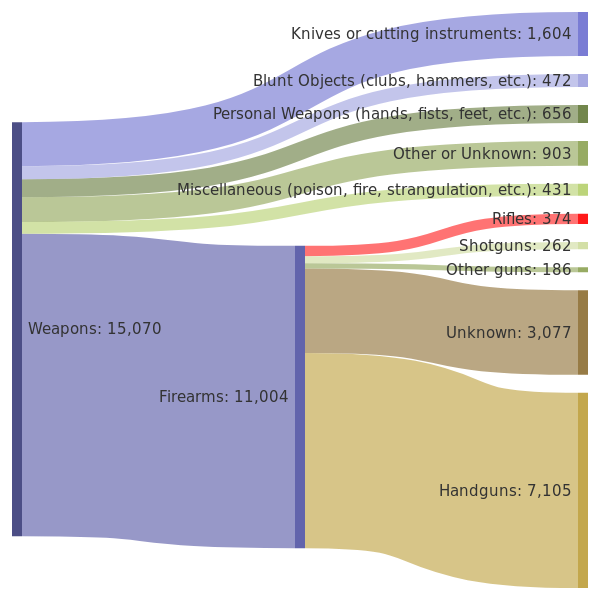





 It was programmed to live out this fate and no matter what it did or how hard it tried, there was no escaping it. Spectators watched as it slowly bled out until the day that it ceased to move forever. Saying that ‘this resonates’ doesn’t even do it justice imo. Created by Sun Yuan & Peng Yu, they named the piece, ‘Can’t Help Myself’. What a masterpiece. What a message.”


