Lowest Pair @ Oly’s Farmers Market 5-16-14

IMGP3089crp

Kendl Winter & Palmer T. Lee

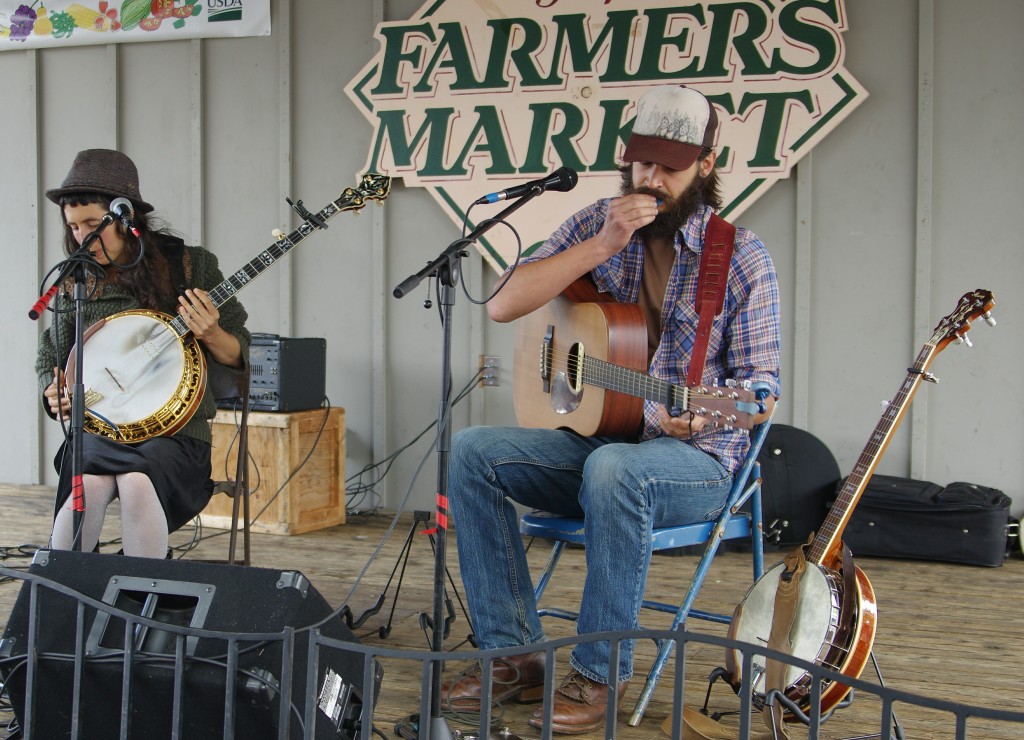
Olympia, WA @ Farmer’s Market State (5-16-14) — The Lowest Pair is a young bluegrass style duet who have been playing together for about 10 months. They sound as sweet as they look, which is a good thing as their harmony provides easy listening.

He’s from Minnesota and she’s from the Olympia area. They both sing, play banjo and guitar. Their repertoire isn’t huge, but it’s more than adequate and they ARE in demand, playing a full schedule of venues wherever they travel.
IMGP3094crp IMGP3090crp She’s Kendl Winter. He’s Palmer T. Lee. They look very happy together.  They SOUND happy together. They each have separate solo albums, but only one featuring both of them:

IMGP3091crp

The pear are obvious poets, but with the sweet melodic gift of music in their lyrical muse.

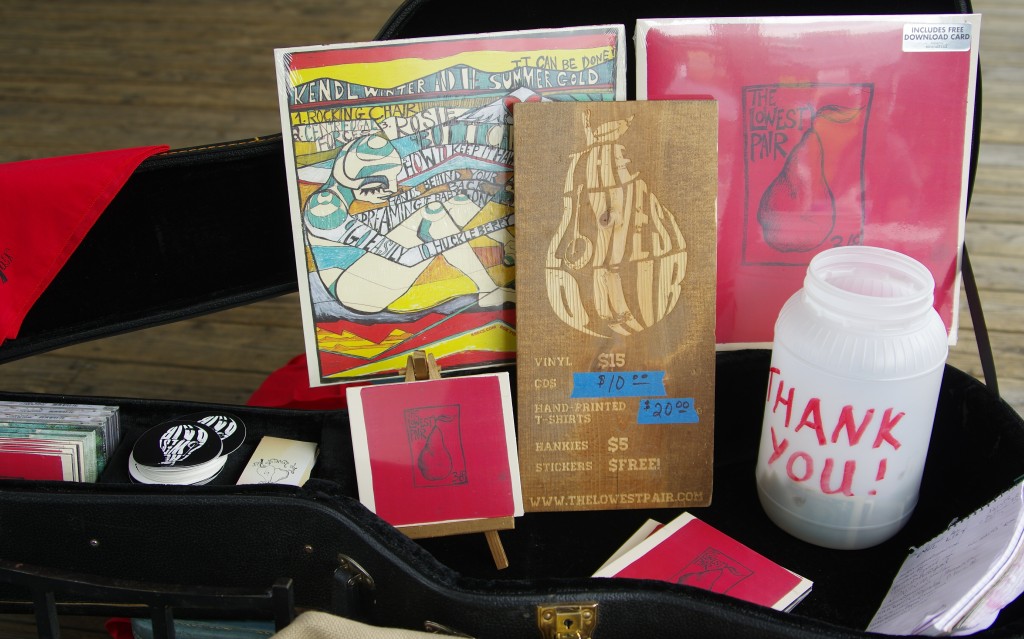
The Lowest Pair – 36¢ It has a logo (of course) of a pear on it–a Bartlett, perhaps–one of the sweeter varieties.  It includes such songs as:
1)  Oh Susanna
2)  Tuesday Morning 10:00 a.m.
3)  Living Is Dying
4)  Pear Tree [naturally!]
5)  Rumi’s Field
6)  Do You Leave The Light On?
7)  Last Summer
8)  Moving On
9)  Trying To Feel At Home
10) Magpies At Sunset
11) Dock My Boat IMGP3092crp

Contact Info:

The Lowest Pair: www.thelowestpair.com or thelowestpair@gmail.com IMGP3093crp
Drop them a “Hello” and your e-mail address so they can keep you posted on when they’ll be performing in your neighborhood. They’re well worth listening to and their $10 CD is a bargain.

The conditions leading to the following video clips were harsh at Oly’s Farmers Market with crying babies, food patrons using the foot of the stage as a sidewalk, and poor lighting from an overcast sky. Still, it should give listeners a measure of what they’re in for with this delightful duet.

Posted in Uncategorized | Leave a comment

Behind The Badge @ TESC 5-11-14

Keith LaMar (aka: Imam Saddique Hasan) & family

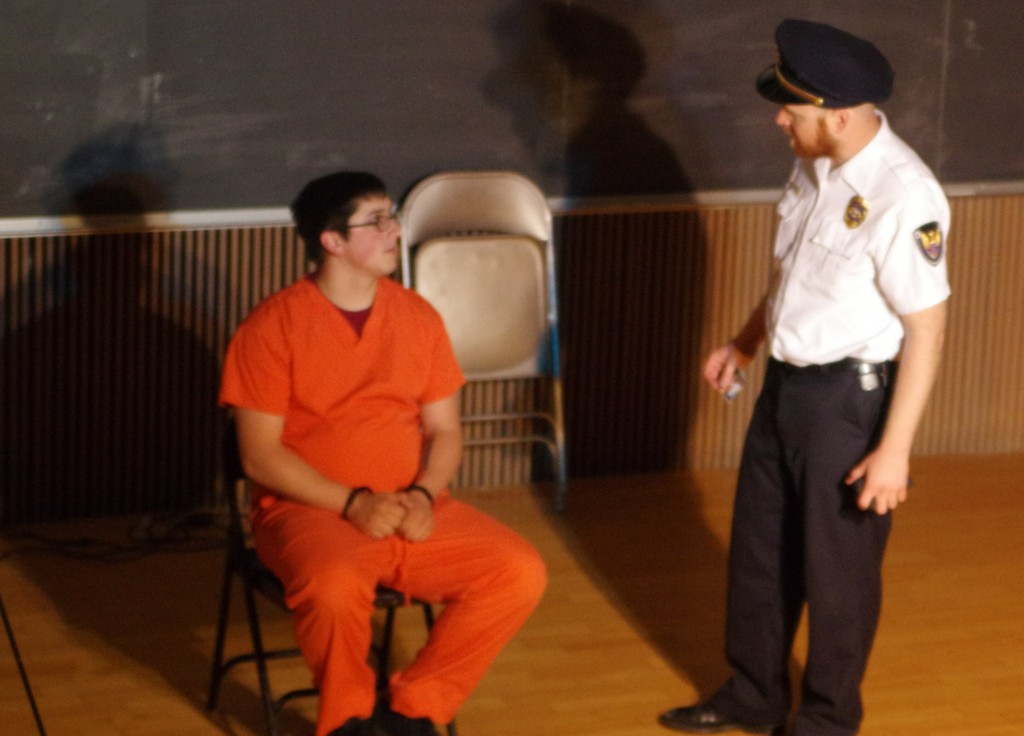
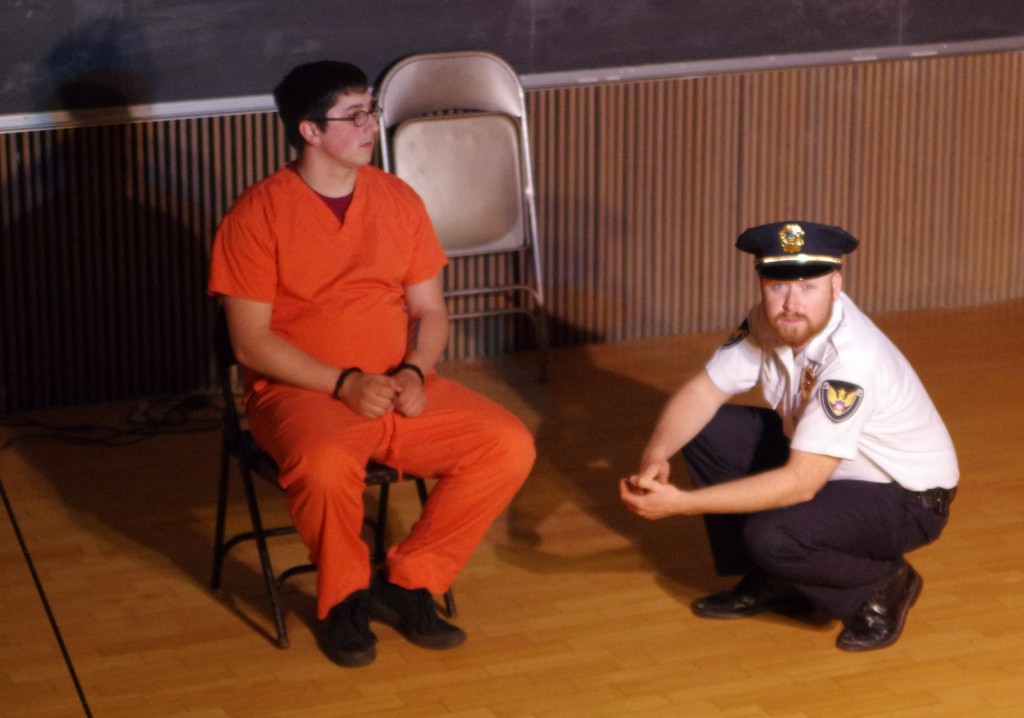
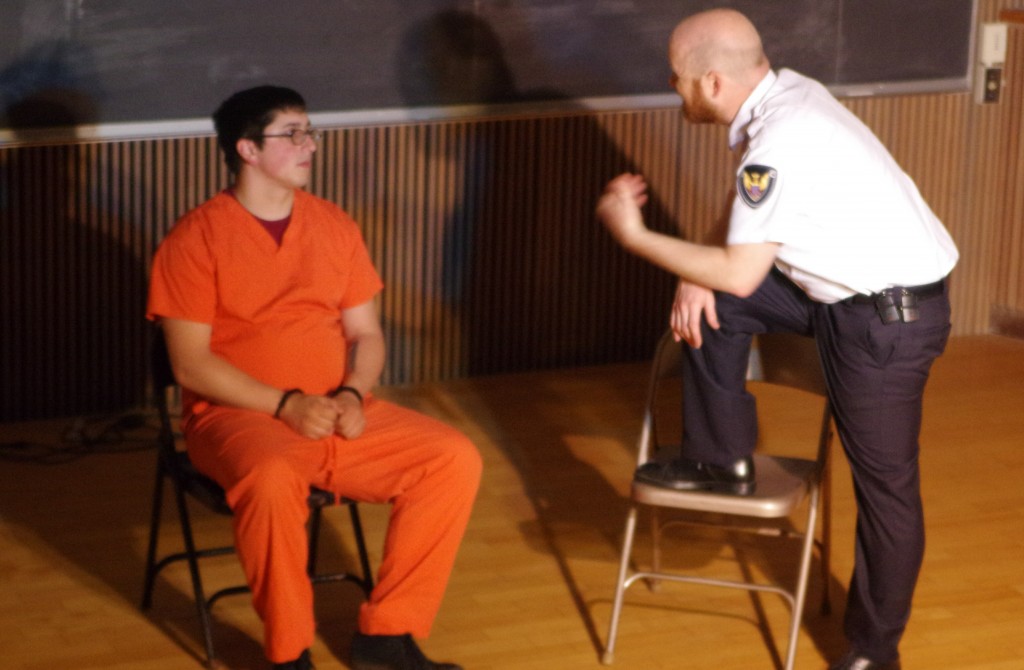
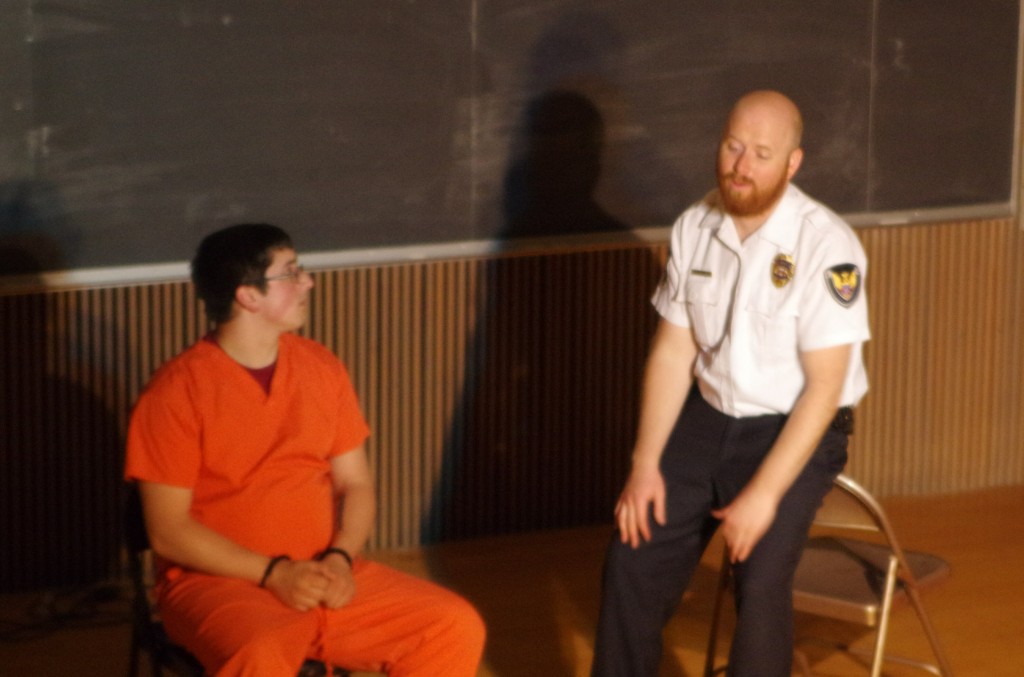
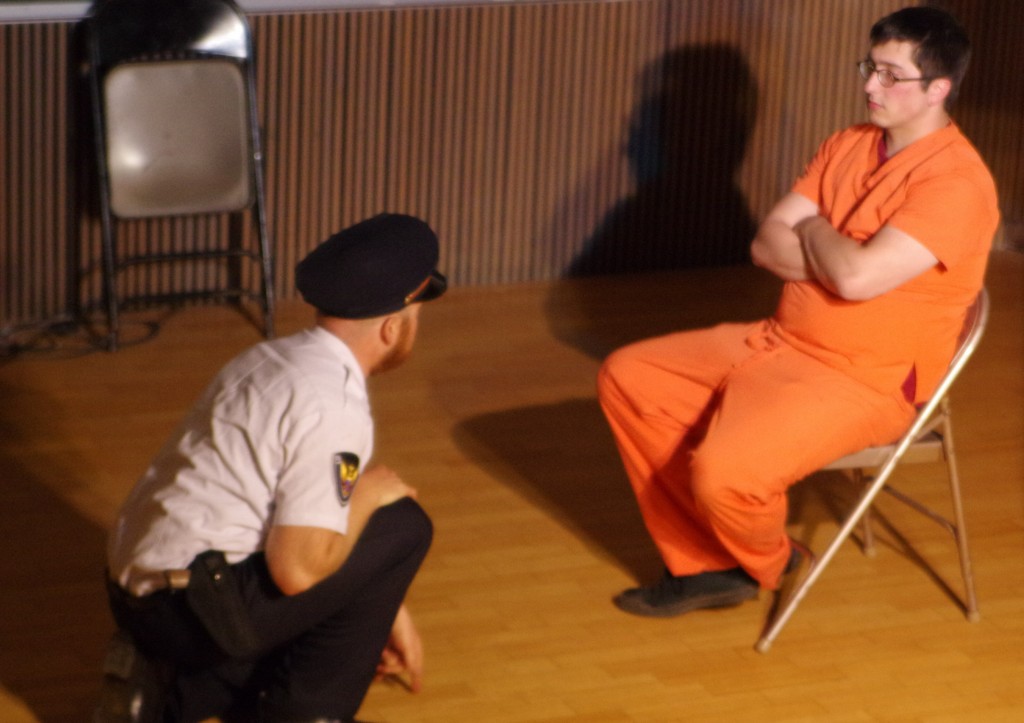
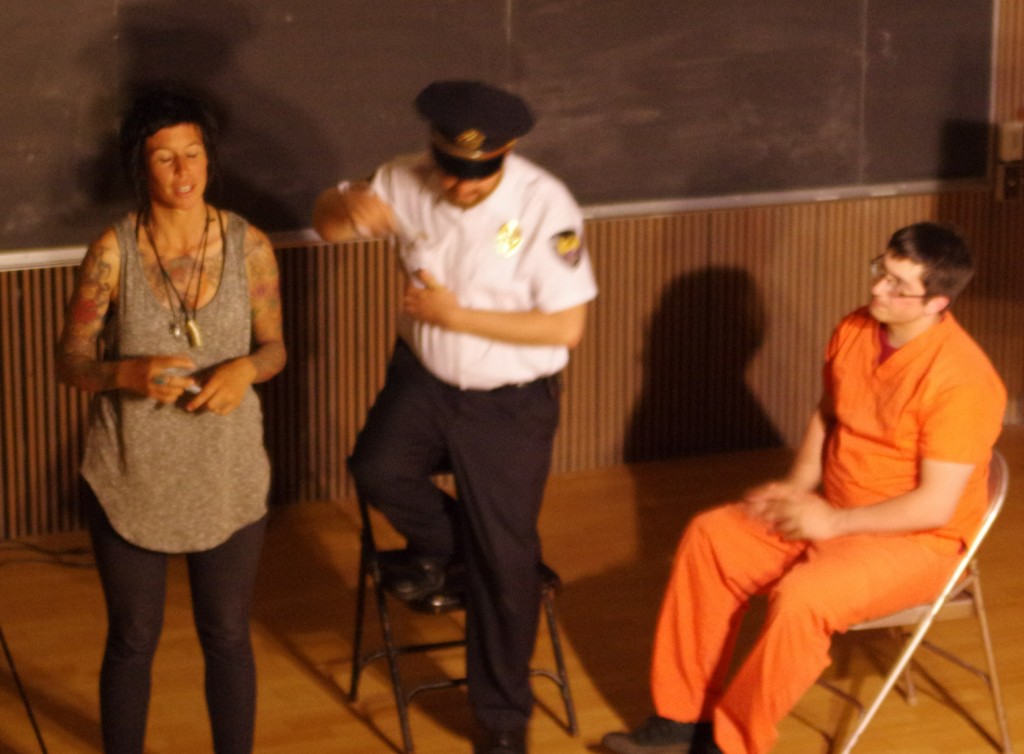
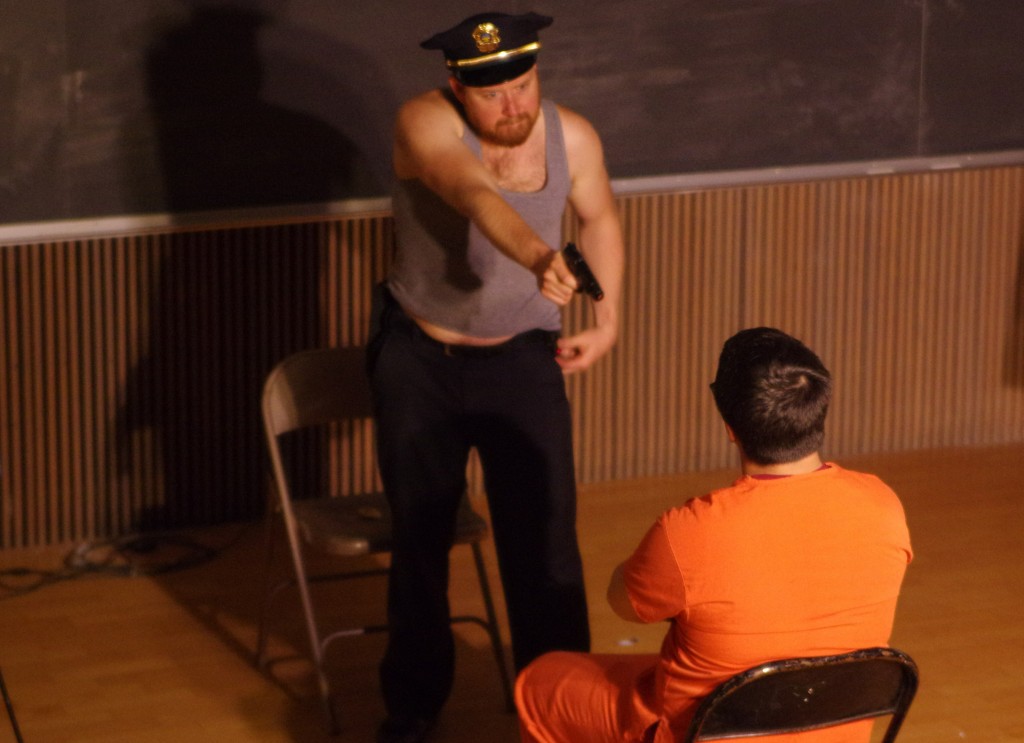
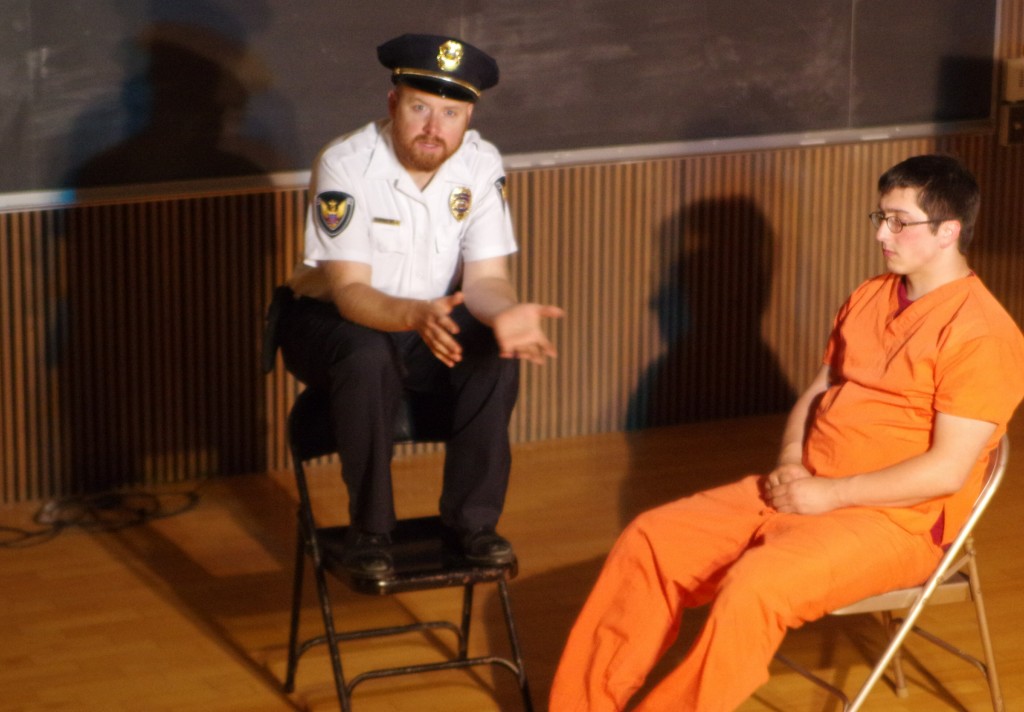
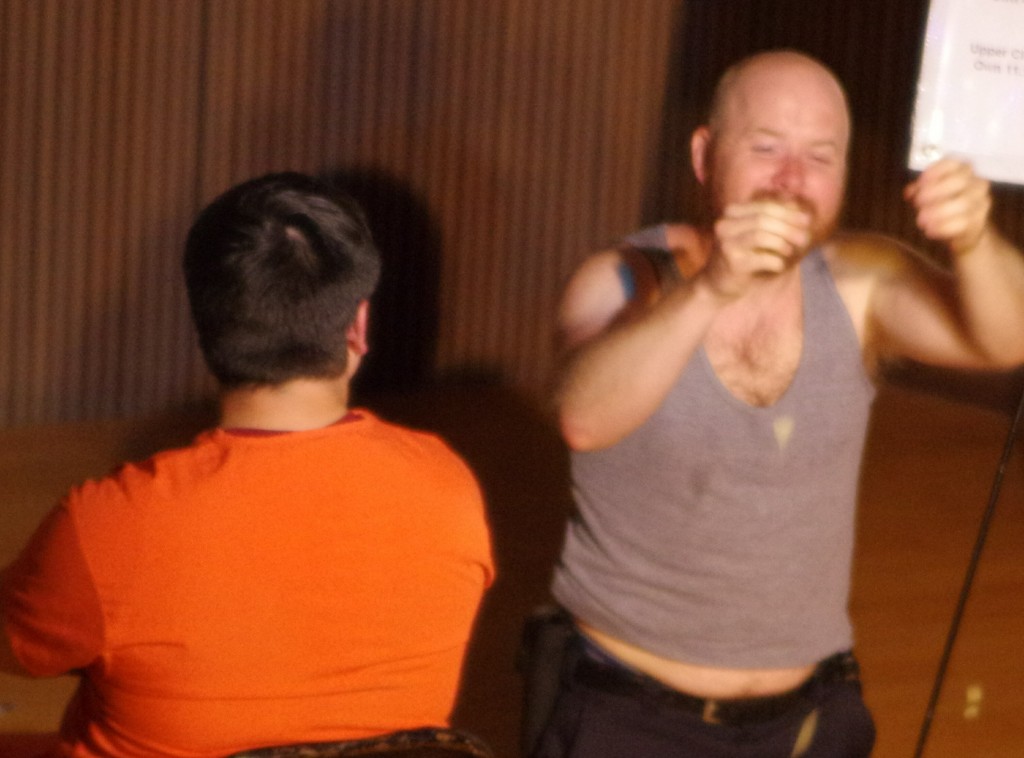
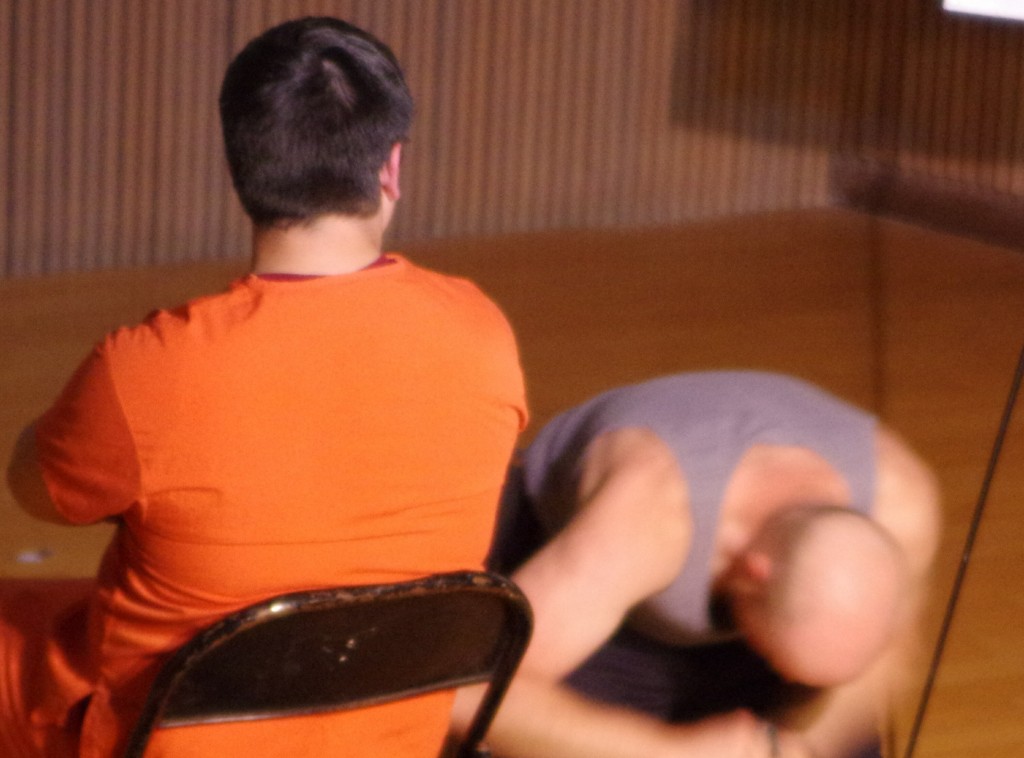
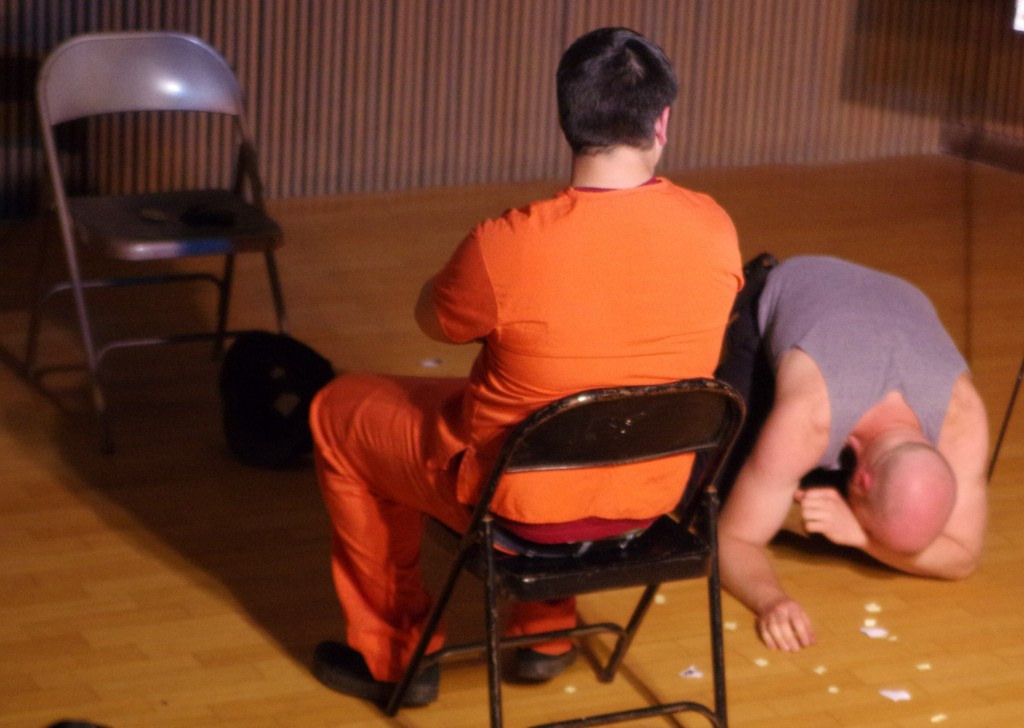
Olympia, WA  @ TESC — Behind The Badge is a theatrical examination of police and prisons in America. It’s written and performed by Ben Turk, directed by Kate Pleuss with contributions from Colleen Hackett.

Mr. Turk admits he’s not a ‘professional’ actor, but that’s not obvious after watching his excellent performance in TESC’s Lecture Hall 1, Wednesday afternoon as a police officer interrogating a ‘suspect’ selected from the audience.

The entire presentation was scheduled from 3:00 pm – 7:00 pm including roughly an hour’s live conversation between the audience and an Ohio death row inmate whose conviction stemmed from the Lucasville prison riot circa 4-11-93 and a well produced film, The Shadow of Lucasville, a new documentary film by D Jones about the 1993 prison uprising in Lucasville Ohio, introducing the issues and participants surrounding the uprising. The film is not available online or CD, but a showing can be arranged through Mr. Turk and his organization. (Contact info: insurgent.ben@gmail.com or (614) 704-4699)

On Easter Sunday, April 11, 1993, 450 Lucasville prisoners, including an unlikely alliance of the Aryan Brotherhood and Gangster Disciples, rioted and took over the facility for 11 days. The main causes apparently were serious overcrowding and mismanagement of the facility and discontent in the general population that the authorities were going to force Muslim prisoners to undergo tuberculosis vaccinations in violation of their religious beliefs. Investigations conducted after the riot found that the gangs were also collaborating to murder inmates accused of being informants. Nine inmates and one corrections officer were killed.

During negotiations, the inmates did not feel they were being taken seriously, and there was discussion of killing a guard in retaliation. Though the group never reached a decision on the killing, one of the prisoners decided it was time to take action. According to the prosecution, Officer Robert Vallandingham, who had been taken hostage, was handcuffed and strangled with a dumbbell from the prison weight room. However, testimony by Dr. Richard Fardal, Franklin County Deputy Coroner, disputed the claim that Officer Vallandingham was killed by a weight, saying that there was “no injury to the voice box or the trachea” and that “Mr. Vallandingham died solely and exclusively as a result of ligature strangulation.” Testimonies vary as to which prisoner was responsible for his murder. During those eleven days, representatives from the Sunni Muslims, Aryan Brotherhood, and Gangster Disciples met every day in an improvised leadership council. 

During an interview shown in the above referenced film production, the Ohio State prosecutor who secured the capital convictions admitted it was unknown who actually strangled the corrections officer and it was unlikely it would ever be known. Nevertheless, several prisoners were sentenced to death based on their having debated/discussed the possibility of executing one of the hostages.

Four prisoners, Siddique Abdullah Hasan (Carlos Sanders), Jason Robb, George Skatzes, and Namir Abdul Mateen (James Were), were sentenced to death as a result. Keith LaMar (Bomani Shakur), unaffiliated with any of the above-mentioned groups, was sentenced to death for his alleged leadership of a group who killed inmates during the riot (he denies these claims and cites the State of Ohio suppressed evidence that could demonstrate his innocence). He was not present in L-6 during the majority of the riot, having been taken off the rec yard the first day by the State authorities and housed in the K block.

DEATH ROW

The Southern Ohio Correctional Facility is the location where Ohio prisoners are executed; however, prisoners awaiting execution are not housed there on a long term basis. Since the riots, death row has been relocated three times. The first relocation was to the Mansfield Correctional Institution in Mansfield with the majority of inmates being moved later to the Ohio State Penitentiary, a supermax facility in Youngstown while a few remained at Mansfield. Currently, all but eight condemned inmates are housed in a new death row unit at the Chillicothe Correctional Institution in Chillicothe. Six high security inmates, most of whom were involved in the 1993 riots, remain at OSP with two others with serious medical conditions housed at the Franklin Medical Center in Columbus.
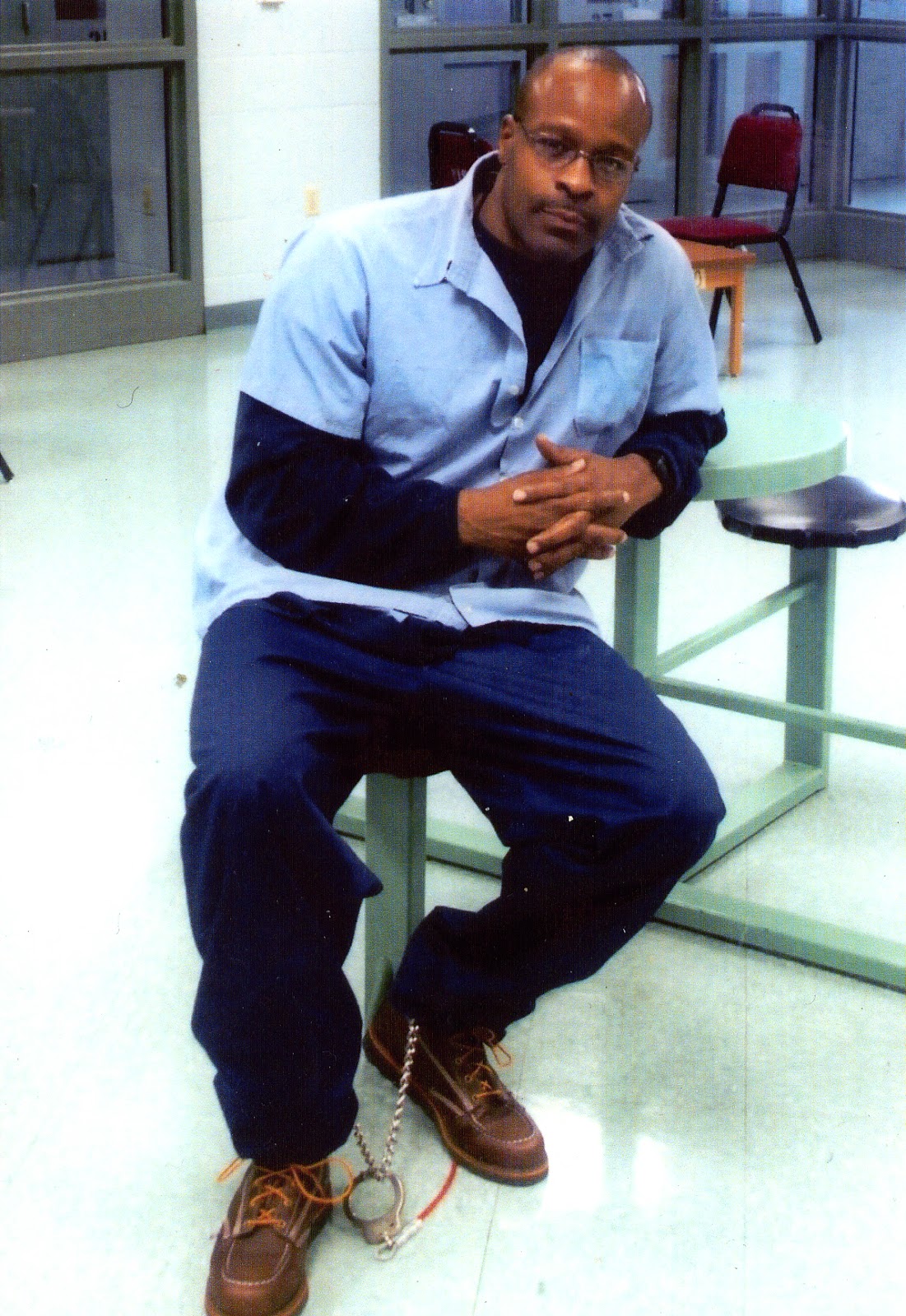
Keith LaMar (aka: Imam Saddique Hasan)

At one point during the Q&A session, the condemned man (Keith LaMar) on speakerphone was asked if he regretted the deaths of the correction officer and inmates murdered during the riot, what he would say to their families if he had the opportunity. His response may have been driven by the fact he  had one appeal left currently undergoing consideration in Ohio courts and any ‘remorse’ might be taken as an admission when his appeal is based upon a claim of innocence, not extenuating circumstances. He seemed agitated by the question and continued to focus on his own circumstances, history, and what had let up to them. He expressed anger and annoyance regarding the term ‘regret’. He also sounded nervous/scared as the days slipped by between his appeal and anticipated execution date. It was a sobering exchange for the audience. No decent human being minimizes the suffering associated with an impending execution date, yet there was little talk or consideration expressed about the suffering the inmates murdered as ‘snitches’ or the prison guard must have felt–the terror of their last moments, the tears of their families and loved ones. It was all about the injustice the condemned man felt, none of his limited time on the phone was used to express ‘regret’ over their fate. His words/reaction can, of course, be heard in the associated video captured during the event.

Prosecutors have called it “the longest prison riot in U.S. history.” More accurately, the director of the Ohio Department of Rehabilitation and Correction (ODRC) refers to “the longest prison siege in U.S. history where lives were lost.” A 1987 rebellion at the United States Penitentiary in Atlanta seems to have lasted a few hours longer.

Bobby Vallandingham holds a picture of his father, Robert, outside his home in Wheelersburg, Ohio.

The uprising took place in April 1993 in Lucasville, Ohio, a small community just north of the Ohio River. Two populations, approximately equal in number, confronted one another there. On the one hand were the maximum security prisoners at the Southern Ohio Correctional Facility (SOCF), mostly black, mostly from cities like Cincinnati and Cleveland. On the other hand was the all-white population of the town. Almost everyone in Lucasville worked at the facility or knew someone who did.

In the course of the 11-day occupation, one correctional officer and 9 prisoners were murdered by inmates.

Those 11 days in April 1993 coincided with the much-publicized siege of the Branch Davidian compound in Waco, Texas. Most Americans were barely aware of the Lucasville disturbance.

In 1996 a supermaximum security (or “supermax”) prison was being built in Youngstown. A community forum was organized at a church near the site to explore the question:
“What is a supermax prison?” Jackie Bowers from Marion, Ohio, testified about the experience of 23-hour-a-day isolation. She is the sister of George Skatzes (‘Big George’), one of the five men condemned to death after the Lucasville events.

A couple of retired attorneys took an interest in Big George’s case (post conviction), became convinced of his innocence, and volunteered to assist his post-conviction counsel. As retired attorneys, they had more time than busy practicing lawyers to read 5,000- or 6,000-page transcripts. Little by little they came to be researchers for several of the Lucasville Five defense teams.

Two things caught their attention at the outset.

First, there has been an extraordinary degree of solidarity among the five men condemned to death. They have shared legal materials to a greater extent than have their attorneys. The condemned men have expressed concern about one another’s health problems. Together, they have engaged in a series of hunger strikes protesting their burdensome conditions of confinement. Yet two of the five were at the time of the uprising members of the Aryan Brotherhood, an organization thought to endorse white supremacy, and the other three are African Americans. I sensed a dynamic quite different from the unchanging—even unchangeable—racism that many historians have recently ascribed to white workers in the United States.

Second, emotions in southern Ohio have run so strongly about the Lucasville events that truth had gotten lost in the shuffle.

The Columbia Journalism Review published an article about the irresponsible speculations of the media during those 11 days. “Glaring mistakes were reported as fact, and were never corrected,” the Review declared. “Reporters … vied for atrocity stories. They ran scary tales—totally false, it was later found—that spread panic and paranoia throughout the region.”
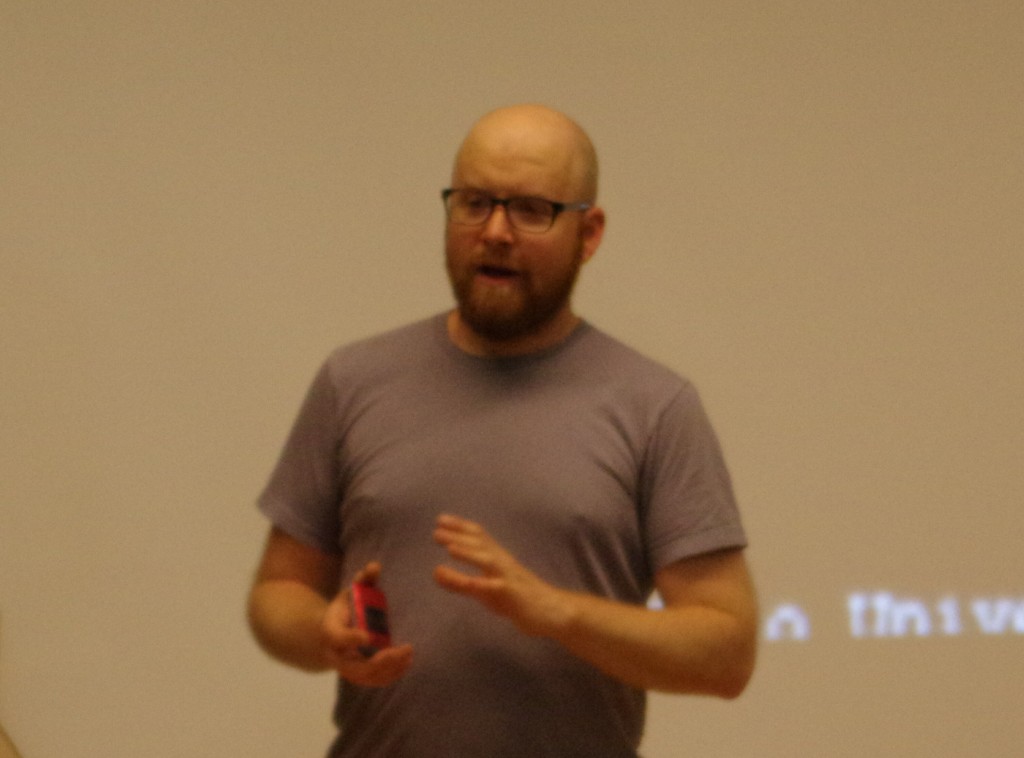
IMGP3062crp

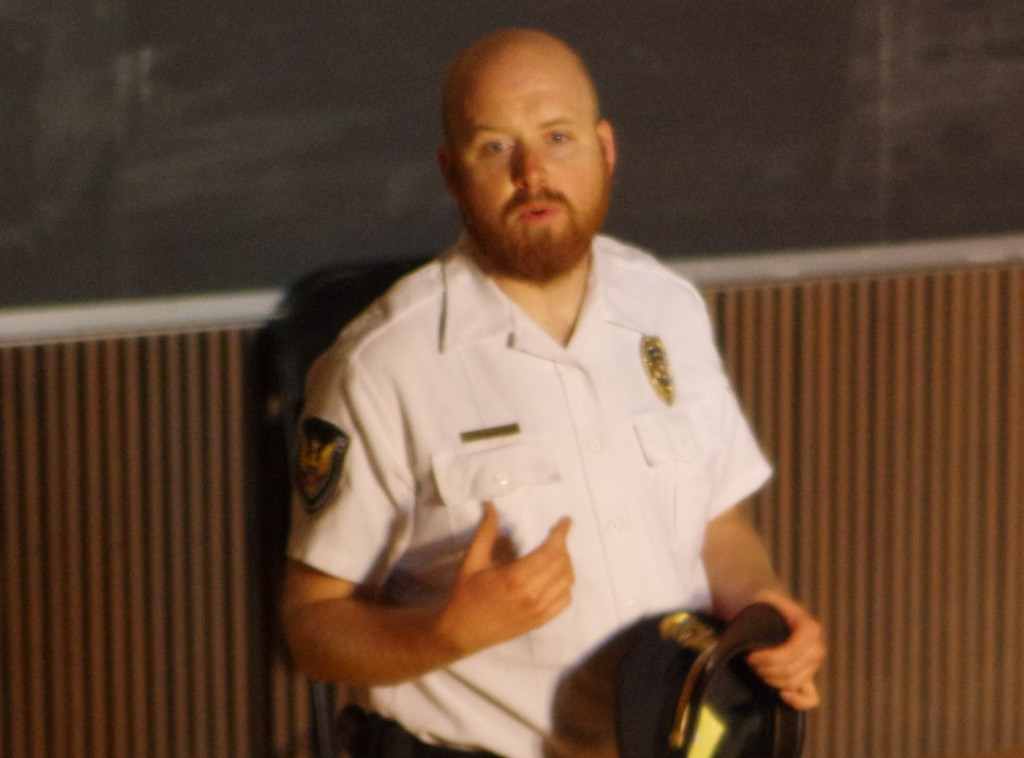
Ben Turk, playwright/actor (Behind The Badge)
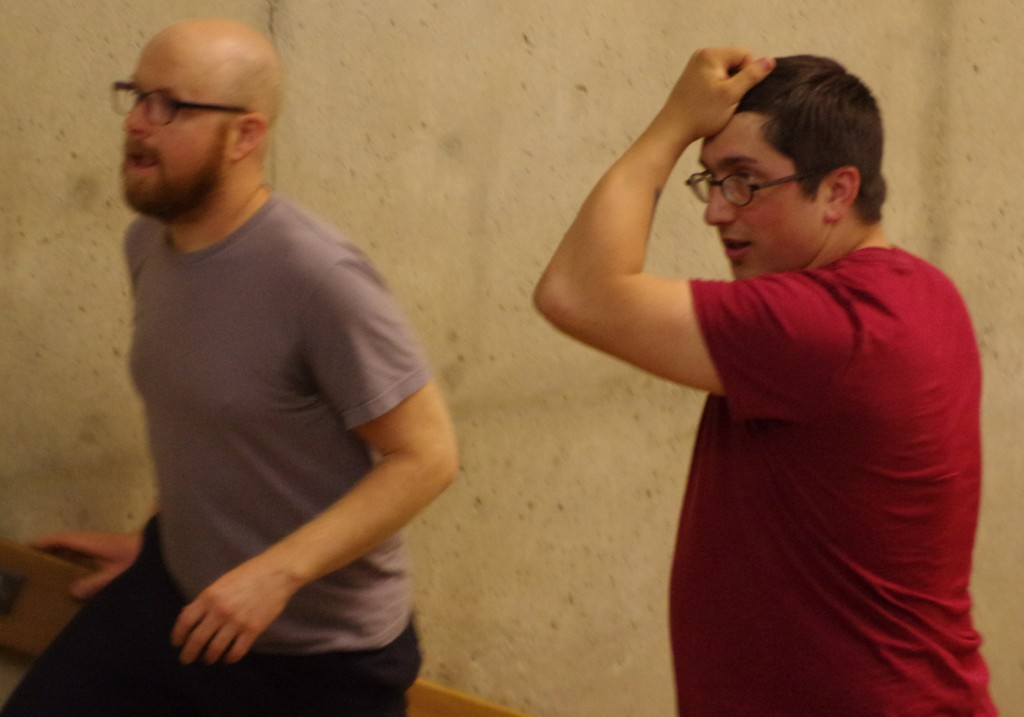
IMGP3064crp

Ben Turk w/Brad Collins, student organizer of TESC’s ACAP (Abolish Cops And Prisons)

Among the examples recounted were these:

• Six days into the riot, a front-page story in the Cleveland Plain Dealer, citing anonymous sources, reported that along with seven inmate deaths, 19 other people in the prison had been killed, including “some pretty barbarous mutilations of the dead.”

• A reporter for Channel 4 told viewers that as many as 172 bodies were piled up in the prison. This body count turned out to be a head count of inmates in one of the blocks not involved in the riot.

• The Akron Beacon Journal reported about the murder of Officer Robert Vallandingham “that his eyes had been gouged out, that his back, arms and legs had been broken, and that his tongue had been cut out.” Not one of these details was accurate.

IMGP3066crp

Home Made Stage Lighting

IMGP3067crp

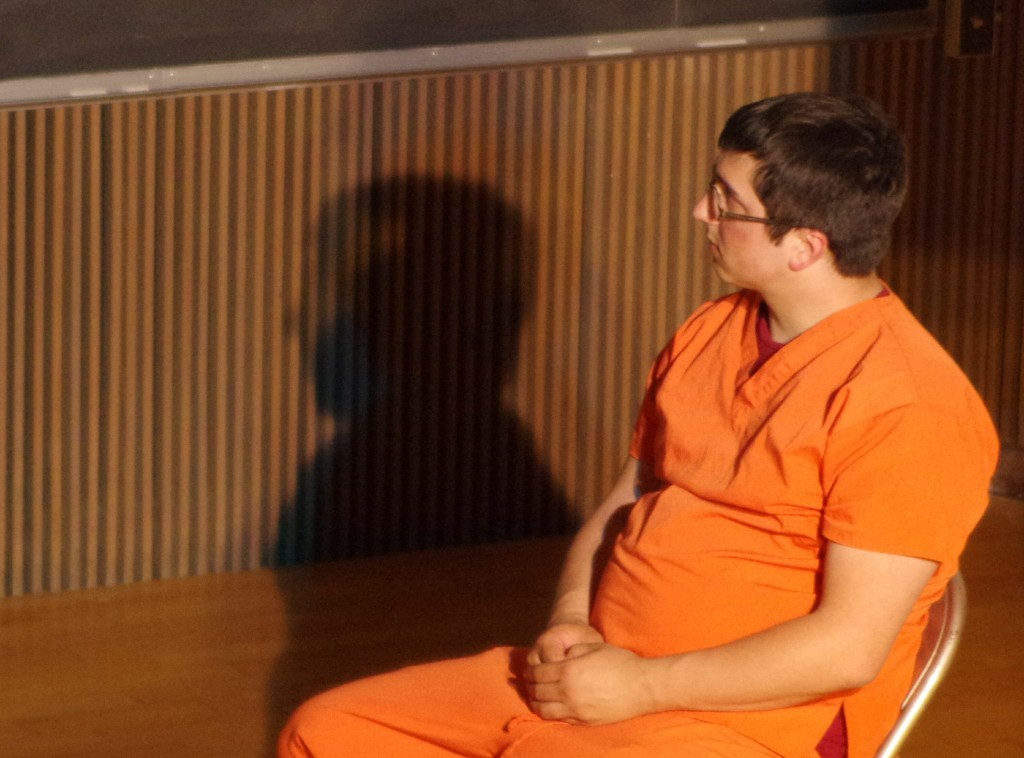
Brad playing a suspect being interrogated

Even on the tenth anniversary of the uprising, in April 2003, media coverage in Ohio dealt almost exclusively with persons outside prison. The highest award given to Ohio correctional officers for bravery was renamed for Officer Vallandingham; his widow, Peggy
Vallandingham, accepted the Vallandingham Gold Star Award for Valor in his name; and flags at Ohio prisons flew at half-mast. News stories conveyed next to nothing about the men [convicted killers] on Death Row.

This was not wholly the fault of the media. Applying what appears to be a permanent policy, in mid-February 2003 ODRC Director Reginald Wilkinson informed a reporter for the Columbus Dispatch that “no inmates convicted of riot crimes will be permitted
to speak to” reporters.
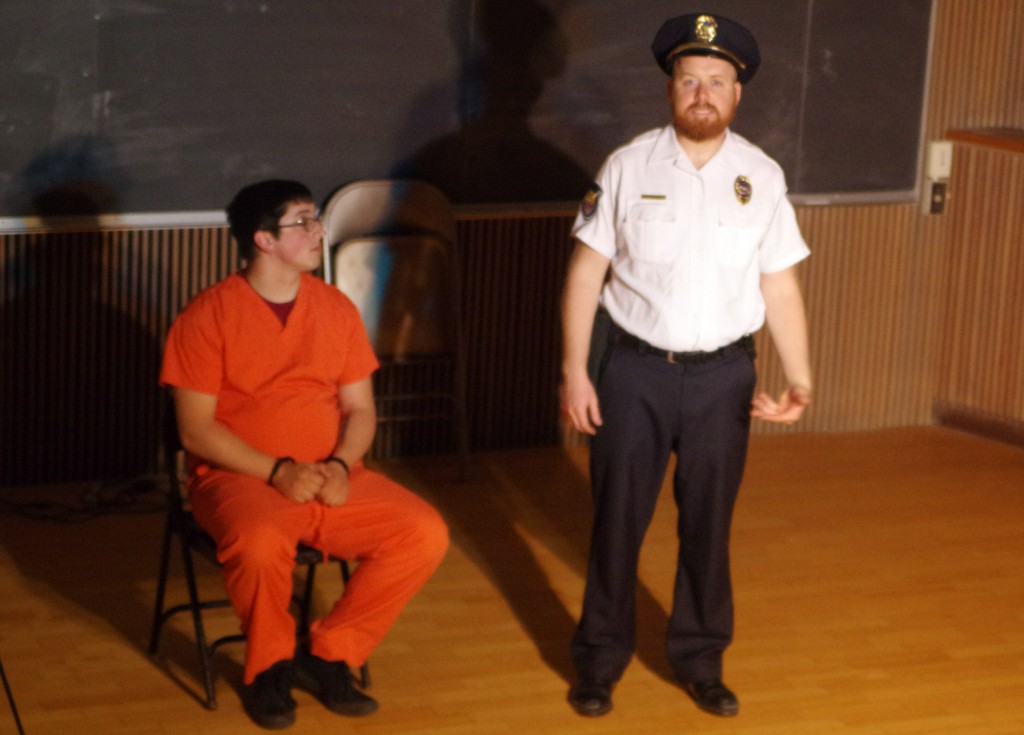
IMGP3068crp IMGP3069crp

Both historians and lawyers claim to be devoted to the search for truth. And because historians and lawyers commonly turn their attention to events after they have occurred, one might suppose that history and law would correct the mistakes of journalists reporting in the heat of the moment.

Yet from a historian’s point of view, official narratives about what happened at Lucasville are disturbing in many ways. For example, a historian writing about these events would almost certainly begin by exploring the causes of the riot. But as later explained more fully, in the Lucasville capital cases the defense was forbidden to present such evidence, while the prosecution was permitted to expand on this theme at length.
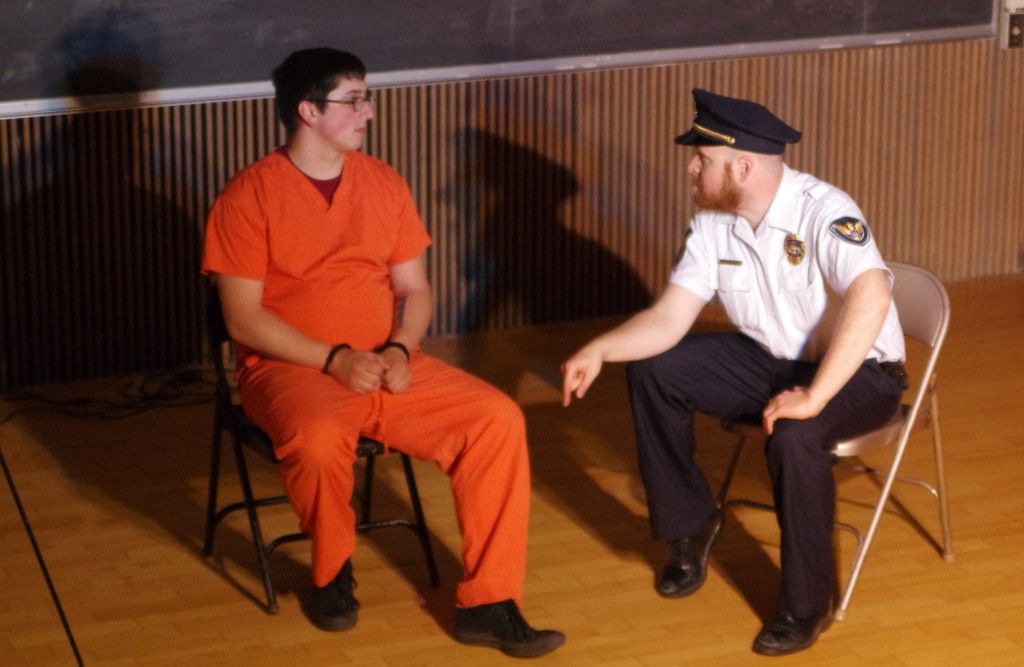
IMGP3070crp

Officer Friendly

IMGP3071crp

Pleading for Rapport

Indeed, one’s belief in the integrity of truth-seeking in the law might be shaken by the Lucasville judicial proceedings. The idea the adversarial process promotes truth-seeking may be as misleading as the assumption that the free-market competition of profit-maximizing corporations will produce adequate public health.
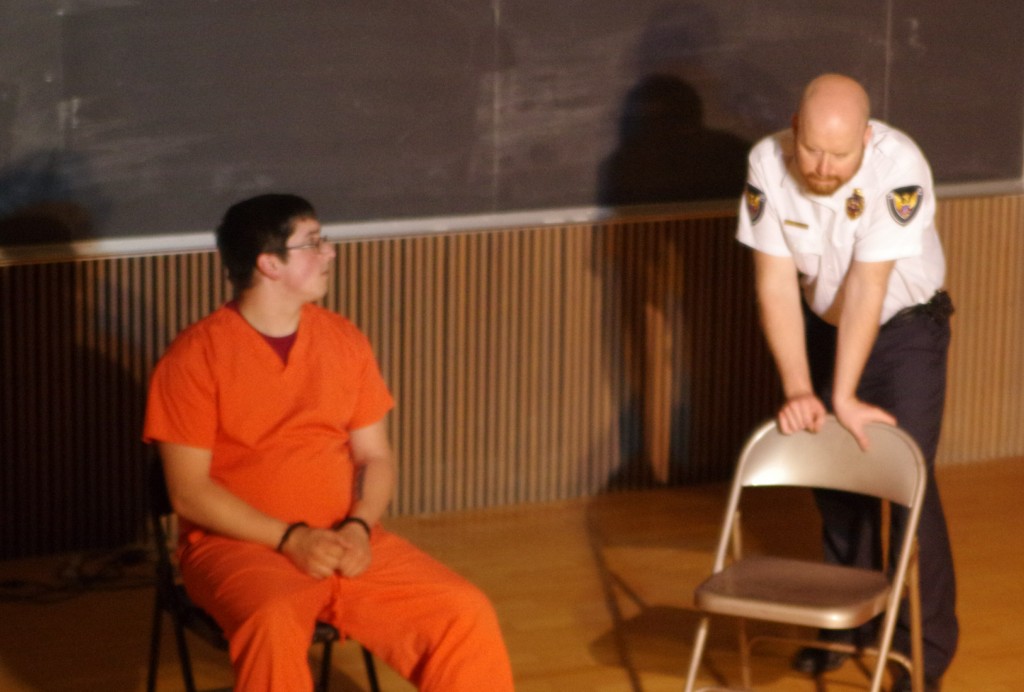
IMGP3072crp

Stockholm Syndrome

IMGP3073crp

Sympathy for the Devil

What follows are the facts of the Lucasville disturbance as best as can be discerned. This is the untold story that the State of Ohio doesn’t want you to hear.

A central thesis is the State of Ohio and its citizens need to face up to the State’s share of responsibility for what happened at Lucasville.
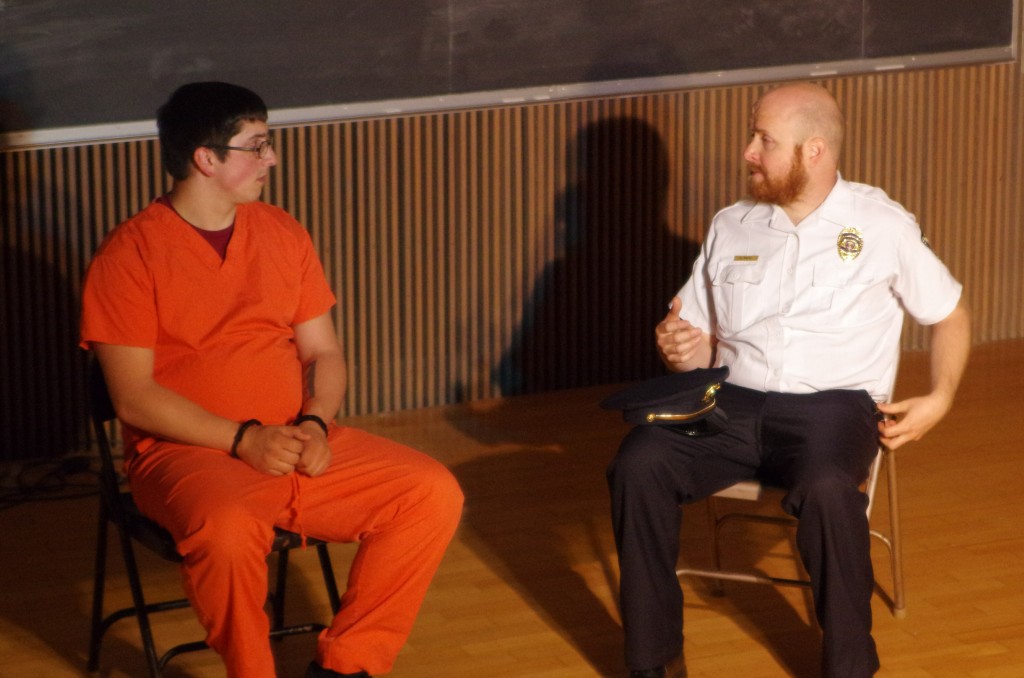
IMGP3074crp

Family Man

IMGP3075crp

Getting to Know Big Brother

It might be argued the authorities have already conceded their part in the sequence of cause and effect. Prisoners not involved in the disturbance later sued state defendants for negligence in connection with the rebellion. The prisoners’ suit alleged in part:

17. In 1990, following an investigation at SOCF, a State Senate Select Committee determined that the security policy and procedures at the institution were “woefully inadequate,” and recommended various reforms. . . .

18. Also in 1990, in order to rectify overcrowded conditions and to maintain proper security within SOCF, defendants … announced the implementation of “Operation Shakedown” pursuant to which the entire population of the prison was to be single-celled.

19. As of April 11, 1993, single celling had not yet been instituted at SOCF; one thousand eight hundred and twenty (1,820) inmates were still housed in the prison (a number far in excess of the institution’s design capacity).
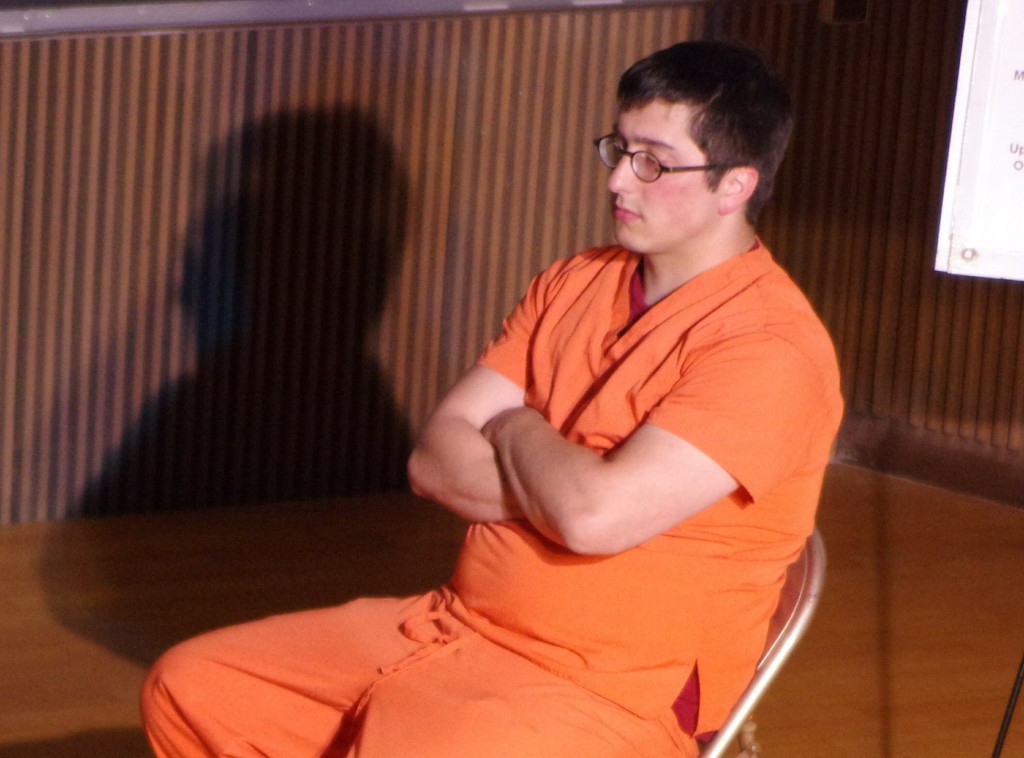
IMGP3076crp

In the Belly of the Beast

IMGP3077crp1

What Am I Doing Here?

Rather than defend against these and other allegations, the authorities settled with the prisoners for $4.1 million. The correctional officers taken hostage, together with the widow and son of Officer Vallandingham, likewise sued the authorities “for numerous torts before and during the siege.” The state once again settled, for more than $2 million.
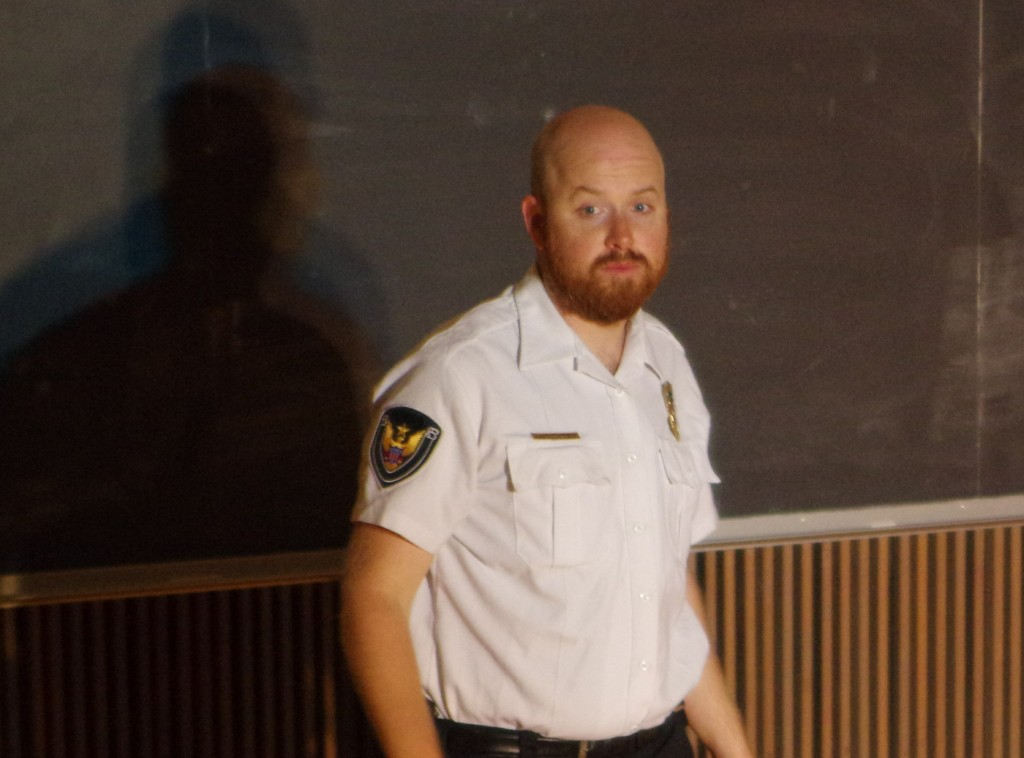
IMGP3077crp2

A Friend Who Searches Body Cavities

IMGP3078crp

Just Between You and Me–Off the Record

In addition to the state’s role in causing the riot, there were several ways in which its negotiators heightened the peril for the correctional officers held hostage in L block.

• Sergeant Howard Hudson, who was present throughout the negotiations, conceded that state negotiators deliberately stalled.

• On April 12, apparently in response to communication between prisoners and the media, Warden Arthur Tate cut off water and electricity in L block. This action unnecessarily created a new conflict between the occupiers and the authorities, and the failure
to resolve it was the occasion for Officer Vallandingham’s murder.

• On the morning of April 14, a state spokesperson named Tessa Unwin denigrated the prisoners’ demands and said that the prisoners’ threat to kill a guard was “just part of the language of negotiation.”

Officer Vallandingham was killed the next day while an anguished George Skatzes, negotiating over the telephone, pleaded with the authorities to restore water and electricity.
IMGP3079crp

Keeping It Light

IMGP3080crp

Directed by Kate Pleuss

None of this impressed the Supreme Court of Ohio. In affirming one of the death sentences, the court stated:

Nor was DRC’s alleged refusal to “negotiate in good faith” relevant in the guilt phase. Let us be clear: The authorities in lawful charge of a prison have no duty to “negotiate in good faith” with inmates who have seized the prison and taken hostages, and the “failure” of those authorities to negotiate is not an available defense to inmates charged with the murder of a hostage.

Some believe these words to be profoundly misguided. To be sure, the authorities negotiated under duress. Moreover, if Sergeant Hudson and Ms. Unwin helped to cause the death of Officer Vallandingham, this does not mean the leaders of the uprising were necessarily free of guilt.
IMGP3082crp

You Won’t Look at My Family Pictures?
IMGP3083crp

Cop Losing It

What’s questionable in the decisions of the Ohio Supreme Court is the attitude that prisoners in rebellion are “enemy combatants” toward whom the authorities have no obligations at all. For example, one Court of Appeals held that under the plain language of the law existing in 1993, the state had illegally eavesdropped on the conversations of prisoners in L block, and that this crucial evidence should therefore have been excluded at trial. On further appeal, the Ohio Supreme Court held that enforcement of the
statute for the benefit of rioting prisoners would be “absurd”.

Such a holding, and the attitude prompting it, oversimplify a tangled sequence of cause and effect. Perhaps the law itself is prone to such rigidity. Perhaps legal practitioners are driven to view the world superficially by the desire to win. History, with its constipated analysis,
has serious problems of its own. But, history at least stands for the proposition that an event can have more than one cause, and sometimes what happens in life is not a melodrama, with clearcut villains and heroes, but a tragedy in which we all have played
a part. Is it too much to ask that before sending five more men to their deaths, we pause and seek to determine what really happened?
IMGP3085crp

The Perils of Power…and Being Hated

IMGP3087crp

Judge, Jury, & Executioner

Finally, there is the state’s misconduct after the prisoners surrendered on April 21. At that point the agency charged with investigating what had occurred—the Ohio State Highway Patrol (OSHP)— and the special prosecutorial team appointed to try the Lucasville cases were free to act calmly and with circumspection.

Instead, in the absence of physical evidence the State, through its various agencies, targeted those whom it believed to have led the uprising and built cases against them by cutting deals with prisoners willing to become informants. The government threatened prisoners with death if they declined to “cooperate.” It appears the prosecution put
witnesses on the stand to offer testimony the state knew to be false. Like Emile Zola in his celebrated exposé of the Dreyfus case, the State stands accused the of deliberately framing innocent men. [The chief prosecutor, while being interviewed for the film referenced above, fecklessly admitted he rolled up a newspaper and repeatedly whacked one of the State’s witnesses every time the inmate would start a sentence with, “I won’t lie to you…” The State’s prosecuting attorney seemed oblivious to the appearance of coercion, arguing this hardly amounted to ‘beating testimony out of a witness’ or witness tampering.]

Arguably, Ohio should be guided by the experience of the State of New York after the rebellion at that state’s Attica prison in 1971. During the years 1975–76 it came to light prisoners had been induced to present perjured testimony, and prosecutors were
intentionally suppressing evidence of misconduct by State personnel during the assault on the prison. In the end, New York Governor Hugh Carey declared an amnesty for everyone involved in the Attica tragedy—both prisoners and persons involved in the state’s assault on the recreation yard—and extended clemency to prisoners who had already been convicted or had previously entered into plea bargains.

Ohio should do likewise. The pattern of prosecutorial misconduct should cause Ohio’s governor to pardon all Lucasville defendants found guilty of rebellion-related crimes.

Some of those who helped assembled these researched facts include:

Frances Goldin, friend, literary agent, and negotiator extraordinaire, and Peter Wissoker, senior acquisitions editor for Temple University Press. There were a number of diligent lawyers, among them Niki Schwartz, who represented the prisoners in L block in settlement negotiations at the end of the disturbance; Dale Baich, who worked on the Lucasville cases while employed by the Office of the Ohio Public Defender; Richard Kerger, one of the lawyers for the supposed principal leader of the rebellion, Siddique Abdullah Hasan; Palmer Singleton of the Southern Center for Human Rights, which represents capital defendants in Georgia and Alabama; and Professor Jules Lobel of the University of Pittsburgh School of Law.

In addition to the five men condemned to death, at least eighteen prisoners contributed relevant memories, documents, and insights. They are not named lest doing so expose them to retaliation. They know who they are, and they will find their contributions in these pages.

In most cases, the information provided to me offered no benefit to the prisoner who shared it. In at least one instance, a prisoner conveyed information to clear his conscience at considerable peril to himself.

Like the women who attended Jesus at the cross after the disciples fled, three women—Jackie Bowers, sister of George Skatzes; Angela Merles Lamar, wife of Keith Lamar; and Vincenza Ammar, beloved friend of Namir Abdul Mateen—provided whatever assistance was in their power to give.

Attorney Alice Lynd, spent approximately three years poring over the transcript of the capital proceedings against George Skatzes, indexing and cross-indexing, and identifying issues for appeal. Later, her time was almost wholly taken up by litigation concerning conditions at the supermax prison that opened in Youngstown in 1998. Most of the prisoners who were found guilty of crimes or rule violations connected with the Lucasville uprising, including those sentenced to death, have been housed at the supermax.

The pool of prisoner witnesses to what happened in 1993 was thus near at hand. And Alice has had an uncanny ability to retrieve documents that had once examined but thereafter seemed to have disappeared.

The five men condemned to death—the “Lucasville Five”—have been extraordinary collaborators. Throughout the process, each of these men has been confined alone in a small cell, with little access to any of the others. A meeting including all five around
a table has never been permitted. Disagreements among the Five could not be ironed out face to face. Prison mail presented many frustrations. Despite these physical obstacles, all five have shared their legal papers with each other, responded to requests, and reviewed manuscripts in various stages of its preparation.

One at a time, probing their recollections, considering documents that very often they had provided, when it have came to conclusions different from what some of these men remember, those were discussed with mutual respect and effort to establish the truth.

Mumia Abu-Jamal has played a special role. He is probably the best-known prisoner in the United States, if not in the world. During the period in which I put this book together, Mumia and his attorneys were in the midst of cross appeals from the decision of a federal
judge who had for the moment set aside Mumia’s death sentence (although he remained on Pennsylvania’s Death Row), but left the jury verdict of guilt intact. Mumia stepped back from these pressing personal concerns to help with this book.

Mumia knew of George Skatzes, and there existed respect at a distance between the former Black Panther who has remained silent about the events surrounding the death of Officer Daniel Faulkner in Philadelphia, and the former member of the Aryan Brotherhood who has declined the state’s invitation to accuse other prisoners of murdering Officer Robert Vallandingham (see Chapter 5). Mumia said he felt a book was “doable.” Pennsylvania prison regulations prohibited direct correspondence between Mumia and the
Lucasville Five, but through correspondents, he offered encouragement.

In an unpublished essay on the Lucasville events, Mumia shares his views about what happened there:

Lucasville
The name is evocative. People who hear it, who may know very little about its recent role in Ohio history, seem to recognize its penal roots.

It has become a site etched upon the American mind that means prison, like Sing Sing, Marion, or Lewisburg. The name evokes an aura of fear, of foreboding.

In this essay Mumia contrasts what happened at Lucasville with the much greater loss of life at Attica in 1971. The Lucasville Five, he writes,

worked, against great odds, to prevent an Attica (where over thirty men perished when the state unleashed deadly violence against the hostages taken, and falsely blamed it on the prisoners). They sought to minimize violence, and indeed, according to substantial
evidence, saved the lives of several men, prisoner and guard alike.

Mumia is particularly struck by the extent to which these five men overcame “easy labels”—Muslim and Aryan, black and white—and began to perceive each other’s humanity.

They rose above their status as prisoners, and became, for a few days in April 1993, what rebels in Attica had demanded a generation before them: men. As such, they did not betray each other; they did not dishonor each other; they reached beyond their
prison “tribes” to reach commonality.

It is a sentiment appropriate to all persons, in whatever country, on Death Row for political reasons.

A Long Train Of Abuses

The uprising at the Southern Ohio Correctional Facility (SOCF) in Lucasville began on Easter Sunday, April 11, 1993. As prisoners returned from recreation in the yard at about 3 p.m., they overpowered correctional officers on duty inside L block. After the release of certain badly injured officers, eight continued to be held as hostages.

In the course of the occupation, two more hostages were set free, and one was murdered. Eventually, with the help of attorney Niki Schwartz, the State and the prisoners came to a 21-point agreement. On Wednesday, April 21, 407 prisoners surrendered and the five remaining hostages were released.

In subsequent legal proceedings, three negotiators and spokesmen for the prisoners—Siddique Abdullah Hasan, formerly known as Carlos Sanders (hereafter “Hasan”), Jason Robb, and George Skatzes—were found guilty of the aggravated murder of Officer Robert Vallandingham. So was Namir Abdul Mateen, also known as James Were (hereafter “Namir”). All four were sentenced to death, along with Keith Lamar, alleged to have organized a “death squad” that killed five supposed prisoner informants in the early hours of the uprising. Hasan and Namir are Sunni Muslims; Robb and Skatzes were at the time members of the Aryan Brotherhood.

At this time, the five capital cases are making their way through the courts. Hasan, Robb, and Lamar are at the last (federal habeas corpus) stage of appeals.

KING ARTHUR

What makes human beings rebel?

Often rebellion seems not to be in the personal interest of the insurgents. This was true in Philadelphia in 1776, where Benjamin Franklin is said to have joked about the need for the signers of the Declaration of Independence to hang together lest they hang separately. It was equally true in Lucasville, Ohio, in April 1993. At least two of the five men later sentenced to death for their alleged roles in the uprising were within sight of release from prison when the “riot” began. Hasan, the supposed mastermind of the rebellion, was in the SOCF honor block.

The words “a long train of abuses” come from the Declaration of Independence. The American Revolution is the rebellion about which we know most.  Why did some tenant farmers support the patriot cause while others hoped for a British victory? (Answer: It depended on the politics of your landlord. You opposed what the landlord was for, in the hope that if he lost you could obtain ownership of your farm.) Why did city artisans, who were radical Sons of Liberty before 1776, vote in 1787 for a constitution drafted by conservatives like Alexander Hamilton? (Answer: Before and after independence, the artisans were concerned to keep British manufactured goods out of America.) And how did it come about that these advocates of inalienable human rights set up a government that protected slavery? (Answer: Both northerners and southerners expected the population in their own part of the country to grow more rapidly than that of the other section, allowing it to dominate the Congress and resolve the issue of slavery in its own interest.)

In writing about the Lucasville uprising, it can be viewed it as a rebellion like the American Revolution. The comparison is encouraged by the following words from the country’s leading authority on prison riots, Bert Useem: “[T]he principles underlying collective behavior against authorities appear to be fundamentally the same whether one is examining revolution against monarchies and empires or riots against prison authorities.”

So what made prisoners at Lucasville rebel? What were the causes of the uprising?

To answer these questions, we must turn to studies conducted both before the disturbance and after it ended; to deposition and court testimony, especially in a subsequent civil suit by victims of the rebellion; and to the collective memory of the rebels themselves.

The drafters of the Declaration of Independence charged King George III with “a long train of abuses” against their rights. Similarly, prisoners at Lucasville had multiple grievances against Warden Arthur Tate, whom they called “King Arthur.”

The Southern Ohio Correctional Facility in Lucasville was opened in September 1972 to replace the old Ohio State Penitentiary in Columbus, where there had been riots in 1968.

According to John Perotti, who was a prisoner at SOCF, “Luke” acquired a reputation as one of the most violent prisons in the country. Prisoner Emanuel “Buddy” Newell, testifying in the trial of a fellow prisoner after the surrender, agreed. When he heard the commotion begin in L block on April 11, he said, he first assumed that it was a “normal fight.”

Q. When you say a “normal fight,” what are you talking about?
A. You know, just inmates, just some inmates fighting, maybe two or three inmates fighting.

Q. Okay.
A. Officers trying to break it up, like all the time.

Q. Is that uncommon at Lucasville?
A. No.

Perotti says that most of the guard-on-prisoner brutality took place in J block, which housed Administrative Control and Disciplinary control (“the hole”). In 1983, Perotti continues, 12 guards beat to death Jimmy Haynes, a mentally disturbed African American
prisoner. While nurses stood watching, one guard jumped on Haynes’s neck while another guard held a nightstick behind it. Two other black prisoners, Lincoln Carter and John Ingram, were alleged to have touched white nurses. They were beaten by guards and found dead in their cells in the hole the following day. No criminal charges were pressed.

A group of prisoners known as the “Lucasville 14” sought to give up their United States citizenship and emigrate to other countries. Three of these prisoners cut off one or more fingers and mailed them to President Carter and other officials to prove that they were serious. The United States refused to allow them to renounce their citizenship.

Some prisoners organized a branch of the Industrial Workers of the World to demand the minimum wage for prison labor, Perotti relates. The courts rejected this demand. Perotti also helped to prepare a 38-page petition to Amnesty International. The petition described
instances in which prisoners were chained to cell fixtures, subjected to chemical mace and tear gas, forced to sleep on cell floors, and brutally beaten, all in violation of United Nations Minimum Standards for the Treatment of Prisoners. The petition was confiscated as contraband, and its authors were charged with “unauthorized group activity.”

In 1989 Warden Terry Morris asked the Correctional Institution Inspection Committee (CIIC)—a body appointed by the Ohio legislature—to prepare a summary of concerns about SOCF to be used by him in discussions with unit managers and department heads. The CIIC based its response on letters from 427 SOCF prisoners received between August 21, 1987, and November 1, 1989. Many of these—180, or 42 percent—expressed concerns about personal safety. The CIIC report mentioned the murders of prisoners Tim Meachum in December 1988 and Billy Murphy in January 1989, and the stabbing death of prisoner Dino Wallace.

In more than a hundred subsequent interviews with CIIC staff, prisoners—years before April 1993—“relayed fears and predictions of a major disturbance unlike any ever seen in Ohio prison history.”

It was alleged that knives have been and can be bought or provided from staff, and that a staff person allegedly provided a gun that is reported to be hidden in the institution (whereabouts unknown). Inmates claimed staff were approaching them with suggestions or offering to make it worthwhile if they would stab another inmate. Certain inmates are reportedly allowed to stash or transport knives.

One victim of a stabbing claimed that he knew it was coming, because of a reported pattern in such matters. His cell was targeted for daily consecutive shake downs reportedly to ensure that he had no weapon when the inmates stabbed him. A security staff person reportedly apologized to him afterwards, explaining that he has a family. Incidents were cited in which staff reportedly were present when verbal death threats were relayed
from one or more inmates to another, (in one case when the inmate also displayed his knives by raising his shirt) yet staff were reportedly silent. In another case, after a stabbing, a staff person reportedly approached the inmate who stabbed the inmate and
said, “Why didn’t you kill the son of a bitch?”

Another prisoner at SOCF in those days, part–Native American “Little Rock” Reed, describes the events that led to the appointment in 1990 of a new warden, Arthur Tate.

Operation Shakedown was the extreme and unjustified result of a horrible incident in which a mentally unstable prisoner killed a young, beautiful school teacher who worked at the prison assisting prisoners to achieve their high school diplomas. Although the prisoner had a documented history of mental instability including violence against women, the administration carelessly assigned him to work as the teacher’s aide, where he would be in a room with her at times alone, with no supervision. The prisoner took her hostage and ultimately cut her throat with a coffee can lid, nearly ripping her head from her shoulders. Many prisoners thought highly of the young teacher, and were outraged at her senseless and brutal death. . . .

Nevertheless, immediately following the incident, the prison was placed on lockdown [“lockdown” means confinement of each prisoner in his cell]. The guards came into each cell block, armed in full riot gear, and systematically ransacked every prison cell while the prisoners could only stand helplessly and watch. . . .Meanwhile, local citizens banded together in front of the prison demanding that the prisoners be stripped of all privileges, holding placards with such proclamations as “Kill the killers.”

SOCF housed both maximum security prisoners and prisoners classified as “close security,” a status intermediate between “maximum” and “medium.” However, prisoners agree that once Arthur Tate became the warden, the whole complexion of the penitentiary changed for everyone imprisoned there.

One of the Lucasville Five, Keith Lamar, remembers that Tate “immediately scrapped all the programs, supposedly as a way to cut down on inmate traffic. Lines were painted on each side of the hallway floors, and we were ordered to stay within those lines as we walked—military style—to and from the kitchen, gym and work areas.”

Chrystof Knecht, another Lucasville prisoner, has similar memories: “Under Tate’s regime, SOCF prisoners were told how and when to eat, sleep, talk, walk, educate, bathe and recreate. Privileges were taken away on a regular basis. New rules were enforced daily, disregarded, then re-implemented weeks later.” Bill Martin, also a SOCF prisoner, thinks the “most bizarre” rule was the one “requiring prisoners to march to chow, recreation, chapel, work, school, commissary, etc.” King Arthur wanted prisoners not only to walk within the lines, “but walk in double-file formations. Prisoners who hated each other were
forced to march next to each other. Everybody deeply resented this.” According to Martin, there were repeated massive shakedowns of prisoners’ personal property and constant transfers of prisoners from one part of the facility to another.

SNITCH GAMES

A prisoner who becomes an informant is known behind bars as a “snitch.” In its report to Warden Morris, the CIIC concluded that the main concern of SOCF administrators should be “snitch games,”

the common denominator reported to be related in one way or another to past or present circumstances of the large majority of inmates. They spoke of the relationship between snitch games and unit management, violence, gangs, racial tension, drug, gambling, sex and extortion rings, job assignments, cell assignments, unit moves, lack of personal safety, fear of other inmates and distrust of staff.

Yet, according to Keith Lamar and an influential Muslim prisoner, Taymullah Abdul Hakim, also known as Leroy Elmore, after Warden Tate’s appointment SOCF continued to encourage “snitches”: “the only way you could work where you wanted to work, or cell where you wanted to cell, was to be in cahoots with the administration. This served to increase the snitch population exponentially.” Taymullah declares that Tate “promoted informing on guards and prisoners. Prisoners were fitted with ‘wires’ (recording instruments) and sent at guards to entrap them in criminal activities. Flyers were printed up instituting a ‘snitch line’ where prisoners and visitors could write to inform on criminal activities inside Lucasville.”

Warden Tate’s invitation to snitch was conveyed in a memorandum, a copy of which is before me as I write. It is dated May 31, 1991, and directed to “All Inmates And Visitors.” The memo states in part:

Due to my concern about violations of laws and rules of this institution, I feel it necessary to make myself available for persons wishing to pass this information on to this office concerning these things. . . . I have established a post office box at Lucasville, Ohio for information which could assist our departmental efforts in eliminating violation of institutional rules and criminal conduct. Your letter will be intercepted by this office and will not be processed through normal institutional mail. Your information
will be held in strict confidence. . . . The address is as follows: Operation Shakedown, P.O. Box 411, Lucasville, Ohio 45648.

Prisoners view snitches much as striking workers perceive scabs, only more so. It should not have come as a surprise that at least eight of the nine prisoners later killed in the uprising were perceived by others as “snitches.”

L’ÉTAT C’EST MOI (I Am the State)

What did Warden Tate intend? In a document entitled “Situation at the Southern Ohio Correctional Facility as it led up to the riot,” dated July 5, 1993, an anonymous prisoner states that he believes that Tate would have liked to lock down the whole institution permanently “and make it another Marion, Ill. supermax” (a prison in which prisoners are confined in single cells for 23 or more hours a day).

There is evidence for this theory. The most comprehensive of the post-uprising studies, Southern Ohio Correctional Facility: Disturbance Cause Committee Findings (sometimes called “the Mohr Report” after its chairperson, Gary Mohr) contains in its appendix a memorandum dated March 22, 1993—20 days before the uprising began. The memo, from Tate to Eric Dahlberg, South Region Director is entitled
“Request to Construct a Maximum Security Unit at SOCF.” Although Tate speaks of constructing a “maximum security” unit, SOCF was already for the most part a maximum security prison, and his request must be understood to seek supermaximum conditions of confinement. The memo states in part:

Over the past several months I have expressed my concerns relative to the need for a maximum security unit at this facility which is suitable to house those prisoners who are high security risks requiring maximum levels of supervision as well as a physical structure designed to effectively house them. . . . [I]nmates in the highly assaultive, predatory category requiring maximum security confinement, will continue to increase due to lengths of sentences. 

Recognizing that the department was unable to finance the construction of a new supermaximum security prison at that time, Tate asked permission to build a “high security unit” at SOCF.

Whether or not Warden Tate consciously wanted to turn SOCF into a supermax, it is certain that he insisted on absolute obedience. Like Bourbon kings before the French Revolution, he acted as if he believed that “I am the State.” Bill Martin offers an example of Tate’s mindset.

King Arthur followed Otto Bender’s advice of closing all the windows during the summer because SOCF was designed to have a flow-through ventilation system to keep the institution cool. Without any investigation, King Arthur signed Bender’s decree which ordered all the windows closed. . . . My supervisor, Pat Burnett, subsequently went into King Arthur’s office and inquired about his “window decree.” King Arthur .. . had the institution’s blueprints on his desk and, as he was gently patting them, he told Burnett, “I have it all right here. The institution was designed with flow-through ventilation. It will keep the institution cooler if the windows are kept closed.” Burnett then informed King Arthur that the flow-through ventilation will not work because most of the blowers on the roof are burnt out. . . . [You would think that King Arthur would have rescinded] his “window decree.” But he did not want to appear foolish–so all suffered through a very hot summer.]

Similar hard-headedness about the best way to test for tuberculosis would trigger the April 11 uprising.

Behind the Badge is on tour with The Shadow of Lucasville, a new documentary film by D Jones about the 1993 prison uprising in Lucasville Ohio.

Posted in Uncategorized | Leave a comment

Barry Crust: Artisan Sculptor @ Puyallup’s Park

IMGP3050crp

Barry Crust w/hand carved Madrone staff

Puyallup, WA (5-13-14) — Barry A. Crust is an artist who works with what he calls ‘beachy treasures’ made from Hood Canal driftwood and other found treasures from the shore–unique birdhouses, walking staffs & Canes, sculptures. He accepts commissions and sometimes sells his artwork.

Barry’s contact info:
University Place, WA 98467
Cell – (253)273-0953
basa28@comcast.net
www.beyondthebeach.biz

IMGP3046crp

6′-6″

IMGP3048crp

Waiting for Godot

IMGP3054crp IMGP3053crp IMGP3052crp IMGP3050crp IMGP3049crp IMGP3047crp

This short interview was done in the park between Puyallup’s City Hall and its public library on a sunny May morning as temperatures climbed into the mid-80’s. The delightful man shown was an appropriate compliment to the gorgeous flowers and the park’s  manicured lawn, playground, small children swinging with their moms–a few eyeing the photographer suspiciously.

IMGP3045crp

In the Pink

IMGP3042crp

Walk In The Park

IMGP3037crp

Protective Mom & Photographer Taking Each Other’s Measure

IMGP3035crp

Schmoozing in the Park

IMGP3039crp

Golden Boy

IMGP3041crp

Sibling Rivalry

IMGP3038crp

Vertigo

IMGP3043crp

Stripes

IMGP3040crp

Barry (artist above) describes his muse as: “Created by Nature, Found by Me”

IMGP3059crp

Puyallup Police Citing Black Man

IMGP3058crp

Puyallup City Park Spring in May on a Sunny Day

IMGP3056

Puyallup City Hall’s Front Lawn

IMGP3036crp

Old Fashioned Prop Plane Airliner

IMGP3034crp

Plane Spotting

IMGP3033crp

Busker Lessons

IMGP3032crp

Street Musicians

IMGP3061

Low Rider

IMGP3031crp

Drop Dead Gorgeous Landscaping in Puyallup’s Park

Posted in Uncategorized | Leave a comment

PSU L@w & Disorder Conference Disrupted by Disorderly

Portland, OR @ PSU (5-10-14) — The Law & Disorder Conference (L&D) hosting Kristian Williams as one of its featured panelists was disrupted by chanting protesters drowning out the words of those scheduled to speak. Police were called, accusations made, protesters fled, Kristian Williams (for his part) flinched when he canceled the event and quailed in response to allegations he’d ‘snitched’–focusing on responding to the labeling rather than the disruption itself. There was enough cravenness for all.

For those unfamiliar with the Pacific NW @narchist ‘scene’, or at least what lead up to this incident, it can be summarized best by those closest to the center of the storm.

Anarcho-Syndicalists protesters got protested at their own conference. A panelist by the name of Kristian Williams was scheduled to speak at the annual Law & Disorder conference, but was thwarted by a protest.

Austin Petersen wrote:

A meeting of Anarcho-Syndicalists devolved into chaos at Portland State University last week. The “Law & Disorder” conference presented by the Students of Unity was disrupted by protesters complaining about “survivor trauma” and the “patriarchal society” which is “prioritizing powerful white men.”

Eventually police were called, causing the protesters to flee.

Anarcho-Syndicalists are a subset of anarchists who believe in a communistic approach to self governance. Their theory is to use revolutionary unionism as a method for workers to destroy the capitalistic society and gain control of the economy. Contrast that with libertarian anarchism, Anarcho-Capitalism, which argues that free markets and voluntary interactions are the greatest moral and ethical good.

As for Kristian Williams himself, the author of ‘The Politics Of Denunciation’ (which this incident mirrored to a ‘T’) he cravenly denied having anything to do with calling the campus police or those who did. He went on to placate the ‘protesters’ by claiming he canceled the event out of concern for their safety–that explanation and the Brooklyn Bridge are for sale. Williams went on in his online blog to explain:

by Jenny Esquivel, Kristian Williams, and Scott Crow

On May 10, 2014, we attempted to speak on a panel at Law and Disorder
entitled, “Informants: Types, Cases & Warning Signs.” This is a subject
with which all three of us are only too-well acquainted. It is a subject
of utmost importance to us — both personally and politically. One of us
has a partner spending almost 20 years in prison because of an informant.
We believe that sharing our experiences with the movements and struggles
we are a part of and that we care about deeply can go a long way towards
protecting those movements and the people involved in them.

And so it was with great dismay that we realized two weeks before our talk
was to happen that people were planning on disrupting the event. The
series of events that has unfolded has been disheartening and upsetting to
us as long-time anarchists and organizers.

As our first presenter began to speak, several people from the crowd stood
up and started chanting over him (“We will not be silenced by your
violence”) while the panelists sat silently, waiting to speak. The people
who were chanting have accused him of silencing survivors of domestic
abuse by writing a critique of call-out culture in his essay, “The
Politics of Denunciation.” Despite the efforts of the moderator, some
conflict-resolution peacekeepers, and event staff hired by the conference
organizers, it became impossible to proceed with the panel. When we were
notified that the police were preparing to intervene, we decided it was
best to end the event and leave.

To be clear — no one on the panel called the cops. And we also didn’t
tell anyone else to call the cops. This should be obvious to anyone who
was present at our panel, as none of us used our phones or in any way
communicated with anyone else who used a phone during this time. We did
everything within our control to prevent this from happening and were
assured prior to the event that no one would call the cops and that no one
would be arrested. We would not have agreed to speak if not for these
assurances.

As speakers, we have had two security priorities throughout this entire
experience: 1) ensuring that the cops did not get involved, and 2)
ensuring our ability to speak about an issue we believe is critically
important to our struggles. In the end, we resigned ourselves to
sacrificing our second priority (our ability to speak) to ensure that the
first was achieved. Our exit from the room was the only way we knew of to
ensure the safety of others who were present — including those who were
being disruptive.

We believe that the damage caused by patriarchy and intimate violence in
our movements is a real and terrible force. These are problems that need
to be discussed, addressed and confronted head on. The way we do that as
a community has real implications for how we move forward together — our
process around these issues has the potential to make us stronger. To
forge relationships based on solidarity, mutual aid and support that can
carry us through as we struggle against the state, patriarchy, capitalism
and all forms of oppression requires a level of willingness to treat each
other with respect and care — even when we disagree.

We also believe that our communities and movements are strongest when we
can disagree without branding each other as enemies. Dialogue around
critical issues is sometimes painful and complicated — but it doesn’t have
to mean that we destroy each other in the process, or that we sabotage
other important work. There are so many other places we need to be
focusing our energy and outrage — but instead people seem insistent on
internal destruction. This pattern is not unique to this particular
instance, unfortunately, but seems to be happening in many other places
across the country. We hope that someday very soon we can learn to
disagree in ways that are constructive, rather than destructive.

That is, in part, why we opened the panel by promising time afterwards to
talk about the issues about which people are upset. We wanted to provide
space for people to engage in a more productive dialogue about how to
resolve our disagreements and frustrations. It is unfortunate that this
did not happen because people shut down the entire talk.

We would like to thank the organizers of this event for standing on
principle. It would have been much easier for them to cave under the
pressure of coercive threats than to move forward with the presentation.
Their willingness to foster a dialogue, rather than run from politically
complicated issues was heartening and reassuring during an otherwise sad
and stressful time.

Apparently the protest was organized as a response to this article. Protestors planned to disrupt Williams’ speech after writing this summary of their grievances in an online forum at FreeTextHost:

Kristian Williams is scheduled to speak at the Law and Disorder Conference ( Law AndDisorder ) from 11:30am-1:30pm on Saturday, May 10th. It will be held in PSU’s Smith Memorial Student Union room 238. Please come and support the survivors who Kristian Williams has targeted, support the feminists and survivor-supporters who Kristian Williams has deemed as “divisive”, support a rad community that supports survivors and values women. We need to get him off the bill or make his time hell!

Please go to the Law and Disorder Conference pages that are linked above, or email them at ( lawandisorder@gmail.com ) and tell them to cancel Kristian Williams place at the conference! Ideally they’ll shut it down before we have to go and make hell. They’ve been working on a “safer space policy” and they need to know that manarchists whose goal it is to silence survivors aren’t welcome!!

RELEVANT INFORMATION:

The following is summarized in a comment by dave negation on Kristian Williams’ article titled “The Politics of Denunciation” http://anarchistnews.org/content/politics-denunciation

“One common response to Kristian Williams’ piece is that, whatever the specifics of what occurred in Portland, Williams’ piece is nevertheless valuable and makes some good general points. I disagree. It is extremely difficult to pry apart the content of Williams’ piece from facts about what happened in Portland. Williams’ account is utterly dishonest, and his article obscures Williams’ own role in what occurred. On the occasions where political content may be examined separately from Williams’ distortions, his commentary plays to typical sexist caricatures, such as of women as manipulative and unreasonable. The article is also unbalanced in its emphasis on doubting survivors. Williams does not argue for generalized suspicion, but wants suspicion to be focused on survivors. In other contexts where suspicion develops, Williams portrays this as a destructive breakdown of trust that is harmful to the community.

A longer criticism of Williams’ article is necessary, because to the extent that his politics are clear (and potentially separable from context) they are very bad indeed. In general, however, Williams’ article is not good faith contribution to discussions about gender, patriarchy and abuse. Rather, it is an attempt to circulate lies about what occurred in Portland and to harass a local survivor and her supporters. Williams’ motivations are much clearer once we examine some of his distortions as well as Williams’ own role in the events he wrote about. Providing such context is the task of my comments here.

Williams omits that he helped to edit the anti-survivor statement that was read aloud at the Patriarchy and the Movement event. In conversation, Williams admits to having helped prepare the statement. However, Williams writes his “Politics of Denunciation” article as though he was some sort of neutral bystander to the entire scene. Furthermore, Williams characterizes the prepared statement as being about the personal experience of Eleanor (who read it aloud) “trying to address domestic violence and other abuse in the context of radical organizing.” This is a tortured way to put things, to say the least.

The statement signed by ex-Bring the Ruckus (BTR) members Geoff and Eleanor was a direct response to the survivor’s experience plus Peter Little’s name having being mentioned. (See one version of the statement here.) The ex-Bring the Ruckus statement begins: “A lot has been said this evening regarding our comrade Peter Little and his behavior.” Note that this was a prepared statement, so it is clear that it was to be issued just in case Little’s name got mentioned at the event. The statement claimed that Geoff, Eleanor and the rest of the ex-BTR crew considered the matter to be closed, and that they wished to present general points so as to move away from “personalized attacks on comrades.” It is clear, firstly, that the statement co-edited by Williams portrayed the underlying situation as being about “personal attacks” not anything of substance. (To be clear about Williams’ relation to Bring the Ruckus: Williams was not a member but he worked closely with that organization.) Secondly, the more general points within the statement were a way of speaking about the specific situation without actually going into details, or they were red herrings to divert from the situation at hand.

When Eleanor, either going off-script or reading from a version of the statement that was different from the one subsequently circulated online, made a comment along the lines of “we think it’s important to be critical of survivors” (proximate quote, the ex-BTR intervention was not recorded) this comment was understood as a jab at the survivor, phrased in the typical indirect style of Portland Bring the Ruckus. People gasped and were upset because they understood the ex-BTR statement and Eleanor’s comments as an attack on the survivor, even though it was passed off as some sort of general comment (and then later denied altogether by Eleanor, despite a room full of people having heard her speak.)

Here, I should say something quick about the underlying situation. There is certainly more to say, but this is just a quick version for those who do not want to trudge through the various accounts online. Peter Little is not being accused of intimate violence against the survivor; they were never intimate. The issue is that Peter Little hijacked an “accountability process” regarding an abusive friend of his, with Little then portraying himself as the voice of the process while breaking all understandings that the “process” was founded on. Instead, Little used his power and his self-presentation as the voice of “accountability” to demean and try to ostracize the survivor. As a result, Little was asked to leave the process, having in effect already sabotaged it. The great majority of those involved in the process have by this point spoken out regarding Little’s behavior and identified it as highly damaging. Little continues to besmirch and organize against the survivor to this day, and has continued to escalate despite many opportunities to change his behavior. As far as anybody can tell, Little’s actions are due to a grudge he has held against the survivor ever since she–long before the situation of abuse– made a snarky comment critical of Little and Bring the Ruckus. It is simply not acceptable to use situations of abuse instrumentally, as a way to exact revenge upon a survivor for petty grudges and quarrels. Yet this is precisely what Peter Little did. (Peter Little’s own account is that he was acting gallantly to save a child from the survivor’s wrath, a threadbare and insulting story.)

Back to the Patriarchy and the Movement event: the ex-Bring the Ruckus statement was clearly an attempt to shut up a survivor and those who had supported her. Williams turns the situation on its head when he suggests that it was some sort of “totalitarian” feminism that was engaged in “silencing.” (Following some shock and uproar, Eleanor was given space to politically defend her statement, which she could not do.) After the Patriarchy and the Movement event, Eleanor and Geoff even made an insincere apology for their intervention, admitting that “We can see how this was interpreted as an attempt to shield an individual and felt silencing.” Now, Williams has changed the narrative to his BTR friend having been “silenced” and in fact being a victim. The apology made by Eleanor and Geoff was a cynical political move from the start, but their online post at least demonstrates what was actually considered as “silencing” at the time. The anti-survivor nature of the ex-BTR statement was not only noted by the organizers of the Patriarchy and the Movement event (http://patriarchyandthemovement.wordpress.com/2013/03/07/statement-on-the-patriarchy-and-the-movement-event-portland-2282013), but also by the Red & Black Café (http://www.redandblackcafe.com/statement-in-response-to-2-28-13-event-2) (where the event was hosted), the Patriarchy Resistance Committee of the Portland branch of the IWW (http://patriarchyandthemovement.wordpress.com/2013/04/29/statement-from-the-patriarchy-resistance-committee-of-the-portland-branch-of-the-iww), as well as other observers.

With all this in mind, how was the statement read by Eleanor actually about her “experience trying to address domestic violence and other abuse in the context of radical organizing” as Williams alleges? As stated earlier, Williams’ wording is tortured. One of the reasons why people were so appalled by the statement signed by Eleanor and Geoff, is due to Geoff and Eleanor’s earlier role in this situation. Trying to address Little’s harmful conduct discretely, the survivor’s supporters attempted to talk with Bring the Ruckus about what was going on. The result was a meeting with Geoff and Eleanor, which is now Eleanor’s “experience” referred to by Williams. Yet the “personal experience” in that case is not one of opposing abuse, but rather of betraying a survivor! This needs to be further spelled out.

Bring the Ruckus constantly emphasized how everyone who knew of the situation needed to be quiet about it. The survivor’s close support did not accept the initial demand of Bring the Ruckus, which was: in order for BTR even to meet with you and hear you out, you must not talk to others about this matter. The survivor’s support team refused such a gag order, but tried to stay mostly quiet thereafter so as to create a situation favorable to what was needed: de-escalation, an apology from Little, and damage limitation. Instead, the BTR circles (including the clique which remained in Portland after that organization’s formal disbanding) from that point onwards just made excuses for Little and decided that the survivor was really the problem, for having dared to have a problem with their favored commissar.

It was protracted efforts against the survivor which led to one of her supporters finally talking about the situation openly at Patriarchy and the Movement, because relative quiet on this issue had only been used against the survivor. Prior to Patriarchy and the Movement, the ex-BTR people certainly did not practice the discretion which they expected of everyone else. The survivor was presented by Little and his associates as “political liability” to anybody who would listen (the phrase itself is vague, but was used for the purpose of borderline COINTELPRO-jacketing, when the survivor was not simply portrayed as crazy.) In context of such ongoing efforts, the pre-written statement from Geoff and Eleanor (with Williams’ assistance) was a way of communicating to the survivor that their clique would throw all their efforts into opposing anyone who did not shut up. Williams had already been recruited for the purpose of their intervention, helping with the statement in case Little’s patriarchal behavior got referenced at the anti-patriarchy event. Williams had not even heard from the survivor or her supporters before he threw himself into the conflict. So much for Williams’ pose of wanting “political discussion” or for people to examine situations critically!

Williams’ article claims to be about “The Politics of Denunciation” yet ignores the actual denunciation that has taken place since Patriarchy and the Movement. Soon after the Patriarchy and the Movement event, ex-BTR cadre telephoned their contacts coast to coast in order to denounce the survivor. Within a couple of weeks of the Eleanor and Geoff pseudo-apology, Peter Little recruited his allies Don Hammerquist and Janeen Porter to issue a 2700-word statement against the survivor to all their contacts on an international “revolutionary” listserv. Hammerquist and Porter made clear that they would not tolerate any challenge to their account not backed by “supporting evidence,” while they broadly circulated lies from Peter Little without any proof except Little’s word for it! Those who could offer evidence contradicting Porter and Hammerquist’s repetition of Little’s dangerous claims were banned from the listserv. Also involved in harassment of the survivor were Seattle’s Black Orchid Collective, who wrote not one but two pieces on the topic (the final one wondering why the survivor’s supporters had not turned to them for help!) Peter Little’s new organization Hella503 also circulated a fantastic “report” against the survivor to their contacts. (When Hella503 began, it featured several alumni of Portland Bring the Ruckus, which suggests some of the pressure on the group to work against the survivor.) None of these actions consist of “denunciation” to Williams, apparently.

Finally, it is ironic that at the start of Williams’ article as posted on Libcom, a “Trigger Warning” has been added to beginning of the text, presumably by some editor. (Libcom article offline at time of posting here.) A glance at Williams’ article will show that the word “triggering” is used in the article twice, both times in quotation marks. Williams’ article suggests that when people use the term “triggering” this is just to get what they want and to stop conversation. Good luck involving survivors in your efforts, if that is you how you view things. You will need all the luck you can get.”

Additional context:
The original accountability process which Chad Walter failed to adequately engage in (as of July 2011): http://chadwalterinfo.wordpress.com/accountability-process-demands-and-response/

P.S.. “Posts in support of Kristian Williams or in any way dismissing survivors WILL BE DELETED.” [But, of course–‘survivors’ will not be silenced/questioned unless THEY are doing the silencing/questioning. It was an ocean of protest in a sea of white men and ‘women’.]

Amicus Curia opined:

“The organizers brought this on themselves (it was predictable) and it bit them in the @ss when they condoned the violence (assault on 2 DGR females and defacing of their tabling literature) against women last year at the D&L Conference hosted in the PSU facilities. What’s sauce for the goose is good for the gander proved to be the case. Challenges to both the disruptive elements and the organizers about the irony of allowing women to be assaulted as blatant threats to trash the event were posted online and fell on deaf ears. The Greeks had a timeless saying: “Even the gods cannot protect fools from their folly.” It has become p@r for the course.”

“…or in the lifestyle @narchist ‘scene’ in the Pacific NW. This isn’t a ‘movement’, it’s a social circle/jerk, no different than a quilting bee or a knitting club. The polemics is simply a pretext for a social outlet. One women, (‘Crow’) got her feelings hurt and went off the deep end for a personal agenda and revenge. Hell hath no fury like a woman scorned. The L&D Conference is now in the position of @ping all its favorite bugaboos. (There must really BE a God!) The Greeks had another saying: When the gods want to punish us, they grant us our wish(es). So it is here with the L&D Conference–in spades!”

Luis Garcia Ramirez says:

“Which is what communism originally was. Turns out that in the real world such system is impossible because it runs counter to nature. Vladimir Lenin used to mock them as childish. And he was right.

Such a system will always devolve into centralized control.”

Amicus Curia:

“There’s something to that. Hard core communist theorists welcome the children’s brigade, which may be swept aside once they’ve sufficiently sapped the strength and energy of the capitalist overlords. The school yard politics of the L&D Conference is a classic example of how this is so. Even Kristian Williams doesn’t get it!”

Richard Simpson:

“What’s the difference between ‘the community’ and ‘the state’, in action? Both are merely useful fictions, imho, and not to be trusted with real resources.” [Max Stirner’s sentiments?–what’s ‘mine’ is what I can take AND keep, including people. Adolf may have been Stirner reincarnated.]

Amicus: 

“Community: The polemics about ‘us’
State: The polemics about ‘them’.
What’s characteristic about lifestyle @narchists is they can’t smell their own sh*t!”

NeoNationalist:

“Nothing like a bunch of anarchists to brilliantly illustrate the need for governance.”

Amicus:

“True. The L&D Conference became the poster child of why it shouldn’t be taken seriously.
(From the 142nd Fastest Gun In the West: 141 were faster than he–L&D was looking for 143!)

In the end, butterfingers L&D organizers gunned themselves down at the Law & Disorder Conference!”

Amicus:

“PRIVILEGED white men benefiting from institutional patriarchy. Why I’ve never found it is a mystery (at least to me). Perhaps I’ve just never passed for white? Or, maybe my gender is in doubt?…because my wallet is STILL empty–always has been. I could shower these revolution@ries with tales of assault, imprisonment, dispossession, even being described as an ‘enemy of the state’ by one corrupt court official, but who would listen?–certainly not THESE r@dicals. They’re too busy sniffing each others’ crotch and debating whether its ginger or tonic. It’s like watching kids play doctor. And Kristian Williams continues to treat them as though they were interns–go figure. Hearing/reading about him cringing at the possibility of being labeled a ‘snitch’ (denying having called the cops OR any of those who he spoke with calling the cops) lessened his stature, IMO. The L&D Conference ‘safer space’ policy is laughable in the extreme. PSU should ban it from a legal liability perspective alone.”

Lana Voreskova:

“It doesn’t matter who is speaking, or how ridiculous their views may be: The right to free speech is absolute and should be upheld at all costs by any educational institution. Students have the right to protest of course even if they have nothing to contribute other than the meaningless slogans of indoctrinated simpletons, but they do not have the right to shout down a speaker.

Any student who engages in such activity should be expelled from the institution. These people are disgusting. Shame on any college that allows these ignorant fascist minded protesters to dictate who can or cannot be heard: And they probably think of themselves as “liberals” or “progressives.” What a bunch of pathetic, pampered, self-obsessed idiots.”

Amicus:

“Lana, you’re right, of course. But, this is not an aberration. TESC (The Evergreen State College) in Olympia follows suit by not only allowing, but encouraging the same, such as the shouting at the PRESS by those disrupting public events on campus, and even failing to prevent assaults and robberies of photojournalists. College campuses have become the fountainhead of Law & Disorder. Many of the miscreants involved were NOT students. And these rumpkins wonder why they’re monitored/tracked! One of the core functions of government is to PREVENT force and fraud. These life style @narchists promote it. You speak of ‘rights’–they reject that rights even exist. They openly declare themselves at war with the state, society, even civilization. They reject all laws. “Each may do as they wilt shall be the whole of the law,” is their mantra. They’re dangerous, violent, and undisciplined as this incident reveals…as a pattern of similar incidents reveals. Perhaps worst of all, they are their own worst enemies.”

Bruce Wilkinson (an @narchist NV organizer) says: 

“I appreciated the workshops I went to on Sunday, which was the only day I could make it. Great work to all the organizers and presenters. Thanks to the volunteers and attendees. No thanks to those that worked against it, be it the agents who were no doubt undermining the event or merely the aggressive ideologues.

The presenters had an obvious passion for social justice and the rigor of following the issues as deeply as they could. That takes a lot of effort and time. It is also not work that is rewarded in our capitalist system considering the effort especially. To all the presenters, I appreciate your risk and personal sacrifice in speaking truth to power. Undoubtedly you all face government and corporate attacks besides the surveillance that is ubiquitous. Continue your great work and hopefully more now, because of this conference, will help your efforts.

To the organizers, a conference like this, the bringing in of so many great minds on such diverse issues is a complex and difficult task. The passion to put this together, the thoughtfulness, the inclusiveness, deserves applause. Organizing a gathering like this, especially for five years, is a Herculean task and the reward under capitalism doesn’t exist although the risk certainly does. To all the organizers, I appreciate your risk and personal sacrifice in organizing others in speaking truth to power and in also acting to build grassroots power and tear down the walls of the authoritarian power of empire. Undoubtedly you all, as well, face government and corporate attacks besides the surveillance that is ubiquitous.

I applaud the presenters and organizers. I also want to give thanks to the volunteers. Support work is vital work that is often invisible but I think in this crowd, where people sometimes provide support and sometimes present and sometimes organize, I would hope you all have been appreciated.

To those who attended, thank you all, you all are part of a very small sliver of people who actively seek out the knowledge and connections for effective struggle. I hope that you all gained from this like I did. I was an attendee and it was a great chance to hear diverse voices coming together. I hope to bring back lessons and share them in my community and I hope you all do the same as that is the reason that conferences like this are held.

To the protesters, you don’t deserve any thanks because you did nothing of benefit to the conference or the causes of the presenters. I am truly ashamed of the way in which you all acted, ashamed because I perhaps once believed that you all were part of the social movement. I understand that only a few of you were the ones who came up with this ridiculous protest and the rest were merely ill informed followers but either way your actions speak loudly the disrespect you had for the presenters, the organizers and the rest of the attendees. I continue to be offended by the ugliness of the discourse I have been reading on here by you all. My only comfort is that going forward hopefully those who paid attention to the ridiculous and harmful nature of this attack against a radical conference will heed less to your voices and more to the nuanced voices of the presenters and organizers who did well despite this unfortunate and hurtful antagonism.

To the agents. We know you were there. We know you wouldn’t miss such a thing as a “Law and Disorder” Conference filled with political prisoners and their allies. We know your funding comes from hyping the threat of radicals. We know that your job is observing, orienting, deciding and then acting against us over and over. We know some of you come from the US government but likely the majority are hired by corporations either directly or through third party private security spy agencies. Your job is to find the divisions and exploit them or manufacture divisions where there aren’t any. If you weren’t involved directly in manufacturing, finding or exploiting this division then I would be surprised, but you definitely are aware of it now.

Despite the turmoil, some connections were strengthened, some movement work was furthered. We shall overcome someday.”

Amicus:

“Bruce, sometimes ‘agents’ are unnecessary. “When the enemy is set against and destroying itself, do NOT interfere!” -Sun Tzu-

Had L&D Organizers defended assaulted women at last year’s conference, they wouldn’t have had to confront the same issue (safety) this year. The organizers, even now, have condoned this kind of behavior by failing to condemn it. (or worse, applauding it) It is hardly the only @narchist venue where this happens, but the title of the event, ‘Law & Disorder’ makes it an inviting target for jokes at its expense. When the dogs of war/disorder are unleashed, no one is safe. This was pointed out by the women who were victimized/assaulted at last year’s conference. The L&D organizers ignored them and even thanked those who assaulted them. And now?–the scholarly author, Kristian Williams, the reputed epitome of NW @narchy himself cringes at the thought of being labeled a ‘snitch’ for the allegation of having anything to do with calling the police?…instead of focusing on the cancer within, a scenario that could have been lifted right out of the pages of his ‘The Politics Of Denunciation’? How pathetic. When the witch hunt arrived on Williams’ doorstep, he quailed. He opined the meeting could not be held under the circumstances. Bullsh*t! It could have been moved to a different room or the room itself could have been emptied, and a more selective process of who was admitted could have been implemented. Then Williams disingenuously reckons he canceled out of concern for the ‘safety’ of the protesters? Yeah?–and I’ve got a bridge to sell those who believe it.

This was known (open threats being posted on the internet by the perpetrators) for WEEKS before hand–yet NOTHING effective was done and NO plan B was in evidence. Yes, the L&D organizers worked very hard under difficult conditions and took on tremendous risks from a system that brooks no opposition…but they did a LOUSY job of planning for what they’d virtually been given a blueprint of–the disruption. What if the protesters had shown up with weapons?–and that’s been DONE, so it’s not beyond the pale. The organizers were clueless and inept despite their so called ‘safer space’ policy which consisted of little more than political purity checks. PSU itself is idiotic in assuming liability for this kind of chaos where, in the words of L&D organizers, rabble rousers are welcome. Sometimes you get what you wish for–as in this instance.”

Posted in Uncategorized | 3 Comments

Incompetent School Cop Arrests Dad for Walking Son Home

Tennessee — Yet another reason all public officials should be filmed, especially the ones toting around a badge, appeared in the news. Imagine this father’s predicament if he hadn’t captured this encounter on video. The school’s security officer would have lied to his heart’s content while covering his ass in his official ‘report’. Most judges have never met a cop they didn’t like. But here, the public gets the opportunity to see the way the system tends to work in all is incompetent/corrupt glory. It’s also a classical example of why incompetence is as pernicious as corruption: the net results are the same!

A Tennessee man was arrested for arriving to pick his special needs kids up from school. The school wanted the parents to sign a form to allow their children to walk home “unsupervised.”

Naturally the parent questioned the safety of this new policy. He went to school and naively called the Sheriff’s department to voice his concern over the new policy, then one officer begins his power trip.

At one point the father cites the law which allows him to pick up his children when school is out. The officer then has the audacity to tell the father, “Yes, school is out you can pick up your child, but it doesn’t say when, now, does it?” “I’ll be damned if some bureaucrat on a power trip is going to tell me when I can and cannot have access to my children,” explained the father.

Soon after, the cop is made to look like the tyrant fool that he is. So, he does what all cops do when backed into a legal corner–arrests someone.

Posted in Uncategorized | Leave a comment

Billy Frank Public Funeral: Squaxins Impose News Blackout

Shelton, WA @ Squaxin Tribal Event Center (Sunday, 5-11-14) — A great and ancient spirit Cedar tree fell in the forest May 5, 2014. Billy Franks Jr. was easily the best known NW Indian, the Nelson Mandella of his people and indigenous people across the face of America and Canada. An internationally recognized leader respected even by his enemies who once persecuted him for standing tall in the defense of the environment and his people’s ancestral treaty rights, he overcame the anger which must have gnawed at him after 59 arrests, jail, and even having his face pressed into the mud of the Nisqually under the boot of a Fish & Wildlife officer. Today, Senators, Congressmen, and Governor Inslee eulogized him. An American flag flown over this nation’s capital in his honor was presented to his son, Willy. There were songs, tears, drums, and oceans of respect as love for this legendary man from across the political spectrum by every race/ethnicity poured out in the crowded cavernous Squaxin event center attended by thousands. President Obama acknowledged Billy’s passing. The Governor had ordered the State flag to be flown at half mast on the capitol campus.

Yet, curiously, photojournalists were prohibited from bringing their cameras to the funeral billed as ‘public’ and of keen interest to Americans everywhere even with the promise no photos would be taken inside. One Island Enterprise employee graciously offered to hold the reporter’s camera equipment during the services in a ‘PRESS’ room with video feeds for the news people gathered there. This room was located in the Little Creek Casino’s hotel above the poker room. (One eulogy offered the observation the NW tribes were not only a ‘gaming’ people, but a fishing people.)

After trusting the white unnamed Squaxin employee with the camera and gear (more trust than the photojournalist was getting), an effort to enter the throng was made. The interior revealed a massive crowd spilling out into an outdoor overflow tent with large screen live monitors generously distributed inside and out. A number of commercial scale tripods and video cameras were noted in addition to the ones permanently mounted atop the pillars supporting the huge roof. Spotlights had been arranged to illuminate the podium. Flashes from the crowd testified to pictures being taken despite the official ban. It was learned the video being taken was being broadcast across the internet in a live stream/podcast format. The excuse the Frank family wanted no photos taken during the service began to seem thin.

Adding to the temporary confusion was one woman tagged as yet another employee who spotted the “PRESS” button worn. She averred the ‘family’ wanted no ‘press’. Recognizing the ‘press’ was inherently PART of the ‘public’, the reporter removed the button and stuck it in his pocket. “It’s too late,” she insisted, “I already saw it.” “Look, be reasonable,” he argued. Catching her momentarily blank expression, he thanked her and quickly disappeared into the crowd.

After taking in the breadth of the service, nervousness about the camera gear prompted this photojournalist to leave before the wooden casket was ushered into the black Cadillac hearse waiting outside in order to locate the ‘PRESS’ room where it was promised it would be safely held. (Google glass might have been just the ticket on this occasion.) Billy was to be taken to a local Indian Shaker Church cemetery for burial, but the decision to skip the grave side service and dinner later that evening was made given the official antipathy to independent press coverage. Still, it was noted the vehicle procession to the burial site was a long one…a very long one, generating a seldom seen traffic jam in rural Mason County.

A few helpful directions found the huge PRESS room with equally huge monitoring screens occupied by hundreds of vacant folding chairs except for two intrepid photojournalists from Seattle’s KOMO news. After introductions, stories were swapped regarding the event being covered. They allowed as how they had not been permitted to enter the building where the memorial services were being held, at least with their gear, which was large, heavy, and expensive. They’d chosen to stick with the gear rather than pursue the story. But, they’d been assigned as photojournalists, not gonzo journalists. When asked if the display monitors provided a resolution of broadcast quality (it wasn’t very good), they revealed they’d been instructed NOT to take photos of the displays either.

By this time, the removal of the casket from the hall was well underway and the KOMO guys (2) hoisted their gear accompanied by the Squaxin media minder to see what they’d be allowed to film now that the assembly had come outside. They were then told, upon arriving outside, they wouldn’t be allowed to photograph the procession either unless they did so OFF the casino property, which wasn’t much of a concession…in fact, it was no concession at all. The KOMO news team reacted very professionally and thanked their minder for his ‘help’ as they shook hands. They’d gotten NO footage, and by being chained to their gear, no story either other than what can be seen in the internet stream link above–which may be exactly the point!

This Billy Frank public funeral isn’t the first time an event signifying the end/beginning of an era has been ‘owned’/hi-jacked by those involved. Dr. Martin Luther King’s assassination, public speeches, and legacy comes to mind. The King family invoked copyright claims to his “I have a dream” speech, et ux, for decades. Out of respect for a great leader, a legend, a maker of history, and his bereaved, who was going to challenge such an assertion?–no one!

When questions arise that are difficult to answer or are not forthcoming, following ‘the money’ provides a reasonable answer 95% of the time. So it is here. Being the number 1 employer in Mason County gives Island Enterprise, the corporate arm of the Squaxins, a lot of clout. Having their operations under the protection of a sovereign such as the Squaxin tribal government doesn’t hurt either. The contradiction between what was glibly attributed to the Frank family’s desires and the actual photojournalism going on during the public memorial services for Billy Frank suggests something more–much more, and at the same time, something less.

Billy Frank Jr. was a hero, a spokesman, a leader, and a diplomat of the order of Nelson Mandela and Dr. Martin Luther King, Jr.  But, he was not a wealthy man, nor is his family. He was a humble affable man whom the world came to embrace and love. That world would insist on acknowledging him en mass! To host such an event would be costly, an expense the Frank family was unable to sustain. But the Squaxins have always been superlative business people and Island Enterprise has done well in the gaming and hotel/event hosting business–extremely well. Two years ago, they spent over a million dollars hosting the Salish Sea canoe paddle on a building constructed singularly for that purpose then torn down. They graciously transported visitors to the tribal center to watch the week long ceremonies and hosted Indian tribal members from afar participating all the while. It was an awesome display of hospitality and solidarity. The Billy Frank public memorial service was no less so.

Still, the Squaxins are nothing if not shrewd business people. The best guess is they reached an agreement with the Frank family whereby they would receive exclusive rights to cover the event in return for sponsoring and paying for it–a considerable expense even for the Squaxins. In return, the tribe would benefit from the PR generated, both politically and economically. They would control the message and this would be a step to expand their event hosting business into the realm of the internet. Currently, the Little Creek Casino hosts major entertainers for a stiff admission fee. But an online presence opens up the possibility of charging a much reduced fee for subscribing to these events in the same way as, perhaps, a Netflix subscription, or online subscription to the newspaper of your choice. Billy Frank’s name is one that has immense political, social, economic, and PR value.

No, the thin pretext the Franks objected to news coverage at the public memorial service makes little sense given the number of large video cameras and lighting present. It makes much more sense Island Interprise wanted exclusive rights and the associated benefits which came with that. They wanted to ‘own’ the eulogies and love Billy Frank inspired. It was a pretty safe bet the expense would pay off in the long run–an expense the Squaxins were predisposed to make in any event, but had the advantage of a return in uncountable ways over time. When people thought of Billy Frank Jr., they would remember him though the lens Island Enterprise had held. His legacy would be ‘incorporated’ (as it were) into their business plan/strategy.

As for the memorial service itself, everyone who was anyone was there from every conceivable corner of the political, ethnic, and social spectrum. Senator Murray, Senator Cantwell, Governor Inslee, Norm Dicks, Dicks’ successor, anarchists, Zahid, his wife, Anne, ACAP (abolish cops & prisons) members, Marines, tribal leaders from every quarter, whites, blacks, reds, browns…they were all there. There was not enough time to allow for every notable/dignitary who wished to eulogize Billy. The relatively few who had such an opportunity revealed a Billy Frank given to affability, spontaneous explosions of well meant profanity, bear hugs, and overcoming great adversity, both personal as well as legal/political. He was a consummate diplomat, a keen judge of human nature and a sage. “People listen better if they believe you care about them,” he would say. He was also a father, grand father, and great grand father–a leader not only for his people, but for humanity as he staunchly defended the environment along with human rights. He was a man everyone could love and who even his enemies came to respect and embrace. Some present found common cause with native Americans in their struggle with an aggressively dominant federal government. Others recounted how Billy has been a U.S. Marine and, ironically, an MP during his service to this country. But Billy was also a member of the tribe (Nisqually) who had their Chief (Leshi) hung as a ‘criminal’ by Governor Stevens–a stain upon the history of Washington territory. Billy’s tribe had all their land appropriated except for 2 square miles out of the thousands of square miles which had been their home for countless generations. Of the 2 square miles left for them to ‘survive’ on, the U.S. Army though its surrogate, Pierce County, took half of that with the advent of WWI. It may have been no coincidence that Lakewood is the modern municipality within which the gallows for Chief Leschi once stood, where he was executed like a dog. Even U.S. Army commanders were appalled a man who lead his people against encroachments on their homeland would be dealt with in such a fashion–it was a violation of international prisoner of war protocol. Billy Frank came from a tribe forced to endure all this, overcame his anger at how his people and he, personally, had been treated to achieve a success no one could have predicted by virtue of his character, his forbearance, his leadership.

“I don’t believe in magic. I believe in the sun and the stars, the water, the tides, the floods, the owls, the hawks flying, the river running, the wind talking, They’re the measurements. They tell us how healthy things are. How Healthy we are. Because we and they are the same. That’s what I believe in.” -Billy Frank Jr.-

Billy’s family released some thoughts (Together In Heaven), they believe he must have for his many friends and admirers:

“My dearest friends and family, there are things I’d like to say; first of all, I’ll let you know I arrived here safe today. I am sending word from Heaven where I’ll dwell with God above; there are no tears and sorrow, there is only peace and love.

I had to leave you as my time on earth was through; loved ones waited for me just as I will wait for you. I missed them and am happy to be with them again. I want you all to know I’m here with family and friends.

God Gave me many tasks he wishes me to do; high up on the list is watching over all of you. Don’t think I do not hear you because I am out of sight; remember I am with you every morning, noon and night.

When your load gets heavy, don’t cry too many tears; then I can whisper to you what you will need to hear. I always will be near you to guide you through each day; remember when you need me I am just a thought away.

Our love will build a highway and our memories a lane; I’ll walk right down from Heaven and be with you again. Remember, when you miss me and I am on your mind; although you will not see me, I’ll be just a step behind.

When your life on Earth is over, and your soul is finally free; believe me when I tell you, you’ll be coming home with me.”

IMGP3028crp

Outside the Billy Frank Jr. Public Memorial Service

IMGP3027crp

Mourners Celebrating Billy Frank Jr.’s Life at his Public Memorial Service, courtesy of the Squaxin Tribe

Place of birth:  Nisqually River, Frank’s Landing

Date of birth:  March 9, 1931 – Date of death: May 5, 2014

Burial Site: Indian Shaker Church cemetary (Mason County, WA)

Preceded in death by: 1st & 2nd wives, Norma and Sue Crystal; by his daughter, Maureen; by his parents, Willie Senior and Angeline.

Surviving family:  3 sons, Tobin “Sugar”, Tanu, and Willie Frank.

Pall Bearers:  Neugie Kautz, Richard Trudell, Charles Wilkinson, Tobin “Sugar” Frank, Bucky Johns, Danny McGee, Reuben Wells, Joe Symonete, George Walters

FUNERAL SERVICES PROGRAM

Billy Frank Jr.: March 9, 1931 – May 5, 2014

OPENING CEREMONY

Indian Shaker Church – Ministert Dennis Anderson

Services Coordinator – Robert Whitener (Squaxin Island) Introduction & Messages & Transitions

Color Guard – Posting the Colors

Reading from Ecclesiastics: A Time for Everything – Pastor Tandyy Charley (Quinnault)

TESTIMONIALS & REMEMBRANCES

U.S. Representative Norm Dicks

Quinault Indian Nation President Fawn Sharp

Author-Attorney Charles Wilkinson

Attorney Patricia Zell

Attorney Thomas P Keefe, Jr.

Squaxin Island Tribe Chairman David Loperman

First Alaskans & AFN – Willie Hensley

NCAI President Brian Cladoosby

U.S. Senator Patty Murray

U.S. Senator Maria Cantwell

Attorney Richard Trudell (Santee Sioux)

Governor Jay Inslee

NWIFC Vice-Chair Lorraine Loomis (Swinomish)

Attorney Keith Harper (Cherokee)

State Senator John McCoy (Tulalip)

U.S. Representative Denny Heck

NWIFC Treasurer Ed Johnstone (Quinnault)

Tulalip Tribes Treasurer Glen Gobin

Scott Aiken of the Potowatamie Tribe from Kansas

Stillaguamish Tribe Chairman Shawn Yanity

Makah Tribe Chairman T. J. Green/NWIFC Justin Parker

12:45 – 1:00 PM

Indian Shaker Church – Minister Dennis Anderson

Shaker Closing & Removal of Casket from Event Center to Procession

1:15 PM Event Center

Singer Ray McCloud, Jr.

Prayer & Remembrance – Pastor Tandy Charley (Quinault)

Carry-Over Speakers

Indian Student Singers – Jeremiah George

Lummi Nation Singers

Color Guard – Retiring the Colors

GRAVE SITE SERVICES

2:00 PM

Indian Shaker Church Ceremony – Minister Dennis Anderson

Prayer Song – Frank Eaglespeaker

U.S. Marine Corps Flag Cover & Folding, 21-gun salute, Taps

Indian Shaker Church Ceremony – Minister Dennis Anderson

Lowering and Closing of the Grave

3:00 PM

Return to Event Center

DINNER AT EVENT CENTER

4:00 – 4:30 PM, Begin

Robert Whitener

U.S. Representative Derek Kilmer

Singers (Limited)

Other Dignitary Speakers

Presentations & Thanks

CLOSING CEREMONIES

Indian Shaker Church – Minister Dennis Anderson

IMGP3030crp

Many Tribal Members Attended Billy’s Public Memorial Service

IMGP3029crp

Photos were taken inside & outside the Billy Frank Public Memorial Service.

Posted in Uncategorized | 2 Comments

Shelton Sting Suspect, Larry Gillette, Found Dead In Cell

Shelton, WA (4-30-14) — Larry Ray Gillette, 53, a recently released convicted felon who had served a long stretch in Washington’s prison, was angry, wanted to get even, and was desperate. It’s not easy for an applicant with a criminal history to find employment. Larry wasn’t about to try. After hitting the streets only days earlier he contributed to his own undoing by stupidly taking the bait in a multi-agency coordinated sting operation hook, line, and sinker.

The  FBI had been tracking Larry for some time as his release date loomed. Larry had been talking, sharing his plans for his release with a cell mate. Larry imagined bombing a crowded Shelton Wal-Mart parking lot (along with 2 local gas stations) as a distraction so he could rob several banks on the opposite side of town, killing as many people during the heists as possible he said. It isn’t known whether the jail house snitch received a reduction in his own sentence for ratting Larry out, but that’s often the motivation for such cooperation with the authorities. The people of Shelton may possibly owe the snitch a debt of gratitude, it’s speculative.

What’s uncertain is whether Larry could have actually found a man, minus the government intrigue, who would have done Gillette’s bidding by finding explosives (including propane canisters, timing device, a box van-bomb loaded and ready to detonate, 4 Glock high powered hand guns, and a partner willing to accept only 50% of the loot for all this preparation. It wasn’t real, of course. The accomplice turned out to be an FBI agent, the firing pins in the hand guns had been emasculated, the bombs were fake–the van was real. No doubt, the agent would have produced a convincing mock-up of a missile if Larry had asked for one.

The day of Larry’s planned mass murder arrived. So did the van with its compliment of bogus bombs, timer, harmless handguns, and a veritable army of law enforcement agencies waiting for none other than Mr. Gillette to show. “Are you sure you want to do this?” the agent had asked Larry several times. Oh, yeah–Larry wanted to do it. There was all that money to be had and who knew how high the body count might go–payment for the years Larry had spent behind bars for his crimes.

As soon as Larry took possession of the van, set the fake timer, and walked away from it in Shelton’s Wal-Mart parking lot, the law enforcement agents swooped, en mass, on Larry and took him into custody without incident. Larry couldn’t have gotten a shot off if he’d tried. The weapons furnished to him were about as lethal as a kid’s cap pistol. Why anyone would dream such an armory and ready-to-deliver van-bomb would be available like a load of lumber from a hardware store may be evidence Larry’s long prison term had already turned his mind to jelly. Delusional?–or criminal?…perhaps both!

Larry was taken & delivered to the federal lock up for such miscreants at the correction complex in SeaTac. It’s doubtful he was allowed with the general population of prisoners held there. He faced up to 30 years if convicted for solicitation to commit a crime(s) of violence (murder), unlawful possession of a (dysfunctional) firearm by a felon, as well as plotting to use weapons of mass destruction–and it’s likely he would have been.

Larry bailed. He used his get out of jail free card. Mr. Gilllette was found, dead, in his prison cell (4-30-14) 2 days after his aborted attempt to kill as many Shelton residents as possible, planning on robbing 3 area banks in the process. Sheriff Casey basked in the media limelight, taking much of the credit although it was the feds who did almost all the heavy lifting.

Larry was transported to a medical center where he was pronounced DOA at  5:37 pm. The FBI is investigating the death as an apparent suicide. No fowls are suspected.

Though not for Larry, this story had a happy ending for Shelton area residents. No one was hurt, the suspect was taken into custody, and any other wannabe mass murderers planning on killing folks in these parts have some bedtime reading to contemplate. It doesn’t make us all that much safer, of course, but it makes us feel much better than if Larry had succeeded with even a sliver of his ill conceived plans. Good job…or good enough, you tin horned rumpkins. Now go find some miscreant a little more challenging than a brain addled thug with delusions of grandeur–like a few of the more violently inclined area anarchists who give each other pep talks on a regular basis at our colleges and universities.

Posted in Uncategorized | 2 Comments

Incompetent Chicago Security Guard Deletes Photos

by Andrew Meyer of PINAC

Chicago, IL (5-6-14) — “I’m gonna erase the memory card.”

A security guard for Acme Refining in Chicago followed through on this threat, and deleted two days’ worth of Benn Jordan’s photography.

Jordan was taking landscape photos from a public area of the South Side of Chicago when security guards rolled up on him and started getting physical.

In the video Jordan posted to YouTube called, “This crap is why I can’t make a timelapse landscape of Chicago,” you can see part of Jordan’s encounter, as Acme’s overly aggressive security guard pushes the camera phone Jordan used to film the altercation.

The security guard seizes Jordan’s camera, claiming he was on private property while threatening to call the cops, insinuating Jordan had criminal intentions. Similar to the staff at an Illinois refinery who recently tried to have a photographer arrested, this security guard seems to be treating photography as a form of terrorism.

Jordan said the aggression took place before he was able to turn on his camera phone.

“I wish I could get to my phone sooner when they initially approached me, as I definitely have grounds for assault,” Jordan said.

In the YouTube video description, Jordan says Acme has resolved the situation, and is meeting with them to get his damaged equipment replaced.

If Jordan decides to file a lawsuit for assault, battery, and destruction of property – as he legally could – Acme will learn, as all businesses should, to be careful when hiring security guards because a lawsuit can end up costing more than a security guard would ever save.

Legally, security guards do not have the right to delete photographs. And they can only ask trespassers – which Jordan wasn’t as he was standing on the sidewalk – to leave the property or have them arrested. Even a police officer cannot legally delete a person’s photos as spelled out by the U.S. Dept. of Justice in this document.

A final note on this story – Benn Jordan also happens to be an accomplished musician. Maybe this incident will inspire a song on the right to take pictures.

Posted in Uncategorized | Leave a comment

Michigan Cops Attack, Injure, Hospitalize Mentally Ill Man

by Carlos Miller of PINAC

Dearborn, MI (5-8-14) — A disturbing dash cam video shows a group of Michigan police officers pouncing on a mentally ill man who was doing nothing more than standing on a residential street trying to fix his bicycle chain.

The first Dearborn cop pulls up, steps out of the car and begins donning gloves – a usual indicator he is about to get physical.

And sure enough he does, insisting on patting Ali Baydoun down for weapons, even though he was not doing anything that would have given the cop a reasonable suspicion that he had or was about to commit a crime.

If anything, the cop should have had a reasonable suspicion that Baydoum was mentally ill and was possibly not understanding the situation.

But recognizing and working with mentally ill citizens has never been a priority for police departments in this country where the general attitude is escalate the aggression until the mentally ill man is either dead or incarcerated.

In this case, Baydoun was transported to a hospital for injuries sustained during the beat down but was never taken to jail or charged with a crime.

And, of course, the officers were never charged with a crime either, which is why his family is filing a lawsuit today over the incident that took place in December.

From a Youtube commentator:

 Ali is my cousin. He has had brain disfunction ever since he was a little kid. He cant remember things that aren’t part of his daily agenda. Thats why he didn’t even know the numbers to his address. What the cops did to him sickens me and it makes me want to do what they did to him, and see how they feel. Ali was on his way from work and he stopped to fix his chain. And to all the cops out there, not every Arab in the street is a terrorist. They should have taught you that in police academy. I can’t wait until the city loses so much money and those cops end up on the street. I swear just hearing him scream for help makes me cry and go against the police that assaulted him. Please spread the word about this, because what if this was your family member?
Below is a statement for the Dearborn Police Department, posted on Michigan Live:
DEARBORN, Mich. – A thorough Police Department review of an incident in December 2013 involving Ali Beydoun, who resisted police officers’ lawful instructions, resulting in the necessary use of force, showed the officers acted and reported the incident appropriately and according to approved department protocols.

A videotape of the incident, which occurred at 4:47 a.m. on December 7, 2013 shows a physical encounter that resulted from Mr. Beydoun resisting a pat down for weapons.
However, what attracted the officer’s attention to this individual incident is not given on the video.
Mr. Beydoun was not dressed properly for the 20 degree weather that December morning. Despite riding his bicycle in the street, his bike did not have a light and he disregarded several stop signs.

Mr. Beydoun was on a bike at 4:47 a.m. in a neighborhood that has experienced auto thefts and break-ins. It is common for criminals to use a bike when traveling to an area to steal cars. Autos have been stolen in cold weather when owners start them, but leave them unattended to warm up.

Mr. Beydoun could not produce an I.D. when asked to do so by the officer, nor could he answer where he had come from. The officer then indicated that he was going to conduct a pat down for weapons. That is when Mr. Beydoun began to resist and pull away from the officer.

Mr. Beydoun did not appear to be injured following the incident. He was not arrested.
Once the incident was under control, officers cared for the well-being of Mr. Beydoun by transporting him to Oakwood Hospital for suspected mental health issues. A family member was contacted.

The family member told police that despite his behavior during the incident and his lack of ability to clearly communicate with officers, he did not take medications, did not have a mental health diagnosis or have a known mental illness.

So failing to don a jacket after you’ve been washing dishes all night and possibly committing some minor bicycle violations – which are evidently made up by police considering the cop came across the man when his bike was inoperable – is now reasonable suspicion that you are stealing cars?

Posted in Uncategorized | 1 Comment

NY Cops Beat Black Man for Recording Traffic Stop

Kyle Howell

Kyle Howell

by Carlos Miller of PINAC

Nassau County, NY (5-8-14) — Last January, Kyle Howell was pulled over by Nassau County police in New York and pulled out his phone to record the stop, only to get threatened with violence if he dared do it again.

Last month, he was pulled over again by the same officer, boldly pulling out his phone to record the stop despite the previous threat – only for the cop and another cop to make good on the threat by viciously beating him in a violent rage.

The cops prevented him from recording the arrest, enabling them to conjure a story that they were the ones attacked in a “violent struggle” that sent them to the hospital for treatment, justifying felony charges against the 20-year-old man who had only been pulled over for a cracked windshield.

But then a surveillance video emerged showing that the cops were the aggressors. And now his family is planning on suing.

According to Newsday:

A lawyer for Howell filed a legal claim against the county Monday seeking unspecified damages.

Howell said he didn’t put up a fight but suffered a broken nose, bone fractures near both eyes and facial nerve damage.

After Howell’s release on $10,000 bond following a hospital arraignment, he and his father got a video from a store security camera that captured his police encounter, according to his family. Howell said he also started recording on his cellphone before the officers came up to his car. He said police began beating him after one officer took away his phone. Howell said the same officer had warned him during a January traffic stop not to record him again.

“He said ‘The next time you record me I will use physical force to stop you,’ ” Howell said.

He recalled getting a knee to his face, being hit repeatedly in the head and hearing police telling him to spit something out.

He said he was only chewing gum, didn’t have any drugs, and didn’t hit the police back.

Attorney Amy Marion filed the notice of claim with the county Monday claiming Howell was the victim of false arrest, excessive police force, and deprived of his civil rights, including by Nassau University Medical Center employees who concealed illegal police behavior.

Howell, who may be left with permanent vision problems, was charged with assaulting the cops, tampering with physical evidence and resisting arrest.

As ironic as it is, the tampering with evidence charge stems from the allegation that Howell had been trying to eat marijuana police had found in his car.

He insists he was only chewing gum.

This is what he told CBS:

“I remember getting a knee to my face and after that, I don’t really remember much. I was hit in the head so many times,” Howell said. “They were telling me to spit something out of my mouth.”

“They came out of the car, I gave them my information, they opened up the door and my paycheck started to fly out the door. I went to go reach and the next thing you know, I got a knee to the face. And then the next thing I remember, I was in the hospital,” he said.

The officers, Vincent Logiudice and Basil Gomez, have been placed on “modified duty where they don’t have contact with the public and can’t earn overtime pending the outcome of the internal affairs probe,” but judging by their salaries, they will probably survive without having to milk the taxpayers for more overtime dollars.

Records show Logiudice joined the police force in 2007 and earns $145,900 a year, and Gomez joined the department in 2005 and earns an annual salary of $160,867.

In 2008, internal affairs probed an alleged beating incident after a complaint involving an officer named Basil Gomez, but a police spokesman said Monday the law kept him from disclosing the outcome.

But you know they would have released the outcome of that investigation had he been cleared of any wrongdoing.

Check out the surveillance video below.

Posted in Uncategorized | Leave a comment