Shelton Officer Kicks Handcuffed Suspect’s Head, Breaks Jaw

Shelton Police Officer Christopher Kostad is named in a federal civil rights lawsuite (case #:CV05752-RBL) for having kicked Vince Allen in the head while Mr. Allen was handcuffed lying face down on the ground.

Complaint of Police Brutality, Broken Jaw, Intimidation, Harassment

Apparently the City of Shelton’s disregard for citizens’ basic human rights does not end with merely forcing them and their children to breathe ever increasing amounts of shit from the existing and planned downtown Simpson incinerators.

Creeping Paternalism in City of Shelton government

The lawsuit alleges Officer Christopher Kostad (who resides near what was planned as the Adage site) kicked Vince Allen in the head while the victim was handcuffed lying face down on the ground, breaking his jaw. (Accordingly, the City of Shelton promoted Officer Kostad to the rank of Detective.)

It describes how the Mason County Jail attempted to destroy the evidence by laundering the victim’s blood soaked clothing without his consent, manipulated his signing of documents in an effort to exculpate officer Kostad, and bullied the victim (& his attorney) when he sought incriminating documents through the public disclosure act.

The fact city of Shelton government turns a blind eye to such brutality, even rewarding the perpetrator(s), is telling and reveals a pattern of abuse that extends to other basic human rights violations such as air unfit for children to breathe.

Citizens need to enforce some serious spring cleaning in Shelton City Hall. Removing existing city commissioners responsible for/allowing such abuse would be a good start. Commissioner Pannell is running for Mayor but won’t admit her position on welcoming yet another incinerator into the midst of city residents.  A candidate committed to protecting the community, residents, environment and air quality rather than acting as a knight errant for Simpson is sorely needed just now.  Such a candidate must, of course, reside within the city limits.

candidate Dawn Pannell evades question on additional incinerators in Shelton


Posted in Uncategorized | 3 Comments

Crawford Bolsters 6th Amendment Objections

A US Supreme Court decision (Crawford v. Washington) is analyzed in an article by R. Michael Cassidy of Boston College Law School (michael.cassidy@bc.edu). (cc) 11-1-2006

Reconsidering Spousal Privileges after Crawford

Be sure to read this very interesting and instructive article.

However, for Washington State residents, read the following law as well:

RCW 5.60.060

A recent US Supreme Court decision bolsters 6th Amendment challenges to hearsay exceptions.  A distinction between ‘testimonial’ and ‘excited utterance’ statements as exceptions to the “hearsay” rules of evidence, especially those in 911 calls, is important in this analysis.  This will have a profound impact on many domestic violence prosecutions.
.
Equally interesting are the many glib assumptions the author makes in favor of a feminist prosecutorial slant in DV cases.  e.g. A typical sentiment in the article is contained in the following excerpt:
.

“Police officers put their lives at risk by responding to a victim’s call for help; having  invoked the resources of society, domestic violence victims have forfeited the right to exercise a the resources of society, domestic violence victims have forfeited the right to exercise a veto over how society decides to respond to the threat once it has been exposed.”

(I’m a loser, baby…so why don’t you kill me?)

young Ayn Rand, author and collectivism refugee

This reminds one of Ayn Rand’s disdain for presumptions in favor of the ‘collective’. She believed the concept was an artifice undermining individual freedoms, choice, and association. A close reading of the article reveals echoes of why she viewed ‘collectivism’ with suspicion.

Posted in Uncategorized | 1 Comment

Center for Bio-Diversity Slams ORCAA

Center for Bio-Diversity letter slamming ORCAA for failure to protect

They have no voice, they have no choice

March 25, 2011
Via Certified Mail to:

Olympic Region Clean Air Agency 2940 B Limited Lane NW Olympia, WA 98502
(360) 539-7610, Fax (360) 491-6308

Re: NOC #10NOC748 (ADAGE Mason LLC)

.

.

Dear Sir or Madam:

Please accept the following comments on behalf of the Center for Biological Diversity (the “Center”) regarding the above-referenced Notice of Construction (“NOC”) requesting approval to construct a 65-MW biomass-fueled power plant near Shelton, Washington (the “Project”), and the Staff Recommendation issued by the Olympic Region Clean Air Agency (“ORCAA”) on December 21, 2010 (the “Staff Recommendation”).

This Center is a non-profit organization with more than 320,000 members and online activists, and offices throughout the United States, including in Seattle, WA.  The Center’s mission is to ensure the preservation, protection, and restoration of biodiversity, native species, ecosystems, public lands and waters, and public health.  The Center also has worked for many years to protect the biodiversity and ecological integrity of the nation’s forests.  In furtherance of these goals, the Center’s Climate Law Institute seeks to reduce U.S. greenhouse gas emissions and other air pollution to protect biological diversity, the environment, and human health and welfare.

One of the Center’s top priorities is ensuring that the Clean Air Act is implemented in an expeditious and effective manner to reduce emissions of the pollutants causing global warming. Although scientists and policy-makers have now thoroughly debunked the long-standing myth that biomass combustion is “carbon neutral,” industry proponents continue to seek special treatment for biomass projects based on the dangerously false contention that biogenic GHG emissions do not affect the climate.  Public incentives for biomass, embodied in renewable energy standards and other policies, are both threatening to exacerbate greenhouse pollution and putting increased pressure on the nation’s forests by increasing the demand for woody fuel.  In the absence of strong regulatory standards—including those mandated by the Clean Air Act—the increased use of

[We recognize that the comment submission deadline has technically passed. However, ORCAA has not yet issued a decision, and the agency has indicated that it will not complete its review of the NOC until Mason County’s environmental review is complete. As that process is still underway, ample time remains for the agency to consider these comments. Further, ADAGE Mason LLC recently announced plans to abandon the project, suggesting further delays, if not outright withdrawal of the NOC. Accordingly, if review continues (or resumes) despite ADAGE’s announcement, we request that ORCAA consider these comments as part of the record. Tucson • Phoenix • San Francisco • Joshua Tree • Pinos Altos • Portland • Seattle • Washington, DC P.O. Box 549 Joshua Tree, CA 92252 760-366-2232 www.biologcaldiversity.org]

Woody biomass for energy generation will undermine the nation’s climate goals and damage its ecosystems. Approval of the NOC for this Project would violate the plain text of the Clean Air Act and applicable regulations.  In particular, the NOC improperly characterizes the Project as a “synthetic minor” source for purposes of the Clean Air Act’s Prevention of Significant Deterioration (“PSD”) program. See 42 U.S.C. § 7479(1).  As a result, ORCAA lacks jurisdiction to approve this Project; the Washington Department of Ecology is the agency with jurisdiction.  WAC 173-400-700 et seq.; ORCAA Rule 1.4 (defining “Prevention of Significant Deterioration” program).  Moreover, the NOC and Staff Recommendation fail to evaluate best available control technology (“BACT”) for carbon dioxide and other greenhouse gases, as required by statute and regulation.  42 U.S.C. § 7475; 40 C.F.R. §§ 51.166(b)(48), (49), 52.21(b) (49), (50). ORCAA cannot lawfully approve the NOC for this Project.

The Project Must Obtain a PSD Permit.

This Project has the potential to emit several criteria pollutants in amounts exceeding 100 tons per year (“tpy”).  NOC at 7-5 (Table 7-2); Staff Recommendation at 34.  The Clean Air Act defines specific categories of major stationary sources that must obtain PSD permits if they have the potential to emit more than 100 tpy of any regulated pollutant. See 42 U.S.C. § 7479(1). These categories include “fossil fuel-fired steam electric plants of more than 250 million British thermal units per hour heat input” and “fossil-fuel boilers (or combinations thereof) totaling more than 250 million British thermal units per hour heat input.” Id.; see also 40 C.F.R. §§ 51.166(b)(1)(i)(a), 52.21(b)(1)(i)(a); WAC 173-400-720(4)(a)(v) (incorporating 52.21(b) by reference); ORCAA Rule 1.4 (defining “Major Stationary Source”).  Congress intended the 100­tpy threshold to apply to the kinds of large facilities that are “primarily responsible” for the nation’s air quality problems. Alabama Power Co. v. Costle, 636 F.2d 323, 353 (D.C. Cir. 1979).

Here, the NOC proposes to burn not only biomass fuels, but also fossil fuels (natural gas, propane, and diesel) during startup, shutdown, and “bed stabilization” operations.  NOC at 7-3. The Project will have an overall heat input rate of 758 MMBtu/hr.  Id.  EPA regulations define “heat input” as “the total gross calorific value . . . of all fuels burned.”  40 C.F.R. § 52.01(g) (emphasis added).  Under the plain language of the Clean Air Act and applicable regulations, therefore, this Project is a fossil-fuel fired steam electric plant and a fossil-fuel boiler with a total heat input rate exceeding 250 MMBtu/hr.  The 100-tpy PSD threshold is therefore applicable. According to the NOC, however, the 100-tpy PSD threshold does not apply because the applicant has proposed design features that will limit fossil fuel heat input to less than 250 MMBtu/hr. See NOC at 7-3 (proposing limitation to 240 MMBtu/hr).  The only authority identified in the NOC for this interpretation is an email from EPA Region VI staff purporting to interpret a provision of New Mexico’s State Implementation Plan (“SIP”).  An email from a different EPA region, concerning a different project and interpreting another state’s SIP, cannot override the plain text of the statute and applicable regulations.

Notwithstanding the lack of adequate legal support, ORCAA staff has apparently accepted the applicant’s position.  The Staff Recommendation does so, moreover, without any meaningful analysis or discussion.

[Comments re: ADAGE NOC from Center for Biological Diversity]

See Staff Recommendation at 15, 34 (declaring in conclusory fashion that the 250-tpy PSD threshold applies). Although the Staff Recommendation proposes some additional limitations on fossil fuel input, it provides no explanation or rationale as to why ORCAA might find these limitations adequate.  For example, staff recommends limiting the Project’s fossil fuel heat input rate to 160 MMBtu/hr and annual consumption of fossil fuels to 10 percent of the fuel total. See id. at 37.  The Staff Recommendation cites EPA regulations in Part 60 of Title 40 as authority for these limitations, but the cited regulations govern applicability of New Source Performance Standards, not PSD permitting thresholds.  In any event, these limitations are not practically enforceable. See e.g., WAC 173-400-30 (84) (“‘Synthetic minor’ means any source whose potential to emit has been limited below applicable thresholds by means of a federally enforceable order, rule, or approval condition”) (emphasis added).

However, a fossil fuel heat input rate of 160 MMBtu/hr is more than 20 percent of the Project’s overall heat input rate, indicating that staff’s proposed design limitations would not achieve the 10 percent annual limit also recommended by staff.  Such inconsistent recommendations are likely unenforceable. Additionally, there is no apparent monitoring in place to document the amount of fossil fuels consumed by the project, also making enforcement of any such limitation impractical if not impossible.

In sum, the applicant’s and staff’s efforts to shoehorn this Project—a major industrial facility with significant air pollutant emissions—into a “synthetic minor” permit lack any legal foundation.  The 100-tpy PSD threshold was intended to apply to Projects like this one, as the plain text of the Clean Air Act, applicable regulations, and well-established case law indicate. ORCAA cannot approve this NOC, but rather must refer the application to the Washington Department of Ecology for a PSD permit.
The Project Must Demonstrate Application of BACT for Greenhouse Gases.

Major emitting facilities required to obtain PSD permits also must demonstrate application of “best available control technology for each pollutant subject to regulation” under the Clean Air Act.  42 U.S.C. § 7475(a)(4).  EPA has defined “subject to regulation” for purposes of greenhouse gases in its so-called “Tailoring Rule.”  Prevention of Significant Deterioration and Title V Greenhouse Gas Tailoring Rule, 75 Fed. Reg. 31,514 (June 3, 2010) (codified at 40 C.F.R. §§ 51.166(b)(48), (49), 52.21(b)(49), (50)).  As the Staff Recommendation recognizes, Staff Recommendation at 34, EPA is implementing the Tailoring Rule in two initial phases.  After January 2, 2011, new major sources that must obtain PSD permits for conventional pollutants, and that have the potential to emit more than 75,000 tpy of greenhouse gases (as CO2­ equivalent or “CO2e”), must demonstrate application of BACT for greenhouse gases.  See 75 Fed. Reg. at 31,523.  For permits issuing after July 1, 2011, all new sources with the potential to emit more than 100,000 tpy CO2e must obtain PSD permits and demonstrate greenhouse gas BACT compliance, regardless of their conventional pollutant emissions. Id.

This Project’s greenhouse gas emissions far exceed these thresholds.  Staff Recommendation at 34 (identifying 687,248 tpy in CO2 emissions alone).  As explained above, a PSD permit is required for this Project anyway due to its potential to emit conventional pollutants in excess of 100 tpy; accordingly, this Project also must obtain a PSD permit and demonstrate

[Comments re: ADAGE NOC from Center for Biological Diversity]

BACT for its greenhouse gas emissions under Tailoring Rule Phase 1.  Even if a PSD permit were not needed for conventional pollutants, a greenhouse gas PSD permit will still be required under Tailoring Rule Phase 2, if the final permit issues after July 1, 2011.2  Any Title V operating permit for the Project also will be required to address greenhouse gases, under either Phase 1 or Phase 2 of Tailoring Rule implementation.

The NOC cannot be approved as submitted because it fails to demonstrate BACT for greenhouse gases.  ORCAA also lacks jurisdiction to issue the required PSD permit for this Project, and must refer the NOC to the Washington Department of Ecology for further proceedings.

Conclusion

For the foregoing reasons, ORCAA may not approve the NOC for this Project.3 In addition, it is our understanding that ORCAA’s processing of this application has been suspended temporarily pending completion of environmental review pursuant to the State Environmental Policy Act (“SEPA”).  Accordingly, we respectfully request that ORCAA reopen the public comment period on the NOC following completion of SEPA review.  In any event, given that ORCAA’s decision on the NOC is not yet final and may not be completed for some time, we ask that ORCAA include these comments in the administrative record of proceedings for the Project and consider the points raised herein in making its final determination.

Sincerely,

Kevin P. Bundy, Senior Attorney, Center for Biological Diversity

351 California Street, Suite 600 San Francisco, CA 94104 Phone: (415) 436-9682 x 313 Fax: (415) 436-9683

Email: kbundy@biologicaldiversity.org

[2 EPA has indicated its intent to defer application of Phase 2 of the Tailoring Rule to greenhouse gas emissions from biomass combustion and recently has initiated rulemaking for that purpose. 76 Fed. Reg. 15249 (March 21, 2011).  However, as of the date of this letter, no regulation implementing the proposed deferral has been adopted.  In any event, deferral of regulation in the manner apparently intended by EPA would be unlawful and in excess of the agency’s statutory authority.  By the same token, neither ORCAA nor any other agency in the State of Washington may exempt emissions of pollutants otherwise “subject to regulation” from PSD requirements on the basis of their “biogenic” character.]

[3 The Center also has reviewed the comments submitted by David A. Bricklin on behalf of the Concerned Citizens of Mason County; the Center concurs with these comments and hereby incorporates them by reference.]

[Comments re: ADAGE NOC from Center for Biological Diversity]

Sarah Uhlemann, Staff Attorney, Center for Biological Diversity

PO Box 31001 Seattle, WA 98103 Phone: (206) 327-2344

Email: suhlemann@biologicaldiveristy.org

CC: Barbara A. Adkins, AICP Department Manager, Mason County Department of Community Development, P.O. Box 279, Shelton, WA 98584

[Comments re: ADAGE NOC from Center for Biological Diversity]
Posted in Uncategorized | Leave a comment

Even Nuclear power is safer than coal, oil, biomassacre, & natural gas says study

Nuclear power is safest way to make electricity, according to a study

Even nuclear power technology is cleaner than biomass, coal, gas, oil

(The following article emphasizes the real hazards of carbon incineration technologies)

By David Brown, Saturday, April 2, 8:33 PM

Radioactive water is leaking into the sea, there’s a little plutonium in the soil, and traces of nuclear fallout have been detected in places as far apart as Kuwait and Maryland. In a few parts of Japan, you’re also not supposed to eat the broccoli or the beef.

The effects of the accident at the Fukushima Daiichi nuclear plant grow by the week, creating a lengthening catalogue of worries and proving once again that nuclear power frightens people as few other technologies do.

But when the dead and sickened are added up, how dangerous is it really?

The partial meltdown in Japan has injured 23 people and exposed as many as 21 to levels of radiation higher than is considered safe to receive in one year. Two workers are still missing but are assumed to have been killed by the earthquake or tsunami, not the nuclear accident. No people in the “plume zone” outside the plant have been contaminated to a degree that is expected to affect their health, based on radiation readings so far.

In the months after the world’s worst nuclear disaster, in Chernobyl in 1986, about 50 people died. In the next-biggest accident, at Three Mile Island in 1979, no one did.

History suggests that nuclear power rarely kills and causes little illness. That’s also the conclusion engineers reach when they model scenarios for thousands of potential accidents.

Making electricity from nuclear power turns out to be far less damaging to human health than making it from coal, oil or even clean-burning natural gas, according to numerous analyses. That’s even more true if the predicted effects of climate change are thrown in.

Compared with nuclear power, coal is responsible for five times as many worker deaths from accidents, 470 times as many deaths due to air pollution among members of the public, and more than 1,000 times as many cases of serious illness, according to a study of the health effects of electricity generation in Europe.

“The costs of fossil fuels come out quite high, while the costs for nuclear generally come out low,” said Anil Markandya, an economist at the University of Bath in England and scientific director of the Basque Centre for Climate Change in Spain, who co-authored the study published in the Lancet in 2007.

Health consequences are measured two ways.

Occupational deaths in mines, oil rigs or power plants are counted directly. Death and illness in the public is determined by epidemiological studies, such as ones estimating the fraction of hospital admissions for emphysema that can be attributed to air pollution. Those impacts are then given a monetary cost that is added to the price tag of a kilowatt hour of electricity. (The cost is the value of a life lost by premature death, or diminished by illness, that economists use in other analyses.)

The calculations can be very fine.

In “Full cost accounting for the life cycle of coal,” published this year by a team of 12 researchers led by Paul R. Epstein of Harvard Medical School’s Center for Health and the Global Environment, the ledger included .02 cents per kilowatt hour for mental retardation caused by mercury in coal-plant emissions.

Using similar methods, Markandya and his co-author in the Lancet study, Paul Wilkinson of the London School of Hygiene and Tropical Medicine, found that in Europe coal is responsible for .12 deaths from accidents, 25 deaths from pollution and 225 cases of serious illness per terawatt (1,000 billion kilowatt) hour of electricity generated. In comparison, nuclear causes .02 accidental deaths, .05 pollution deaths and .22 cases of illness.

This human health cost is much higher in some parts of the world than others.

It’s especially high in China, where three-quarters of the electricity is made by burning coal, mining accidents kill about 6,000 people a year, and hundreds of millions of people are affected by air pollution. In some inland cities, the economic cost to human health of making electricity from coal is as much as seven times higher than the cost of generating the electricity, according to a calculation by Stefan Hirschberg at the Paul Scherrer Institute in Switzerland, which has done energy system analysis for the European Commission.

Many experts think greenhouse gases are a future threat to health. Some say the threat is already here, and point to 30,000 heat-related deaths in Europe in August 2003 as evidence. Coal produces 1,290 grams of CO 2 per kilowatt hour in direct (smokestack) and indirect (mining, transport) emissions, while nuclear produces 30, according to the Lancet study.

Built into the calculations are the consequences of what are called “beyond-design” nuclear accidents — events similar to what is underway in Japan. However, there aren’t enough big nuclear plant accidents to provide a statistically meaningful estimate of their frequency, effects and costs. According to a database compiled by the Paul Scherrer Institut, from 1970 to 2008 there were 1,686 accidents in the coal industry, 531 in the oil industry and 186 involving natural gas in which five or more people died. There was just one such nuclear accident — at Chernobyl 25 years ago this month.

To better estimate the potential impact of nuclear catastrophes, analysts break down plant operations into thousands of different actions and then estimate the probabilities of hypothetical accident sequences. Hirschberg and his colleagues used a Swiss nuclear plant to come up with such an estimate. They calculated that nuclear accidents in Europe can be expected to cost .007 lives per gigawatt year (1 million kilowatt years), compared with .12 lives for coal, .02 lives for oil and .06 for natural gas.

Radiation’s toll

There is also much uncertainty about how many people might be harmed by a big nuclear accident.

At Chernobyl, two people died during the accident and 28 others died of radiation illness in the first four months afterward. (Some estimates of the early deaths put the number as high as 57 ).

Since then, there have been 6,800 cases of thyroid cancer in people who were children at the time of the accident, according to a recent report by the U.N. Scientific Committee on the Effects of Atomic Radiation, with the number still rising. As of 2005, only 15 were fatal.

To date, there is no clear increase in leukemia or other cancers, or deaths from non-cancer diseases. However, various expert groups estimate that 4,000 to 33,000 premature deaths might occur as a consequence of the accident.

In general, the hazards of radiation are less than most people think.

Since 1950, Japanese and American researchers have followed 120,000 residents of Hiroshima and Nagasaki, the cities on which the United States dropped atomic bombs in 1945 to end World War II. Three-quarters of the people in the Life Span Study were exposed to the blasts; one-quarter were away at the time. The number of deaths attributable to the bombs is estimated by comparing survival in the two groups.

Through 2000, 42,304 of the people in the study had died. Of those deaths, 822 were “excess” — probably a result of the radiation.

Nuclear’s ‘dread factor’

Many critics of nuclear power say none of this truly accounts for the technology’s hazards.

“To replace carbon pollution with radioactive pollution is not a healthy solution,” said Epstein, the Harvard physician. “Even if the events are rare, what’s happening now in Japan demonstrates how profound and long-lasting these impacts can be.”

At a recent briefing by Physicians for Social Responsibility, David Richardson, an epidemiologist from the University of North Carolina, said that “the unsolved problems of long-term storage and its contribution to nuclear proliferation” are two reasons besides accidents that make nuclear power unacceptable.

Future accidents at storage sites are considered by energy analysts. But because modeling suggests they’re improbable, they don’t affect the calculations much. Mental-health effects of nuclear accidents are part of the calculations, too, but the doomsday fear of them and threat from nuclear proliferation are not.

“There is a kind of dread factor for nuclear which is very hard to quantify,” Markandya said. He added after a pause, “In the end . . . if people feel really uncomfortable with nuclear power, then they ought to go against it.”

Posted in Uncategorized | Leave a comment

Peggy Johnson dies

Peggy Johnson, a long time resident of the Skokomish Valley and wife to Wes Johnson, died this past Saturday. Funeral services are expected to be held at the Baptist Church she attended on Cota Street in Shelton on Saturday, possibly around 1:00 p.m.

Peggy was elected as State Representative in the 35th District.  She ran on the Republican ticket, was active in local civic affairs, and floated a bill to allow gravel mining in the Skokomish River to help ameliorate the frequent flooding there.  The bill failed to materialize for lack of funding. Her husband, Wes, was elected for a term as Mason County Commissioner soon after Mrs. Johnson lost her bid for reelection.

Posted in Uncategorized | Leave a comment

Oakland Bay shellfish industry exposes World to Dioxin

Current news is about the Japanese nuclear disaster and the radioactive risk the world now faces.

Oakland Bay: Shellfish nursery & Hotbed of DIOXIN contamination

What hasn’t been as covered is the hotbed of Dioxin contamination in Washington State’s Oakland Bay, a prime shellfish farming area that exports internationally to unsuspecting consumers.  The bay is among the worst in the Puget Sound region with Dioxin levels reaching as high as 175ppt to 902ppt in Shelton Harbor.

Health Effects in Animals

This hotbed of Dioxin was discovered by Washington State’s own Dept. of Ecology who, were one to believe their press releases, is charged with protecting the public from such powerful deadly toxins left by industrial giants such as Rayonier and Simpson.  But in the agency’s more candid moments with community activists, they admit they plan on doing NOTHING to remove this toxic waste dump from our bay, our streams, estuaries, and environment. Moreover, Governor Gregoire has publicly complimented the department for supporting BioMassacre projects around the State–the very type of industry responsible for the Dioxin disaster in our local waters from the outset.

Studies of Dioxin's effects in Vietnam

The Dept. of Ecology put on a dog & pony show in an effort to calm the fears of local residents who didn’t want to eat the Dioxin tainted seafood. The Dept. crooned the shellfish weren’t so badly tainted as to be inedible. Many scientists and medical experts seriously question this presumption.

Dioxin fallout

More details, at least as spun by the Dept. of Ecology on this matter can be found at the following link:

Dept of Ecology tries to spin away DIOXIN risk arising from Oakland Bay

WA State Dept of Ecology declares Oakland Bay Dioxin contaminated shellfish safe

Washington State’s Dept. of Ecology did no study on the bio-accumulation of Dioxin in the local food chain.

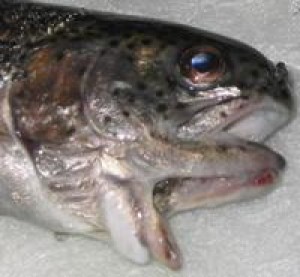
2 cars in every garage, 3 eyes for every fish


Posted in Uncategorized | Leave a comment

3 Ecology Scientists Debunk DNR CO2 Myth

Three highly regarded Professors (Mark Harmon, Tim Searchinger, & William MooMaw), all expert ecology scientists, have written a pointed letter to Washington’s legislators debunking DNR’s myth of CO2 neutrality pertaining to BioMassacre of Northwest forests.

Biomassacre CO2 Neutrality Debunked

Olympian article debunks biomass as ‘clean’ or ‘green’

Improving the Environment through Smoke Stacks

Posted in Uncategorized | Leave a comment

It was Beauty that Killed the Beast

The beautiful folks of Mason County, through their perserverance, have killed the Monster, Adage, that was terrorizing the community.

Ever Vigilant, Ever Faithful

Adage’s undoing came about as a result of several serendipities:

1)  Community activists alerted residents to the political corruption and danger to the environment as well as all who lived in the area.

2) Barbara Adkins, a Mason County employee with the Community Development Dept. as well as a young mother, took a courageous stand in questioning the glib assumptions of the Adage petition for a permit.

Letter from CCMC to Barbara Adkins requesting EIS for Adage

3) A newly elected more conservative US Congress dried up the federal pork that was fueling voraciously predatory companies like Adage. Ironically, the very conservatives who so often support business interests over human values, balked at imposing a carbon tax on US Businesses. This effectively gutted the admitted rationale for Adage’s existence, which was to funnel carbon credits to its parent, Dupe Energy…electrical energy production being the PR scheme for justifying the torching of Northwest forests for Adage’s ‘cap and trade’ leveraged strategy.

4) CCMC implemented a legal ‘war of attrition’ against Adage, calculating that with time, a solution to the impending environmental disaster might arrive while the courts weighed the merits of its claims. The community gave CCMC its money and whole hearted support.

5) Hearings (such as ORCAA’s 1-31-11 @ Shelton Civic Center) and multiple rallies allowed citizens to hear their own voices, creating the necessary inspiration and solidarity to defeat Adage’s scheme.

6) Duff Badgley, an environmental activist, sharply criticized Peter Goldmark, the head of Washington’s DNR, for failure to protect this State’s forests from BioMassacre in a guest column published by the Seattle Times. Shortly thereafter, Peter Goldmark issued a public correspondence/statement to Mason County Commissioners criticizing the Adage proposal and inveighing against it. This raised the likely specter of Adage’s proposed fuel source becoming unavailable, at least from DNR land.

Peter Goldmark letter to Mason County Commissioners slamming Adage

7) Mike Dorcy, recently elected Mason County Prosecutor, issued a formal legal opinion substantiating Barbara Adkins, et ux, in determining an EIS (environmental impact statement) would, under Washington State law, be legally mandatory before the Adage BioMassacre plant could become operational.

8) Within days after the Dorcy opinion was issued, Adage announced it was withdrawing its effort to set up shop in Mason County. Adage PR shills argued public opinion has little/nothing to do with this decision, that it resulted from a lack of market interest in ‘renewable energy’, i.e. Adage’s “product”.

Mike Dorcy official legal opinion supporting Barbara Adkins’ determination

You’ll meet some beautiful people there

9) News of this turn of events spread almost instantly prior to the official release of Adage’s announcement. Adage had begun to run out of $ despite its claim of 250 million$ from its parent company, Dupe Energy. With the federal largess of 75 million$ looking increasingly unlikely with the new US Congress, and Dupe casting a jaundiced eye on Adage’s unrequited endless expenses, parent and shell company decided to pull the plug instead of digging deeper in a hole of their own making. Greed and a bad business model could not overcome a committed community once it had been educated and aroused. Residents gathered in impromptu celebrations and congratulated one another.

BioMassacre Fact Sheet for those arriving late to the party

Assorted documents pertaining to Mason County BioMassacre drama

Adage Terrorizes Mason County

Posted in Uncategorized | Leave a comment

Lessons from Anonymous on cyberwar

A cyberwar is brewing, and Anonymous reprisal attacks on HBGary Federal shows how deep the war goes.

Click HERE for link to military digital complex secret war.


Posted in Uncategorized | Leave a comment

Wooden Stake/Silver Bullet Needed

The Adage monster is still twitching and may come back to life.

Blood Sucking Corporation

Tom Duponty, Adage’s PR rep, asserts public opinion has nothing to do with the decision to abandon ship. That’s no surprise. From the outset, Adage demonstrated it viewed residents as annoying irritants or obstacles to its profits.

Port Commissioner Jay Hupp is on record as stating area resources were there for him and his clients to get their hands on while denying he had any responsibility for the welfare of the community.

Mr. Duponty admitted Adage was searching for a buyer to assume its position.  ORCAA’s Gorden Lance opined his agency was inclined to grant the permit application Adage (et al) had submitted. Tim Sheldon reportedly argues Mason County is still a good fit for BioMassacre. A great deal of infrastructure expense has been committed toward that end in Mason County. What to do? How to irrevocably seal the monster’s coffin so neither it nor a surrogate (Simpson?) can again terrorize the community?

An Indecent Proposal:

CCMC is in the midst of a legal battle with the Port of Shelton and Adage in the Washington State Courts appellate system. A brief is soon due from CCMC’s attorney, Mr. Bricklin.  Adage/Port of Shelton must respond to prevail. But having chosen to abandon the field of battle, Adage is now more interested in recouping its losses. The Port of Shelton attorney, Skip Houser, may be inadequate to the task of appellate litigation. And there’s the question of Port finances in defending against the same.

The obvious solution is to make the extra effort to irrevocably drive a wooden stake through the monster’s heart NOW while it is in retreat. SPEND the $ needed to do so through the current appeals process.

What is at issue (legally) before the courts is whether the Port of Shelton erred by granting a fundamentally certain lease option to Adage before allowing the SEPA process to run its course, thereby ensuring Port Commissioners were fully informed of the environmental impacts and threats to the welfare of the community. CCMC may be in a better position to demand a stipulated settlement from the Port and Adage while they’re low on ga$…or to prevail outright. Should CCMC prevail, this could preclude an alternate’s offer tendered to Adage to bail it out and assume its place. The times to strike hard is when the enemy is in disarray and weak–NOW!

Once a judgment favoring residents is in hand, it will diminish the attractiveness of County Commissioner Tim Sheldon’s public invitation for new BioMassacre suitors. Perhaps Japan will serve as an object lesson to the appellate judges who hear this case involving hazards to the public and environment. After all, its unreasonable to believe the legislature anticipated all the dire consequences so many years in advance of Adage’s creation. This strategy is an important component of timing and building momentum toward removing the culpable officials from office.

Posted in Uncategorized | Leave a comment